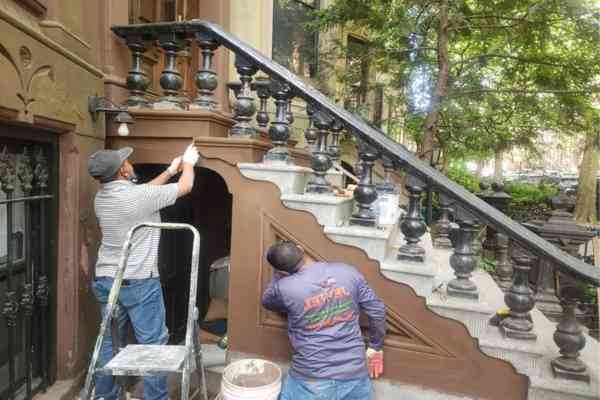
Hastings’ brick and stucco homes ask for a particular kind of attention. The village’s colonials and Tudors were built with real masonry — brick laid as structure, stucco applied in its traditional coats over masonry or lath — and a century of Hudson River weather has worked on both. As brick and stucco contractors serving the wider New York area, we bring that parent trade’s discipline to Hastings’ hillside homes: lime-rich mortar matched to soft old brick, stucco rebuilt coat by coat rather than patched over, and every repair judged by whether it lets the wall breathe the way it was built to.
The hill adds its own complication. A Hastings wall takes the river’s damp wind on its west elevation and hillside runoff at its base, so the same house can show two different failures on two sides — washed-out joints up high, drummy stucco low where water has sat behind it. Our masonry contractors in Hastings-on-Hudson read those patterns before quoting, because the repair that ignores the water’s route is the repair that gets redone. Where a chimney stack or a garden wall is part of the same failure, we treat the whole assembly, not just the elevation in front of us.
What follows is how we work through the village’s brick and stucco: the brick on the pre-war homes, the stucco finishes on the hillside houses, the water that causes nearly all of it, and the honest answer to whether a later home’s finish is stucco at all.
Brick and stucco are the two masonry skins of the pre-war village — and they are not the same trade, even though one contractor usually practices both. Brick is structural masonry: units laid in mortar, with the mortar as the sacrificial layer that weathers so the brick survives. Stucco is a plaster skin: traditionally three coats — scratch, brown and finish — applied over masonry or wood lath, textured by hand, and colored through or painted. Both breathe; both move with the building; both fail when water gets behind them and cannot get out. The repair tradition for each is older than the village: soft, lime-rich mortar against old brick, and stucco rebuilt in its coats, never smeared over in a single cement patch.
That tradition is the whole job in Hastings, where the river’s damp wind and the hill’s runoff test both materials at once. A wall that looks like a paint problem is usually a water problem, and a crack that looks like a structural problem is often a joint or a coat that has simply finished its service. Knowing which is which — before anyone mixes — is what separates a repair that lasts from one that buys a tidy year.

If your Hastings home’s brick or stucco is showing its age — washed joints, drummy patches, a crack you keep watching — start with an inspection, not a quote. Star Construction INC has repaired brick and stucco across the New York area since 2018, and we will tell you honestly what is surface and what is structure. Request a free, no-obligation estimate and we will walk the walls with you, elevation by elevation. The areas we cover are on our service areas page.
Our clients value the consistency, structural precision, and long-term performance we deliver on every project, from initial planning through final execution.

 Jav V
Trustindex verifies that the original source of the review is Google.
Got my bathroom remodel Team was professional on time Thank you Ever fernando Perez saldañaCrear Word
 LUIS CAYOi hire them for my home project. and everyting went smoothly. no delays
 Shahid IqbalVery reliable contractor. They did exactly what they promised and the quality was excellent. Would definitely recommend.
Contact us now to discuss your project and receive a no-obligation quote from our experts.
Every project is handled through a defined process that ensures accuracy, efficiency, and long-term structural performance from start to finish.
We begin by reviewing site conditions, understanding project objectives, and identifying structural requirements to establish a clear and practical direction before any work begins.
A detailed execution plan is developed, including material selection, sequencing of work, and coordination of labor to maintain consistency and avoid delays during construction.
Work is carried out using proven installation methods, with attention to structural integrity, proper reinforcement, and adherence to safety and quality standards.
A final walkthrough is conducted to verify workmanship, resolve any outstanding details, and ensure the completed project meets performance expectations and durability standards.
Four things decide whether brick and stucco work on a Hastings home holds: the mortar matched to the brick, the stucco rebuilt in its coats, the water found and sent away, and the honesty to say when a finish is not stucco at all. Each section below takes one of them in turn.
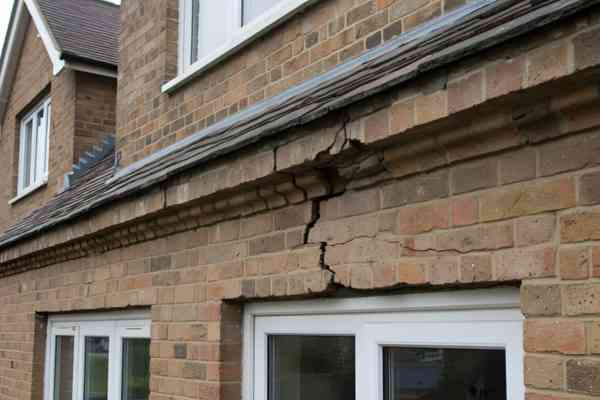
Hastings’ colonials and Tudors carry brick as structure — walls that hold the house up, not veneer hung on frame. Their mortar was lime-rich and softer than the brick, by design: the joint was meant to weather so the unit would not. A century of river weather has opened those joints grain by grain, and the honest repair is brick pointing and repointing in a matched, lime-rich mix, cut to sound depth and tooled to the original profile. Where individual units have spalled — faces popped by a hard modern patch that trapped moisture — brick crack repair and unit replacement swaps the damaged brick for a match in size, color and absorption, so the repair reads as the wall’s own. The rule that governs both: never put a harder material against a softer original. Hard mortar on soft brick does not strengthen the wall; it moves the damage into the brick itself.
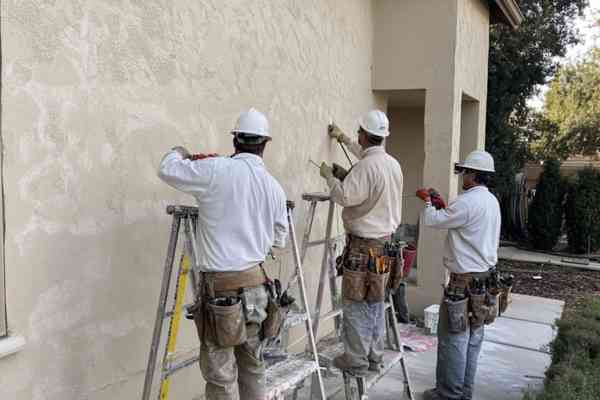
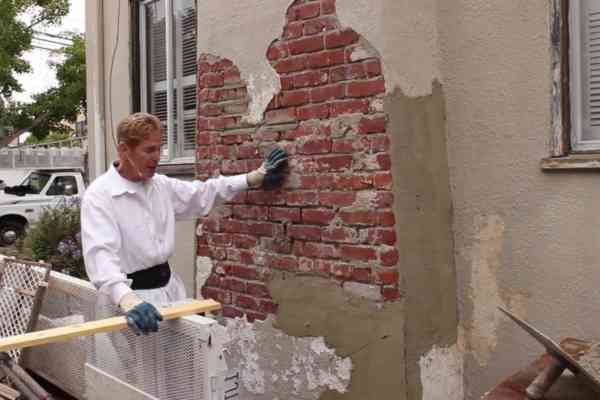
Hastings’ stucco is period stucco: three coats over masonry or wood lath, hand-textured, on homes that climb the slope. It fails in two substrates’ vocabularies. Over masonry, it cracks where the wall moves and drums where water has broken the bond. Over lath, it fails when the lath itself rots or the keys — the plaster squeezed through the lath gaps — snap, leaving a hollow-sounding sheet. The repair in both cases is stucco repair in the material’s own coats: failed material cut back to sound, substrate repaired, scratch and brown coats rebuilt, finish coat matched to the original texture. Where the stucco is sound but tired, stucco skim coating and refinishing gives a fresh, paint-ready face without the cost of a full rebuild. What we never do is smear a cement patch over a drummy area and paint it — the patch is harder than the stucco, it traps the water that made the drum, and the drum comes back larger.
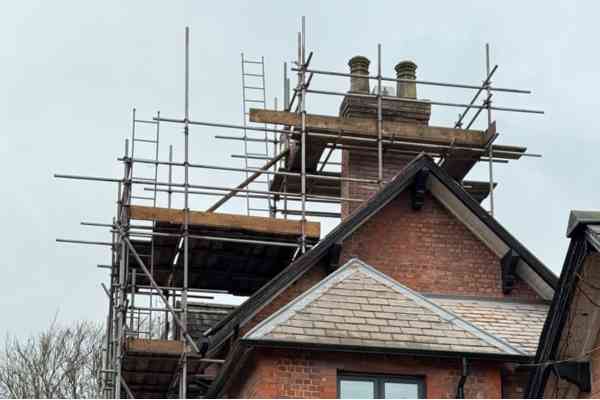
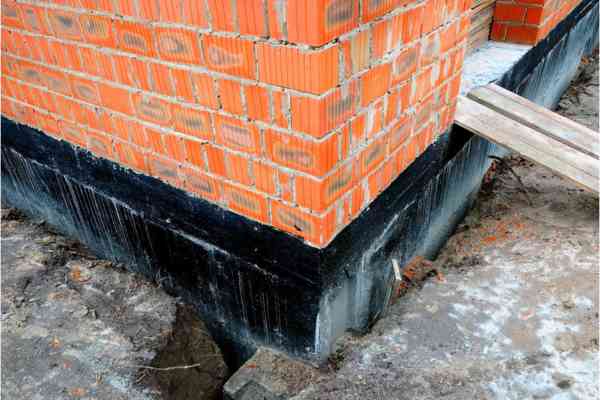
Nearly every brick and stucco failure in Hastings is a water failure with two sources. From above, the Hudson’s damp wind drives rain into the west elevations, and chimney flashing — the metal work where a stack meets a roof — opens a quarter inch and starts feeding the wall from the top; our chimney repair and rebuilding work often begins at that flashing line. From below, hillside runoff sits against the base of the wall, wicks upward, and leaves the lower courses and the stucco above the foundation damp in every season. Steel lintels rust where that water reaches them, and rust-jacking cracks the masonry above — a job for lintel and shelf angle repair once the steel is cleaned or replaced. The lasting fix in every case is the same sequence: stop the water first, with exterior waterproofing for masonry where the wall needs it, then repair the masonry. Repairing the symptom while the water still runs is how a wall gets repaired twice.
Not every textured finish in Hastings is traditional stucco. Later additions and some newer homes wear EIFS — an exterior insulation and finish system — which looks like stucco but behaves differently: a foam board with a thin synthetic skin, where water trapped behind the skin rots the wall silently instead of showing itself in a crack. The two systems need different repairs, and treating EIFS like stucco (or the reverse) is how a small problem becomes a wall rebuild. Our short guide to EIFS vs stucco explains how to tell which system your home has and why the distinction matters before anyone quotes. If your home does carry EIFS, we repair it as EIFS, with its own details and drainage — never as a coat of traditional stucco over foam.
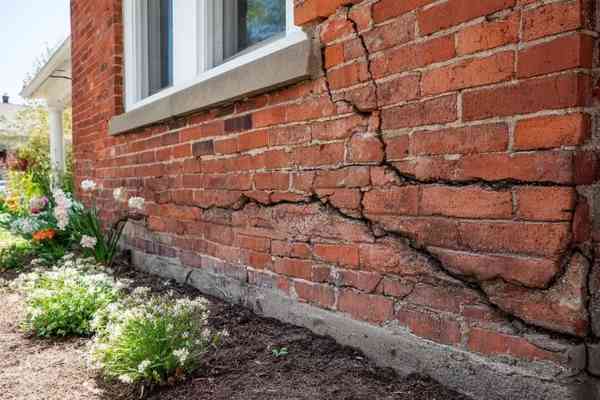
It depends on the crack, and the honest answer starts with what kind it is. Hairline cracks in the finish coat are usually shrinkage or seasonal movement — cosmetic, and worth watching rather than worrying over. A crack that runs through the stucco and keeps widening, one that follows a straight line where a panel or a lath joint sits, or a crack with a hollow, drummy sound when tapped beside it, means water or movement has broken the bond behind the finish — that one needs a proper repair, cut back to sound material, not a tube of caulk. A crack that steps through brick courses or widens at one end can signal structural movement, and that deserves a mason’s eyes before anything else. Cost depends on scope: a hairline repair is a small job; a drummy section rebuilt in its coats is a larger one, and we quote it after inspection.
Because old brick is soft, and mortar must be softer still. The brick in a Hastings colonial or Tudor was fired in an era when bricks were less hard and more absorbent than modern units, and the original mortar was lime-rich — flexible, breathable, and deliberately sacrificial, weathering away so the brick would survive. Modern cement mortar is harder, denser and less permeable: pack it against soft old brick and it traps moisture in the units, forces freeze-thaw damage into the brick faces, and the brick spalls while the joint looks perfect. Matching the original mortar — in strength, in sand, in color — is not a cosmetic preference; it is the difference between a repair that protects the wall and one that injures it. That is why we test and match before we mix.
Usually yes, closely — and honestly, not always invisibly on day one. Brick matching means finding units of the same size, color range and absorption, and mortar mixed to the original’s sand and tone; on a Hastings home that often means sourcing reclaimed or specially matched brick, and the new work weathers in over a season or two until it reads as the wall’s own. Stucco matching means rebuilding the finish coat to the original’s texture — hand-troweled, floated or dashed as the house was finished — and tinting or painting to blend. What we promise is a match in material and craft, not a guarantee that new work will be indistinguishable from a century-old wall on the afternoon it is finished. Cost depends on how much matching the job needs and how much material must be sourced.
A well-built three-coat stucco wall, kept dry and maintained, can last a century — Hastings has homes proving it. What shortens its life is water behind the finish and repairs made in the wrong material: a cement patch over a lime coat, a painted-over drum, a flashing left open. With its water managed — gutters, flashing and grading doing their jobs — and hairline cracks addressed before they widen, traditional stucco is one of the longest-lived finishes a house can wear. When it does need attention, it is usually sectional: a failed area rebuilt in its coats, not the whole elevation. Cost depends on scope and on whether the substrate beneath is sound.
Like-for-like repairs — repointing, patching stucco, replacing individual bricks — usually do not, since they restore the wall to what was already there. Work that changes the structure or the footprint — rebuilding a wall, altering an opening, adding a new masonry element — generally does need village approval, and the village will want to see the scope before work starts. We confirm the position with the village for any job that is not plainly a repair, and we say so in the estimate before work begins. Cost depends on scope; permit fees, where they apply, are the village’s, not ours.