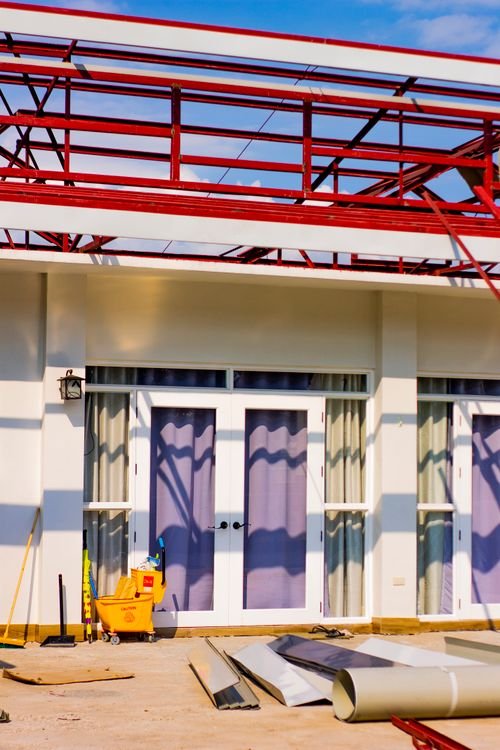
We start with the whole envelope, not one stain or crack. Our team inspects walls, joints, flashings, balconies, and drainage paths, then traces how water moves across the building before recommending any repair. That diagnosis decides whether a surface needs repointing, recoating, or replacement — and in what order — so work done this season does not trap moisture for the next. We also handle power washing and surface cleaning, balcony and terrace repair, and exterior painting where preparation and sequencing matter as much as the finish.
New Rochelle buildings take a particular beating: pre-war masonry and stucco face freeze-thaw cycles, shore-side wind and rain, and street-level splash, while occupied apartment blocks need work staged without closing entries or sidewalks. We plan around residents, weather, and access, and we keep each phase weather-tight before the next begins.
Exterior repair and renovation is the work of keeping a building’s outer envelope weather-tight and sound. Repair restores what has failed — cracked masonry and stucco, open joints, failed flashings, leaking balconies, and worn coatings — while renovation renews larger areas, such as a full facade, a cornice and trim repair, or a brownstone restoration, so the building sheds water and holds its appearance for years.
In New Rochelle, that work must suit pre-war construction and shore-side sites: details that ignore freeze-thaw movement, coastal exposure, or the way water tracks behind a cornice usually fail in the same place. Good exterior work therefore starts with diagnosis, sequences repairs from water entry outward, and finishes surfaces that can move, drain, and be maintained.

Start with a site visit that looks past the visible stain. Star Construction INC inspects the full envelope — walls, cornices, balconies, joints, and waterproofing — traces water to its entry point, and explains which repairs come first and why. That matters on New Rochelle apartment blocks and shore-side homes alike, where a single failed flashing can feed damage far from where it shows.
As exterior repair renovation contractors in New York, we sequence the work, protect occupied entries and sidewalks, and give a free, no-obligation estimate before anything begins. See our service areas to find the Westchester County communities we serve.
Our clients value the consistency, structural precision, and long-term performance we deliver on every project, from initial planning through final execution.

 Jav V
Trustindex verifies that the original source of the review is Google.
Got my bathroom remodel Team was professional on time Thank you Ever fernando Perez saldañaCrear Word
 LUIS CAYOi hire them for my home project. and everyting went smoothly. no delays
 Shahid IqbalVery reliable contractor. They did exactly what they promised and the quality was excellent. Would definitely recommend.
Contact us now to discuss your project and receive a no-obligation quote from our experts.
Every project is handled through a defined process that ensures accuracy, efficiency, and long-term structural performance from start to finish.
We begin by reviewing site conditions, understanding project objectives, and identifying structural requirements to establish a clear and practical direction before any work begins.
A detailed execution plan is developed, including material selection, sequencing of work, and coordination of labor to maintain consistency and avoid delays during construction.
Work is carried out using proven installation methods, with attention to structural integrity, proper reinforcement, and adherence to safety and quality standards.
A final walkthrough is conducted to verify workmanship, resolve any outstanding details, and ensure the completed project meets performance expectations and durability standards.
Exterior work in New Rochelle protects more than the facade you see from the street. It keeps water out of walls and interiors, preserves masonry and finishes on pre-war apartment blocks and shore-side homes, removes hazards at entries and sidewalks, and cuts the yearly patching that comes from chasing leaks one surface at a time.
One leak rarely has one cause. We inspect walls, joints, flashings, cornices, balconies, and drainage together, trace water to its entry, and write a sequenced scope — so a masonry repair does not cover a flashing failure, and a coating does not trap moisture behind it. On a New Rochelle building, that evaluation also weighs shore-side exposure and the way wind-driven rain finds joints on the weather side of the building.
Brick, stucco, and facade surfaces take the weather first. We repoint failed joints, repair cracked or delaminated stucco, restore facades in matching materials, and detail joints and coatings for freeze-thaw movement on New Rochelle hillside and street-facing walls. Where the wall itself needs attention, facade, masonry and stucco repairs are sequenced so structural repairs come before cosmetic finishes, never the other way around.
Balconies, cornices, and terraces are where small failures become interior damage. We repair decks and membranes, restore cornices and trim, and apply waterproofing and sealants at joints and transitions so water sheds instead of entering. On New Rochelle apartment buildings, balcony and terrace repair and cornice and trim repair are often paired with waterproofing and sealants work, because a sound deck means little if the joint above it still lets water in.
Most New Rochelle exterior work happens while people live in the building. We phase by elevation and season, keep entries and sidewalks open and protected, hold each phase weather-tight before moving on, and coordinate access, scaffolding, and board or management requirements in advance. That phasing also lets owners spread larger programs across seasons without leaving any elevation exposed.
It covers the building’s outer envelope: facade and masonry repair, stucco and siding work, balcony and cornice repair, and waterproofing and sealants, sequenced so each repair protects the next. The exact scope depends on the building’s condition and construction — a pre-war apartment block may need repointing and cornice work, while a shore-side home may need stucco repair and new flashings. A site visit and a phased, written scope confirm what is included before work begins, and every project starts with a free, no-obligation estimate.
Water rarely enters where it shows. Stains, damp patches, and masonry damage often sit far below a failed joint, flashing, or balcony membrane. Finding the entry takes inspecting walls, joints, cornices, balconies, and drainage paths together, tracing water movement, and sometimes opening a small test area. A site visit that checks the whole envelope gives a far more reliable answer than patching the visible stain.
Yes, in most cases. Work is usually phased by elevation and priority: stop active water entry first, make each phase weather-tight, then return for cosmetic and lower-priority areas in a later season. Cold weather limits some coatings and masonry work, so sequencing accounts for temperature, curing, and access. A phased plan keeps the building protected between phases, and the cost of each phase depends on its scope.
Often, yes — in general terms, many New Rochelle apartment and condominium buildings require board or management approval before exterior work begins, and some work may also need City of New Rochelle permits, depending on its scope. Approval usually covers the scope, schedule, access, and protection of common areas. We provide a clear written scope and schedule that boards can review, and we confirm permit and approval requirements before work starts. No specific form numbers or fees are promised here, because they depend on the building and the work.
Work areas are set up with protection for sidewalks, entries, and neighbouring properties: scaffolding and netting where overhead work is involved, covered walkways where entries must stay open, and daily cleanup of debris and dust. Access, staging, and working hours are agreed with the building’s management in advance, and each phase is left weather-tight and tidy at the end of the day so residents and neighbours are disrupted as little as possible.