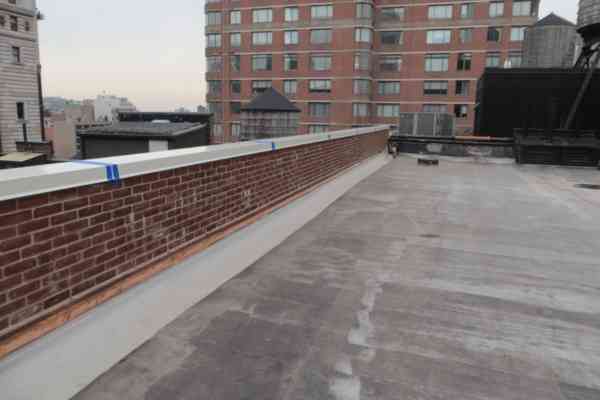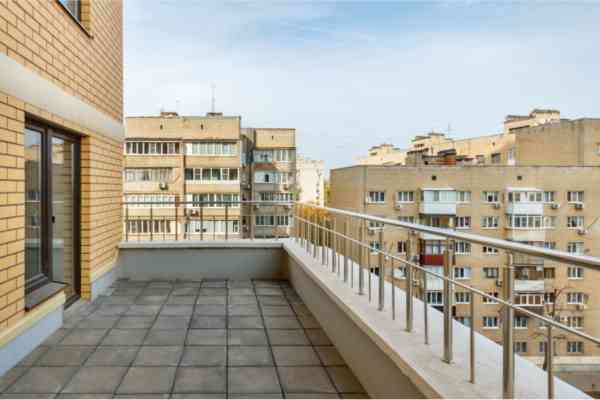
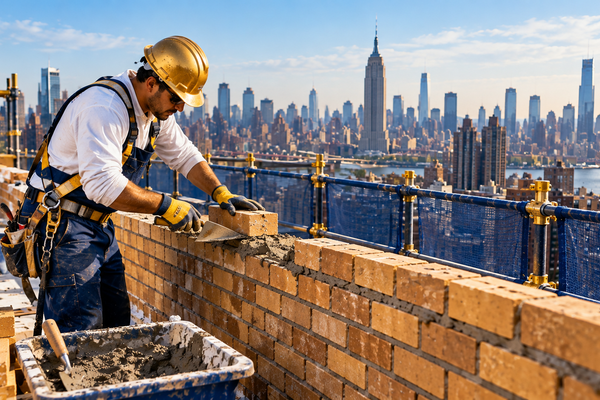
Our parapet wall repair and installation contractors work across Manhattan, from townhouse roof edges to the parapets of tall buildings over busy sidewalks. A parapet is the low wall that continues past the roofline, and it takes the worst of the weather: wind-driven rain on its outer face, freeze and thaw in its joints, and water that finds every weak line in its coping and flashing.
We repair and rebuild parapets in kind — brick and stone matched to the building, coping reset or replaced, flashing renewed through the wall — and we treat the roof edge and the parapet as one assembly, not two separate jobs, working alongside the roof repair and installation contractors in Manhattan on the same crew. Where the parapet belongs to a taller building, the work is often part of a wider facade repair scope, and our masonry contractors in Manhattan handle the brickwork, pointing and stonework that goes with it.
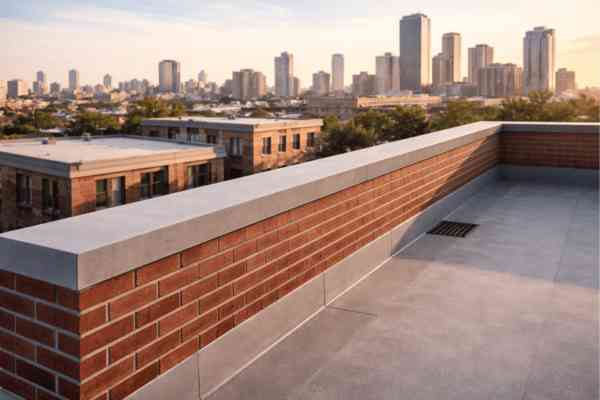
A parapet is the section of wall that rises above the roofline at the edge of a roof. On a Manhattan townhouse it may be only a few courses of brick above a rear extension; on a tall building it is a full-height wall running the perimeter of the roof, holding back the roof system, anchoring railings and equipment, and forming the top edge of the facade the street sees.
Parapet wall repair and installation covers everything that wall needs: rebuilding courses that have lost their mortar or their bond, resetting or replacing coping stones, renewing through-wall and counter-flashing, and repointing joints that have opened to the weather. On taller buildings, parapet conditions are also a named item in facade inspection reports — the repair scope that follows is masonry work, and it is the work Star Construction performs.

If you are searching for trusted parapet wall contractors in Manhattan, Star Construction INC has repaired and rebuilt parapets across the borough since 2018 — on townhouses, on pre-war apartment buildings, and on tall buildings where parapet work forms part of a wider facade repair scope. We inspect from the roof, explain what has actually failed, and price the repair honestly: repointing and recoping where the core is sound, rebuilding where it is not.
Request a free, no-obligation estimate, and see the service areas we cover across New York City.
Our clients value the consistency, structural precision, and long-term performance we deliver on every project, from initial planning through final execution.

 Jav V
Trustindex verifies that the original source of the review is Google.
Got my bathroom remodel Team was professional on time Thank you Ever fernando Perez saldañaCrear Word
 LUIS CAYOi hire them for my home project. and everyting went smoothly. no delays
 Shahid IqbalVery reliable contractor. They did exactly what they promised and the quality was excellent. Would definitely recommend.
Contact us now to discuss your project and receive a no-obligation quote from our experts.
Every project is handled through a defined process that ensures accuracy, efficiency, and long-term structural performance from start to finish.
We begin by reviewing site conditions, understanding project objectives, and identifying structural requirements to establish a clear and practical direction before any work begins.
A detailed execution plan is developed, including material selection, sequencing of work, and coordination of labor to maintain consistency and avoid delays during construction.
Work is carried out using proven installation methods, with attention to structural integrity, proper reinforcement, and adherence to safety and quality standards.
A final walkthrough is conducted to verify workmanship, resolve any outstanding details, and ensure the completed project meets performance expectations and durability standards.
Parapet work in Manhattan is different from parapet work anywhere else in the region, for one reason: the wall usually stands above a sidewalk full of people. A loose coping stone or a failed flashing line is not only a leak risk; on a tall building it is a public-protection issue, and on a townhouse it is the top of the wall the owner lives under. The four sections below cover what matters most: the inspection regime that governs tall buildings, the two lines that fail first, the judgment between repair and rebuild, and the honest work of tracing a leak back to its source.
On buildings over six stories, parapets are part of the Facade Inspection & Safety Program (FISP) — Cycle 10 is the current cycle. A parapet that shows up in an inspection report as a condition needing repair becomes a defined scope of masonry work: repointing, rebuilding, recoping, reflashing. Star Construction performs the repairs; inspection and filing are done by a Qualified Exterior Wall Inspector (QEWI), a separate role we do not claim. Owners and managers dealing with a FISP report can read more on our Local Law 11 contractors in Manhattan page, which explains the program in plain terms.
For those buildings, the parapet is rarely a standalone job. It is repaired as part of the facade scope, sequenced with the rest of the elevation, and protected while the work proceeds so the sidewalk below stays safe.
Almost every parapet leak starts in one of two lines. The first is the coping — the cap stones or metal that cover the top of the wall. When coping joints open or stones loosen, water pours straight into the core of the wall, and freeze and thaw widen the damage from inside. Our coping stone installation and replacement work resets or replaces that cap so the top of the wall is sealed again.
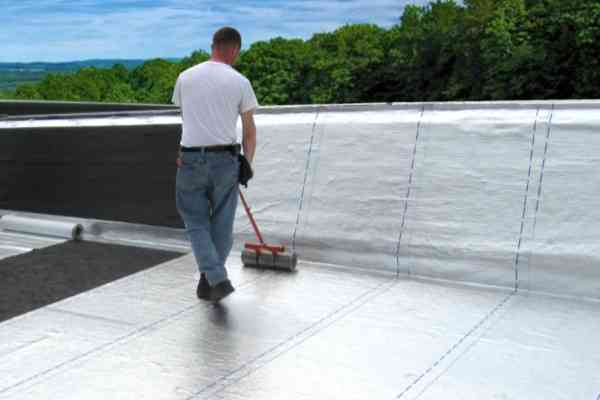
The second line is the flashing — the through-wall flashing that carries water out of the wall, and the counter-flashing where the parapet meets the roof. When either fails, water travels behind the face brick and shows up far from its entry point. Our parapet wall waterproofing and flashing installation renews both lines, so the wall sheds water the way it was built to.
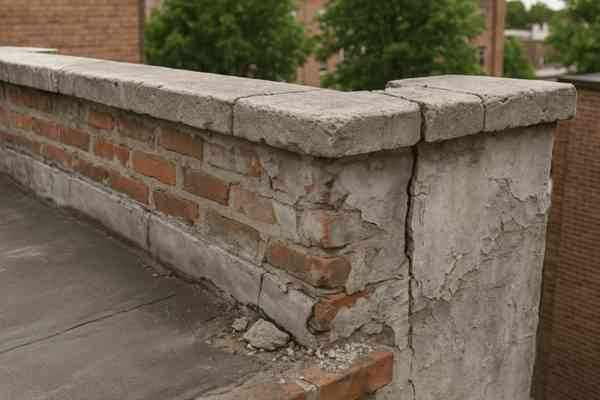
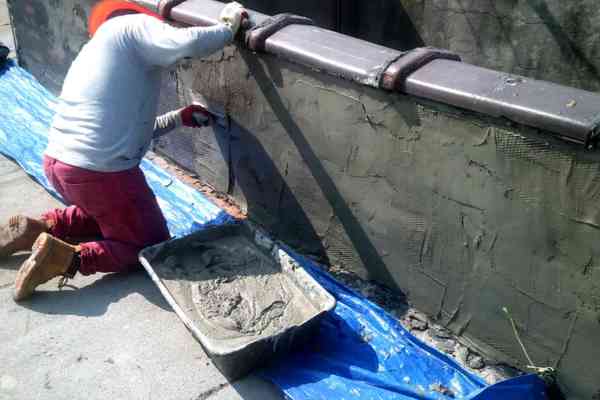
The judgment is the core of the job. If the wall’s core is sound — bricks firm, no lean or bulge — then parapet wall repair and repointing is the honest answer: failed mortar cut out, joints repacked with matched mortar, coping reset, flashing renewed. It costs less than a rebuild and leaves the original wall in place.
When the wall leans, bulges, or is cracked through its full thickness, repair is a patch on a failed structure. Then parapet wall demolition and rebuilding is the right call: the failed wall taken down to sound work and rebuilt in kind, with new flashing and coping, so the repair lasts rather than repeats.
A stain on the top-floor ceiling does not mark the leak’s entry point; it marks where the water finally found its way out. Water entering at a failed parapet flashing can travel along a beam, a joist or the back of a wall and appear rooms away from the wall that let it in. Tracing it honestly means inspecting from the roof: the coping, the flashing lines, the joints, and the roof surface behind the parapet, before any repair is priced.
That is why parapet work and roof work are so often one job in Manhattan. Our roof repair and installation contractors in Manhattan check the roof edge, drains and flashing details alongside the parapet, and our masonry contractors in Manhattan handle the brickwork and pointing that the water has already damaged. Fix the entry point, not the stain, and the stain does not come back.
Under New York City’s Facade Inspection & Safety Program (FISP), buildings over six stories must have their exterior walls — including parapets — periodically inspected by a Qualified Exterior Wall Inspector (QEWI), who files a report. Conditions the report flags as needing repair become a repair scope, and Cycle 10 is the current cycle. Star Construction performs the repair work in that scope — repointing, rebuilding, recoping, reflashing. We do not inspect or file; the QEWI does that. If your building’s report lists parapet conditions, we can price and carry out the repairs it calls for.
Treat it as urgent, especially on a tall building. A loose coping stone above a busy sidewalk is a falling-object risk, and every storm drives water into the open joint and down into the wall core. Loose coping should be secured or replaced promptly, and the joints and flashing beneath it checked at the same time — the stone is often the visible symptom of a wider failure in the top of the wall.
Yes — often. Water entering at a failed parapet flashing or coping joint travels inside the wall and along structural members, so it can appear as a stain on a ceiling or wall well away from the parapet itself. A roofer or mason who inspects from the roof, checking the coping, flashing lines and joints before pricing anything, can usually tell whether the parapet is the source.
It comes down to the core of the wall. If the bricks are firm and the wall is plumb, repointing, recoping and reflashing will usually do. If the wall leans, bulges, or is cracked through its full thickness, or if large sections of brick have lost their bond, the honest answer is to take the failed section down and rebuild it in kind, with new flashing and coping. Cost depends on the scope — the size of the wall, its height and access, and how much must be rebuilt.
In general New York City terms, straightforward parapet repairs — repointing, recoping, flashing renewal — often proceed without a Department of Buildings permit, while a full rebuild or work that changes the structure usually needs one, and work on a tall building is typically coordinated with the building’s facade program filings. The exact requirement depends on the building and the scope, and we confirm it before work starts.