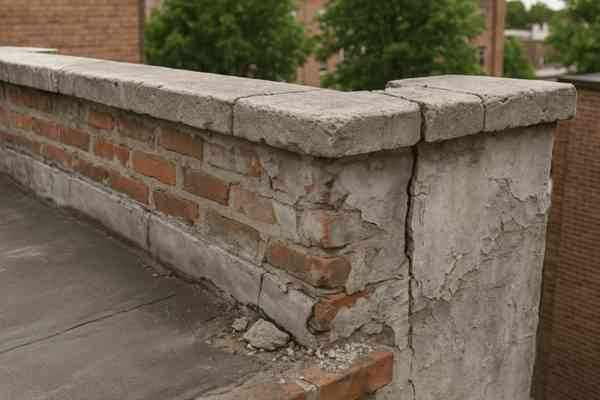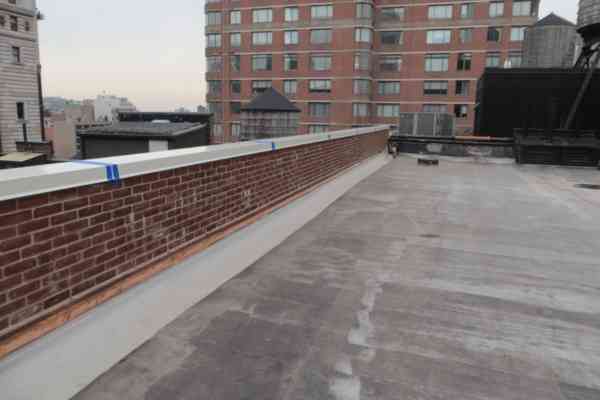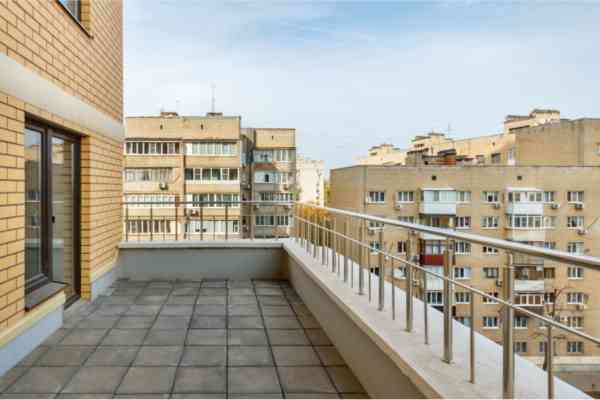

Our parapet wall repair and installation contractors in North Side, NY work on the walls other trades walk past: the low masonry wall that runs around the roof edge of the area’s pre-war apartment buildings, garden apartments and detached brick homes. A parapet does more than finish a roofline. It holds the top courses of the wall together, it keeps wind-driven rain from running straight into the roof assembly, and it carries the coping and flashing that decide whether the wall below stays dry. When any part of that assembly fails, the building pays for it in leaks, spalled brick and mortar joints that open a little wider every winter.
We approach every North Side parapet as a system, not a single repair. Our masonry contractors in North Side assess the brickwork and mortar, we check the coping stones and the flashing lines where the wall meets the roof, and we coordinate with the roof repair and installation contractors in North Side when the roof membrane or drainage is part of the problem. That whole-assembly view is what keeps a repaired parapet from failing again at the next joint over. It is the same disciplined approach our parapet wall repair and installation contractors in New York bring to buildings across the city, adapted here to the North Side’s older apartment stock.
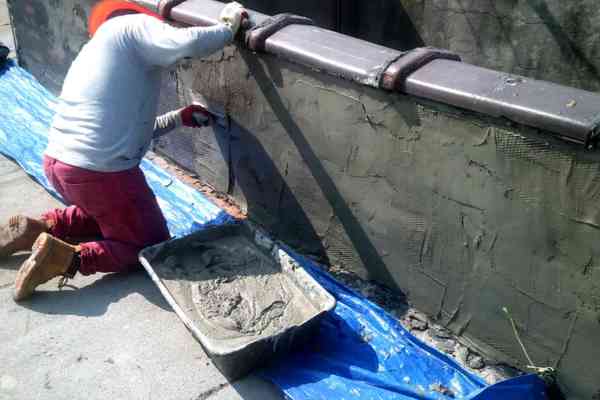
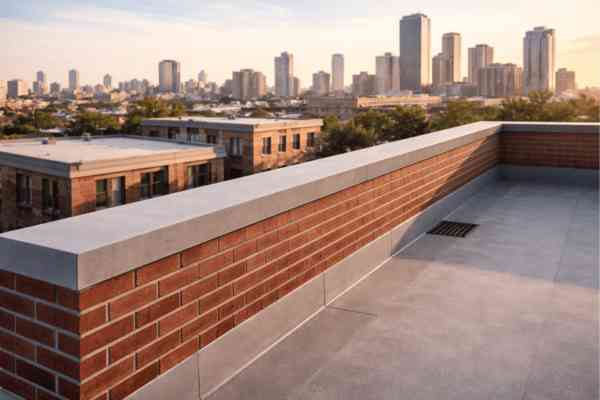
A parapet is the low wall that extends above the roofline around the edge of a flat or low-slope roof. On the North Side’s apartment buildings it is usually brick, capped with stone or concrete coping, and tied into the roof with flashing that turns water away from the wall. The wall’s job is part safety — it guards the roof edge — and part weather defense: it shields the top of the masonry from wind and rain, and it gives the roof’s drainage somewhere to be detailed properly. Parapet wall repair covers the full range of that assembly: repointing opened mortar joints, resetting or replacing coping stones, renewing through-wall and counter-flashing, rebuilding sections where the core has failed, and adjusting height or adding reinforcement where a building’s needs have changed. Installation means building a new parapet where a roof replacement, an addition or a code-driven change calls for one, with the coping and flashing detailed from the start rather than added as an afterthought.

If you are searching for trusted parapet wall contractors near you in the North Side, start with an inspection from the roof side. At Star Construction INC, every parapet project begins with a look at the wall itself — coping, joints, flashing and the roof edge behind it — before any scope is quoted. We serve apartment buildings, garden apartments and brick homes across the North Side, and the areas we cover are listed on our service areas page. Request a free, no-obligation estimate and we will inspect the parapet, photograph what we find, and explain whether it needs repair, partial rebuilding or a full rebuild — honestly, and in plain terms.
Our clients value the consistency, structural precision, and long-term performance we deliver on every project, from initial planning through final execution.

 Jav V
Trustindex verifies that the original source of the review is Google.
Got my bathroom remodel Team was professional on time Thank you Ever fernando Perez saldañaCrear Word
 LUIS CAYOi hire them for my home project. and everyting went smoothly. no delays
 Shahid IqbalVery reliable contractor. They did exactly what they promised and the quality was excellent. Would definitely recommend.
Contact us now to discuss your project and receive a no-obligation quote from our experts.
Every project is handled through a defined process that ensures accuracy, efficiency, and long-term structural performance from start to finish.
We begin by reviewing site conditions, understanding project objectives, and identifying structural requirements to establish a clear and practical direction before any work begins.
A detailed execution plan is developed, including material selection, sequencing of work, and coordination of labor to maintain consistency and avoid delays during construction.
Work is carried out using proven installation methods, with attention to structural integrity, proper reinforcement, and adherence to safety and quality standards.
A final walkthrough is conducted to verify workmanship, resolve any outstanding details, and ensure the completed project meets performance expectations and durability standards.
Reading the Roofline — the North Side’s parapets, from garden apartments to taller elevator buildings. Walk the roofline of a North Side block and you read the area’s building history in its parapets: the low brick walls of garden apartments, the taller runs on pre-war elevator buildings, the coping stones that have weathered a century of freeze-thaw winters. Each one fails in its own way, but the pattern is the same — water gets in at the top, winters widen the opening, and the wall below pays. The four sections below follow that pattern: where the area’s parapets are, the two lines that fail first, the judgment between repair and rebuild, and what a FISP report means when it names your parapet.
Most of the North Side’s parapets belong to its pre-war apartment buildings and garden apartments, and they share a construction: brick laid in lime-rich mortar, capped with stone coping, with flashing tucked into the joints where the wall meets the roof. Decades of freeze-thaw cycling have opened many of those joints a fraction at a time, and the taller the building, the more wind and rain its parapet takes on its exposed face. Garden apartments show a different pattern — lower walls, more of them, often with coping that has shifted where the roof was re-done without re-detailing the wall. In both cases the repair starts the same way: sound out the brick, check the mortar depth, and look at the coping before deciding anything about the wall below. A parapet that is still solid in its core is a repointing and recoping job; one whose brick is soft through its thickness is a different conversation, covered below.
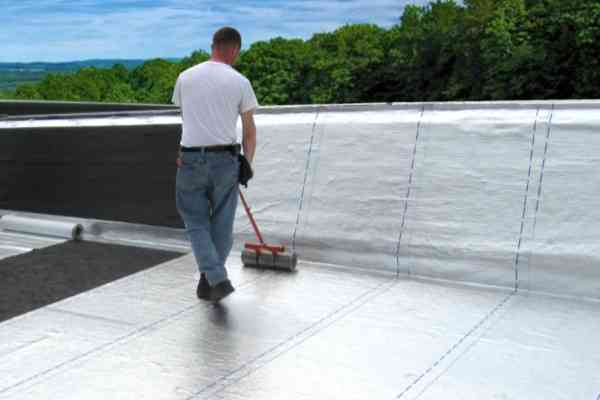
Almost every parapet leak traces to one of two lines. The first is the coping: the stones or concrete caps along the top of the wall. Coping is supposed to shed water off both faces of the wall; when its joints open or a stone loosens, water pours straight into the wall’s core, where it freezes, expands and starts pushing brick faces off from the inside. The second is the flashing: the metal work that seals the wall to the roof. Through-wall flashing carries water out of the wall’s interior; counter-flashing protects the top edge of the roof membrane where it turns up against the parapet. When either fails — rusted through, lifted by wind, or sealed with caulk instead of properly stepped into the mortar joints — water runs behind the wall’s face and shows up rooms away. Our coping stone installation and replacement and parapet wall waterproofing and flashing installation work addresses both lines together, because fixing one while the other still leaks is how a stain comes back.
The honest question on every parapet job is whether the wall can be saved. A wall with a sound core — brick still hard, movement limited to the joints — is repaired: joints cut out and repointed with mortar matched to the original, coping reset or replaced, flashing renewed. Our parapet wall repair and repointing crews do this work across the North Side, and a well-repaired parapet buys the building decades. A wall that leans, bulges, or shows through-cracks has a core problem: water has been inside it long enough to soften the brick or wash out the mortar through its thickness. Patching that wall buys a season at most. Rebuilding — taking the failed section down to sound masonry and laying it up again with proper coping and flashing — costs more once and lasts; patching costs less repeatedly and never stops. We tell owners plainly which side of that line their wall is on, and what each option costs over time, not just on the day.
On the North Side’s taller elevator buildings, parapets often appear by name in a building’s FISP report. Under New York City’s Facade Inspection and Safety Program, buildings over six stories are inspected on a cycle by a Qualified Exterior Wall Inspector (QEWI), who files a report classifying conditions as SAFE, SWARMP or UNSAFE. Parapet conditions — loose coping, open joints, deteriorated flashing — commonly appear as SWARMP items: safe with a repair and maintenance program, meaning the building must correct them within the stated window. That is where Star Construction comes in. We perform the repairs: the repointing, recoping and flashing work the report calls for. We do not inspect and we do not file — the QEWI inspects and files, and the amended report follows the completed repair. If your building’s report names its parapet, our Local Law 11 contractors in New York page explains the program in more detail, and we can scope the repair work from the report’s own language. The cost of a FISP repair scope depends on the wall’s height, access and condition — scaffolding and sidewalk protection on an occupied building are real parts of the price, and we quote them openly.
A parapet is the low wall that rises above the roofline around the edge of a flat or low-slope roof. On an apartment building it matters for three reasons: it protects people and equipment at the roof edge, it holds the top of the building’s masonry together, and it carries the coping and flashing that keep water out of the wall and the roof assembly. When a parapet fails, the damage is rarely confined to the roofline — water entering at the top travels down through the wall and shows up as stains, damp plaster or spalled brick floors below. That is why a parapet is worth inspecting even when the roof itself looks sound.
Loose coping is more urgent than it looks. Coping stones cap the wall and shed water off both faces; once a stone loosens, its joints open and every storm pours water directly into the wall’s core. In winter that water freezes and expands, widening the opening and starting to push brick faces off from the inside. A loose stone can also become a falling hazard on a taller building, where the sidewalk below is busy. Loose coping should be reset or replaced promptly, and the flashing beneath it checked at the same time — the two usually fail together. The repair itself is straightforward; the cost of waiting is a wall that needs rebuilding instead of recoping.
Yes — and on pre-war apartment buildings it often does. Water entering at a failed coping joint or flashing line travels down inside the wall and through the roof assembly, and it can appear as a stain several rooms from where it got in, or a floor below the roofline. The way to tell is to inspect from the roof: check the parapet’s coping joints and flashing, the condition of the mortar at the top courses, and whether the roof membrane is properly turned up against the wall. If the roof field is sound and the stain sits near an exterior wall below the roof edge, the parapet is the first suspect. Tracing it honestly matters, because re-roofing over a leaking parapet leaves the leak exactly where it was.
It means the building’s Qualified Exterior Wall Inspector (QEWI) found parapet conditions that need correcting, usually classified as SWARMP — safe with a repair and maintenance program — which must be corrected within the window the report states. The repair scope comes from the report’s own language: repointing, coping replacement, flashing renewal, or partial rebuilding, depending on what was found. Star Construction performs the repair work; we do not inspect or file. Once the repairs are complete, the QEWI files an amended report. Costs depend on the scope, the building’s height and the access and sidewalk protection the work requires — we quote from the report, so owners see exactly which conditions the price covers.
It depends on the scope. Like-for-like repairs — repointing, resetting coping, renewing flashing — generally do not require a building permit, though work on taller buildings usually needs sidewalk protection and may need Department of Buildings filings connected to the facade safety cycle. Rebuilding a parapet, changing its height, or altering its structure generally does require permits, and any work tied to a FISP report follows that program’s filing process. We confirm the permit position for each project before work starts, in general New York City terms, so there are no surprises mid-job.