
A flat roof fails in the places where water lingers. The field itself is usually a membrane — built-up felt, modified bitumen or a single-ply sheet — and on a Harlem roof it spends its life under shallow standing water after rain, because old drainage falls were never generous and decades of patching have flattened them further. Ponding alone does not puncture a membrane, but it ages one: seams sit submerged, UV and freeze-thaw work the same square feet season after season, and a membrane that was watertight at installation becomes a map of weak points. Our first job on any roof is to read that map — where the water sits, where it should run, and which drains actually drain — before anyone talks about patches. As roof repair and installation contractors in New York, we see the same pattern across the city, but Harlem’s wall-to-wall flat roofs make the drainage question the whole job.
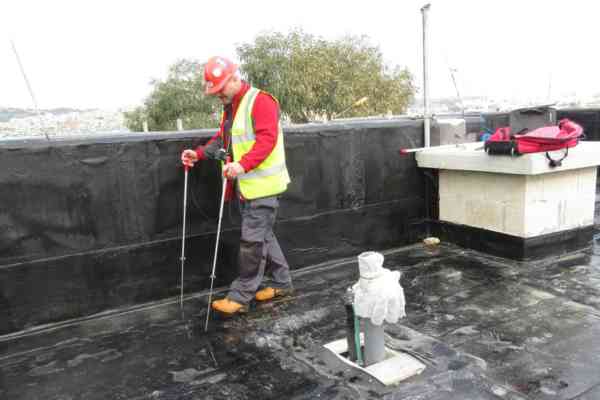
Seams are the second failure point, and the one most often misdiagnosed. A seam opens a hairline at a time: heat in summer, contraction in winter, foot traffic from every tradesperson who has crossed the roof since. The water that gets through a failed seam rarely drips straight down. It travels along the deck, along joists, along the top of a ceiling, and appears as a stain two rooms or two floors from the entry point — which is why a ceiling stain is a starting clue, never a diagnosis. Guessing at the entry point and patching the ceiling below it is how roofs get patched three times and still leak. The honest sequence is inspection first, with the roof walked, seams probed and drains checked, so the repair lands on the actual hole. That discipline is what flat roof installation and repair work demands: the membrane system matters, but the survey matters more.
Drains and scuppers are the third. A flat roof with blocked or undersized drainage does not just pond — it loads. Water weighs roughly five pounds per square foot per inch of depth, and a roof holding two inches of water across a wide field is carrying a load it was never designed for, while every seam sits underwater. Leaves, gravel wash and ice close scuppers exactly when they are needed most, and the overflow path is usually a parapet joint or a wall — the leak that pretends to be masonry, covered in the next section. Before quoting a repair or a replacement we check every drain, every scupper, every fall, and we photograph them, because the cheapest roof job is often a drainage correction rather than a membrane one. Where a leak’s path is genuinely unclear, roof leak detection and waterproofing methods — tracing, moisture readings, targeted test cuts — pin the entry point down instead of guessing at it.
A roof over a Harlem apartment building is a shared system with many stakeholders and one surface. The top-floor residents feel the leak first, but the roof belongs to the building — co-op, condo or rental — and the decision to repair or replace runs through a board, a managing agent or an owner, with budgets, reserves and sometimes a special assessment in the background. That process is slower than a single-family decision, and it should be: a full roof replacement on a six-storey building is a major capital project, and the board is entitled to a diagnosis it can defend to shareholders. Our part is to give them one — a written inspection with photographs, a clear statement of what is failing and what is not, and options priced separately so the board can choose repair, phased work or replacement on evidence rather than urgency.
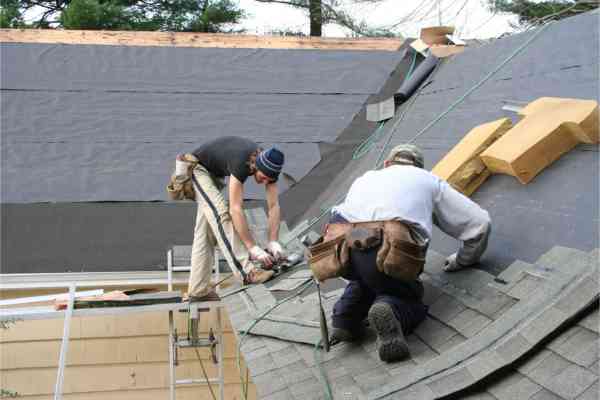
Staging and access shape the job as much as the membrane. Harlem’s dense streets rarely offer a generous laydown area; materials arrive by crane or hoist where the building allows, or by hand up the stairs where it does not, and the work has to be sequenced so residents keep water-tight cover every night. Protecting the top-floor ceilings during tear-off matters more than speed: a roof opened in the morning must be dried in by evening, whatever the forecast said at breakfast. Sidewalk protection, debris control and neighbour notification are part of the scope, not extras — a building’s relationship with its block survives the job only if the job respects the block. We plan the sequence with the managing agent before work starts, including working hours, elevator use where applicable and the contingency for a storm mid-tear-off.
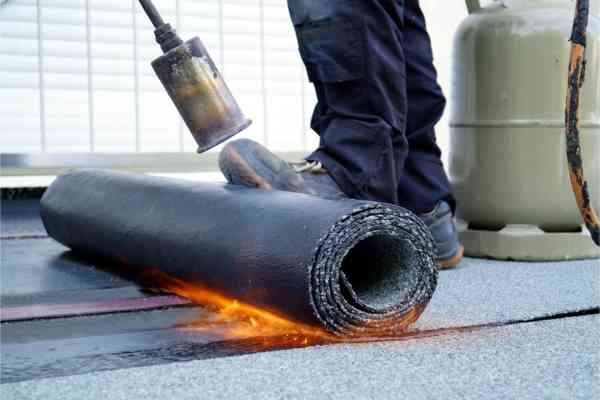
System choice follows the building, not the catalogue. Many Harlem apartment roofs are modified bitumen or built-up membranes that have been patched and coated for decades; where the deck and insulation are sound, a new membrane system over prepared substrate is the straightforward answer. Where the existing roof is a torch-applied system at the end of its life, torch down roofing replacement in kind keeps the detailing the building already knows. And where the roof is finished entirely — saturated insulation, failed deck, chronic ponding that no drainage correction can fix — new roof installation from the deck up, with corrected falls and new drainage, is the honest scope. We show the board which of those three situations their building is actually in, with the photographs to prove it, before quoting any of them.

Every Harlem roof conversation eventually reaches the same fork: repair what is there, or replace it. The honest answer depends on three things, and only three: the membrane’s remaining life, the condition of what lies beneath it, and whether the roof’s drainage can be made to work. A membrane with local failures — a seam here, a flashing there — on a dry deck with sound insulation is a repair candidate, and a good repair buys years. A membrane that is brittle across the field, or a deck that is soft, or insulation that is saturated across wide areas, is not: patching it is spending the replacement budget in instalments, with a leak between each one. We measure and photograph all three before recommending either path, because the difference between a small repair and a full replacement should never rest on a guess.
Age alone is a poor guide. A well-built flat roof, maintained and recoated, can outlive its nominal lifespan; a neglected one can fail in half of it. What matters is the roof’s actual condition: seam integrity across the field, flashing condition at every junction, drainage performance in a real storm, and core samples where the evidence is ambiguous. We also weigh the building’s plans — a roof due for a rooftop addition, solar, or a deck in two years should not get a full replacement today, and a roof already scheduled for replacement should not absorb a costly repair that the new membrane will tear off. The sequence matters as much as the scope, and we say so plainly when it does.
Costs depend on scope, access and system — a brownstone roof and a six-storey apartment roof are different jobs, and any contractor quoting either without inspecting is guessing. What we promise instead is a written scope: what will be repaired or replaced, what materials and detailing, what the work includes and excludes, and what happens if the tear-off reveals more damage than the survey showed. Star Construction INC has worked on homes and buildings across the New York area since 2018, and our roof work in Harlem follows the same rule as everything else we do: inspect first, explain honestly, then quote. If your building is deciding between repair and replacement, request a free, no-obligation estimate — and see the areas we serve on our service areas page.
Our clients value the consistency, structural precision, and long-term performance we deliver on every project, from initial planning through final execution.

 Jav V
Trustindex verifies that the original source of the review is Google.
Got my bathroom remodel Team was professional on time Thank you Ever fernando Perez saldañaCrear Word
 LUIS CAYOi hire them for my home project. and everyting went smoothly. no delays
 Shahid IqbalVery reliable contractor. They did exactly what they promised and the quality was excellent. Would definitely recommend.
Contact us now to discuss your project and receive a no-obligation quote from our experts.
Every project is handled through a defined process that ensures accuracy, efficiency, and long-term structural performance from start to finish.
We begin by reviewing site conditions, understanding project objectives, and identifying structural requirements to establish a clear and practical direction before any work begins.
A detailed execution plan is developed, including material selection, sequencing of work, and coordination of labor to maintain consistency and avoid delays during construction.
Work is carried out using proven installation methods, with attention to structural integrity, proper reinforcement, and adherence to safety and quality standards.
A final walkthrough is conducted to verify workmanship, resolve any outstanding details, and ensure the completed project meets performance expectations and durability standards.
Ask a Harlem building owner where the roof leaks and they will point at the ceiling stain. Ask a roofer and they will walk to the edge of the roof. The parapet — the low wall that runs around the roofline of nearly every brownstone and pre-war apartment house in the neighbourhood — is where roof and wall meet, and it is where both trades’ responsibilities blur. Water that enters at the parapet junction shows up inside as a damp patch on the top-floor wall, a stain near the outside wall, peeling paint a room in from the facade. It looks like a masonry problem. It is very often a roofing detail problem, and treating the wrong one wastes the repair budget twice: the wall gets repointed while the flashing keeps leaking, or the roof gets patched while the coping keeps feeding water in. The inspection has to cover the whole assembly — brick, mortar, coping, flashing and the membrane’s upstand — before anyone decides what to fix.
That is why this section sits inside a roofing page rather than beside it. On Harlem’s buildings the parapet is not an accessory to the roof; it is the roof’s edge condition, and its condition decides whether a new membrane will stay dry. A sound membrane terminated against a failed parapet leaks at the junction within a season. Conversely, a parapet in good repair with failed flashing still leaks. When we inspect a Harlem roof we photograph the parapet as carefully as the field, because the honest quote is the one that names the junction as part of the job. Where the wall itself needs masonry work — repointing, coping replacement, stone repair — our masonry contractors in Harlem carry it out as part of the same scope, so the roof edge is repaired as one assembly rather than two trades pointing at each other.
The flashing detail is where the craft concentrates. Roof flashing repair and replacement at a parapet means a membrane or metal upstand carried high enough up the wall, a counterflashing or reglet that actually sheds water over it, and joints sealed with materials that move with the seasons instead of cracking in the first winter. It is unglamorous, hidden work — nobody admires a parapet flashing — but it is the difference between a roof that dries and a roof that keeps staining ceilings. The four points below are what we check, in order, on every Harlem parapet junction.
The parapet’s cap is its first defence and its first failure. Coping stones are meant to shed water clear of both faces of the wall; when their joints open, their bedding cracks or a stone shifts, water runs straight into the wall’s core and down behind the membrane upstand. The mortar below the coping goes next — freeze-thaw opens the joints, and an open joint at the top of a wall feeds every course beneath it. We check coping alignment, joint condition and bedding before anything else, because a roof edge repair that leaves failed coping in place is a repair with its cause still installed.
The membrane must turn up the parapet wall and be protected by a counterflashing that sheds water over the upstand, not behind it. On older Harlem roofs we commonly find upstands that end too low, counterflashings that were never chased into the wall, and sealant doing the job that metal or membrane should do — sealant that has long since cracked. A failed junction here leaks into the top-floor wall even while the roof field is perfectly sound, which is exactly why it gets misdiagnosed as a masonry leak. Renewing the flashing detail, with proper height, proper laps and proper terminations, cures a large share of Harlem’s stubborn ceiling stains.
Sometimes the parapet wall itself has had enough: mortar washed out through its full depth, brick faces spalling, a lean that shows the wall is moving. No flashing detail fixes a wall that is failing structurally, and repointing a wall that needs partial rebuilding only buys a season. The honest read separates the two: repointing and new coping where the wall is sound, partial or full rebuilding where it is not. Because this is masonry work as much as roofing work, it is scoped with the masonry side of the team and priced as one job, not discovered halfway through a roof replacement.
Parapet work has an order, and getting it wrong wastes money. Masonry repair and repointing come first, then coping, then the membrane upstand and flashing, then the field — so each layer is protected by the next rather than buried under it. Waterproofing the parapet’s inner face and any through-wall flashings comes with the same sequence, not as an afterthought coat. Done in that order, the roof edge becomes the driest part of the roof instead of its weakest, and the next inspection finds a junction that is holding rather than a stain that has moved one room further in.
It depends on the system and the maintenance, not the calendar alone. A well-built modified bitumen or built-up roof that is inspected, kept clear at drains and scuppers, and recoated or repaired promptly at seams and flashings commonly serves 20 to 30 years; a neglected one can fail in half that time. The honest measure is condition: seam integrity, flashing condition, drainage performance and whether the insulation below is dry. A roof that is sound across the field has years left regardless of its age, and a roof that is brittle and saturated does not, whatever the warranty paperwork once promised.
Because the entry point and the stain are rarely in the same place — and near the outside wall, the parapet junction is the prime suspect. Water entering at failed coping, open mortar joints or deteriorated flashing at the roof edge travels along the deck, down the wall cavity or across a ceiling before gravity finally shows it, often a room or two inside from where it got in. That is why a ceiling stain near the perimeter wall should trigger an inspection of the parapet and roof edge first, not just a patch over the stain. Repointing the parapet, renewing coping and flashing, and only then repairing the field membrane is the sequence that actually stops this leak.
Often it can be repaired — if the failures are local and what lies beneath is sound. Seam repairs, new flashing at a junction, a drain correction or a local membrane patch on a dry deck are legitimate repairs that buy years. Replacement becomes the honest answer when the membrane is brittle across the field, the insulation is saturated over wide areas, or the deck itself is deteriorated; at that point patching spends the replacement budget in instalments, with a leak between each one. The decision should rest on an inspection with core samples where the evidence is ambiguous, not on age or on a contractor’s preference — and any quote should state plainly which of the two jobs it is.
In phases that keep the building watertight every night. Materials arrive by crane or hoist where the building allows, or by hand where it does not; the roof is opened in sections, never all at once, and each section is dried in before work stops for the day. For apartment buildings the sequence is agreed with the board or managing agent first — working hours, sidewalk protection, debris control, elevator use where applicable and neighbour notification — because a dense block notices a roof job. Costs depend on scope and access, and the schedule should include a weather contingency: a roof opened in the morning must be watertight by evening, whatever the forecast said at breakfast.
It depends on the scope. A full roof replacement in New York City generally involves Department of Buildings filings, and the contractor or filing representative handles the paperwork for the building’s scope; work on a landmarked building or in a historic district can also need Landmarks approval for visible changes. Minor repairs — a seam repair, a flashing patch, clearing a drain — usually do not require a permit. Before work starts, the scope should be clear about which filings apply, who makes them, and how long they take, so the schedule is built on reality rather than hope.