
Hastings-on-Hudson roofs are working roofs on a hillside. The village’s pre-war houses stand steep and tall above the Hudson, their pitches shedding river weather fast, their valleys and dormers catching it where the planes meet, their brick chimney stacks taking the west wind on every face. A roof here does not fail in the middle of a slope; it fails at the details — a flashing line opened a quarter inch, a valley sealed instead of woven, a slate course cracked by a limb the canopy dropped in October.
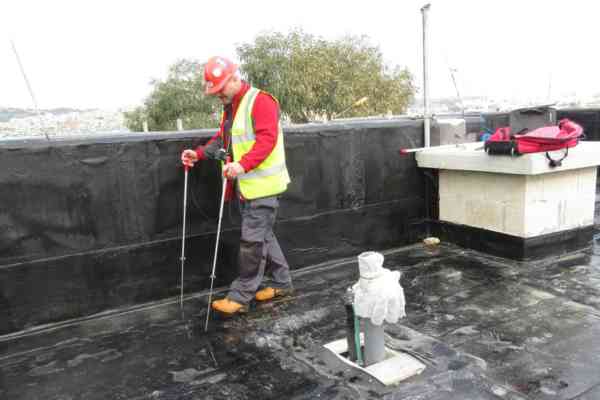
Our roof repair and installation contractors start on the roof itself, slope by slope, because a Hastings roof cannot be honestly quoted from the street. We inspect the field, the flashings, the valleys and the gutters, photograph what we find, and explain which slopes have life left and which are spending it. Shingle roof repair and replacement is the village’s most common roofing work, and roof flashing repair and replacement is the work that most often saves a roof that was about to be replaced for the wrong reason.
Professional roof repair means fixing the roof as a system, not patching the symptom. A leak’s stain rarely sits under its cause: water travels along decking, rafters and underlayment before it shows itself indoors, so the repair begins with tracing the water’s path, not with sealing the stain. The roofer strips back the shingles around the suspect detail, reads the underlayment and flashing beneath, and replaces what has actually failed — a flashing line, a valley weave, a course of shingles, a section of rotted deck — before the roof is closed up again.
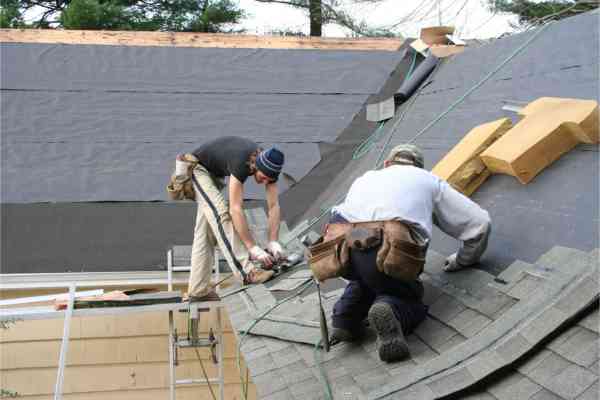
Installation, by contrast, is the whole roof done in order: tear-off to the deck, repair of any damaged decking, ice-and-water membrane at the eaves and valleys, underlayment, starter courses, field shingles or slate, ridge and hip caps, and flashings woven in as the courses rise rather than applied on top afterward. A roof repair and installation contractor who works in that order gives a Hastings roof its best chance against river weather, because the details that fail first are the details that were built first.

If your Hastings-on-Hudson roof is showing its age — a stain that appears after wind-driven rain, shingles lifting on a steep slope, a slate course that no longer sits flat, gutters that overflow every October — the honest next step is an inspection on the roof itself, not a quote from the ground. We will walk every slope, photograph the details that matter, and tell you plainly what is repair, what is replacement, and what can wait.
Request a free, no-obligation estimate from Star Construction INC, and we will inspect, photograph and explain what we find before any work is quoted. The full list of areas we serve is on our service areas page.
Our clients value the consistency, structural precision, and long-term performance we deliver on every project, from initial planning through final execution.

 Jav V
Trustindex verifies that the original source of the review is Google.
Got my bathroom remodel Team was professional on time Thank you Ever fernando Perez saldañaCrear Word
 LUIS CAYOi hire them for my home project. and everyting went smoothly. no delays
 Shahid IqbalVery reliable contractor. They did exactly what they promised and the quality was excellent. Would definitely recommend.
Contact us now to discuss your project and receive a no-obligation quote from our experts.
Every project is handled through a defined process that ensures accuracy, efficiency, and long-term structural performance from start to finish.
We begin by reviewing site conditions, understanding project objectives, and identifying structural requirements to establish a clear and practical direction before any work begins.
A detailed execution plan is developed, including material selection, sequencing of work, and coordination of labor to maintain consistency and avoid delays during construction.
Work is carried out using proven installation methods, with attention to structural integrity, proper reinforcement, and adherence to safety and quality standards.
A final walkthrough is conducted to verify workmanship, resolve any outstanding details, and ensure the completed project meets performance expectations and durability standards.
A sound roof in Hastings-on-Hudson pays back in ways that go beyond keeping rain out. Properly flashed valleys and chimneys stop the slow leaks that rot decking and stain ceilings two rooms away from the cause. A well-ventilated, well-shingled slope sheds the river’s wind-driven rain and the winter’s ice instead of holding it. And because a roof here is judged slope by slope, money spent on the slopes that have actually failed buys years, while money spent on a whole-roof replacement a roof does not yet need buys nothing. The sections below explain where that value shows up on a hillside home.
Hastings roofs are steep because the village is steep. The pre-war houses step down their lots, and their roofs follow: high pitches, intersecting planes, dormers punched through the front slopes, and brick chimney stacks that rise well above the ridge and take the west wind on all four faces. That geometry is beautiful and it is demanding — every intersection is a flashing detail, every steep plane sheds water faster but also drives it harder at the valleys, and every stack is a masonry structure that the roofing must seal to, not merely abut.
Where a chimney’s brickwork or crown has itself failed, the roofing repair alone will not hold, and the honest sequence is masonry first, flashing second — which is why our masonry contractors in Hastings-on-Hudson are often the first call on a roof that leaks at a stack. The roof and the chimney are one weather system, and they are repaired as one.
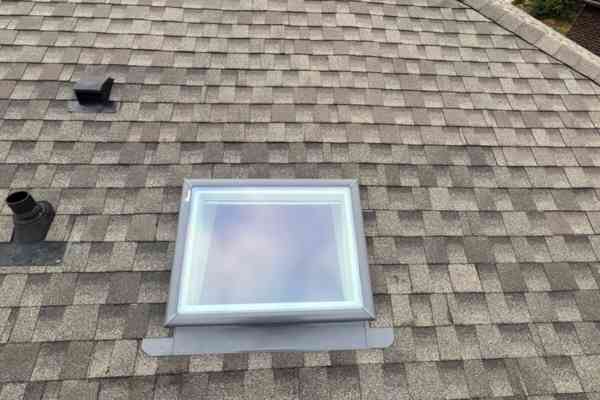
Most Hastings roof leaks are not roof failures at all — they are flashing failures wearing a roof’s clothing. The stain on a bedroom ceiling usually traces back to a chimney flashing that has lifted, a valley where the weave has opened, a dormer cheek where the step flashing was never properly woven, or a skylight curb whose flashing has given up. The field of the roof, the broad shingled slopes, is the last place water gets in, because it is the part of the roof with the fewest joints.
That is why roof leak detection and waterproofing starts inside and works outward: the stain’s position, the rafter bay it sits in, the slope above it, and only then the detail on the roof that could have let the water in. A skylight leak repair follows the same logic — the skylight itself is rarely the culprit; its flashing and curb are. Sealing the stain’s ceiling or caulking over a flashing buys a season at most; tracing the path and rebuilding the detail buys the roof’s remaining life.
Hastings carries both of the village’s roofing generations at once. Slate still covers some of the oldest houses, and it rewards repair in kind: individual slates can be replaced, hooks and nails renewed, and a slate roof that has lost a few courses to a fallen limb can be brought back without disturbing the courses that have another fifty years in them. Slate fails one piece at a time, and it should be repaired one piece at a time.
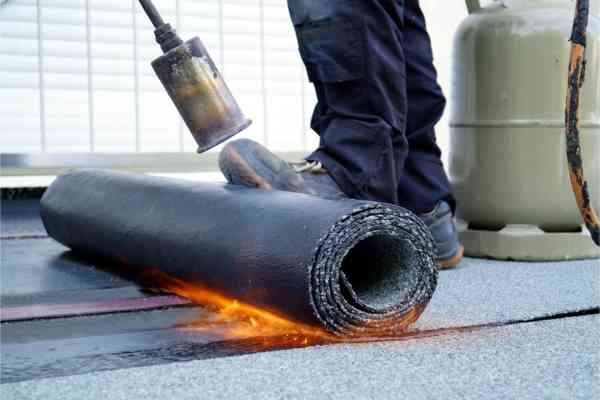
Asphalt shingle is the village’s workhorse, and its repairs are different: lifted or creased shingles replaced, valleys rewoven, flashing lines rebuilt, and whole slopes re-shingled when the granule loss and curling say the slope is done. When the honest assessment is replacement, a new roof installation is done slope by slope in the order that keeps the house weather-tight every night of the job — never stripped further than the crew can close before dark.
Hastings is a canopy village, and a canopy village has a gutter problem before it has a roof problem. The mature trees that shade the north slopes keep them damp and mossy, and they fill the gutters by October — which means water that should have left the roof at the eave instead backs up under the first courses, overflows into the fascia, and finds its way behind the siding. A roof inspection here that does not include the gutters is half an inspection.
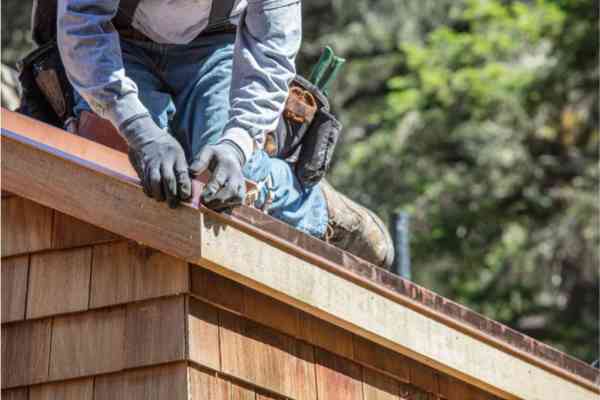
Our gutter and downspout work is therefore part of roofing work in Hastings, not an add-on: gutters sized to the roof they serve, pitched to drain, kept clear, and discharging where the hillside carries the water away from the house rather than toward its foundation. The river’s damp air will always test a Hastings roof; the gutters decide how long the test lasts.
Yes, in most cases. Slate is a piece-by-piece roof, so individual broken, slipped or missing slates can be replaced, along with the hooks or nails that hold them, without disturbing the sound courses around them. A slate roof comes off only when the failure is systemic — widespread delamination, a rotted deck beneath, or fasteners failing across whole slopes. The honest answer comes from walking the roof and counting: a handful of failed slates is a repair; slopes failing everywhere is a replacement, and the cost follows that distinction.
Because wind-driven rain does not fall straight down — it is pushed sideways, uphill and under laps that shed ordinary rain perfectly well. A flashing detail that is sound against vertical rain can admit wind-driven rain at its uphill edge, a valley can be overwhelmed when the wind drives water across it, and a chimney flashing can leak only when the wind comes off the river from the west. A leak that appears only in certain storms is telling you the failure is directional, which is exactly the information a roofer uses to find it: the storm’s direction points to the slope and the detail.
In a river climate like Hastings-on-Hudson, architectural asphalt shingles typically last around twenty to twenty-five years, with the shaded, damp slopes aging faster than the sunny ones. The range depends on ventilation, the quality of the original installation, and how promptly small failures — lifted shingles, open flashings — were repaired along the way. A shingle roof that has lost most of its granules, curls across whole slopes, or leaks repeatedly at different details is telling you its service life is spent, and the cost of replacement depends on the roof’s size, pitch and material.
A full roof replacement generally does need a village permit in Hastings-on-Hudson, while like-for-like repairs — replacing damaged shingles, re-flashing a chimney, repairing a valley — generally do not. The distinction is the scope: work that changes the roof’s structure, decking or material generally requires approval, and work that restores the existing roof generally does not. It is worth confirming the category with the village building department before a replacement begins, so the job is not delayed mid-tear-off.
Many can. Flashing repairs, caps, gutter work and urgent weather-tightening proceed in most weather, and a leak that is letting water in should not wait for spring. Mortar work and adhesive-dependent repairs are the exception: shingles seal poorly in deep cold, and mortar must cure rather than freeze, so those jobs are either staged — make the roof weather-tight now, complete the mortar or sealing work in the first mild spell — or scheduled for a warmer window. A roofer who promises a full re-shingle in a January freeze without explaining the sealing problem is selling a date, not a roof.