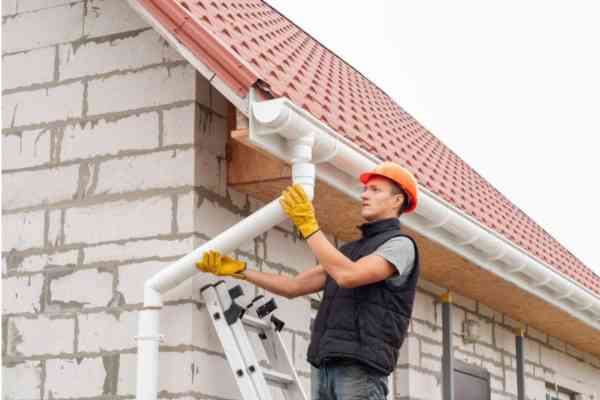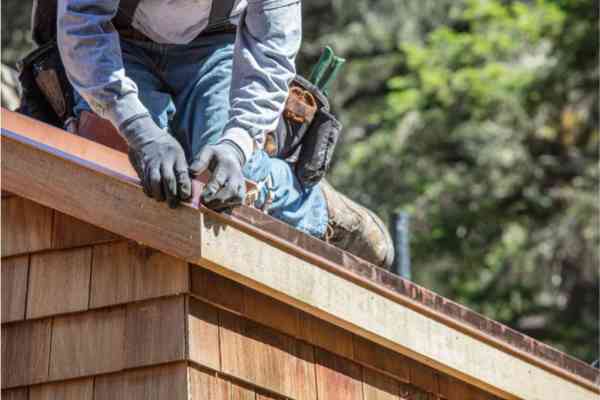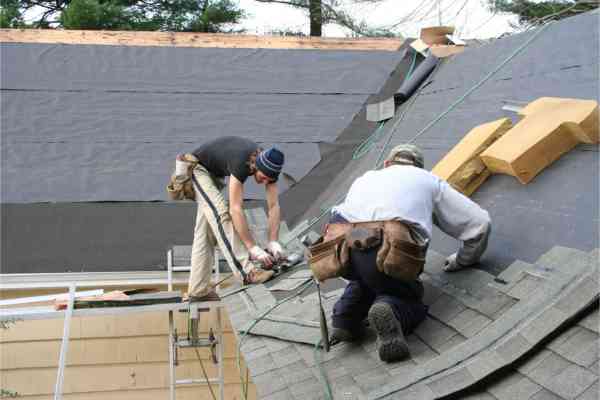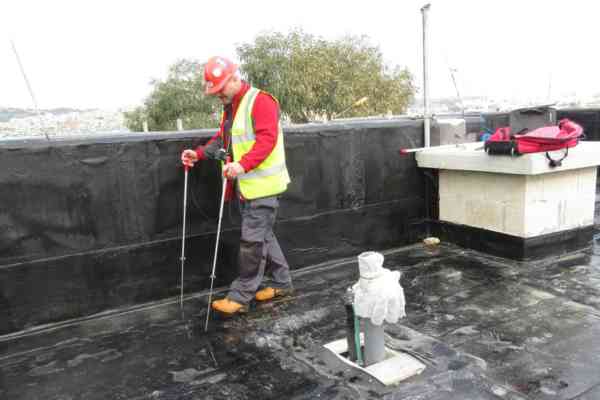

Our roof repair and installation contractors bring the same slope-by-slope discipline to Queens that the parent service is known for: pitched shingle work on the borough’s houses, flat-roof work on its garden apartments and multi-family buildings, and the flashing, valley and drainage details that decide whether either one stays dry. A roof is a system, not a surface — shingles, underlayment, flashing and gutters all have to work together, and we repair and replace them as a system.
Where a roof meets masonry — at a chimney, a parapet or a party wall — that junction is often where the leak starts, which is why our roof work is planned alongside masonry contractors in Queens when the job calls for it. One crew’s flashing is only as good as the other crew’s mortar joint, so we scope the junction together.
Professional roof repair and installation is the work of keeping a building dry from above: diagnosing where water actually enters, repairing what has failed, and replacing what has reached the end of its service life. On a pitched house roof that usually means shingles, underlayment, flashing and ventilation working as one system; on a flat roof it means the membrane, seams, flashing and drainage working as one. The diagnosis matters more than the material — a new roof over an unflashed chimney junction will leak exactly where the old one did.
Our shingle roof repair and replacement and flat roof installation and repair crews work from an on-roof inspection, not a street-level guess, and the estimate names what will be repaired, what will be replaced, and what can honestly wait.

If you are looking for roofers who start on the roof — not at the curb with binoculars — Star Construction INC is the team to call for Queens houses and buildings. From a single flashing repair to a full flat-roof replacement on a multi-family building, we inspect, photograph and explain before we quote. See the full list of neighborhoods and services on our service areas page, and request a free, no-obligation estimate to get started.
Our clients value the consistency, structural precision, and long-term performance we deliver on every project, from initial planning through final execution.

 Jav V
Trustindex verifies that the original source of the review is Google.
Got my bathroom remodel Team was professional on time Thank you Ever fernando Perez saldañaCrear Word
 LUIS CAYOi hire them for my home project. and everyting went smoothly. no delays
 Shahid IqbalVery reliable contractor. They did exactly what they promised and the quality was excellent. Would definitely recommend.
Contact us now to discuss your project and receive a no-obligation quote from our experts.
Every project is handled through a defined process that ensures accuracy, efficiency, and long-term structural performance from start to finish.
We begin by reviewing site conditions, understanding project objectives, and identifying structural requirements to establish a clear and practical direction before any work begins.
A detailed execution plan is developed, including material selection, sequencing of work, and coordination of labor to maintain consistency and avoid delays during construction.
Work is carried out using proven installation methods, with attention to structural integrity, proper reinforcement, and adherence to safety and quality standards.
A final walkthrough is conducted to verify workmanship, resolve any outstanding details, and ensure the completed project meets performance expectations and durability standards.
Queens roofs reward the same discipline in both worlds: diagnose first, then repair or replace only what the inspection justifies. A pitched roof that is re-shingled over failed flashing will leak again at the same junction; a flat roof that is patched without fixing its drainage will pond again in the same corner. The benefit of a proper job is not a new surface — it is a roof that stops being a recurring problem.
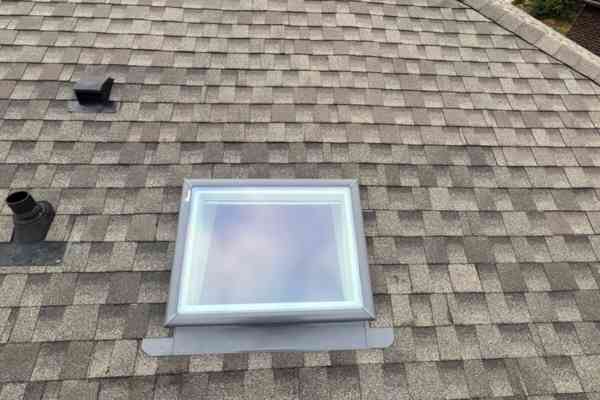
Most Queens houses wear asphalt shingles, and their leaks almost never start in the middle of a slope. They start where the roof changes direction or meets something else: dormer cheeks, valleys, chimney flashings and skylight curbs. A dormer that leaks only in wind-driven rain is a flashing problem, and it is fixed by reflashing the junction properly — the same lesson our guide to dormer leaks describes — not by smearing sealant over it. Our roof flashing repair and replacement work treats those junctions as the roof’s most important details.
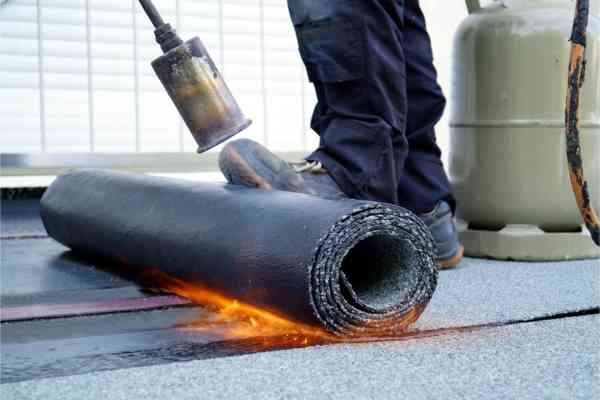
Flat roofs over garden apartments, co-ops and extensions fail quietly: water ponds where the drainage has settled, seams open at the laps, and the membrane blisters where moisture was trapped underneath. Our flat roof installation and repair work starts with the drainage — scuppers, drains and pitch — because a new membrane over a roof that still ponds is a repair with a short memory.
Water rarely shows up where it gets in. A stain two rooms from the roof edge, a damp patch that appears only in wind-driven rain — tracing those back to the entry point takes an on-roof inspection: following the slope, checking the junctions uphill of the stain, and testing the flashing lines. Our roof leak detection and waterproofing work finds the entry before it is repaired, so the repair actually stops the leak instead of moving it.
Not every aging roof needs replacing, and not every leaking roof can be saved by a patch. We judge remaining life slope by slope: the south-facing slope may be done while the shaded north slope has years left, and a flat section may need only its drainage corrected. Where a new roof installation is honestly the cheaper sentence over the next decade, we say so — and where a targeted repair buys real years, we say that too.
It comes down to age, extent and pattern. A roof with localized damage — a failed flashing, a few lifted shingles, one soft flat section — is usually a repair. A roof where the shingles are curling and losing granules across whole slopes, the decking is soft in several places, or repairs have already been layered over repairs is usually at replacement age. An on-roof inspection settles it; a quote from the ground does not.
Because they are junctions, not fields. A dormer cheek is where a wall meets a slope, and a valley is where two slopes meet — both concentrate water and both depend on flashing rather than shingles to stay dry. When the flashing fails, or was never properly stepped into the wall, water enters at exactly those lines, which is why dormer and valley leaks return after surface-level fixes.
Sometimes — if the ponding is shallow, the membrane is otherwise sound, and the drainage can be corrected with tapered insulation, additional drains or re-pitched scuppers. If the ponding is deep, the membrane is blistered or split, or the deck beneath has softened, patching buys a season at most and a proper re-roof with corrected drainage is the honest answer.
In Queens, a well-installed architectural shingle roof typically lasts around two decades, give or take — sun exposure, ventilation and storm history move the number in either direction. A roof that is losing granules heavily, curling at the edges or leaking at multiple unrelated points is telling you it is near the end, whatever the calendar says.
Roof replacement in New York City generally requires a Department of Buildings permit, and the work must comply with the city’s code requirements for the building type. Like-for-like repairs are usually simpler. We confirm the permit position for the specific building before work starts.