For most New York property owners, the repair-versus-replacement question comes down to three things: how old the roof is compared with its expected lifespan, how widespread the damage is, and what the long-term math looks like. As a rule of thumb, a roof under 15 years old with isolated, localized damage is usually a repair candidate, while a roof past 20 to 25 years with problems across multiple areas almost always costs less to replace than to keep patching year after year.
This guide explains the warning signs on both sides of that decision, what roof work typically costs across New York, how the region’s freeze-thaw winters should influence your timing, and the special considerations that apply to the flat roofs so common on New York City buildings. It also covers how building type, co-op and condo boards, and Department of Buildings (DOB) permit questions can change the plan for a New York roof.
How Long Should a Roof Last in New York?
Every roofing material has an expected service life. In New York, hot summers, nor’easters, heavy snow loads, and relentless freeze-thaw cycling tend to push roofs toward the shorter end of these ranges, which is why a roof’s age relative to its material matters more than its age alone:
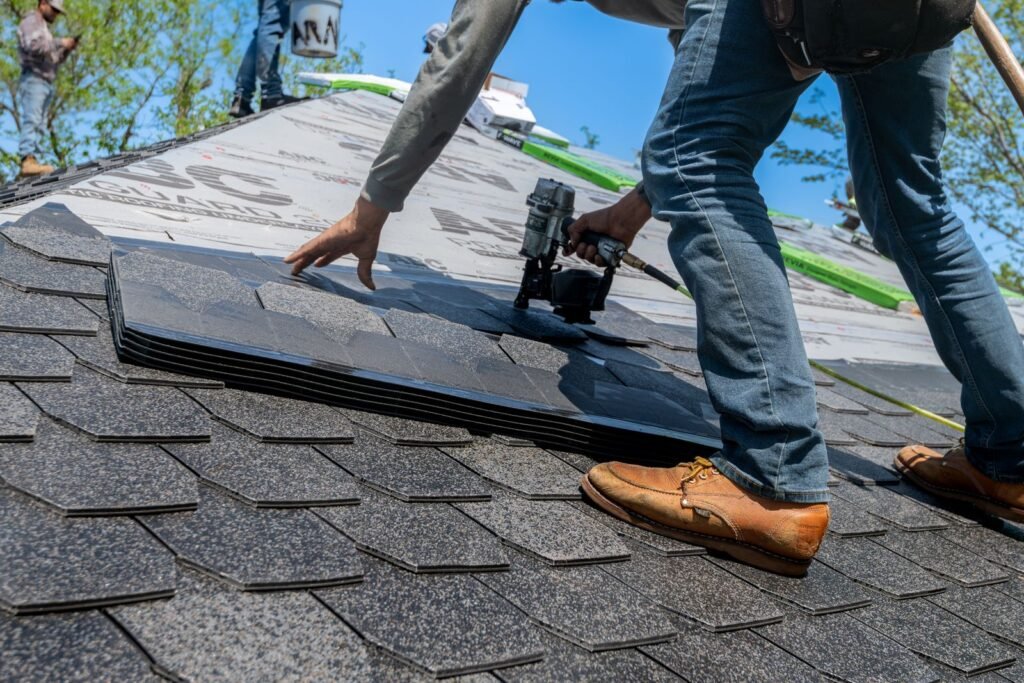
- Asphalt shingles: 20-25 years for architectural shingles; 15-20 for basic three-tab shingles. The most common residential roofing across Westchester, Queens, and Long Island.
- Flat roof membranes (EPDM, TPO, modified bitumen): 20-30 years with proper maintenance. Standard on most NYC rowhouses, apartment buildings, and commercial properties.
- Metal roofing: 40-70 years. Excellent against snow and ice, increasingly popular in the Hudson Valley and suburban counties.
- Slate and clay tile: 50-100+ years for the material itself, though flashings and fasteners usually need attention far sooner.
- Wood shingles and shakes: 20-30 years, shorter in damp, shaded exposures.
If you do not know your roof’s age, check building permit records, ask a home inspector, or have a roofing contractor assess its condition. The material’s wear tells its own story to a trained eye.
Signs Your Roof May Only Need Repairs
Repairs make sense when the roof system as a whole is still sound and the problem is confined. It is worth calling for a roof repair and installation assessment if you notice:
- A few missing, cracked, or lifted shingles after a windstorm, with the surrounding field still flat and well adhered.
- A small, contained leak traceable to a single flashing point, such as a chimney, vent pipe, or skylight curb.
- Minor flashing separation or a single failed pipe boot on a roof under 15 years old.
- Damage confined to one slope, or to one small area of a flat roof membrane.
- Granule loss that is light and even, with shingles still lying flat and flexible.
The key test: the roof is comfortably within its expected lifespan, and the issue has a clear, limited cause. A proper repair then buys you the remaining years the roof was designed to deliver.
Signs It’s Time for a Full Replacement
Replacement is the honest answer when the roof is failing as a system rather than at a single point:
- Age: the roof is at or past its material’s expected lifespan. For asphalt shingles in New York, typically 20-25 years.
- Widespread wear: curling, cupping, or clawing shingles across multiple slopes; heavy, uneven granule loss; shingles that crack when touched.
- Recurring leaks: new leaks appearing in different spots, or the same leak returning after professional repairs.
- Daylight or sagging: light visible through roof boards in the attic, or a deck that feels soft or sags between rafters. Both signal structural involvement.
- Moss and algae takeover: extensive growth that has worked its way under shingles, common on shaded exposures in the Bronx and Queens.
- Storm history: a roof that has weathered multiple major nor’easters may be exhausted even if it looks intact from the ground.
When two or more of these are true, especially age plus widespread wear, replacement is almost always cheaper over the next decade than a cycle of escalating repairs.
Roof Repair vs Replacement: Side-by-Side Comparison
Here is how the two options compare across the factors that matter most to New York property owners:
| Factor | Repair | Replacement |
|---|---|---|
| Upfront cost | Lower, a fraction of replacement | Higher, a major capital project |
| Added service life | Extends the current roof’s remaining years | Resets the clock with a full new lifespan |
| Disruption | Usually a day or less, minimal mess | Several days of tear-off noise, debris, and dumpsters |
| Best when | Roof is young and damage is localized | Roof is old and wear is widespread |
| Energy efficiency | No meaningful change | Opportunity to upgrade ventilation, insulation, and reflective materials |
| Resale impact | Neutral, expected maintenance | Strong positive, a new roof is a top buyer-confidence factor |
What Roof Work Costs in New York
Costs vary widely with roof size, pitch, access, and material. A walkable Queens rowhouse roof and a steep Westchester colonial are different jobs. As general New York market ranges, not any one contractor’s fixed prices:
- Minor repairs (a few shingles, a small flashing fix, a single pipe boot): roughly $500-$1,500.
- Major repairs (valley rebuild, chimney flashing replacement, a partial flat-roof section): roughly $1,500-$5,000.
- Full asphalt shingle replacement: roughly $450-$750 per square (100 square feet), putting most single-family homes in the $9,000-$22,000 range.
- Flat roof replacement (EPDM, TPO, or modified bitumen): roughly $8-$14 per square foot.
- Metal or slate: substantially more, often two to three times the cost of asphalt.
These are market ranges only. The exact figure for your property depends on measurements, deck condition, how many layers must come off, and site access. Any honest estimate starts with an on-site inspection, which is why reputable contractors offer free estimates rather than firm quotes over the phone.
How New York Building Type Changes the Decision
The same roof age can mean different things on different New York buildings, so read the signs above through the building you actually own. On a Brooklyn or Queens rowhouse, the roof is often flat, shared in effect with neighboring parapets and party walls, and reached only through a bulkhead or hatch, so access, drainage, and parapet condition carry as much weight as the membrane itself. On a pre-war apartment building, a roof project may be part of a wider envelope plan that also touches masonry, coping, and bulkheads, and the work has to be sequenced so residents, common areas, and neighboring roofs are protected. On a suburban single-family home in Westchester or Long Island, pitch, valleys, skylights, and tree cover matter more, and a steep or cut-up roof can raise both repair complexity and replacement cost even when the material is ordinary asphalt.
Co-op and condo buildings add another layer. Roof work there is commonly a building-level decision rather than a single owner’s choice, and the board, managing agent, and building engineer may all have a say in scope, timing, and contractor requirements. If you own a top-floor unit, a leak over your apartment does not automatically mean you control the roof above it, so start by confirming who owns and maintains that roof, what approvals are needed, and how the work will be documented. Owners weighing interior work at the same time can read our guide to co-op and condo renovation board approval in NYC for how board review generally works in these buildings.
Co-op Boards, Access, and DOB Permits in New York City
Before you choose repair or replacement in New York City, check the permissions that apply to your building, because they can affect schedule and scope more than the roofing material does. Many co-op and condo boards require written approval for exterior work, and they commonly ask for contractor insurance information, a scope of work, work hours, and protection plans for common areas and neighbors. Buildings with shared roofs may also need coordination with adjacent owners where parapets, party walls, or drainage are shared. Getting that paperwork started early avoids a roof that is ready to be repaired but cannot legally be accessed on the planned dates.
On the city side, whether a DOB permit is required depends on the scope of work, the building, and the applicable code provisions, so do not assume a small repair and a full tear-off are treated the same way. A like-for-like repair may be handled differently from a replacement that changes structure, decking, drainage, or rooftop equipment, and landmark or special-district buildings can face additional review. Ask your contractor, in writing, which permits and filings they expect for your exact scope, and confirm that question before work is scheduled rather than after materials arrive. That one check protects both the schedule and the resale file for the building.
How New York Weather Should Factor Into Your Decision
New York winters punish marginal roofs. Freeze-thaw cycling works water into tiny cracks and expands them with every cycle; ice dams back meltwater up under shingles at the eaves; and a single nor’easter can peel back shingles that looked fine in October. A roof that is borderline in September rarely survives January unchanged, and emergency winter work means premium pricing and weather delays.
That makes fall the ideal season for a clear-eyed assessment: deal with a questionable roof before the first freeze instead of reacting to midwinter leaks. Spring is the second-best window, after winter has exposed the roof’s weaknesses and before summer heat makes tear-offs grueling. For flat roofs, watch the same cycle at drains and scuppers, because a drain clogged with leaves in autumn becomes ponding water in winter, and ponding water becomes ice, membrane stress, and leaks at seams.
Flat Roofs: A Special Case in New York City
Much of New York City, rowhouses in Brooklyn and Queens, tenements in Manhattan and the Bronx, wears flat or low-slope roofs, and the repair-versus-replace logic has its own wrinkles. Ponding water that stands for more than 48 hours, an alligatored or blistered membrane, and failed seams are the flat-roof equivalents of curling shingles. For an aging but fundamentally sound flat roof, roof coating systems can be a legitimate middle path, a reflective elastomeric coating that extends membrane life at a fraction of replacement cost, though no coating can save a saturated or structurally compromised deck. Our flat roof installation and repair page covers the membrane options in detail.
Don’t Forget the Parapet
On NYC buildings, the roof decision often extends to the parapet, the low masonry wall ringing the roof edge. Parapets take the same weather beating as the roof surface, and deteriorated mortar or loose coping can undermine an otherwise sound roofing project. If your building has parapets, have their condition assessed alongside the roof; our parapet wall repair and installation services cover repointing, coping, and rebuilds as part of a complete roofline restoration. Owners with a cracked parapet should also read our cracked parapet wall repair guide for NYC, since parapet movement and roof leaks often appear together.
Frequently Asked Questions
How do I know if my roof needs repair or replacement?
Consider the roof’s age against its expected lifespan and how widespread the damage is. Localized damage on a roof under 15 years old usually means repair; age past 20-25 years with wear across multiple areas usually means replacement. A professional inspection settles borderline cases.
How much does a roof replacement cost in New York?
As a general market range, asphalt shingle replacement runs roughly $450-$750 per square (100 sq ft), or about $9,000-$22,000 for a typical single-family home; flat roofs run roughly $8-$14 per square foot. Exact pricing depends on size, pitch, deck condition, and access. An on-site estimate is the only way to get a firm figure.
Can a roof be repaired in winter in New York?
Emergency repairs can be done in winter, but cold complicates the work. Shingles turn brittle and sealants cure slowly. Fall is the best season for planned roof work in New York, with spring as the second-best window.
How long does a roof replacement take?
Most single-family homes take two to five days depending on size, pitch, and weather; larger or more complex roofs, slate, and tile take longer. A contractor should give you a written schedule before work begins.
Will a new roof lower my energy bills?
It can. Replacement is the right moment to improve attic ventilation and insulation and to choose reflective materials or coatings, all of which reduce summer cooling loads, a real benefit during New York heat waves.
Does a co-op or condo board need to approve roof work in NYC?
Often, yes, for building-level roof work. Start by asking the managing agent what approval, insurance, and documentation the board requires, and confirm who owns the roof above a top-floor unit before assuming an individual owner can authorize the job. Board review can add time, so build it into the schedule, especially before winter.
Does roof replacement in NYC need a DOB permit?
It depends on the scope. A full replacement, structural change, or change to drainage or rooftop equipment is more likely to involve permits or filings than a small like-for-like repair, and landmark buildings may face extra review. Ask your contractor to state, in writing, which permits they expect for your exact scope.
How is a flat roof on a NYC rowhouse different from a pitched roof?
A flat roof lives or dies by drainage, seams, and parapet condition rather than by shingles shedding water down a slope. Ponding water, blistered membrane, failed seams, and deteriorated coping are the warning signs to watch, and a coating can extend a sound membrane but cannot rescue a saturated deck.
Star Construction INC provides roof repair and installation across New York City, Long Island, and Westchester, from targeted repairs and protective coatings to complete tear-off replacements. Contact us for a free, no-obligation estimate, or call +1 (516) 998-4133 to discuss your roof.