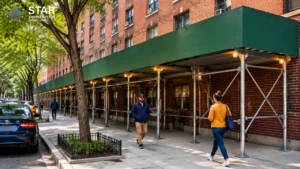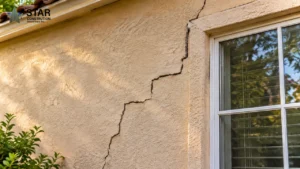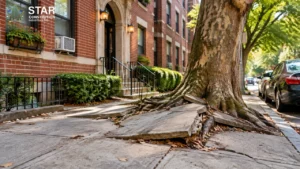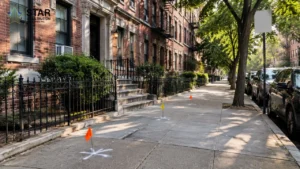
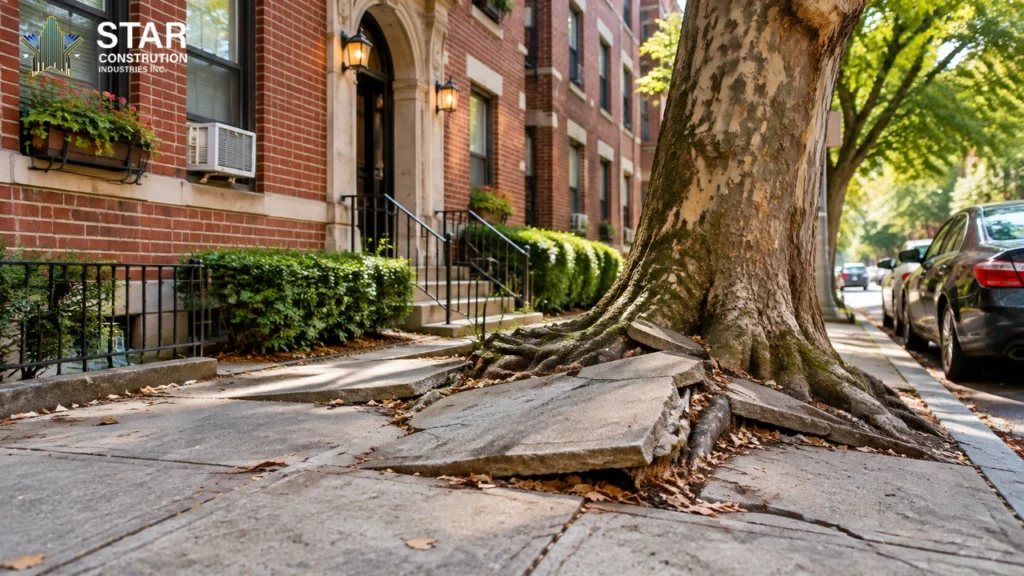
Walk any mature street in the northern Bronx and you will see the same quiet standoff: a street tree doing exactly what street trees do, and a sidewalk slowly losing the argument. In front of the North Side’s pre-war apartment buildings and brick houses, big old trees shade the walk in summer and, underneath it, their roots spread toward the water and air they need. The confusion starts with ownership. In New York City the tree in the pit usually belongs to the city, while the sidewalk flags around it belong to the adjoining property owner to maintain. One living thing, two owners, and a slab caught between them — that split is why a lifted flag raises a question nobody can answer with a single phone call.
How Roots Lift a Sidewalk
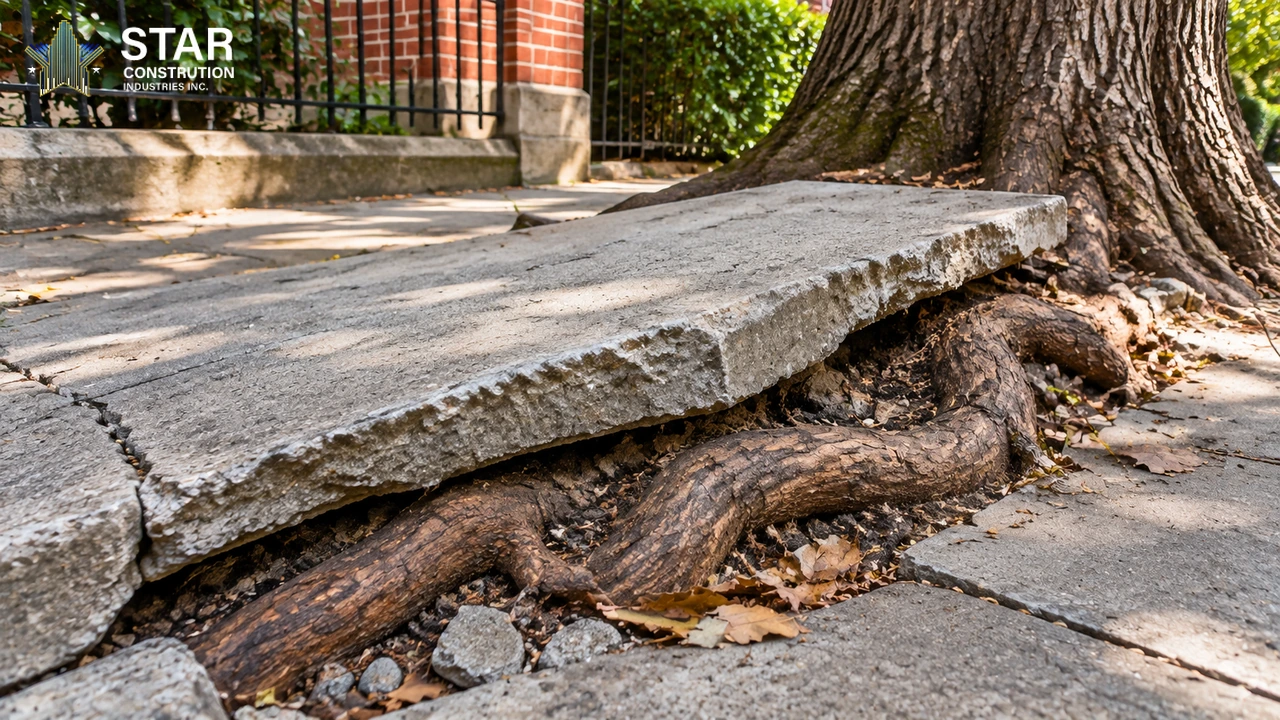
A tree’s roots do not attack a sidewalk. They grow where conditions are best: moist, loose soil with air in it, which is exactly what sits under a concrete flag after decades of watering, rain and thaw. A root as thin as a pencil finds its way under the slab, and then it does the only thing roots do — it thickens, season by season, year by year. The slab above it has nowhere to go but up. First the joint opens a crack of daylight. Then one corner rises a fraction of an inch. Then the flag tilts, the crack widens, and the raised edge becomes a trip hazard that catches shoes, strollers and canes. The process is slow enough that owners often do not notice it until a neighbor mentions it or a notice arrives, and it is one-directional: roots do not shrink back, so a lifted flag never settles itself. Winter makes it worse, because water in the opened joint freezes, expands and pries the crack a little wider each year.
Who Is Responsible for What in NYC
The general rule in New York City is straightforward, even if it feels unfair the first time you hear it: the property owner is responsible for maintaining and repairing the sidewalk adjoining their property, including flags lifted by street-tree roots. The tree itself is a different matter. A city street tree is the city’s tree, and work on the tree — pruning, cutting roots, removal — goes through NYC Parks. An owner cannot simply take a saw to a street tree’s roots, both because the tree is public property and because careless root cutting can kill a tree that shades the whole block or make it unstable in a storm. In practice this means two parallel jobs: the sidewalk repair is arranged by the owner, and anything involving the tree itself is coordinated with the city. Our sidewalk and driveway contractors in North Side see this split on nearly every root-lifted walk they inspect, and the smoothest jobs are the ones where both sides of it are handled in the right order — the tree question first, the concrete second. None of this is legal advice, and the details of any particular property can vary; but the shape of the responsibility is the same across the five boroughs.
The Repair Options, Smallest First
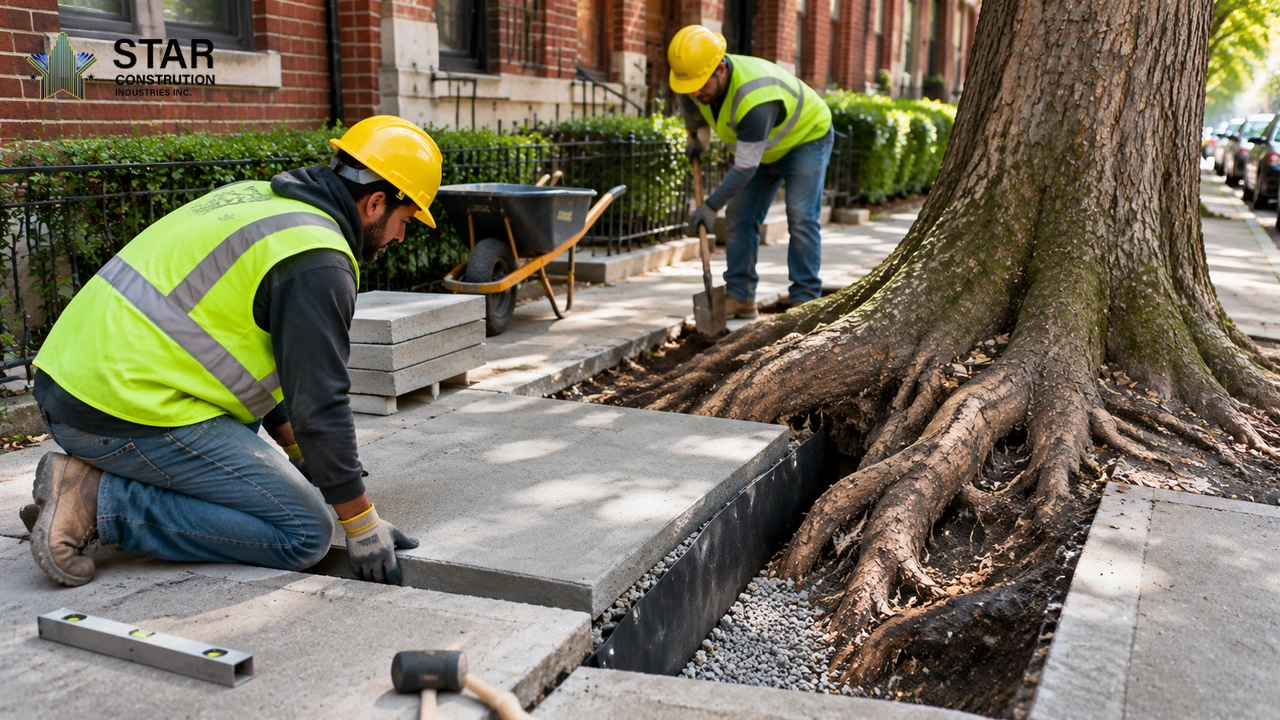
Not every lifted flag needs the same answer, and the honest approach starts with the smallest fix that is actually safe. A small lip can sometimes be ground or ramped down to a smooth, flush edge — a reasonable holding repair when the lift is slight and the root underneath is not still actively pushing. When the root itself is the problem, the repair has to involve the root, carefully: selective root pruning done in a way that keeps the tree healthy, carried out with the city’s coordination where a street tree is involved, can buy a level flag years of peace. The most durable fix is usually a new flag built with room for the roots — a slightly raised or bridged section, or a root barrier that guides future growth downward instead of under the slab. Our concrete repair and installation contractors in North Side judge each flag on its own: grinding a lip that is still rising only postpones the replacement, while replacing a flag without dealing with the root underneath guarantees a repeat performance. And when a raised flag has already drawn a DOT violation notice, the owner repairs it and the city re-inspects — a repair never guarantees a particular outcome, and our NYC sidewalk violation guide walks through that process step by step.
Keeping It From Happening Again
A repair that ignores the roots only buys a season or two, so the lasting part of the job is what happens around the new concrete. A root barrier — a rigid panel set vertically between the tree and the walk — deflects new roots downward, below slab level, instead of letting them run straight under the flag. Giving the tree pit more room helps too: a cramped pit forces roots outward under the walk, while a larger soil volume lets them spread where they do no harm. Where a flag has been bridged or slightly raised, the grade still has to shed water toward the street, not pond against the building. None of these measures makes a sidewalk root-proof forever — a mature tree keeps growing, and the walk will need watching — but they change the rhythm from a repair every few years to a walk that stays level for a long stretch. The cheapest long-term habit is the simplest: walk your frontage once a season, look at the joints, and catch the next lift while it is still a grinding job rather than a replacement.
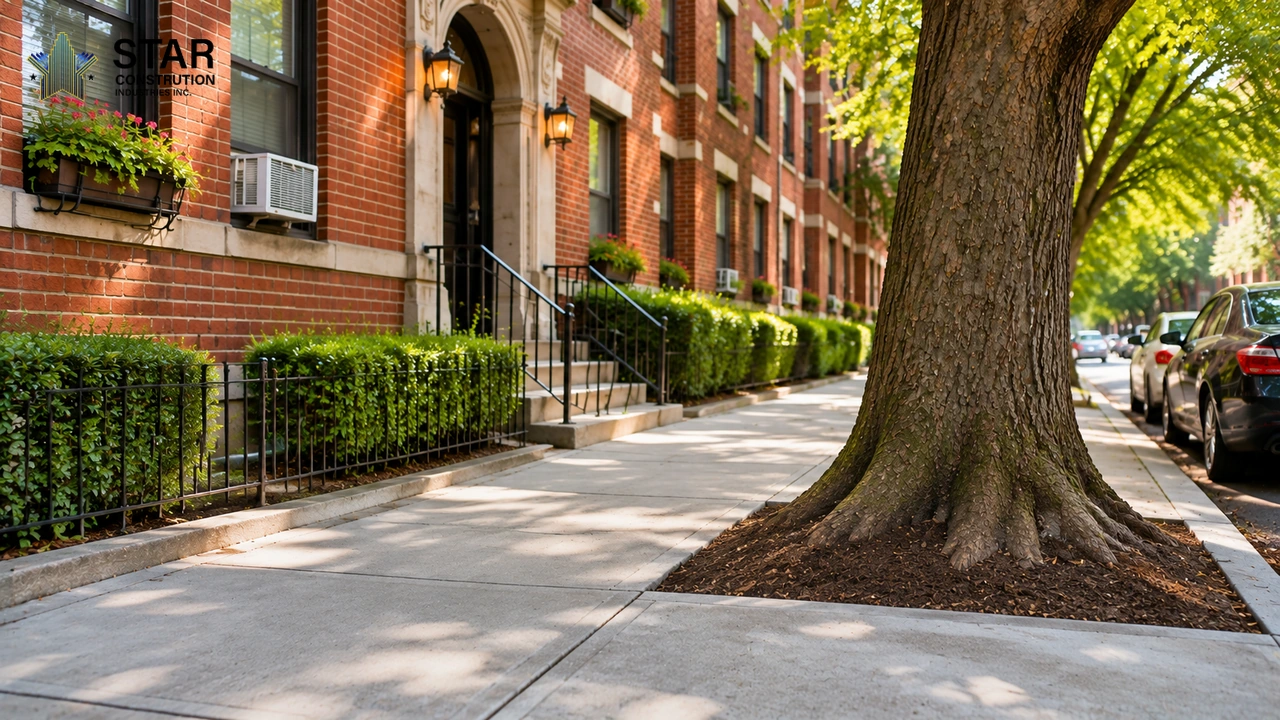
Star Construction INC has repaired sidewalks across New York City since January 2018. If a street tree has lifted the walk in front of your building or home, request a free, no-obligation estimate and we will inspect the flags and the roots, explain which repair fits, and coordinate the tree side of the job properly. The areas we cover are on our service areas page.
Frequently Asked Questions
Can I cut the roots of a city street tree myself?
No — not on your own. A city street tree belongs to the city, and work on it goes through NYC Parks. Cutting roots without coordination can damage or destabilize the tree and can leave the owner liable for harm to public property. The sidewalk repair is the owner’s job; the tree work is coordinated with the city, and a contractor handling the repair should help arrange that side of it.
Who pays when a city tree lifts my sidewalk?
In general terms, the adjoining property owner pays for the sidewalk repair, even when a city tree caused the lift — that is how sidewalk responsibility works in New York City. The city owns and manages the tree itself, but the flags are the owner’s maintenance responsibility. Costs depend on how many flags are affected and which repair method fits, so an inspection comes before any firm figure.
How big a raised edge can be ground down instead of replaced?
Only a small lip. Grinding works when the rise is slight and the root underneath is not still actively pushing the slab up. Once the edge is high enough to catch a shoe, or the flag is cracked through or still moving, grinding leaves a thin, weakened edge that will fail again — replacement is the honest fix at that point.
Will the roots just lift the new sidewalk flag too?
They will if the repair ignores them. A new flag poured over the same roots, with no barrier and no room given to the tree, is likely to lift again within a few seasons. A lasting repair deals with the root — careful pruning coordinated with the city, a root barrier guiding growth downward, or a bridged section — and that is what separates a repair from a repeat.
Do I need a permit to replace sidewalk flags in NYC?
In general, yes — sidewalk work at the public walk involves city permits and approvals that are arranged before work starts. A contractor who regularly does sidewalk work will normally handle that paperwork as part of the job, and it is worth confirming who is arranging it before any concrete is broken up.