
Our concrete work in North Side starts where the building meets the street. The sidewalk flags in front of pre-war apartment buildings take the borough’s heaviest everyday use, and when they break, crack or lift, the result is a trip hazard — and, in New York City, a notice: the property owner is responsible for the sidewalk adjoining their property, and our DOT violation removal work clears the defects a notice names, flag by flag. We also handle the sidewalk repair and replacement that keeps a frontage sound before a notice ever arrives.
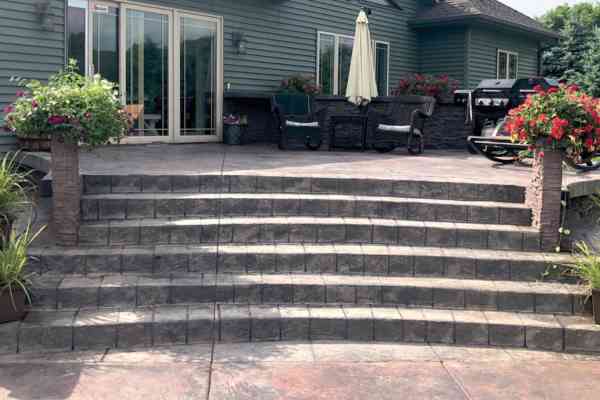
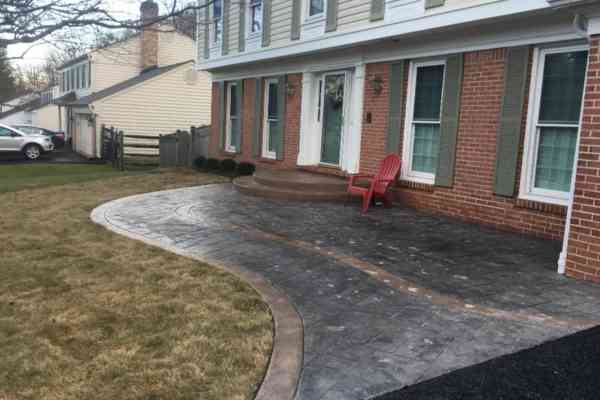
Beyond the frontage, the concrete that residents actually live on matters just as much: stoops and entry stairs rebuilt on proper footings, concrete steps and staircases that stay level through winters, garden-apartment walkways regraded so water runs off rather than pooling at doorways, and patios and walkways that give shared courtyards a surface worth using. Detached homes get driveway installation and apron work graded to the street, and older pours get honest concrete resurfacing and repairs where the slab is sound enough to save.
That judgment — repair or replace, slab by slab — is the same discipline our masonry contractors in North Side bring to brick and stone, and it follows the same rule: never dress up a failed slab. Learn more about our parent service on our concrete repair and installation page.
Concrete repair and installation is the work of keeping the flatwork of a building sound — the sidewalk flags, stoops, walkways, patios, driveways and aprons that everyone uses and nobody thinks about until they fail. Repair means judging each slab on its own: grinding a lifted edge that is still sound, lifting and re-bedding a settled flag, patching spalled areas, repointing joints. Installation means new pours built to last — a proper compacted base, control joints cut where the slab wants to crack, drainage graded away from the building, and a finish suited to the traffic it will take.
In North Side the work has a city dimension the suburbs do not: in New York City the property owner is responsible for the sidewalk adjoining their property, so a broken or lifted flag is not just a nuisance but a liability and, eventually, a DOT notice. That is why our first visit is an inspection, not a quote — we walk the frontage and the grounds, mark what is failed and what is sound, and explain the difference before any price is discussed.

If the flags in front of your building are broken, the stoop is settling, or the walkways between buildings have become a patchwork of patches, talk to Star Construction INC before the next winter makes the decision for you. Request a free, no-obligation estimate and we will walk the property with you, mark the slabs that can be saved and the ones that cannot, and explain the options in plain terms. See all the areas we serve on our service areas page.
Our clients value the consistency, structural precision, and long-term performance we deliver on every project, from initial planning through final execution.

 Jav V
Trustindex verifies that the original source of the review is Google.
Got my bathroom remodel Team was professional on time Thank you Ever fernando Perez saldañaCrear Word
 LUIS CAYOi hire them for my home project. and everyting went smoothly. no delays
 Shahid IqbalVery reliable contractor. They did exactly what they promised and the quality was excellent. Would definitely recommend.
Contact us now to discuss your project and receive a no-obligation quote from our experts.
Every project is handled through a defined process that ensures accuracy, efficiency, and long-term structural performance from start to finish.
We begin by reviewing site conditions, understanding project objectives, and identifying structural requirements to establish a clear and practical direction before any work begins.
A detailed execution plan is developed, including material selection, sequencing of work, and coordination of labor to maintain consistency and avoid delays during construction.
Work is carried out using proven installation methods, with attention to structural integrity, proper reinforcement, and adherence to safety and quality standards.
A final walkthrough is conducted to verify workmanship, resolve any outstanding details, and ensure the completed project meets performance expectations and durability standards.
Reading the Concrete — the North Side’s flatwork in four parts, starting at the street. The sidewalk flags and vaulted sections in front of older buildings are the most public concrete in the borough: wide runs of flags, some over old vaults and areaways, all of them carrying foot traffic, deliveries and winter salt. They fail in a recognizable order — a corner chips, a joint opens, a flag settles or lifts on a root — and each stage has its honest fix. Grinding takes down a sound lifted edge; lifting and re-bedding resets a settled flag; replacement is for the flag that is broken through, spalled across its face, or undermined below. What never works is a thin skim over a failed flag — it buys one winter, then breaks up under the same feet.
Every North Side building is entered over concrete, and that concrete takes the worst of the weather: de-icing salt tracked in all winter, water pooling where a tread has settled, freeze-thaw working at the nosing of every step. A stoop that rocks, a tread that has cracked through, or a run whose railings have loosened at their pockets is not cosmetic — it is the building’s most-used structure failing. Repair means replacing the failed tread or section, not smearing it; rebuilding means a new run on a proper footing, with drainage at its base so the next winter starts from dry.
Garden apartments share their outdoor space, and their walkways show it: paths that link buildings, courtyards and parking areas, often poured decades ago with little thought to drainage. They settle into birdbaths that freeze in winter, crack where roots run beneath, and edge into lawns that creep over them. The fix is usually sectional — replace the failed lengths, regrade so water leaves the path, and keep the joints open so the next freeze has somewhere to go — which keeps the whole complex walkable without tearing up ground that is still sound.
Detached brick homes in North Side usually have one short driveway and one apron where it meets the street — and that apron takes abuse out of proportion to its size: cars turning across it daily, plows catching its edge, and the city’s street trees lifting it from below. Aprons are also the one piece of private concrete that meets the public road, so a settled or broken apron draws attention fast. Replacement is usually the honest call here, poured to the street’s grade with a clean joint at the curb, so water runs to the gutter instead of back toward the garage.
North Side winters do their damage through a simple mechanism: water enters the concrete’s pores, freezes, expands, and pops the surface — scaling — a little more each year, while de-icing salt accelerates the cycle and stains what it does not break. Freeze-thaw damage is the reason a walk that looked tired in October looks wrecked in March. The defenses are unglamorous and effective: a well-cured, air-entrained mix on new pours, joints that are sealed before winter, drainage that keeps water from standing on the slab, and salt used sparingly rather than by the bucket. None of it is a coating that promises a miracle — it is maintenance, done on time.
A DOT sidewalk violation notice means the city has recorded defects in the sidewalk adjoining the property — broken or cracked flags, a trip edge, improper slope — and the owner is responsible for having them repaired. The notice names the defects; it does not by itself set a fine. The honest sequence is: get the flagged defects surveyed, have the broken flags replaced (grinding only where the flag is sound and the lift is small), and keep the paperwork — photos, permits and contractor records — for the re-inspection. The city re-inspects and decides whether the violation is dismissed, so no contractor can promise that outcome; what we can promise is that the named defects are repaired properly, flag by flag.
It depends on how far the flag has lifted and whether it is still sound. A small lift on a sound flag can be ground down to remove the trip edge. A moderate lift can sometimes be handled by lifting and re-bedding the flag at grade, or by root pruning done properly where the tree allows it — street trees in New York City belong to the city, so work around their roots has its own rules and should not be done casually. A flag that is broken through, tilted steeply or undermined needs replacing. Cost depends on how many flags are involved and whether the tree’s roots keep coming back, which we discuss honestly before quoting.
Vaulted sidewalks — flags laid over old basement vaults and areaways — need a structural look before anyone quotes. If the vault below is sound and the flag itself is the problem, the flag can often be replaced like any other. If the vault structure is deteriorating, the repair is bigger: the vault must be addressed, not just covered, because a new flag over a failing vault will fail again. We inspect from both sides where access allows and say plainly which case yours is before work starts.
Sealing is worthwhile on new concrete, but it is not magic. A penetrating sealer applied after the concrete has cured helps resist water entry, salt damage and staining, which is what slows scaling in North Side winters. How often depends on exposure — a sidewalk under heavy foot traffic and salt may want resealing every few years, while a sheltered patio goes longer. Sealing does not fix a slab that is already failing, and no sealer should be sold as a substitute for proper drainage and joints.
In general New York City terms, work on the public sidewalk — including repairs named in a DOT notice — involves city permits and coordination, and work that touches the street, curb or a vault needs the right approvals before it starts. Work wholly on private property, like a rear patio or a garden walkway, is usually simpler. We confirm what your specific job needs before quoting, so the permit question is answered up front rather than discovered mid-job.