Every winter, water does more damage to New York masonry than storms, age or settling combined — and it does it quietly, one freeze at a time. Brick, mortar and stone all absorb water. When that water freezes, it expands; when the same wall thaws and refreezes dozens of times between November and March, tiny cracks grow into spalled brick faces, crumbling mortar and leaning garden walls. This is freeze-thaw damage, and the good news is that it follows a pattern — which means it can be spotted early, repaired properly and largely prevented. Here is how it works, what it looks like on a house, and what to do about it.
What Is the Freeze-Thaw Cycle?
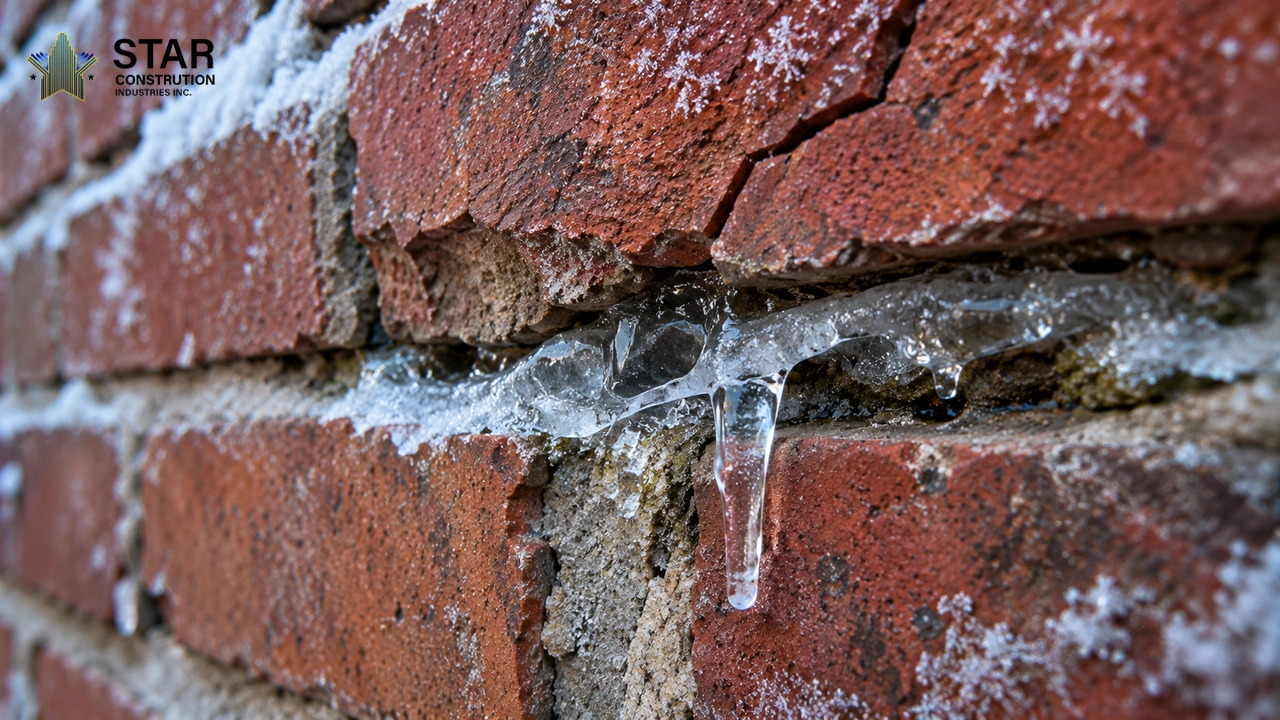
Masonry is porous. A brick can hold a surprising amount of water, and mortar joints — the weakest and most exposed part of any wall — absorb rain and melting snow readily. When temperatures drop below freezing, that trapped water turns to ice and expands by roughly a tenth of its volume. The pressure pries the material apart from the inside: a hairline crack in a mortar joint becomes a channel, the channel holds more water, and the next freeze widens it further. A New York winter delivers this cycle again and again — a wall on the shady side of a house, or one that catches afternoon sun after a freezing night, can freeze and thaw on the same day for weeks at a time.
Why Older Masonry Suffers Most
Houses built before the Second World War — the colonials, Tudors and brick homes of neighbourhoods like Larchmont Manor — were built with softer brick and lime-rich mortar that moved with the seasons. That original softness was a feature, not a flaw: the mortar was meant to be the sacrificial layer, weathering slowly so the brick did not have to. Problems start when the mortar finally wears back far enough to hold water against the brick, and they get worse when an old wall is repointed with a hard modern mortar that traps moisture inside the softer historic brick. The freeze-thaw cycle then attacks the brick itself. If your home’s masonry is original, the masonry contractors in Larchmont who assess it should talk about mortar compatibility before they talk about anything else.
The Signs of Freeze-Thaw Damage
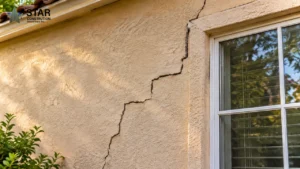
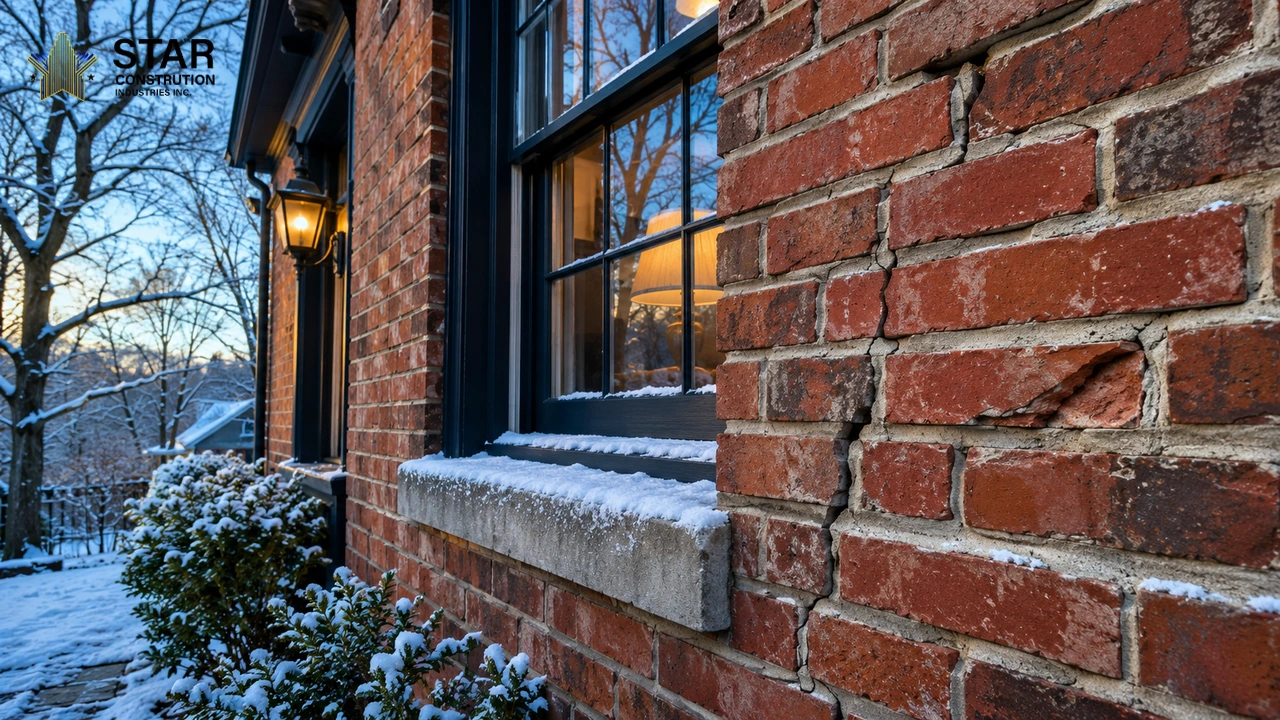
The damage announces itself in stages. First, mortar joints look recessed, sandy or cracked along their centres. Then brick faces begin to flake and pop — a defect called spalling, where the hard outer skin of the brick breaks away and the softer interior crumbles. Stone sills and coping stones split along their layers. White efflorescence blooms where water is travelling through the wall and evaporating. Inside, the same water shows up as damp patches and blown plaster on the room side of an exterior wall, usually worst in late winter. Garden walls and chimneys suffer fastest of all: they are exposed on every side, stay wet longest, and the chimney adds heat cycling from the flue to the freeze cycling of the weather.
Where It Strikes First on a House
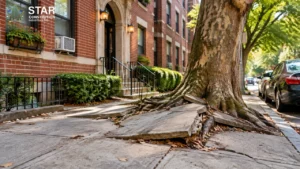
Freeze-thaw damage is not evenly spread. It concentrates where water lingers: parapets and chimney tops, the mortar joints just below window sills, north-facing walls that never dry in winter, the base of walls where snow piles up and splashes back, and any horizontal surface — coping, sills, steps — where meltwater can sit. Steps and stoops are a special case: water enters the joints, freezes, and lifts or rocks the treads, turning a cosmetic crack into a trip hazard by spring. Reading a house this way — wettest first — is how our masonry contractors in New York prioritise what needs repair now and what can simply be watched.

Repairing Freeze-Thaw Damage
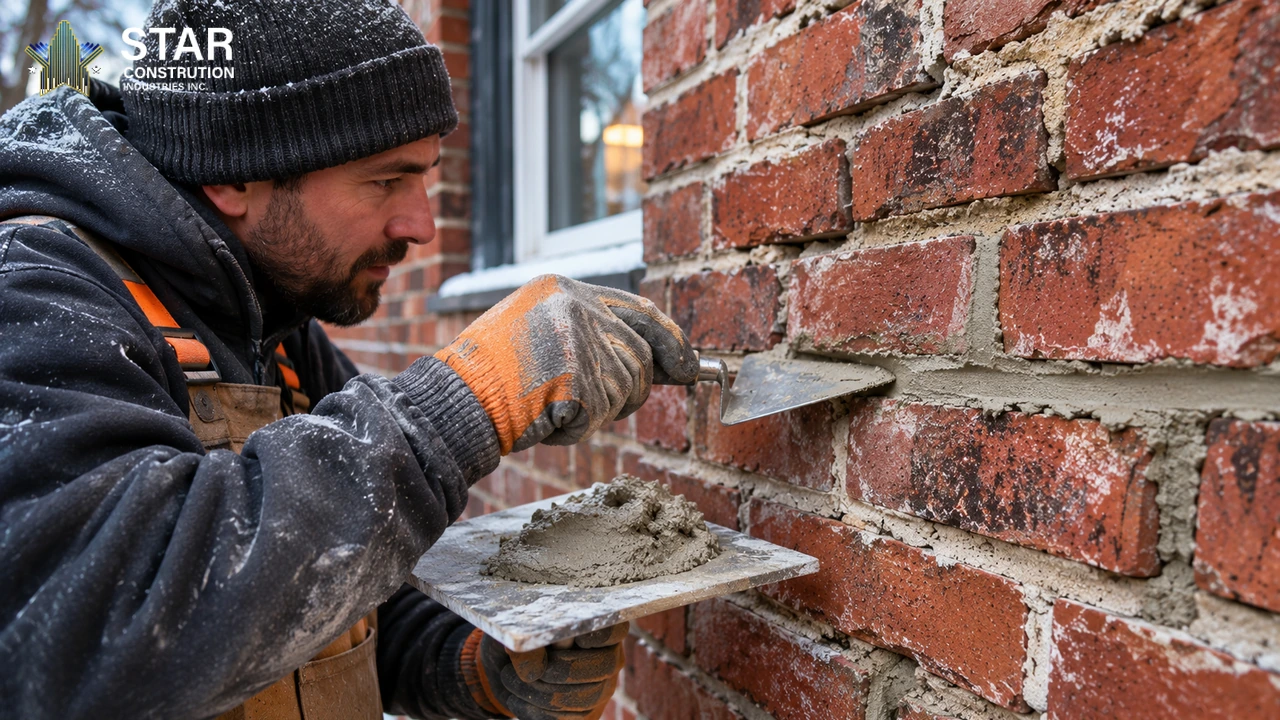
The repair depends on how far the cycle has got. Sound brick with worn mortar needs repointing: the damaged mortar is cut out to a proper depth and replaced with a mortar matched to the original in strength and composition — this is the single most effective freeze-thaw defence there is, and it is the core of proper brick pointing and repointing work. Spalled bricks are cut out and replaced with matching units, because a brick that has lost its face will keep absorbing water no matter what is smeared over it. Split coping and sills are replaced and re-flashed so water sheds instead of sitting. What does not work: hard cement smears over soft historic mortar, waterproof coatings that seal moisture in, and patching spalled brick with mortar — all three accelerate the damage they claim to fix.
Preventing Next Winter’s Damage
Prevention is mostly water management. Keep mortar joints sound — a repointing cycle on exposed elevations is far cheaper than brick replacement later. Make sure coping, flashing and caps shed water clear of the wall face. Keep gutters and leaders discharging away from masonry, and do not let snow pile against walls all winter where it can be helped. In autumn, walk the house and look for the early signs above; a joint that is open in October is a spall waiting for February. Star Construction INC has worked on homes across the New York area since 2018, and the pattern never changes: the houses that come through winter unscathed are the ones whose small defects got fixed in the autumn. If you are unsure what you are looking at, request a free, no-obligation estimate — we will inspect, photograph and explain the priorities. You can see the areas we cover on our service areas page.
Frequently Asked Questions
What is freeze-thaw masonry damage?
It is the cracking, flaking and crumbling of brick, mortar and stone caused by water freezing inside the material. Each freeze expands the trapped water and widens tiny cracks; repeated cycles over a New York winter gradually break the masonry down, starting with the mortar joints.
Which parts of a house does freeze-thaw damage hit first?
The wettest parts: chimney tops and parapets, mortar joints below window sills, north-facing walls, wall bases where snow piles up, and horizontal surfaces like coping stones and steps where meltwater can sit and freeze.
Can freeze-thaw damage be repaired?
Yes. Worn mortar is cut out and repointed with a compatible mortar, spalled bricks are replaced with matching units, and failed coping or flashing is renewed so water sheds properly. Caught early, repointing alone stops most freeze-thaw damage.
Why is hard modern mortar bad for old brick?
Historic brick is softer than modern mortar. A hard joint traps moisture inside the brick and forces the freeze-thaw pressure into the brick face, which spalls. The mortar should always be the softer, sacrificial layer.
When is the best time to fix freeze-thaw damage?
Autumn, before the cycles begin — open joints repaired in October cannot fill with water in January. Spring is the second-best time, when the winter’s damage can be assessed honestly. Emergency interior leaks should be looked at whenever they appear.