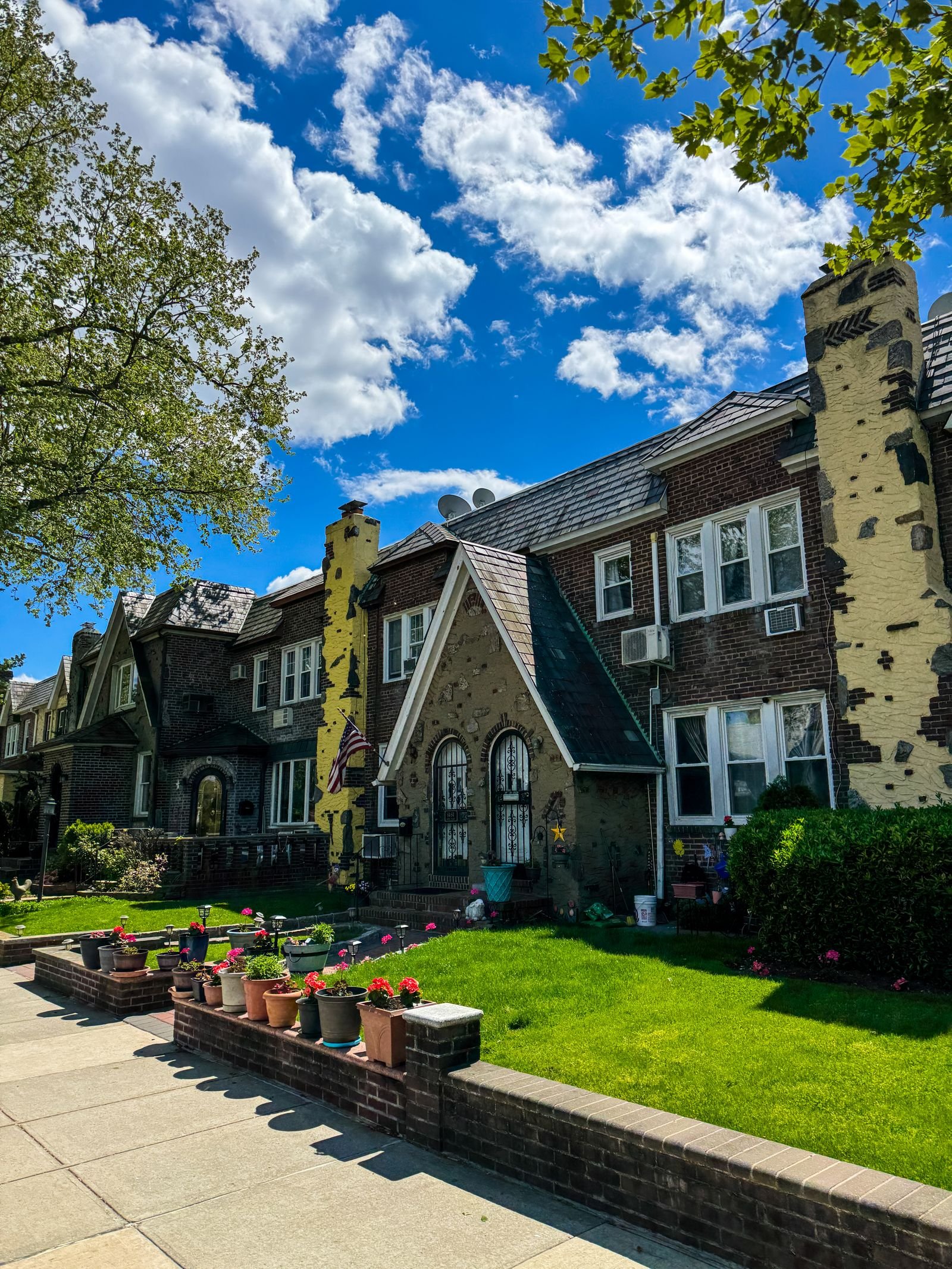
Our masonry contractors work across the North Side’s pre-war stock — the apartment buildings and co-ops near the reservoir, the garden apartments with their long brick elevations, and the detached brick homes whose stoops and retaining walls carry the area’s hilly streets. The common thread is age: lime-rich mortars, soft old brick, and stone that has spent decades in freeze-thaw weather. We repair in the material’s own tradition, because hard modern mortar against soft old brick simply moves the damage into the brick itself.
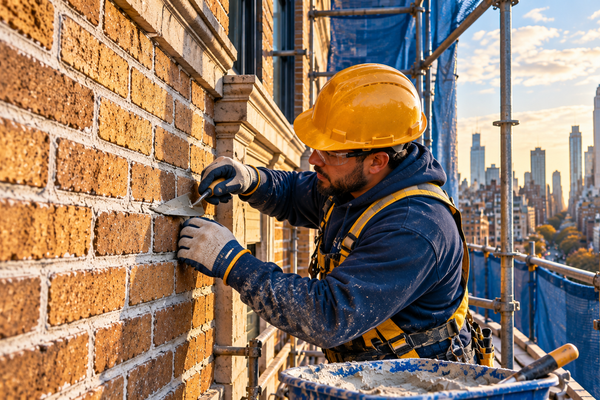
A typical North Side masonry job starts with a walk-around, not a quote. We read the joints, the lintels, the chimney crowns and the retaining walls, and separate the cosmetic from the structural before naming a price. Where brickwork repointing is what the wall needs, joints are cut out to sound depth and repacked with mortar matched in strength, color and sand. Where a wall is leaning or a chimney stack is failing, we say so plainly and price the rebuild honestly.
Many of the same pre-war buildings whose facades we repoint also come to us for apartment interiors — our interior renovation and remodeling contractors in North Side handle kitchens, baths and full apartment work in these buildings, so exterior and interior scopes can be sequenced as one plan.
Masonry work is the construction, repair and restoration of structures built from brick, stone and block — and on the North Side, most of it is repair. The borough’s northern edge was built in brick during the pre-war apartment boom, and a century of winters has done what winters do: mortar joints opened grain by grain, chimney crowns cracked, retaining walls asked to hold hillsides they were never drained for. Masonry repair restores the wall’s weather seal and its structure together — cutting out failed mortar, replacing spalled units, rebuilding what has lost its footing — so the building keeps standing straight and dry for its next century. It is slow, physical work that rewards patience: the repair that matches the original material lasts; the shortcut that fights it fails twice.

If you are searching for trusted masonry contractors near you in the North Side, start with an inspection, not a sales pitch. At Star Construction INC, we have served New York City building owners since 2018, and our North Side work is priced the same way it is done: after a walk-around, with photographs and a scope you can check. Request a free, no-obligation estimate and we will read your walls with you, elevation by elevation. The areas we cover are on our service areas page.
Our clients value the consistency, structural precision, and long-term performance we deliver on every project, from initial planning through final execution.

 Jav V
Trustindex verifies that the original source of the review is Google.
Got my bathroom remodel Team was professional on time Thank you Ever fernando Perez saldañaCrear Word
 LUIS CAYOi hire them for my home project. and everyting went smoothly. no delays
 Shahid IqbalVery reliable contractor. They did exactly what they promised and the quality was excellent. Would definitely recommend.
Contact us now to discuss your project and receive a no-obligation quote from our experts.
Every project is handled through a defined process that ensures accuracy, efficiency, and long-term structural performance from start to finish.
We begin by reviewing site conditions, understanding project objectives, and identifying structural requirements to establish a clear and practical direction before any work begins.
A detailed execution plan is developed, including material selection, sequencing of work, and coordination of labor to maintain consistency and avoid delays during construction.
Work is carried out using proven installation methods, with attention to structural integrity, proper reinforcement, and adherence to safety and quality standards.
A final walkthrough is conducted to verify workmanship, resolve any outstanding details, and ensure the completed project meets performance expectations and durability standards.
Reading the Wall — the North Side’s masonry in four parts. The North Side’s brickwork is not one problem but four, and each asks for a different repair. Repointing for the apartment elevations, careful brickwork for the garden apartments, structural masonry for the detached homes’ stoops and retaining walls, and winter discipline for all of it. The sections below take each in turn.
The North Side’s pre-war apartment buildings and co-ops carry long brick elevations that have rarely been repointed in full. Joints recessed a quarter inch or more, mortar sandy to the touch, and damp appearing indoors after wind-driven rain all say the wall’s weather seal has gone. Our brickwork repointing contractors cut failed joints out to sound depth and repack them with mortar matched to the original in strength, so it stays the sacrificial layer, and in color and sand, so the repair reads as the wall’s own. On occupied buildings the work is staged elevation by elevation, so residents are never left with an open wall overnight.
The garden apartments around the reservoir side of the North Side repeat the same brick details across long, low elevations — soldier courses, stone sills, entry surrounds — and the failures repeat with them. A failed detail copied across forty bays is not forty small problems; it is one systemic repair, priced once and done consistently. We match the brick and mortar across the whole run so the repaired elevation reads as one building again, not as a patchwork of visits. Where garden walls and planters belong to the same property, retaining walls and masonry planters are repaired in the same mobilization, since the same water and the same winters caused both.
Between the apartment blocks, the North Side’s detached brick homes carry the masonry a house shows first: the stoop, the retaining wall that holds the front grade, and the chimney stack above the roof. Stoop treads loosen as water works their joints; retaining walls lean as drainage behind them fails; chimney crowns crack and feed water into the stack all winter. Our chimney repair and rebuilding contractors rebuild crowns and top courses where the stack has earned it, and repoint where it has not. For retaining walls, the honest question is always drainage first — a wall rebuilt without it is a wall waiting to lean again — and our guide to retaining wall failure signs explains what to watch for.
The North Side sits at the borough’s cold edge, and its masonry pays for it. Water enters a joint in autumn, freezes and widens it in January, and thaws it open again by March — a cycle that turns a hairline into a missing joint in a few seasons. Freeze-thaw damage is the quiet engine behind most of the repointing we do here, and the defense is unglamorous: sound joints, sound crowns, flashing that moves water off the wall instead of into it, and repairs scheduled before the next freeze rather than after it. Masonry repaired in kind, before winter, is masonry that stops costing money.
Look at the joints: mortar recessed well back from the brick face, cracked, crumbling or sandy to the touch, damp appearing indoors after rain, and early stepped cracks at corners all say the joints have stopped sealing the wall. A mason can confirm how deep the failure goes, and whether repointing alone will restore the seal or whether units need replacing too.
It depends on how far the movement has gone and what caused it. A wall that has tilted slightly and still has a sound footing can sometimes be stabilized and drained, but a wall that is bowing, bulging or continuing to move usually needs rebuilding — with proper drainage behind it this time, since trapped water is what pushed it over in the first place. An inspection settles which side of the line a wall is on.
Usually, yes — closely enough that the repair disappears into the wall. Brick is matched by size, color and texture, and mortar by strength, sand and color; on the North Side’s pre-war stock, that often means a softer, lime-rich mix rather than a hard modern mortar. An exact match to a century-old, weathered unit is not always possible, but a good match reads as the building’s own work, not as a patch.
Many can — chimney crowns, caps, flashing work and urgent stabilization proceed in most weather — but mortar work needs temperatures that let mortar cure rather than freeze, so deep-winter repointing is often staged: make the wall weather-tight now, complete the mortar work in the first mild spell. We will tell you plainly which of your items can proceed and which should wait.
It depends on the scope. Like-for-like repairs — repointing, replacing individual units, rebuilding a chimney crown — are generally straightforward, while structural work, a rebuilt retaining wall, or changes to a building’s footprint generally need permits and, in some cases, an engineer’s input. We flag the permit question at the inspection stage so it never surprises the schedule.