How Much Does Stucco Repair Cost in New York? The Direct Answer
Stucco repair in New York typically costs $300 to $900 for minor crack and patch repairs, $1,200 to $3,500 for water-damage repairs where moisture has gotten behind the stucco, and $4,000 to $10,000+ for full resurfacing of a wall or elevation. Per square foot, professional stucco repair in the NY metro runs roughly $8 to $30 for traditional cement stucco. New York prices sit above the national average because skilled stucco crews are scarcer in the Northeast and labor rates run higher. Every home is different, so treat these as market ranges — the only way to know your number is a free on-site estimate. Call Star Construction INC at (516) 998-4133 and we’ll assess your stucco in person.
Stucco Repair Cost by Type of Damage (New York Ranges)
Not all stucco damage is equal, and the repair method — not just the size of the damaged area — is what sets the price. These are typical 2026 market ranges for the New York metro area, including Westchester, Queens, and Long Island:
| Repair type | What it involves | Typical NY range |
|---|---|---|
| Hairline crack repair | Cleaning, sealing, and blending hairline cracks under 1/8 inch | $300 – $800 |
| Patch / hole repair | Cutting out damaged sections, re-lathing, and re-coating small to medium areas | $300 – $900 |
| Staining / discoloration fix | Cleaning, sealing, and recoating stained elevations | $500 – $1,500 |
| Bulging / delaminated stucco | Removing separated stucco, repairing the substrate, reapplying coats | $800 – $2,500 |
| Water damage repair | Removing compromised stucco, replacing lath and paper, drying and rebuilding the wall section | $1,200 – $3,500 |
| Partial wall re-stucco | Stripping and re-coating one full wall or elevation (around 250 sq ft) | $2,000 – $5,000 |
| Full resurfacing | New stucco layer over large areas of the home | $4,000 – $10,000+ |
These ranges assume professional work with proper surface prep and curing time. A quote far below them usually means skipped steps — and skipped steps are why stucco fails twice.
What Drives Your Stucco Repair Quote Up or Down
Two homes with the same crack can get very different quotes. Here’s what your contractor is actually pricing:
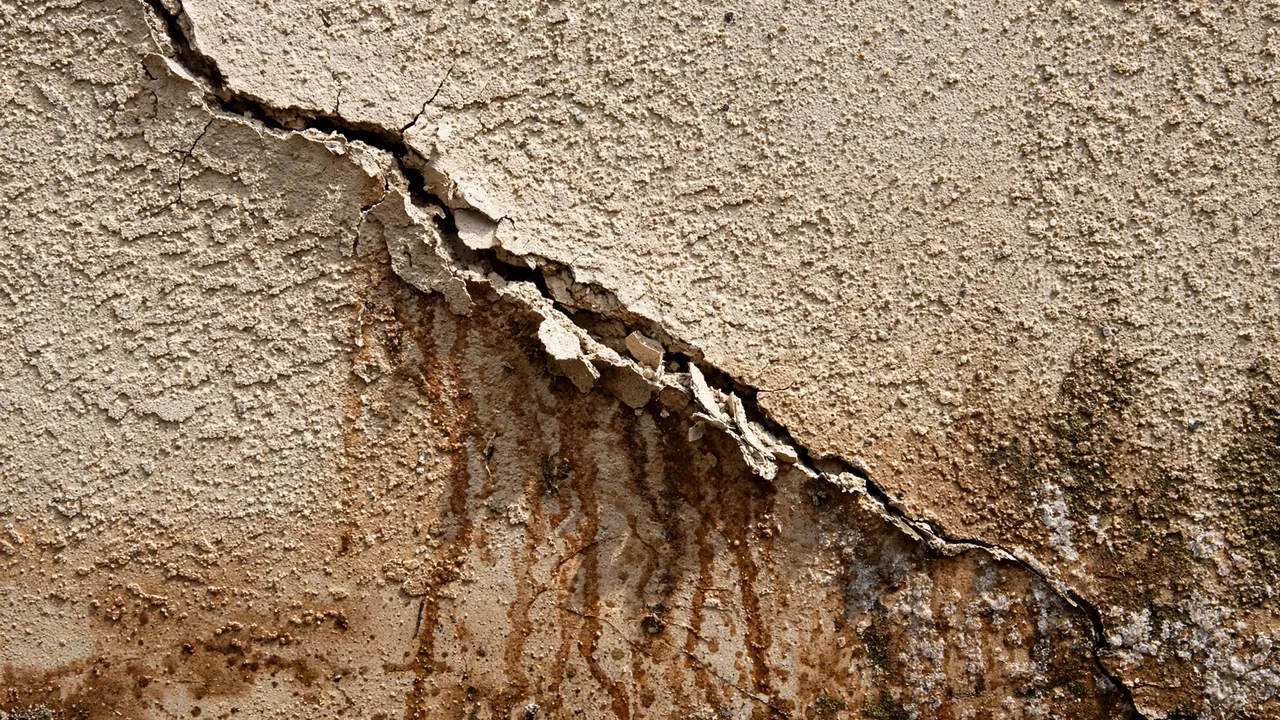
1. Whether water got behind the stucco. This is the single biggest cost driver. A surface crack is a half-day patch; stucco that has trapped moisture means removing material down to the sheathing, replacing corroded lath and saturated building paper, and rebuilding the wall section coat by coat. Soft spots, dark staining, and bulging are the telltale signs — and the reason a hands-on inspection matters more than a photo estimate.
2. Traditional stucco vs. EIFS. Traditional cement-based stucco (three coats over metal lath) is generally simpler and cheaper to repair. Synthetic EIFS — foam insulation board with an acrylic finish coat — costs more to fix because the system has to be opened, dried, and resealed without compromising its insulation layer. In New York, EIFS repairs commonly run 30–50% higher than traditional stucco for the same area.
3. Access and height. Ground-level patches are straightforward. Second-story walls, gables, and areas over sloped roofs need scaffolding or lift equipment and fall protection, which adds $1,000 or more to a project before any stucco is mixed.
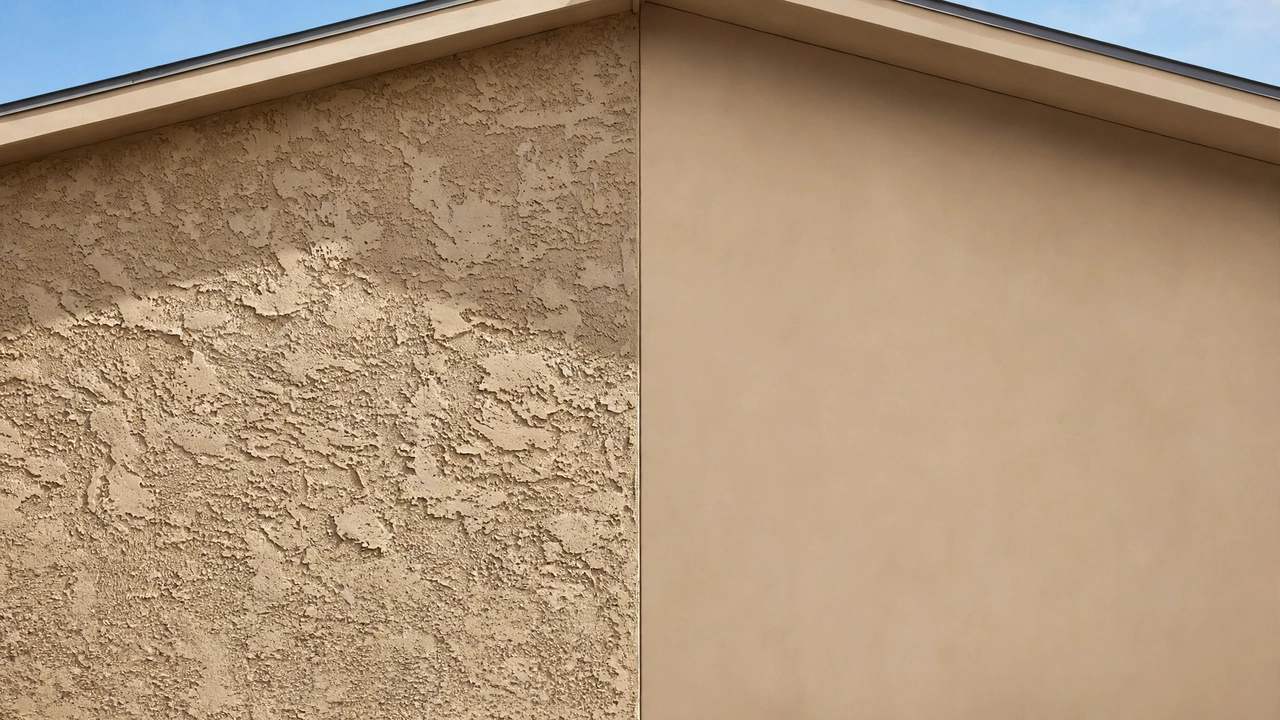
4. Texture and color matching. Matching a 20-year-old sand finish or a custom dash texture so the repair disappears is skilled hand work — often the most labor-intensive part of a small repair. Smooth “Santa Fe” style finishes cost the most to blend invisibly.
5. The extent of hidden damage. Stucco hides problems well. What looks like a two-foot crack can reveal rotted sheathing once opened. Reputable contractors explain this contingency upfront instead of surprising you mid-project.
6. New York labor market. Stucco is less common in the Northeast than in the Sunbelt, so experienced crews are scarcer and rates run higher — national cost trackers consistently place New York among the priciest markets for stucco work. That’s also why hiring a crew that actually specializes in brick and stucco rather than a general handyman pays off: the repair lasts.
7. Permits and project size. In New York City, larger exterior alterations may need Department of Buildings filings; in Westchester villages and cities like White Plains, the local building department typically requires a permit for substantial exterior work. Permit fees are modest, but unpermitted work can trigger stop-work orders and “legalization” penalties that dwarf the original quote.
Traditional Stucco vs. EIFS: Repair Cost Compared
Many New York homes — especially 1980s–2000s builds in Westchester and Long Island — wear synthetic EIFS rather than traditional stucco, and owners are often surprised to learn the systems repair differently:
Traditional cement stucco is hard, breathable, and forgiving. Repairs bond well to the existing coats, and isolated damage rarely compromises the whole wall. Typical repair pricing: $8–$30 per square foot depending on damage and access.
EIFS (synthetic stucco) is a layered system: foam board, base coat with mesh, and acrylic finish. Water intrusion is its Achilles’ heel — once moisture gets behind the foam, it spreads laterally and the system must be opened up, dried out, and rebuilt with proper drainage details. Typical repair pricing: $12–$50 per square foot, with water-damage remediation at the top of the range.
If you’re not sure which system you have, knock on it: traditional stucco sounds solid and hard; EIFS sounds slightly hollow. A contractor should identify the system during the estimate — the repair approach is completely different.
Signs Your Stucco Needs Repair (Don’t Wait on These)
New York’s freeze-thaw winters are brutal on stucco. Water enters a hairline crack in fall, freezes and expands in January, and by spring that hairline is a structural problem. Watch for:
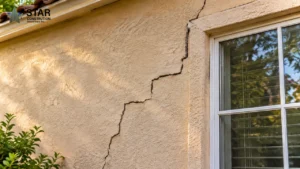
- Cracks wider than 1/8 inch, or any crack in a stair-step or diagonal pattern — these suggest movement, not just shrinkage.
- Staining or dark streaks below windows, at wall bases, or under roof edges — water is traveling behind the finish.
- Bulging or hollow-sounding areas — tap the wall; a hollow sound means the stucco has separated from its base.
- Soft or crumbling spots — press gently; stucco should feel rock-hard. Softness means saturation and likely substrate damage.
- Efflorescence — white powdery deposits where water is migrating through and evaporating, carrying salts with it.
- Mold or musty smells near stucco-clad walls inside the home — moisture may have reached the framing.
Cosmetic hairline cracks can wait for a scheduled repair. Bulging, softness, and active staining cannot — every freeze-thaw cycle makes them worse and more expensive. If you’re seeing these signs on a White Plains or Westchester home, get an assessment before winter.
Repair vs. Full Re-Stucco: How to Decide
Repair the isolated damage when less than roughly a quarter of a wall is affected and the underlying system is sound — patching is almost always the better spend. Consider partial or full re-stucco when:
- Damage is widespread across multiple elevations (widespread cracking, delamination, or staining).
- Water intrusion has compromised large areas of lath, paper, or sheathing.
- The existing stucco is at the end of its service life (50+ years for traditional stucco with poor maintenance history).
- You want a uniform new finish and color across the whole facade.
Re-stuccoing one 250-square-foot wall section typically runs $2,000–$5,000 in the NY metro; a full-home resurfacing starts around $4,000–$10,000+ depending on size, stories, and finish. An honest contractor will show you why a repair is enough — or why it isn’t — rather than defaulting to the bigger ticket.
How to Keep Stucco Repair Costs Down (Without Cutting Corners)
Fix small cracks early. A $400 crack seal today prevents a $3,000 water-damage rebuild next year. Walk your home’s stucco every spring and fall.
Keep water away from the walls. Clean gutters, working downspouts with extensions, and proper grading do more for stucco longevity than any coating. Most premature stucco failure we see traces back to water management, not the stucco itself.
Don’t paint over problems. Standard paint traps moisture behind stucco. If you recoat, use breathable elastomeric or mineral coatings designed for masonry — and only after cracks are properly repaired.
Get the diagnosis right the first time. The cheapest quote that misdiagnoses water intrusion as a cosmetic crack is the most expensive quote you’ll ever accept. Ask every bidder: is there moisture behind this stucco, and how did you check?
Bundle the work. If scaffolding is going up for stucco, that’s the time to address flashing, sealant joints, and adjacent masonry issues — one mobilization instead of three.
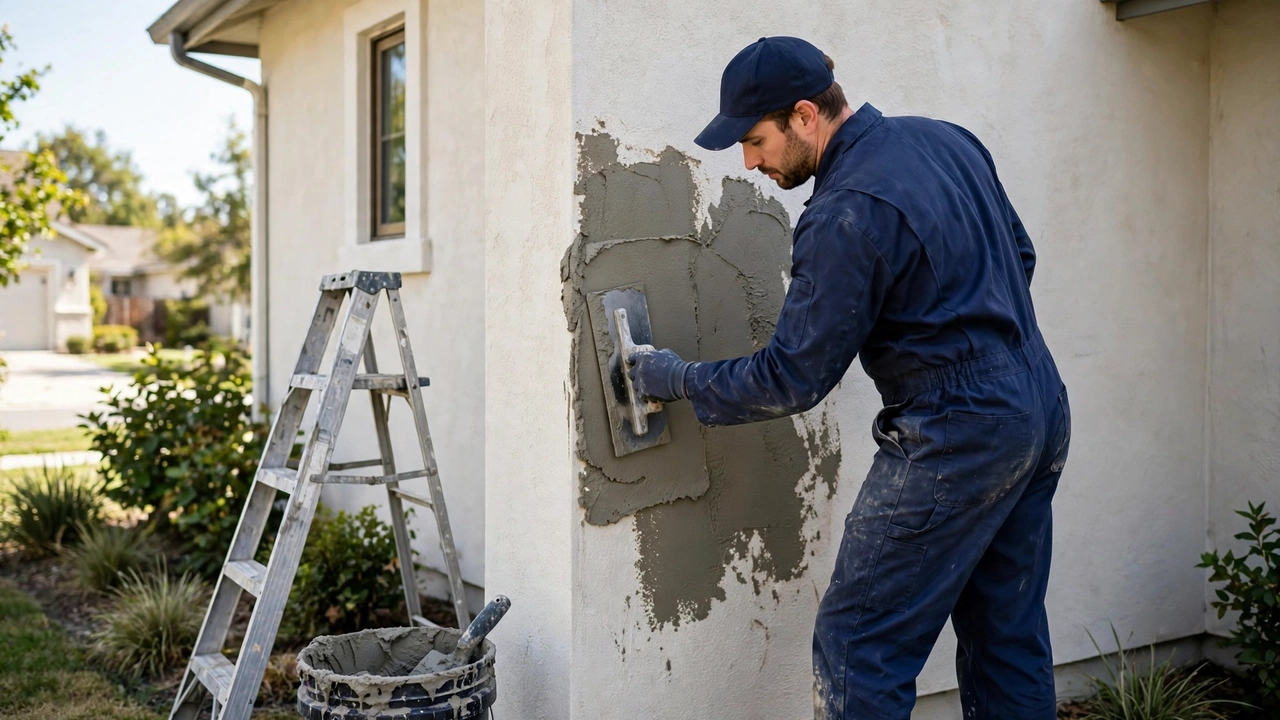
For a clear picture of what your home needs, Star Construction INC offers free, no-obligation stucco assessments across our New York service areas. Call (516) 998-4133 — we’ll tell you what’s cosmetic, what’s urgent, and what it should cost before any work begins.
Frequently Asked Questions
How much does it cost to repair stucco cracks in New York?
Hairline crack repairs in the NY metro typically run $300–$800 per area, depending on access and how much texture blending is needed. Larger cracks or cracks that have allowed water intrusion cost more — $800–$2,500 — because the damaged section must be cut out and rebuilt, not just sealed.
Is stucco repair more expensive than replacement?
No — isolated repairs are almost always cheaper. Patching damaged sections runs $300–$2,500, while partial re-stucco of a wall starts around $2,000–$5,000 and full-home resurfacing $4,000–$10,000+. Replacement only makes financial sense when damage is widespread or the system has failed.
Can water-damaged stucco be repaired, or must it be replaced?
It can be repaired as long as the damage is localized. The compromised stucco is removed, saturated lath and building paper are replaced, the substrate is dried, and new coats are applied and blended. If moisture has spread across most of an elevation or rotted the sheathing extensively, partial re-stucco of that wall is usually the sounder investment.
How long does a stucco repair last?
A properly executed repair — correct system identification, sound substrate, proper coats with full curing time, and matched texture — lasts as long as the surrounding stucco, often decades. Repairs fail early when they’re rushed: skipped curing time, wrong materials (like standard paint over stucco), or unaddressed water sources behind the wall.
Do I need a permit for stucco repair in New York?
Minor cosmetic repairs generally don’t require permits. Larger repairs, partial re-stucco, or full resurfacing often do — in NYC through the Department of Buildings, and in Westchester through your city or village building department (White Plains, for example, requires permits for substantial exterior work). Your contractor should handle permit determination as part of the estimate.
Stucco Repair Cost by Repair Scope in New York
Most stucco quotes make more sense once you sort them by scope rather than by square footage alone. A small, well-defined patch and a full-wall restoration are different jobs, even when they cover similar areas, because the prep, materials, and curing time are not comparable. The table below gives general New York market ranges for each scope, so you can tell at a glance which category your project falls into.
| Repair scope | What the work includes | Typical NY market range |
|---|---|---|
| Patch repair | Cutting out a damaged section, replacing lath and paper as needed, and applying new coats to a localized area | $300 – $2,500 |
| Crack repair | Cleaning, sealing, and blending hairline or small cracks, with mesh reinforcement where the crack is likely to reopen | $300 – $900 |
| Skim coating | A new finish coat over an existing wall to even out texture, cover widespread hairline cracking, and refresh the surface | $1,500 – $5,000 per wall |
| Full-wall restoration | Stripping failed stucco, repairing the substrate, and re-coating a complete wall or elevation | $4,000 – $10,000+ |
Patch and crack repairs sit at the lower end because they are localized and use less material and labor. Skim coating climbs with wall size, height, and the amount of prep the old surface needs, while full-wall restoration is the most expensive scope because it replaces the system rather than touching it up. Treat any quote that prices a full-wall job like a patch — or a patch like a full wall — as a sign the scope has not been defined properly. For a broader comparison across exterior masonry work, see our guide to masonry repair costs in New York.
What Each Repair Scope Actually Involves
Patch repair is the right scope when damage is confined to one spot — a hole, a soft section, or a patch of delaminated stucco — and the surrounding wall is sound. The damaged area is cut back to solid material, the substrate is checked, and new coats are built up to match the surrounding thickness. Because the repair is local, color and texture blending is the main craft challenge.
Crack repair covers hairline and small cracks that have not yet let water behind the wall. The crack is cleaned out, sealed or bridged with mesh, and blended into the finish. The key judgment is whether the crack is cosmetic or a symptom of movement or moisture; sealing a crack that is still moving, or one that is hiding wet substrate, only buys a season or two.
Skim coating is a middle path for walls that are structurally sound but tired: widespread hairline cracking, uneven patches from earlier repairs, or a finish that has faded and stained. A new finish coat unifies the surface, but it is not a fix for delamination, soft substrate, or active water entry — those problems must be repaired first, or the new coat will fail with the old wall. When an entire elevation needs this level of work, a brick and stucco contractor can advise whether a skim coat or a full re-coat is the honest scope.
Full-wall restoration means starting over on that elevation: failed stucco comes off, damaged lath, paper, or sheathing is replaced, and the wall is re-coated in full. It is the scope to expect when damage covers a large share of a wall, when water has compromised the substrate across an elevation, or when the existing finish is at the end of its life. Because it resets the whole elevation, it also delivers the most uniform finish and color. If the project grows beyond one wall into a whole-facade program, our facade repair and restoration guide for New York explains how that larger scope is planned.
Per-Factor Depth: Why Two Stucco Quotes Can Differ by Thousands
Water behind the stucco. This remains the single biggest cost swing. A dry crack is a surface job; a crack that has been admitting water for several winters can mean saturated lath, rotted sheathing, and framing repairs that only show up once the stucco is opened. A moisture probe or a small exploratory opening before quoting is a sign of a careful contractor, and a quote that never mentions moisture on a stained or bulging wall is a warning sign.
Traditional stucco versus EIFS. Traditional cement stucco and EIFS fail differently and repair differently. Traditional stucco is rigid and breathable, so small repairs bond well and moisture can often dry out. EIFS is a layered system over foam, so repairs must respect the layers and the drainage or barrier details, and hidden moisture is harder to spot from the surface. Homes from the 1980s through the 2000s in Westchester and Long Island are the most likely to carry EIFS, so identifying the system before pricing is essential.
Access and height. Ground-level work on a suburban home is straightforward. Second-story walls, walls above driveways or plantings, and city walls that need scaffolding or sidewalk protection add labor and setup costs that have nothing to do with the stucco itself. Tight side yards in New York City can mean hand-carrying material and staging work in stages, which adds days.
Texture and color matching. A new patch on a 20-year-old sand finish, a dash finish, or a custom-tinted wall will stand out unless the texture is matched and the color is blended across a larger area than the repair itself. Walls that have weathered unevenly may need a skim coat or a full-wall coat to look uniform, which moves the project into a higher scope.
Hidden damage and the New York labor market. Stucco hides problems well, so a responsible quote often includes a contingency for what is found behind the wall rather than pretending the surface tells the whole story. Stucco is also less common in the Northeast than in the Sun Belt, so experienced New York stucco crews are fewer, and their schedules fill early in the spring and summer repair season.
Season and curing. New York’s freeze-thaw cycle punishes rushed work. Coats applied in cold weather cure slowly, and a wall repaired late in fall needs enough mild weather to set before the first hard freeze. Scheduling repairs in spring or early summer, and allowing proper curing time between coats, costs nothing extra in materials but protects the repair from failing in its first winter.
How to Compare Stucco Quotes Fairly
Ask every bidder the same questions: which system do I have, traditional or EIFS; was moisture checked, and how; is the scope a patch, a skim coat, or a full-wall restoration; does the price include substrate repair if damage is found; and how will the finish be matched? A quote that answers all five is comparable; a quote that answers none is not. Get the scope in writing, including what happens if hidden damage is found, so a low opening price cannot grow silently into a high final bill.
More Stucco Repair Cost Questions
What is the difference between skim coating and patching stucco, and what does each cost in New York?
Patching fixes a localized damaged area, typically for $300–$2,500 in the New York market, while skim coating applies a new finish coat over a whole wall to unify texture and cover widespread hairline cracking, typically $1,500–$5,000 per wall. Skim coating costs more because it covers a larger area and requires more prep, but it is not a substitute for patching: a skim coat over delaminated or water-damaged stucco will fail with the wall beneath it.
Why does stucco repair cost more in New York than in other states?
New York repair costs run higher mainly because of labor rates, access, and specialization. Stucco is less common in the Northeast, so experienced crews are fewer; city work often needs scaffolding or sidewalk protection; and freeze-thaw winters mean repairs must be done with proper curing time and moisture checks rather than quick cosmetic fixes. These factors raise the market range even for straightforward crack and patch work.
Does EIFS cost more or less to repair than traditional stucco?
Small, dry repairs cost roughly the same for either system, but EIFS repairs can cost more when moisture is involved, because the layered system must be opened, dried, and rebuilt in sequence, and hidden water damage is harder to detect from the surface. Traditional cement stucco is more forgiving for small repairs because it is rigid and breathable. Identifying your system before quoting is the step that keeps an EIFS repair from being priced like a simple cement patch.
How do I know if a stucco quote is fair?
A fair quote names the scope — patch, crack repair, skim coat, or full-wall restoration — states whether moisture was checked, explains how the finish will be matched, and says what happens if hidden substrate damage is found. Compare quotes on scope first and price second: the cheapest quote for a patch is not a bargain if the wall actually needs a skim coat or full-wall restoration, and the most expensive quote is not automatically the most thorough.