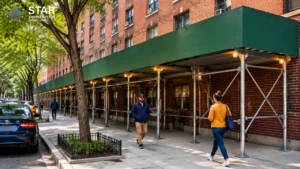
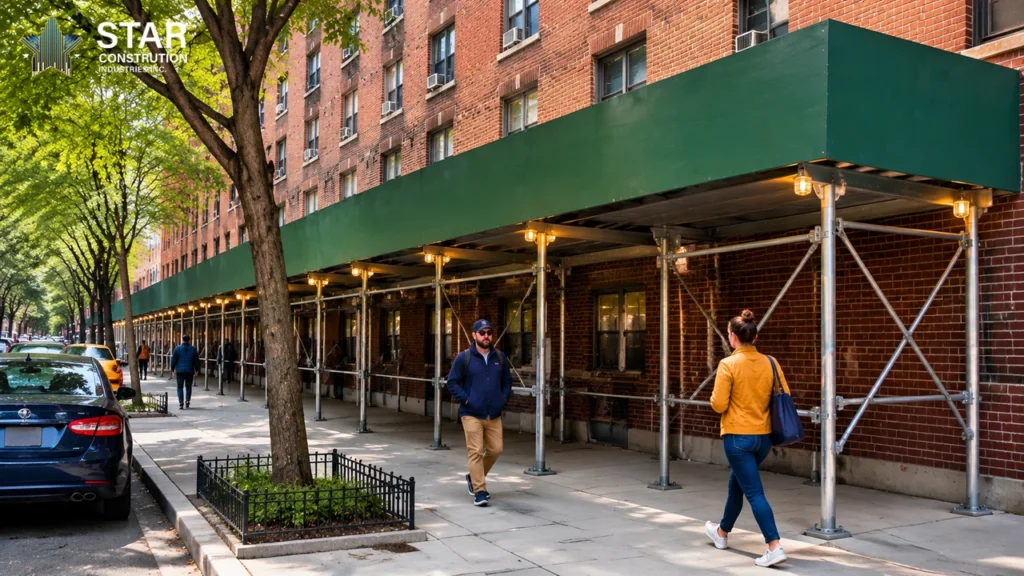
Walk down almost any busy street in Queens and you will pass under one: a green wooden walkway with a solid roof, bright lights, and posts at the curb. It is easy to treat it as part of the street furniture, something that has always been there and will eventually go away. In fact, that structure has a serious job. It is there to protect people on the sidewalk while work happens overhead, and to keep a building’s facade work from becoming a danger to passersby.
This guide explains, in plain terms, when a building needs a sidewalk shed, what the permit and paperwork involve, what a well-built shed looks like, and how long one is likely to stay up. It also explains how sheds fit into facade repair work in Queens, including repairs that follow a facade inspection. If you own or manage a building, the goal is simple: understand what the shed is doing, what to expect while it is there, and what questions to ask before work starts. We work across our service areas in New York City.
When a Sidewalk Shed Is Required
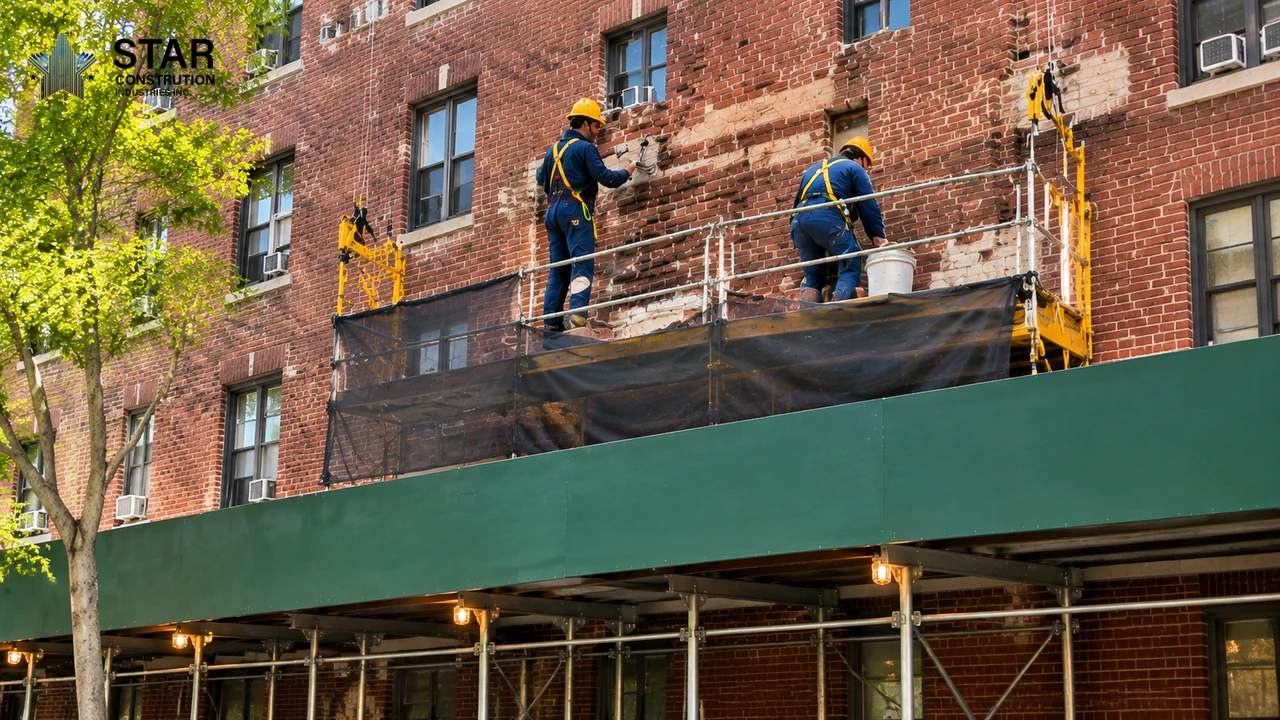
The most common reason is facade work above the public way. When masons, waterproofers, or other crews are working on the outside of a building, tools, materials, and pieces of the facade itself can fall. A shed creates a protected walkway underneath that work, so people can keep using the sidewalk while the job goes on above them. Without that cover, the sidewalk below the work would usually have to close, which is rarely practical on a busy Queens street.
A shed is also used when a facade is found to be unsafe, or when loose material has already come down. In that case the shed is not just a convenience for a planned job. It is a safety measure that goes up quickly, stays in place while the condition is assessed, and remains until the hazard has been addressed. That is why a shed can sometimes appear with little warning: the priority is protecting the public first, then sorting out the repair plan.
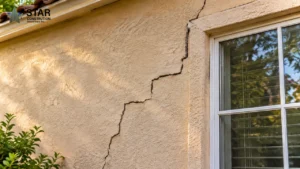
On taller buildings, facade-inspection findings often drive the work that requires a shed. An inspection may identify cracked masonry, deteriorated mortar, loose stone or brick, damaged parapets, or water entry that has weakened part of the wall. Those findings become a repair scope, and the shed protects the sidewalk while that scope is carried out, floor by floor. The shed itself does not fix the facade. It simply makes it possible to do the repair work safely, in stages, without closing the street below.
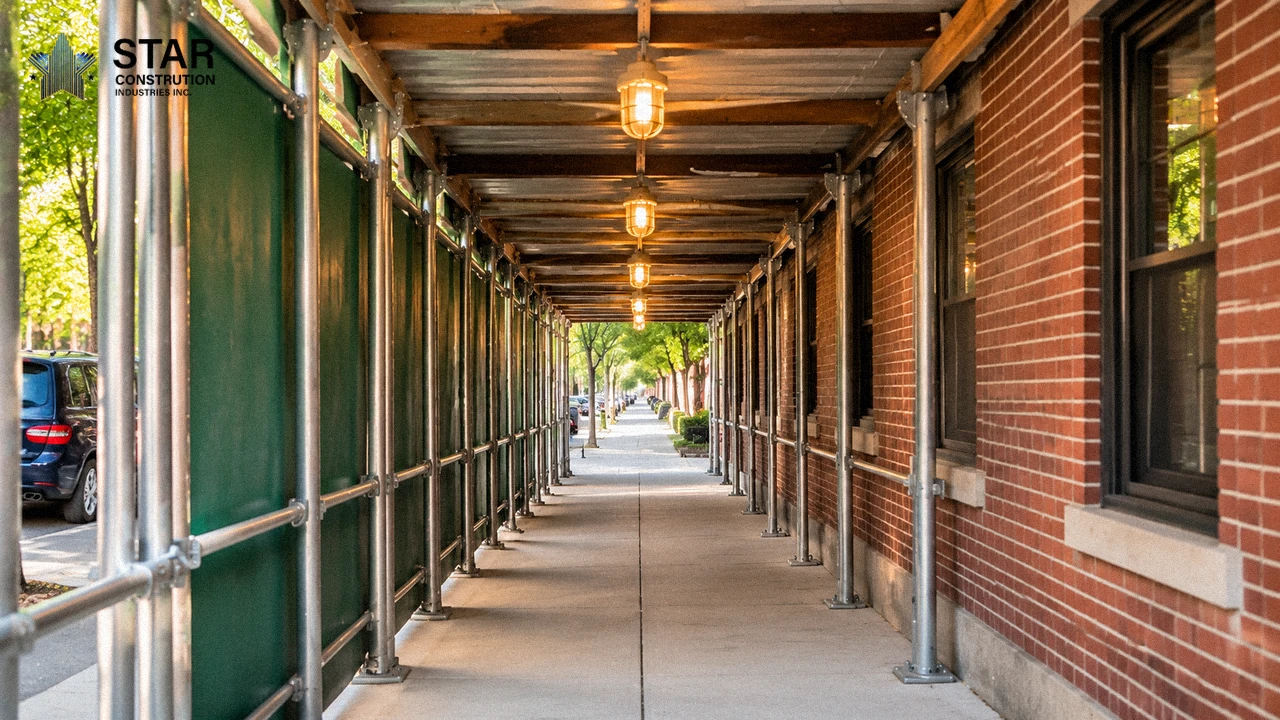
New construction and demolition are the other familiar cases. When a new building rises next to a sidewalk, or an old one comes down, a shed is part of the protection plan for the public way during that work. The principle is the same in every case: if work overhead could put people at risk, the walkway below needs a cover.
The Permit and Paperwork Side
In New York City, a sidewalk shed requires a permit from the Department of Buildings, and the shed must be installed in accordance with the applicable code and permit conditions. That paperwork is not a formality. It records where the shed will stand, how long it is expected to remain, and what kind of work it is protecting. It also creates a clear record of who is responsible for keeping the shed in place and in good condition while the job is under way.
One point owners sometimes misunderstand is that hiring a contractor does not transfer the owner’s responsibilities. The contractor may handle the filing and the installation, and the filing representative may deal with the Department on the owner’s behalf, but the building owner remains responsible for the building and for the protection of the public way. That is why owners should keep copies of permits and filings, know the expected timeline, and ask who will be checking the shed during the job.
Good paperwork also helps at the end of the job. When the underlying work is finished and the necessary clearances are in place, the shed can be removed in an orderly way.
What a Proper Shed Looks Like
A proper shed is easy to recognise once you know what to look for. It has a solid deck overhead, strong posts that carry that deck, and a parapet or guard at the edge to help contain anything that might fall or roll. The walkway underneath should feel like a normal sidewalk: level, clear, and wide enough for people to pass comfortably, including people with strollers, wheelchairs, and shopping carts.
Lighting matters just as much as structure. A shed that is dark underneath, even in daylight, feels unsafe and can hide tripping hazards. Proper lighting along the walkway, along with clear signage where the walkway changes direction or narrows, helps pedestrians move through confidently. The deck above should also be kept clear of debris, and any openings for material handling should be managed so nothing can drop through onto the walkway below.
None of this is decorative. Each element, the deck, the posts, the parapet, and the lighting, is part of a single protection system. If one part is missing or damaged, the shed is not doing its full job, and that is something an owner or manager should raise promptly.
How Long Sheds Stay Up
This is the question neighbours ask most often, and the honest answer is that the shed follows the repair timeline. A straightforward facade repair with a clear scope, good access, and no surprises behind the wall can move steadily from shed installation to completion. A larger scope, a building with several different facade problems, or work that has to pause for weather, material delivery, or further investigation will naturally take longer, and the shed stays up for as long as that work needs protection.
That is also why some sheds seem to linger. In many cases the shed itself is not the delay. The delay is the underlying repair: a scope that grew once work opened up, a detail that needed a different approach, or a building that could not move forward until a decision was made. A shed that stays up for a long time is usually a sign that the repair behind it has stalled, not that the shed was meant to be permanent.
Finishing the underlying work is what brings a shed down. Once repairs are complete and the required clearances are obtained, the shed can be dismantled and the sidewalk returned to normal. Until that point, removing it early would leave the public unprotected while work overhead is still unfinished.
Sheds and Local Law 11 Repairs in Queens
In Queens, many sheds are tied to work that follows a facade inspection under Local Law 11, now known as the Facade Inspection and Safety Program. For taller buildings, those reports generate a repair scope, and a shed protects the sidewalk while the work is carried out. The inspections and filings belong to the owner’s Qualified Exterior Wall Inspector. Our part, as a contractor, is the repair itself, including facade repair in Queens, and Local Law 11 work in Queens where a report has identified unsafe or deteriorating conditions. Owners who want to understand where their building sits in the current cycle can also review the Local Law 11 Cycle 10 timeline.
That division of responsibility matters for planning. The inspector identifies what needs attention and files the report. The contractor then prices and schedules the repair scope, installs the protection the job requires, and works through the facade in stages. When those two roles are kept clear, owners get a cleaner timeline, fewer surprises, and a shed that comes down as soon as the work it was protecting is properly finished.
Frequently Asked Questions
Who pays for a sidewalk shed?
In general, the building owner pays for the shed, as part of protecting the public way during work on their building. The cost is usually considered alongside the repair scope, since a longer shed or a longer job will generally involve more expense than a short, straightforward one.
Who files the sidewalk shed permit?
The permit is usually filed on the owner’s behalf by the contractor or filing representative handling the job. The owner should still keep a copy, confirm the permit details, and understand that responsibility for the building and the public way remains with the owner.
Can a sidewalk shed come down before repairs are finished?
No. Protection must stay in place until the work overhead is finished and the necessary clearances are in place. Taking a shed down early would leave people on the sidewalk exposed while facade work is still under way, which defeats the purpose of the shed.
What is the difference between a sidewalk shed and scaffolding?
A sidewalk shed is an overhead cover at street level that protects pedestrians. Scaffolding is a work platform that lets crews reach the facade itself, often rising several stories. The two are frequently used together: the shed protects people below, while scaffolding gives workers safe access to the wall above.
What should an owner ask before hiring a contractor for facade work?
Ask what the repair scope includes, how the shed and permit will be handled, what the expected timeline looks like, and how changes will be dealt with if more damage is found.