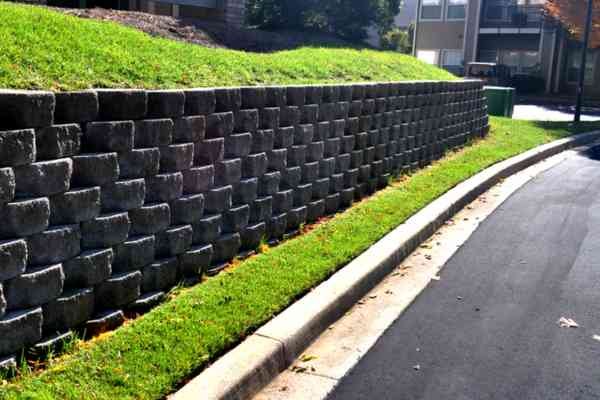
Every Yonkers concrete job starts with diagnosis, not a patch. We check how the slab moves, where water collects, and whether roots, slope or a failed base are driving the damage, then say whether repair or replacement is the honest answer. That approach covers concrete slabs and foundations, garage floor concrete, concrete resurfacing and crack repairs, retaining walls and curbs, and stamped and decorative concrete, matched to the load and exposure each surface will face.
On sloped lots, we pay close attention to drainage at the top of the drive and to joints that let a slab move without cracking through. The goal is concrete that stays level, drains away from the building, and survives Hudson Valley winters without a new repair every spring.
Concrete repair means restoring a surface that still has sound structure: filling and sealing cracks, resurfacing worn areas, lifting or replacing a settled panel, and correcting the base or drainage that caused the failure. Installation means building new concrete from the base up — excavation, a compacted base, reinforcement where needed, and a mix, finish and joint layout suited to driveways, walks, steps, patios and garage floors.
In Yonkers, both kinds of work are common, because hillside lots, street trees and freeze-thaw cycles put steady stress on older concrete. A repair that ignores drainage, slope or root pressure will usually fail in the same place, so the cause is addressed before the surface is finished.

If you are searching for concrete repair and installation contractors near you in Yonkers, start with a site visit that looks past the crack itself. At Star Construction INC, we inspect the surface, base, drainage and slope, trace water to where it collects, and explain whether repair or replacement makes sense and what it will take.
We work on driveways on sloped lots, steps at apartment entries, and walks along Warburton Avenue and Central Park Avenue, with a free, no-obligation estimate. As concrete repair installation contractors in New York, we serve Yonkers homes, apartment buildings and small commercial properties, and every project starts with a clear, written scope.
Our clients value the consistency, structural precision, and long-term performance we deliver on every project, from initial planning through final execution.


 Trustindex verifies that the original source of the review is Google.
 Trustindex verifies that the original source of the review is Google.
 Trustindex verifies that the original source of the review is Google.
 Trustindex verifies that the original source of the review is Google.
Contact us now to discuss your project and receive a no-obligation quote from our experts.
Every project is handled through a defined process that ensures accuracy, efficiency, and long-term structural performance from start to finish.
We begin by reviewing site conditions, understanding project objectives, and identifying structural requirements to establish a clear and practical direction before any work begins.
A detailed execution plan is developed, including material selection, sequencing of work, and coordination of labor to maintain consistency and avoid delays during construction.
Work is carried out using proven installation methods, with attention to structural integrity, proper reinforcement, and adherence to safety and quality standards.
A final walkthrough is conducted to verify workmanship, resolve any outstanding details, and ensure the completed project meets performance expectations and durability standards.
Concrete work in Yonkers protects more than the surface you walk or drive on. It keeps water moving away from foundations, removes trip hazards at entries and walks, and stops small cracks from becoming settled, broken panels. Done with the right base, drainage and joints, it also reduces the yearly patching that hillside and tree-lined properties otherwise need.
A sloped driveway needs more than a level pour: a stable, compacted base, a drainage path that keeps runoff from undermining the slab, and joints placed for movement. We check the grade from street to garage, correct soft or washed-out base material, and use a mix and finish suited to vehicle load and winter exposure, so the new surface does not crack, settle or ice over in the same weak spots.
Steps and walks take daily foot traffic and winter salt, so small failures become trip hazards quickly. We rebuild settled or spalled steps with even risers, sound nosings and a firm base, and replace root-lifted walk panels with joints that allow for nearby tree growth, keeping entries safe and accessible for residents and visitors.
Slabs, patios and garage floors each carry a different load, so each gets a different build: a patio needs drainage away from the house and joints that control cracking, while a garage floor needs a stronger, denser surface for vehicles and stored loads. We match thickness, reinforcement and finish to the use, rather than pouring one standard slab everywhere.
Most Yonkers concrete failures start below the surface, where water sits in a weak base and freezes. We correct drainage and slope first, compact the base, and detail joints, edges and sealers for freeze-thaw movement, so water drains away instead of lifting, cracking or spalling the new concrete.
It depends on the cause and extent of the damage. Hairline cracks, surface spalling and a single settled panel can often be repaired, especially when the base is still sound. A driveway with widespread cracking, major settlement, a failed base or drainage that keeps undermining the slab is usually better replaced, because patching will fail in the same place. A site visit that checks the base, slope and drainage gives the honest answer.
Heaving is usually caused by water and movement below the slab: tree roots lifting a panel, water freezing and expanding in a weak or poorly drained base, or soil settlement on a hillside lot. Along tree-lined streets, roots are a common cause, while freeze-thaw cycles widen the damage each winter. The fix must address the root, drainage or base problem, not just grind down or replace the lifted panel.
Light foot traffic is usually possible after a day or two, depending on the mix, weather and thickness, while vehicles should generally wait longer — often about a week — so the concrete gains enough strength. Your contractor should confirm curing times for your specific pour, because cold weather, heavy loads and thicker slabs can extend the wait. Rushing a new driveway or garage floor into service risks surface damage and early cracking.
Sealing is usually worthwhile in Yonkers, where freeze-thaw cycles, de-icing salts and winter moisture wear the surface. A sealer helps limit water absorption and salt damage, but it is not a substitute for proper drainage, joints and curing. Sealing is normally applied after the concrete has cured, and reapplied as wear shows, especially on driveways, walks and steps exposed to salt and standing water.
In general City of Yonkers Department of Housing and Buildings terms, minor concrete repairs usually do not need a permit, while larger work — such as a new driveway, a structural slab, or work affecting a sidewalk or public right-of-way — may need approval or inspection, depending on scope and location. Permit requirements are discussed during the estimate, before work starts, so there are no surprises.