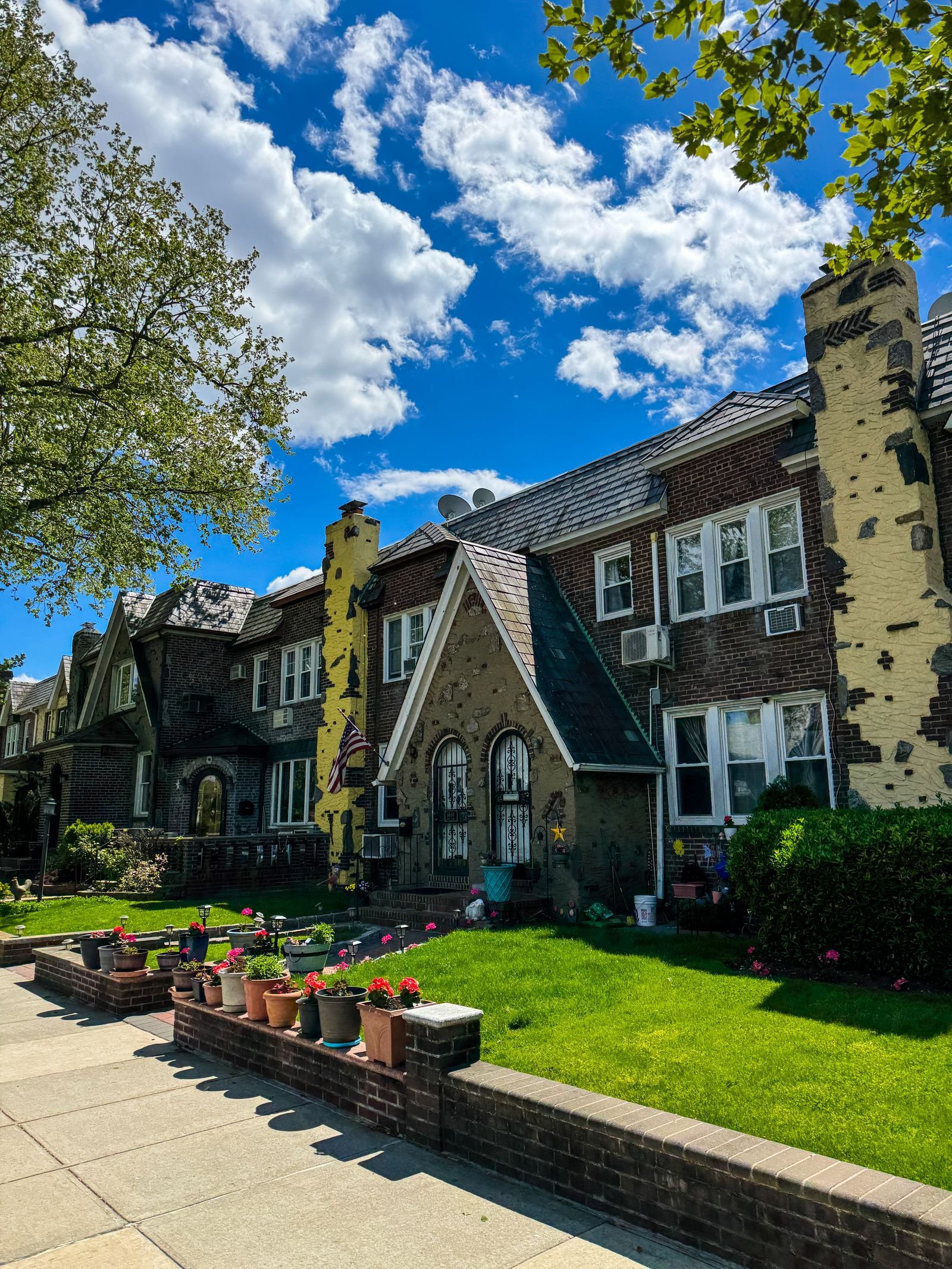

As facade restoration contractors in New York, we bring pre-war masonry expertise to Astoria brick and stone buildings — preserving character while ensuring safety and compliance. Star Construction INC serves all of our service areas with meticulous facade work. Astoria’s facades tell the neighborhood’s age. The pre-war brick walk-ups and attached row homes along 30th Avenue, Broadway, and Ditmars Boulevard were built with lime mortar, soft brick, and limestone or brownstone trim that modern cement mortars and sealers can damage. Freeze-thaw cycles open hairline cracks each winter, East River salt air and traffic grime wear down mortar joints, and decades of deferred maintenance let small leaks become spalled brick, rusted lintels, and loose ornamental stone. Our restoration work starts with a hands-on inspection, not a guess from the sidewalk. We document elevation, test mortar hardness, probe for steel corrosion, and map water entry points before recommending a scope. Repairs use matched brick and stone, lime-based mortars that flex with the wall, and breathable waterproofing that lets trapped moisture escape. Where a building’s height triggers Local Law 126 facade inspection requirements, we coordinate the inspection findings with the repair program so violations are cleared and the facade is protected for the next cycle. From single row homes to co-op and condo buildings near Astoria Park and along Steinway Street, we phase work to keep entrances open and residents safe, with sidewalk protection, communication with boards and managers, and a finished facade that looks like it belongs on the block.
Facade work in Astoria addresses the full building envelope — brick and stone masonry, mortar joints, lintels, sills, cornices, and waterproofing. We perform hands-on inspections, document deterioration, repoint with compatible mortar, replace spalled units, repair or replicate stone details, rebuild cornices, and apply breathable waterproofing. For larger buildings, we coordinate sidewalk protection and phased work to maintain occupancy. That scope is shaped by Astoria’s building stock. Pre-war walk-ups and attached row homes along 30th Avenue and Broadway often need repointing in lime mortar, lintel and sill replacement, and cornice rebuilding, while larger co-op and condo buildings add parapet coordination, stone replication, and DOB filing for facade safety work. We also protect the ground below: sidewalk sheds and netting where required, careful staging on narrow tree-lined streets, and phased elevations so residents and storefronts stay open. Every repair is finished to match the surrounding masonry in color, texture, and joint profile, so restored sections blend into the historic facade instead of standing out as patches.

Co-op boards, landlords, and owners of Astoria pre-war buildings call us for deteriorating facades, DOB violations, and water infiltration. We provide detailed inspection reports, prioritized scopes, and restoration plans that balance safety, compliance, and budget. In Western Queens, that includes the brick rowhouses, multi-family homes, and pre-war apartment buildings around Ditmars and Steinway, where street-facing facades take the same freeze-thaw and wind exposure year after year — including parapet wall repair and installation in Astoria where the facade meets the roofline. Owners also reach out when a facade inspection flags unsafe conditions, when a sale or refinancing requires documented repairs, or when water stains and interior leaks point back to the exterior wall. We respond with a prioritized plan, clear scopes for board approval, and work scheduled around tenants and storefront hours on busy corridors like Broadway and Steinway Street.
Our clients value the consistency, structural precision, and long-term performance we deliver on every project, from initial planning through final execution.


 Trustindex verifies that the original source of the review is Google.
 Trustindex verifies that the original source of the review is Google.
 Trustindex verifies that the original source of the review is Google.
 Trustindex verifies that the original source of the review is Google.
Contact us now to discuss your project and receive a no-obligation quote from our experts.
Every project is handled through a defined process that ensures accuracy, efficiency, and long-term structural performance from start to finish.
We begin by reviewing site conditions, understanding project objectives, and identifying structural requirements to establish a clear and practical direction before any work begins.
A detailed execution plan is developed, including material selection, sequencing of work, and coordination of labor to maintain consistency and avoid delays during construction.
Work is carried out using proven installation methods, with attention to structural integrity, proper reinforcement, and adherence to safety and quality standards.
A final walkthrough is conducted to verify workmanship, resolve any outstanding details, and ensure the completed project meets performance expectations and durability standards.
Lasting facades demand compatible materials and structural understanding.
Astoria 1920s-40s facades used lime mortar and specific brick types. We match these materials — never smearing hard Portland cement on soft historic brick — preserving both appearance and structural behavior.
Limestone and brownstone details erode over decades. We repair sound stone with compatible patching compounds and replicate deteriorated elements in matching materials, maintaining the architectural character of the facade.
Most facade damage traces to water — failed flashing, porous mortar, cracked sills. We trace leaks to their source and correct the water path, not just the visible damage, preventing recurring failures.
Loose masonry triggers DOB violations and public safety risks. We secure hazardous conditions promptly, document corrections, and complete full restorations to code — protecting owners and pedestrians alike.
Costs depend on building size, height, and deterioration extent. A small row home facade might be $20,000-$40,000; larger pre-war buildings can exceed $150,000. We provide detailed inspections with itemized proposals and phased options. For a fuller walkthrough of the process, see our complete guide to facade repair and restoration in New York.
Freeze-thaw cycles, water infiltration through failed mortar and flashing, air pollution, and incompatible past repairs such as hard cement on soft brick. Regular maintenance and prompt repointing prevent most major deterioration.
We recommend professional facade assessments every 3-5 years for pre-war buildings, plus annual parapet observations per Local Law 126. Early detection of mortar failure and loose masonry prevents costly emergency work.
Yes. We source matching brick and stone for Astoria pre-war stock and replicate architectural details. Proper matching preserves historic character, which matters for property value and neighborhood aesthetics.
Yes. We secure unsafe conditions immediately, address the underlying deterioration, and provide documentation for violation dismissal. Facade safety is our top priority — we respond urgently to hazardous conditions.