Hastings-on-Hudson asks more of a paint job than a flat, dry town does. The village’s pre-war homes were built with plaster walls, deep wood trim and real siding, and they sit on a hillside where one elevation faces the Hudson’s damp winds and the opposite side sits under the tree canopy in shade for most of the day. Paint on those two sides does not age the same way, and a contractor who quotes both sides as if they were one surface has not really looked at the house.
Our paint renovation and general contractors begin every Hastings job the same way: walking the rooms and the elevations, exposure by exposure, reading the paint film the way a doctor reads a chart. Where the film has failed, we find out why before we cover it — moisture behind the siding, plaster that has lost its key, a gutter overflowing into the trim it was meant to protect. The preparation that follows is the job itself, and the color is the last decision, not the first.
Inside, the work centers on the rooms these houses are loved for: plaster walls that have hairline-cracked with a century of seasons, and trim profiles that no lumberyard stocks anymore. Outside, it centers on the exposures: the river-facing elevations that take wind-driven rain, and the shaded elevations that stay damp long enough for algae and mildew to work under the film. Interior and exterior painting are different trades on the same house, and both get the preparation they actually need, not the preparation a flat rate allows.
Paint renovation is not the same as a coat of paint. Renovation means restoring the surfaces first: taking failed paint back to sound material, stabilizing plaster, repairing wood that has softened, re-caulking the joints that move, and priming each surface with a primer suited to what it actually is — old plaster, old wood, previously painted brick. General contracting, in this context, means the job is managed as one project rather than a series of trades arriving in the wrong order: plaster repair before painting, carpentry before priming, gutters and flashing checked before the exterior film goes on.
That order matters more in Hastings-on-Hudson than in most places, because the village’s houses combine old materials with two different climates on the same walls. A paint renovation contractor who understands old houses does not seal moisture into a wall to make a deadline, does not paint over plaster that has lost its key, and does not promise a single lifespan for a film that will live two different lives on the river side and the shaded side of the same house. The work below explains how that plays out, room by room and elevation by elevation.

If your Hastings-on-Hudson home is showing its age in the paint — peeling on the river side, mildew on the shaded side, plaster cracking in the rooms you live in — the honest next step is a walk-around, not a quote over the phone. We will come out, look at the surfaces in their actual light, and tell you which ones need preparation, which ones need repair first, and which ones simply need paint.
Request a free, no-obligation estimate from Star Construction INC, and we will walk the rooms and elevations with you and explain the sequence before any work begins. The full list of areas we serve is on our service areas page.
Our clients value the consistency, structural precision, and long-term performance we deliver on every project, from initial planning through final execution.

 Jav V
Trustindex verifies that the original source of the review is Google.
Got my bathroom remodel Team was professional on time Thank you Ever fernando Perez saldañaCrear Word
 LUIS CAYOi hire them for my home project. and everyting went smoothly. no delays
 Shahid IqbalVery reliable contractor. They did exactly what they promised and the quality was excellent. Would definitely recommend.
Contact us now to discuss your project and receive a no-obligation quote from our experts.
Every project is handled through a defined process that ensures accuracy, efficiency, and long-term structural performance from start to finish.
We begin by reviewing site conditions, understanding project objectives, and identifying structural requirements to establish a clear and practical direction before any work begins.
A detailed execution plan is developed, including material selection, sequencing of work, and coordination of labor to maintain consistency and avoid delays during construction.
Work is carried out using proven installation methods, with attention to structural integrity, proper reinforcement, and adherence to safety and quality standards.
A final walkthrough is conducted to verify workmanship, resolve any outstanding details, and ensure the completed project meets performance expectations and durability standards.
Professional paint renovation in Hastings-on-Hudson pays for itself in ways a quick repaint cannot. Proper preparation protects the plaster and wood underneath, so the next paint job starts from sound surfaces instead of a thicker pile of failing layers. Moisture is read and dealt with before it is sealed in, which is what keeps a paint film from peeling in sheets on the shaded side. And because the work is sequenced — repairs first, then primer, then finish — the finished rooms and elevations look right for years rather than for a season. The sections below explain where that value shows up on a hillside pre-war home.
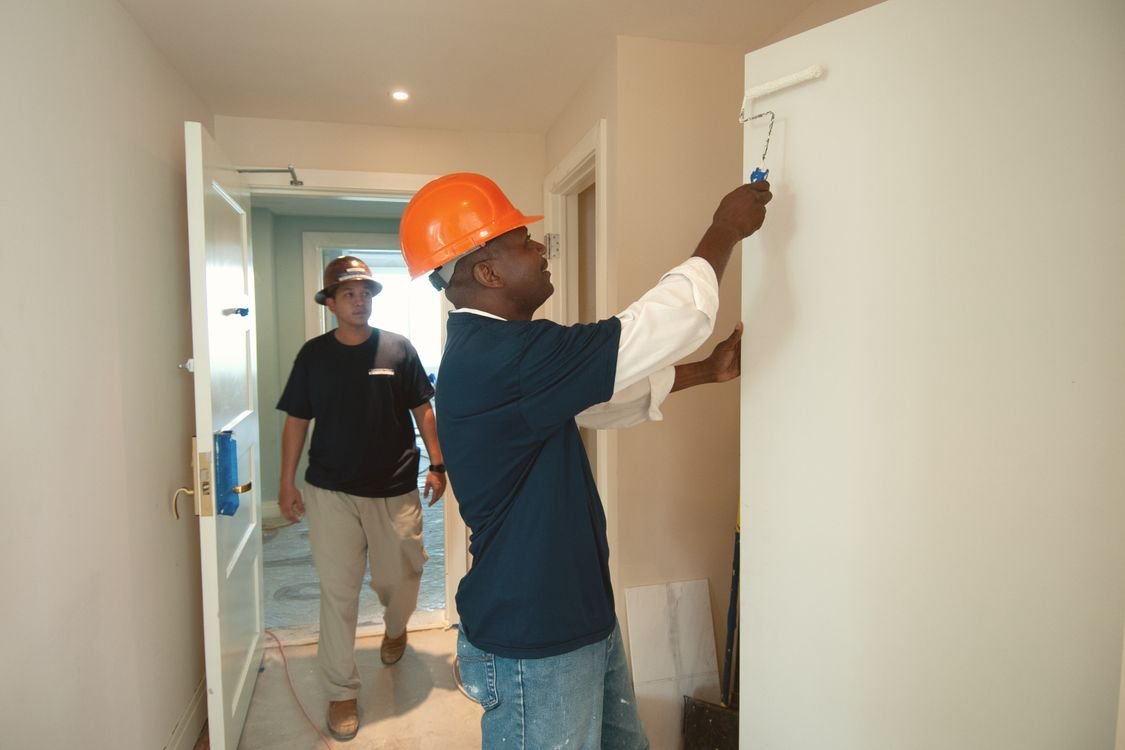
Inside a Hastings home, the paint job is mostly plaster and trim work wearing a finish coat. The plaster walls have moved gently for a century, which means hairline cracks at the corners, small areas where the plaster has lost its key to the lath, and ceilings that show the house’s settlement in faint lines. Painting over any of that without stabilizing it first simply preserves the crack under a fresh coat, where it reappears within a season.
The trim deserves the same respect. These houses carry baseboards, casings and crown profiles milled when every profile was cut to order, and the paint history on them is deep — sometimes a dozen coats, softened at the edges. Good preparation takes the failed layers back to a sound edge without sanding the profile away, repairs the wood where it has split or softened, and primes for adhesion rather than for speed. Where a room has just been opened up by an interior renovation in Hastings-on-Hudson, the painting that follows should protect the new plaster and the old trim with the same care, not treat one as new work and the other as an afterthought.
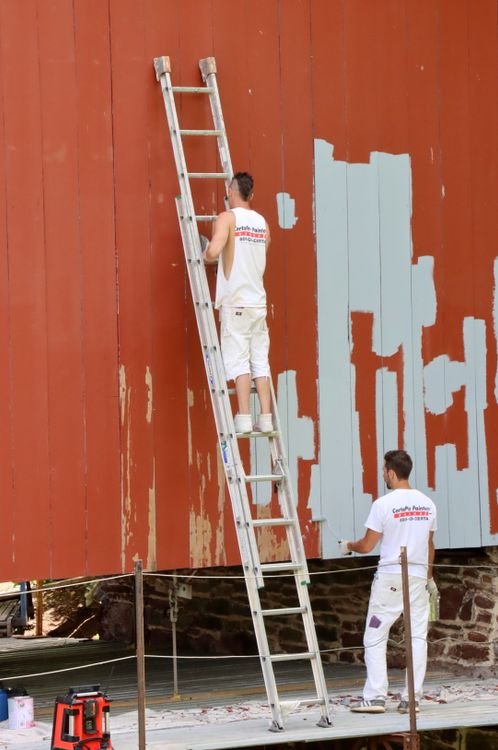
Outside, a Hastings house is two paint jobs in one. The river-facing elevations take wind-driven rain and damp air off the Hudson, which means the film there fails by peeling and by moisture getting behind it at every joint and end grain. The shaded elevations fail differently: they stay damp after rain, algae and mildew colonize the film, and the paint softens and lifts from underneath rather than weathering from the top. A single specification for both sides is how the shaded side ends up repainted twice as often as it should be.
Our exterior painting work in Hastings starts by reading each elevation’s exposure and its moisture path. River-side work emphasizes sealing end grain, sound flashing and a film that sheds water; shaded-side work emphasizes cleaning, mildew treatment, and primers that bond to damp-prone wood. The gutters get checked before either side is painted, because a gutter overflowing into the trim will defeat the best paint job on the street.
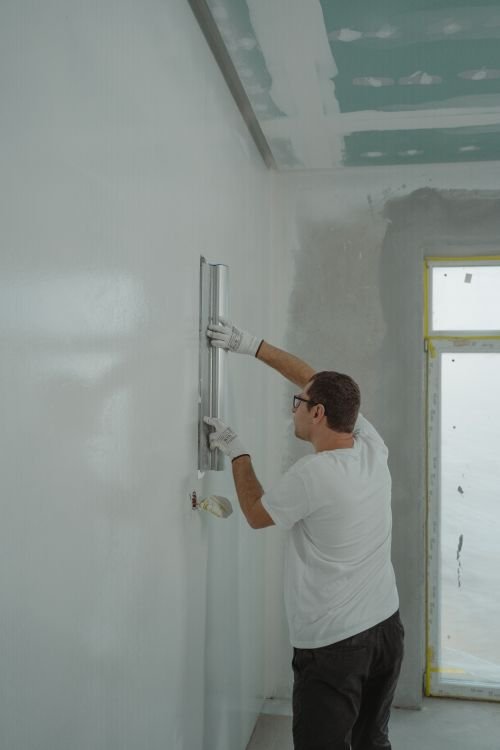
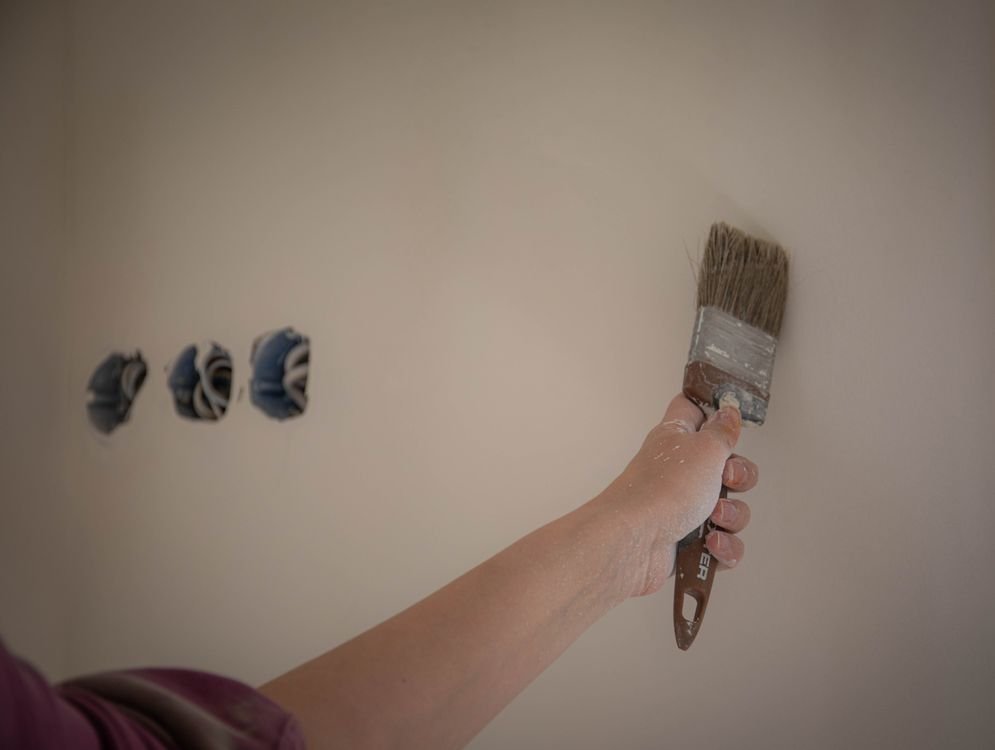
Preparation is the heart of this page because it is the heart of the job, and it has a definite order. First, the surfaces are cleaned and the failed paint is removed back to a sound edge — not feathered over loose material, which only postpones the peel. Then the repairs: plaster stabilized and re-keyed where it has loosened, wood repaired or replaced where it has softened, joints re-caulked where movement has opened them. Only then does primer go on, chosen for the surface beneath it: a bonding primer for old glossy paint, a stain-blocking primer where water has marked, a masonry primer for previously painted brick.
Two disciplines separate honest preparation from cosmetic preparation. The first is moisture: no surface is primed while it is wet underneath, and any damp source — a gutter, a flashing line, a grade against the wall — is dealt with before the paint, not after. The second is honesty about scope: the small repairs that belong inside a paint job are included and named in the estimate, while larger plaster or carpentry repairs are quoted separately, before work starts, so there are no surprises halfway through a room.
Color on a period home is a judgment call, not a fashion statement, and the hill complicates it in a useful way: the colors that read well on a shaded, tree-framed elevation are not always the ones that read well in full river light, and the trim color that flatters a Victorian is not the one that flatters a colonial next door. The practical guidance is simple. Keep the body color close to the house’s period and its neighbors, use the trim to sharpen rather than to shout, and test large swatches on both exposures before committing — a color that looks calm on a north wall in the morning can glare on a west wall in the afternoon.
Inside, the same restraint pays. Period rooms take saturated color well when the trim stays crisp and the ceilings stay light, because the proportions do the work. And where the original palette survives under later layers — a stairwell, a closet interior, the back of a door — it is worth uncovering before choosing, because the house itself often has the best opinion about what it should wear.
Paint applied before 1978 must be assumed to contain lead until testing proves otherwise. That assumption changes how the work is done: painted surfaces are not dry-sanded or dry-scraped into dust, work areas are contained and cleaned carefully, and debris is handled as lead waste. The work follows lead-safe practices under the federal renovation rule, and a lead test — a swab test or a laboratory paint-chip analysis — settles the question for a given surface before any major disturbance begins. If testing shows lead, the preparation plan is adjusted accordingly, and the cost of that adjustment depends on how much painted surface is involved.
Shade keeps a wall damp, and damp is what defeats paint. A sunny elevation dries within hours of rain, so its film weathers mainly by sun — fading and chalking, slowly. A shaded elevation under the tree canopy can stay damp for days, and that persistent moisture feeds algae and mildew, softens the film from behind, and lets water work into every joint and end grain. The result is peeling and blistering on the side that never gets the sun, while the sunny side merely looks tired. That is why shaded elevations need more cleaning, a mildew-resistant approach, and primers that bond well to damp-prone wood — and why they should be inspected first, not last.
The small repairs that make painting possible are part of the preparation and are included in the estimate: removing loose and failed paint, filling hairline cracks and nail holes, re-caulking joints, spot-priming, and stabilizing small areas of plaster. Larger work is quoted separately before it begins — substantial plaster repair or re-keying, wood replacement where trim or siding has rotted, and any structural repair the preparation uncovers. The estimate names which category each repair falls into, so the price you approve is the price for the work described, and the cost of anything beyond it depends on the scope found on inspection.
It depends on exposure more than on the calendar. In a river village like Hastings-on-Hudson, a well-prepared exterior paint job typically lasts around seven to ten years, but the river-facing elevations and the shaded elevations often need attention sooner — the first for wind-driven rain, the second for damp and mildew. South-facing trim and sun-baked siding may fade and chalk before they peel. The honest schedule is inspection-driven: walk the elevations each spring, and repaint the elevations that have actually failed rather than waiting for the whole house to fail at once.
Cosmetic painting — repainting existing surfaces without changing the structure — generally does not need a permit in the village. Work that goes beyond painting, such as replacing rotted framing, changing window or door openings, or altering the structure, generally does need village approval, and it is worth confirming with the village building department before that kind of work begins. A painting estimate should say plainly which category the job falls into.