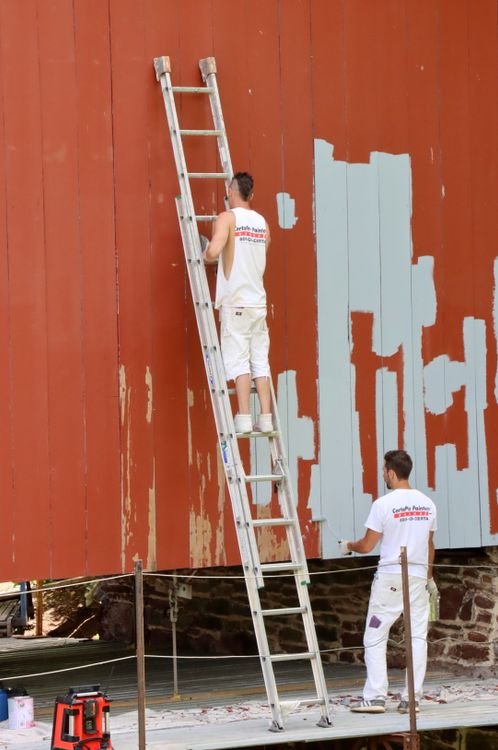
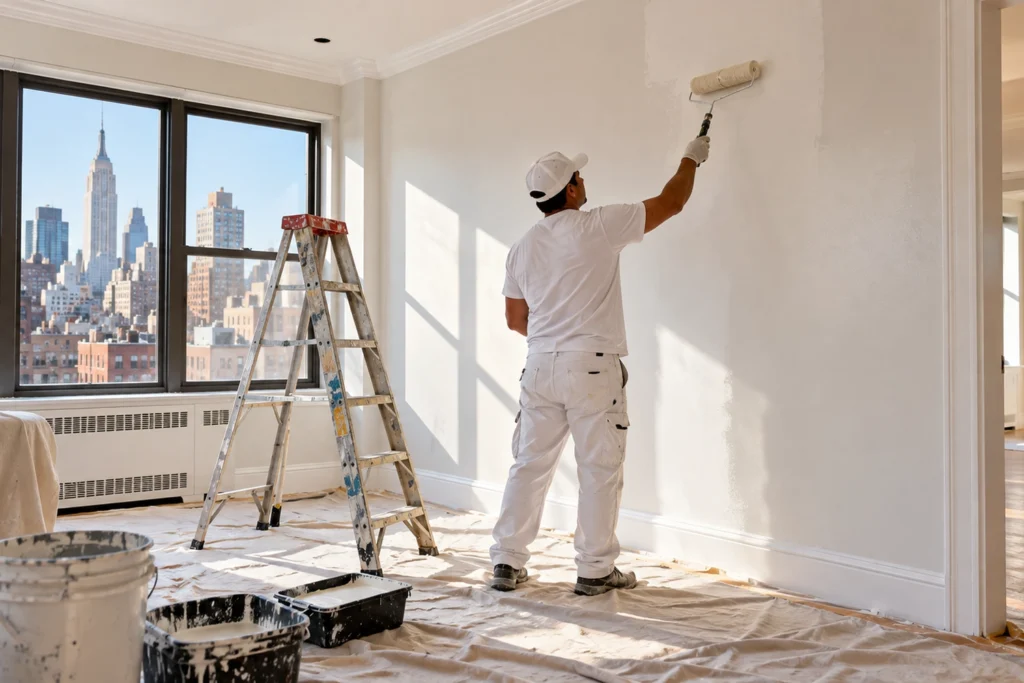
Our paint renovation work in Long Island City starts where every lasting paint job starts: with the surface underneath. In the towers, that means drywall seams, patched plaster and the scuffed walls of apartments turning between tenants; in the converted buildings, it means brick and plaster that have carried decades of coatings, and sometimes damage the paint is hiding rather than causing. As paint renovation and general contractors in New York, we inspect before we quote, so the scope names the preparation the walls actually need rather than the coats alone.
The work itself covers interior and exterior painting for apartments, lofts, common areas and commercial spaces, with drywall and plaster repair folded into the same job wherever a wall needs more than paint. Where a previous finish has failed — peeling, bubbling, cracking — we trace the cause first, whether it is moisture, movement or an incompatible coating, and fix that before the new finish goes on.
Star Construction INC has worked on homes and buildings across the New York area since 2018, and our Long Island City crews plan each job around the building it sits in: work hours, elevator bookings and protection for corridors and neighbours agreed before the first can is opened. Request a free, no-obligation estimate and we will walk the walls with you, explain what each surface needs, and put the full scope in writing.
Paint renovation is not a repaint. A repaint changes a colour; a renovation restores a surface — repairing what has failed, preparing what remains, and only then applying the finish. In Long Island City that distinction matters more than usual, because the two building stocks fail in different ways: tower apartments show seam cracks, scuffs and the wear of high turnover, while converted industrial walls show old coatings over brick and plaster, efflorescence and the marks of a century of use.
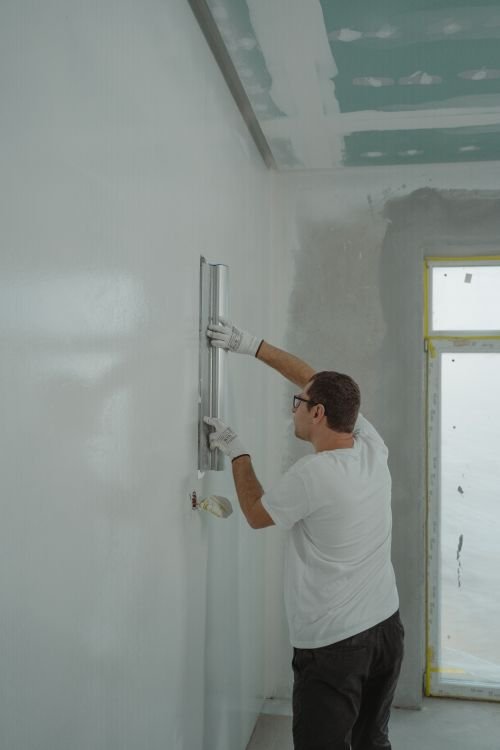
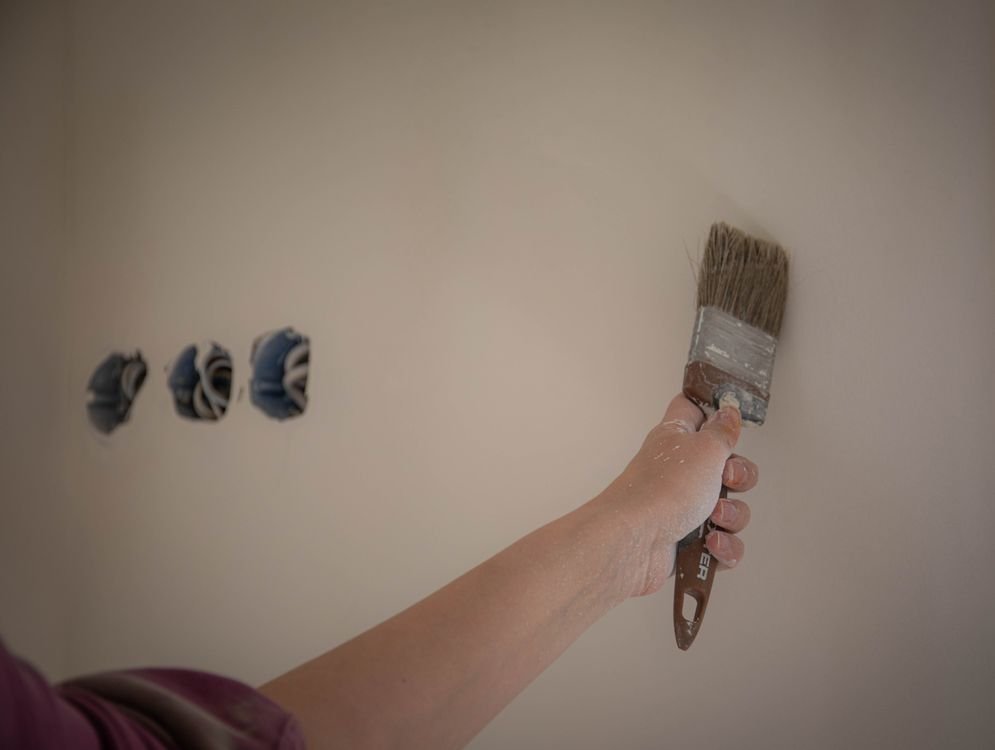
The process runs in order: inspection and diagnosis, repair of damaged plaster, drywall and trim, surface preparation matched to the substrate, priming, and finish coats. Preparation is the unglamorous bulk of the job — filling, sanding, caulking, sealing stains — and it is also the part that decides whether the finish lasts five years or fifteen. Skipping it is how a fresh coat starts peeling within a season.
Colour and finish selection come last in the sequence but first in the conversation, because light behaves differently forty floors up than it does in a brick loft. We work through color consultation and custom finishes with samples on the actual wall, in the room’s own light, so the colour you approve is the colour you live with.

If you are looking for paint renovation contractors in Long Island City — for a tower apartment, a loft, a common area or a commercial space — start with a walk-through, not a price. Tell us about the peeling paint, the brick you are unsure about, or the unit that needs turning quickly, and we will look at the surfaces, explain what each one needs, and give you a written scope with a free, no-obligation estimate.
See all the areas we serve on our service areas page, or read about our work as paint renovation contractors in New York. Star Construction INC has served homes and buildings across the New York area since 2018, and in Long Island City we plan every job around the building’s rules as carefully as the finish itself.
Our clients value the consistency, structural precision, and long-term performance we deliver on every project, from initial planning through final execution.


 Trustindex verifies that the original source of the review is Google.
 Trustindex verifies that the original source of the review is Google.
 Trustindex verifies that the original source of the review is Google.
 Trustindex verifies that the original source of the review is Google.
Contact us now to discuss your project and receive a no-obligation quote from our experts.
Every project is handled through a defined process that ensures accuracy, efficiency, and long-term structural performance from start to finish.
We begin by reviewing site conditions, understanding project objectives, and identifying structural requirements to establish a clear and practical direction before any work begins.
A detailed execution plan is developed, including material selection, sequencing of work, and coordination of labor to maintain consistency and avoid delays during construction.
Work is carried out using proven installation methods, with attention to structural integrity, proper reinforcement, and adherence to safety and quality standards.
A final walkthrough is conducted to verify workmanship, resolve any outstanding details, and ensure the completed project meets performance expectations and durability standards.
Good paint work is mostly preparation, and preparation is mostly honesty about the surface. Here is how we work in Long Island City, from the first walk-through to the final walk-through.
Tower apartments punish shortcuts. Drywall seams telegraph through a rushed coat, patches flash where the texture was never blended, and the light off the East River — bright, shifting, raking across the wall by afternoon — shows every flaw a dim hallway hid. So preparation is the job: seams taped and feathered, patches primed to the same porosity as the surrounding wall, and sample boards checked in the room’s own light before a full coat goes on.
We also plan the work around the building: work hours kept, corridors and elevators protected, neighbours considered. A repaint that disrupts the floor is a repaint the building remembers, and not fondly. The result should be walls that look as if they were always that colour — no flashing, no holidays, no roller marks catching the evening light.
Every loft owner with exposed brick eventually asks whether to paint it. Our honest answer: painting brick is effectively permanent. Paint fills the pores, changes how the wall breathes, and stripping it back to bare brick afterwards is rarely clean or complete. It also changes the maintenance — painted brick needs repainting, while bare brick mostly needs cleaning and repointing.
That does not mean the wall must stay as it is. Cleaning can lift a century of grime and transform the room; limewash offers a softer, more breathable colour that sits differently on the surface and can be renewed without the same commitment. We will show you cleaned, limewashed and painted samples side by side where possible, and tell you plainly which choice we would make in your loft — including when the answer is to leave the brick alone.
Colour chosen in a paint store looks different twenty floors up. River light is cooler and stronger than street light, and a shade that felt warm under shop lighting can read cold and flat against a white ceiling and a wall of glass. That is why we test colours on the wall itself, in large patches, and look at them morning and evening before anyone commits.
Our color consultation and custom finishes work is built around that test: undertones checked against flooring and furniture, sheen chosen for how the room is used — washable finishes where life happens, flat finishes where the light needs softening — and the final colour approved in the room, not in the store.
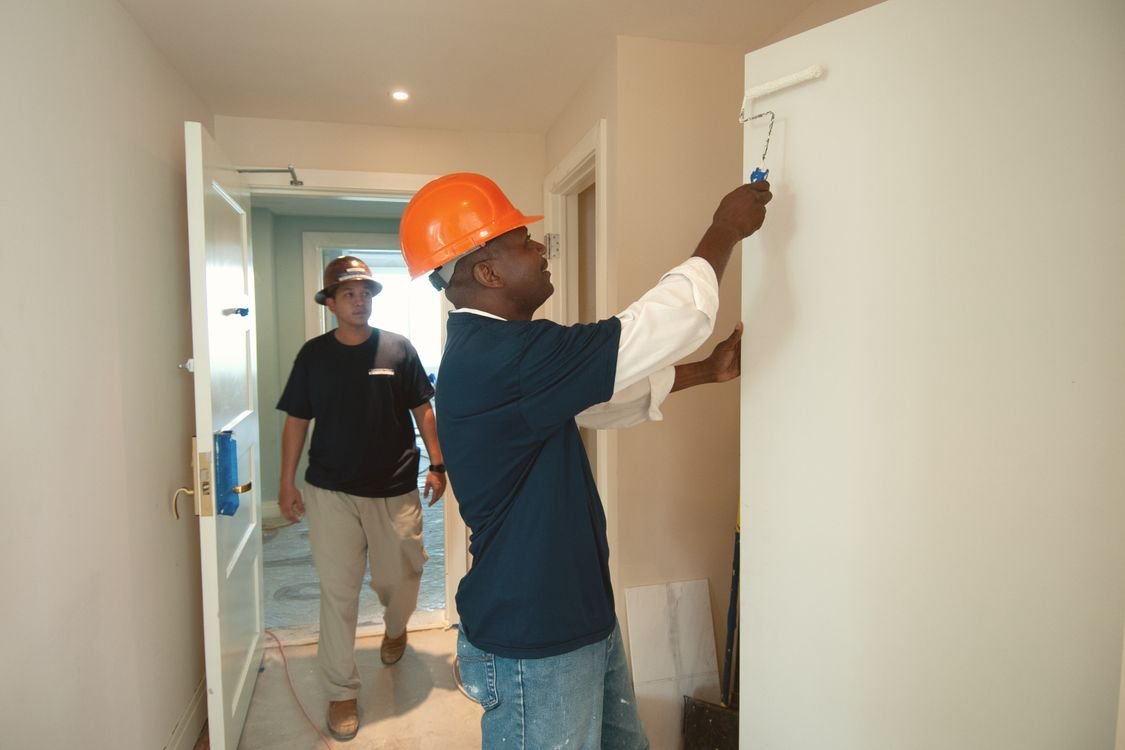
A painting job in a Long Island City tower runs on the building’s calendar as much as ours. We confirm the alteration requirements, work hours and elevator bookings with management first, then protect what is not being painted — floors, corridors, fixtures — before opening a can. Repairs come before primer: ceiling and trim work is repaired and caulked, cracks filled, stains sealed, so the finish coats sit on a sound surface.
Coats follow the manufacturer’s sequence — primer where the surface demands it, two finish coats as standard — with drying time respected rather than rushed, and waterproof coatings and finishes specified wherever a surface faces moisture. Each day ends with the site left tidy and the room usable where possible, and the job ends with a walk-through in daylight, because that is the light the walls will live in.
Yes, in most cases. Most Long Island City condo and co-op towers set the terms for any contractor work in the building: permitted work hours, which elevator materials and paint cans travel in, and the insurance certificates the contractor must provide before starting. Some buildings also require an alteration form or notice even for painting, so the first step is always a conversation with management.
We confirm the building’s requirements before scheduling, and we build the job around them — hours, elevator bookings and protection for corridors and common areas — so the work never stalls at the lobby desk. A free, no-obligation estimate includes that conversation; the cost of a painting job depends on the scope found on inspection.
Think carefully before painting brick, because painting it is effectively permanent. Paint fills the pores and changes how the wall breathes, and stripping it back to bare brick afterwards is rarely clean or complete; painted brick also changes the maintenance, since it needs repainting rather than just cleaning and repointing.
Cleaning can lift a century of grime and transform the room without that commitment, and limewash offers a softer, more breathable colour that can be renewed without the same permanence. We will show you cleaned, limewashed and painted samples where possible and tell you plainly which choice we would make — including when the answer is to leave the brick alone. The cost depends on the wall’s condition and the finish chosen.
Tower apartments combine two unforgiving conditions: raking light and flat, large wall planes. Light off the East River and through floor-to-ceiling glass strikes walls at a low angle for much of the day, and that light reveals every seam, patch edge and roller mark that softer, indirect light would hide. A coat of paint does not level a wall — it records it.
That is why the preparation matters more than the paint itself: seams taped and feathered, patches primed so they do not flash through, repairs sanded smooth before any finish coat goes on. When the preparation is done properly, the same light that exposes flaws becomes the light the finished room is admired in. The cost of getting it right depends on how much repair the walls need before painting begins.
It depends on the scope and the building. A single room with sound walls can often be completed in a few days; a full apartment with repairs, multiple coats and drying time between them takes longer, and the building’s permitted work hours and elevator bookings shape the calendar as much as the painting itself. Drying time between coats cannot be rushed without harming the finish, so a realistic schedule allows for it.
Before work starts we walk the space, agree the scope and give a realistic timeline; a free, no-obligation estimate includes that schedule. The cost depends on the rooms, the repairs and the finishes chosen.
Sometimes, but balcony and exterior elements often fall under the building’s rules rather than the individual owner’s. Railings, balcony ceilings, exterior doors and window frames may be common elements or governed by the building’s facade programme, so painting them can require management approval — and in some buildings, the work is done on the building’s schedule, not the apartment’s.
The first step is to check with management about what is yours to paint and what needs approval. Interior work can usually proceed regardless, and where exterior painting is permitted we include it in the same written scope. The cost depends on the elements involved and the approvals required.