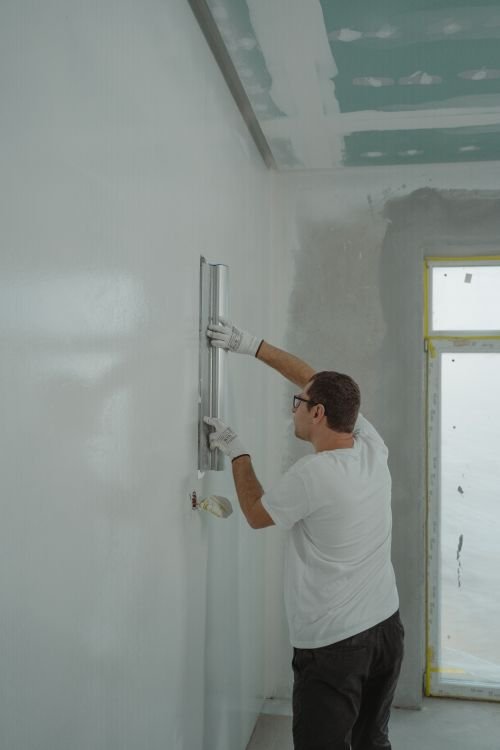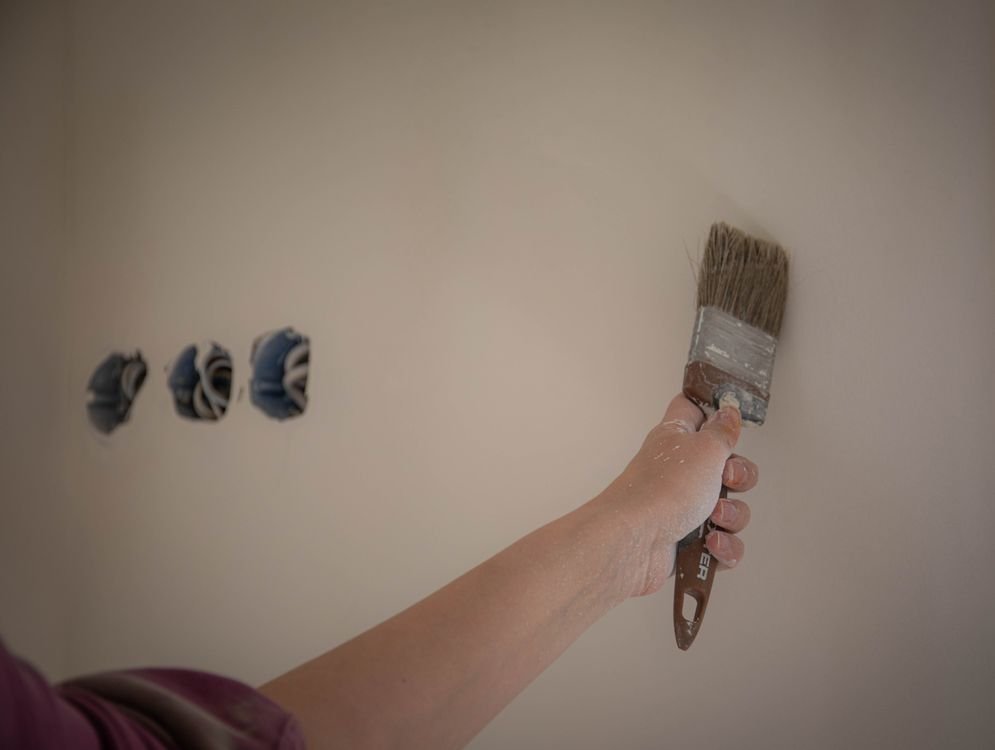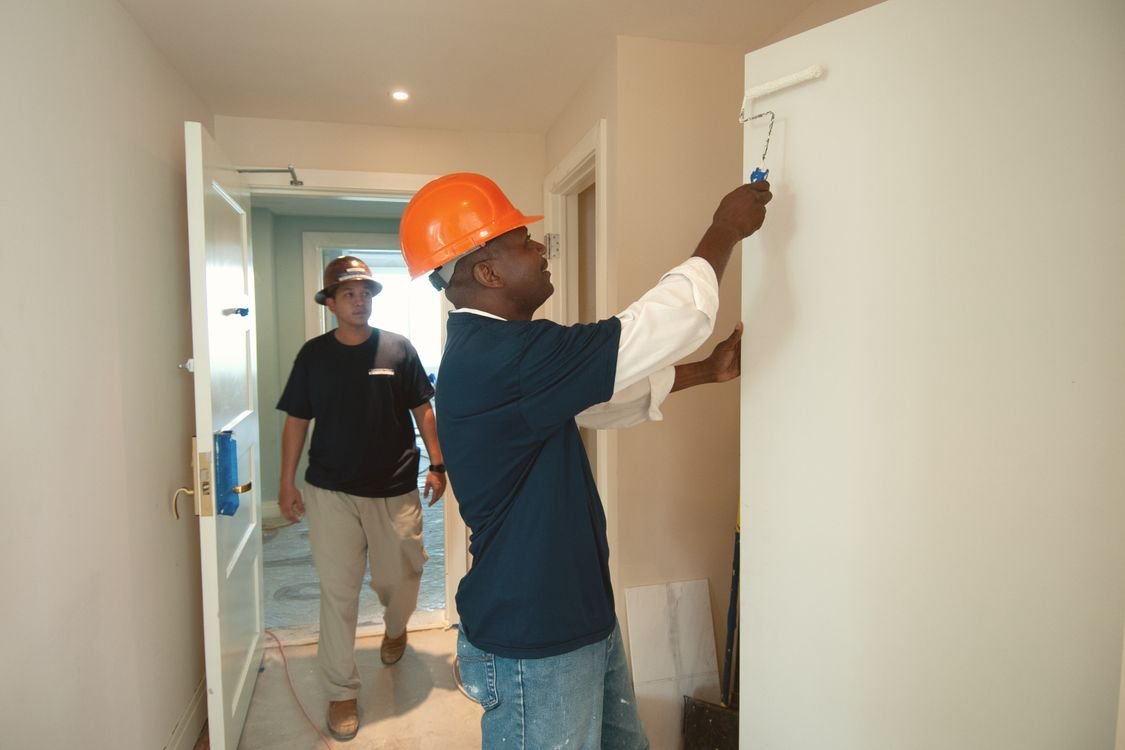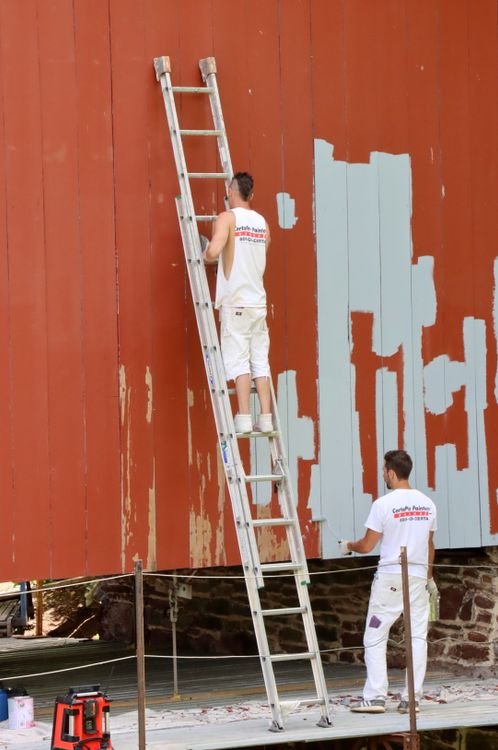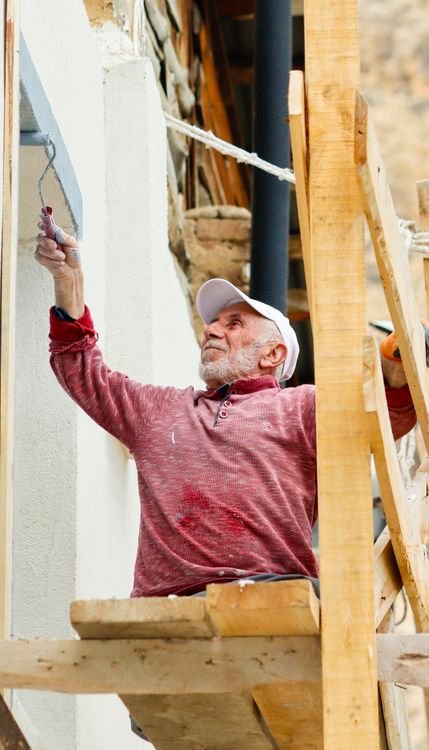
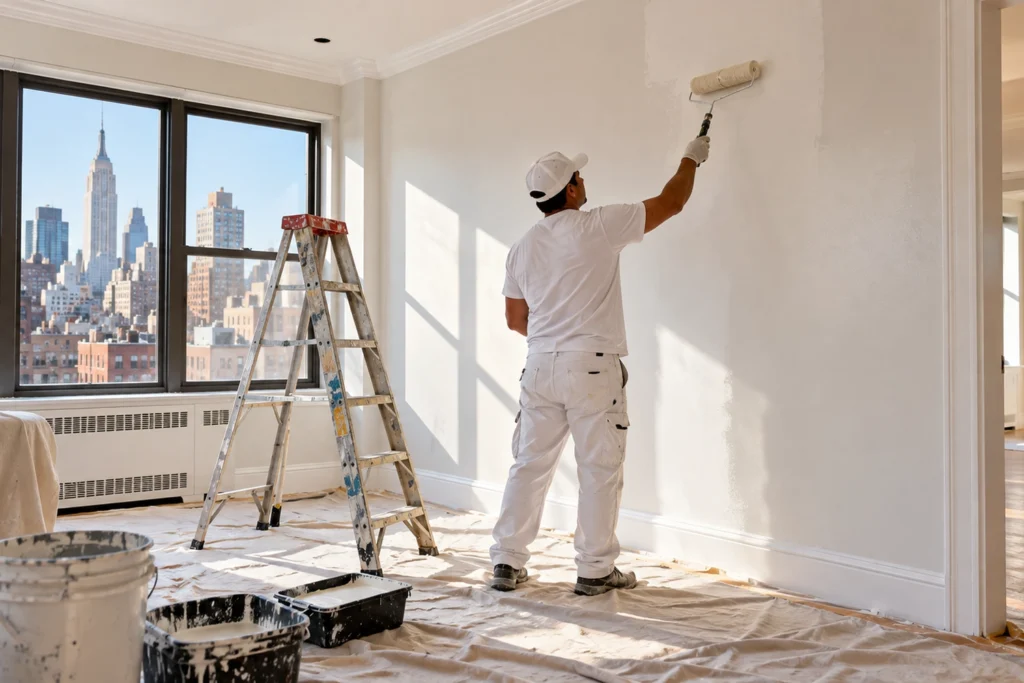
Paint renovation in Village of Pelham is restoration work before it is decoration. The village’s colonials and Tudors were built with real plaster, deep wood trim and, outside, wood siding, painted brick and stucco that have each aged differently, and a finish that ignores those differences will fail at the weakest surface first. Our paint renovation contractors in New York approach, adapted here house by house, treats preparation as the job itself: washing, scraping back failed paint, stabilising plaster, repairing wood and priming for old surfaces, so the colour that follows has something sound to hold to.
Inside, that means plaster walls and ceilings that are patched and primed before they are painted, and trim that is cleaned, repaired and finished by hand rather than buried under filler. Outside, it means siding and trim prepared board by board, painted brick judged on its own condition, and stucco repaired before it is coated. The same preparation discipline runs through our interior and exterior painting work, and where a Pelham house needs exterior painting after years of weather, the scope is set surface by surface, not by a single price for the whole house.
When painting is part of a wider project, it is coordinated with the rest of the work: if rooms are being opened up or refitted, our interior renovation contractors in Village of Pelham plan the painting sequence around the plaster, carpentry and finishing, so new work is painted once, properly, rather than touched up repeatedly. Every project ends with a walk-through, room by room and elevation by elevation, against the scope agreed before work began.
Paint renovation is not a single coat over what is already there. It is the full sequence that makes a finish last on an old house: inspection of every surface, cleaning, removal of paint that has failed, repair of the material underneath, priming suited to that material, and only then the finish coats. On a pre-war Pelham house that sequence matters more than the paint itself, because plaster, wood, brick and stucco each fail differently and each needs a different preparation.
General contracting, in this context, means the painting is not treated as an isolated trade. Plaster that needs stabilising, wood that needs repair, a windowsill that needs rebuilding and a wall that needs a new skim are planned and sequenced with the painting, so one trade does not undo the work of another. The result is a finish that belongs to the house: trim that still reads crisply, walls that are flat rather than patched over, and exteriors that shed Westchester weather instead of trapping it under a thick, brittle skin.

If you are looking for paint renovation contractors in Village of Pelham, request a free, no-obligation estimate from Star Construction INC and we will walk the rooms and the elevations with you, surface by surface, before quoting. We will tell you which surfaces need repair before painting, which can be prepared and painted as they are, and where a cheaper shortcut would cost more within a few seasons.
Star Construction INC has worked on homes since 2018, and our team also serves other parts of Westchester County — see all the service areas we cover. Whether the job is a single room, a whole interior, or the full exterior of a colonial or Tudor, the estimate will price the preparation honestly, in plain terms, so you can compare like with like.
Our clients value the consistency, structural precision, and long-term performance we deliver on every project, from initial planning through final execution.


 Trustindex verifies that the original source of the review is Google.
 Trustindex verifies that the original source of the review is Google.
 Trustindex verifies that the original source of the review is Google.
 Trustindex verifies that the original source of the review is Google.
Contact us now to discuss your project and receive a no-obligation quote from our experts.
Every project is handled through a defined process that ensures accuracy, efficiency, and long-term structural performance from start to finish.
We begin by reviewing site conditions, understanding project objectives, and identifying structural requirements to establish a clear and practical direction before any work begins.
A detailed execution plan is developed, including material selection, sequencing of work, and coordination of labor to maintain consistency and avoid delays during construction.
Work is carried out using proven installation methods, with attention to structural integrity, proper reinforcement, and adherence to safety and quality standards.
A final walkthrough is conducted to verify workmanship, resolve any outstanding details, and ensure the completed project meets performance expectations and durability standards.
Choosing a painter for a pre-war Pelham house is choosing a preparation standard. The finish you see on the last day is only as good as the surfaces underneath it, and on a colonial or Tudor those surfaces have a history: layers of paint, repaired plaster, wood that has moved with the seasons and exteriors that have faced a century of Westchester weather. The sections below describe how we approach each part of that work, so you can judge the scope, the sequence and the price on the same terms we do.
Pelham interiors are defined by their plaster and their trim. Walls are real plaster, often with hairline cracking at corners and around windows, and ceilings carry the same material over lath that has flexed for decades. Painting over that movement without stabilising it first simply prints the crack through the new coat within a season, so interior work here starts with the plaster itself: loose material is removed, cracks are opened, filled and meshed where needed, and the repair is primed before any finish coat goes on.
The village’s deep trim — wide casings, deep baseboards, panelled doors and, in the Tudors, woodwork with real depth — needs a different hand from a flat wall. Trim is cleaned, sanded and repaired rather than filled over, so profiles stay sharp and doors still close cleanly after painting. Where trim has been painted many times, edges that have softened are eased back carefully rather than built up further, and the final coats are laid on thinly enough to keep the detail readable.
Ceilings are treated as a surface in their own right, not as an afterthought to the walls. Stains are traced to their cause before they are sealed, repairs are feathered so they do not read as patches under ceiling light, and the finish is chosen for the room’s light rather than for a single standard sheen. Floors, fixtures and built-ins are protected throughout, and rooms are returned in the order they were found, with paint left labelled for future touch-ups.
Outside, a Pelham house usually presents three materials at once, and each is prepared on its own terms. Wood siding is washed, scraped back to sound paint, and repaired board by board: split or rotted boards are replaced, joints are re-caulked, and bare wood is primed before it sees a finish coat. Painting over failed siding paint without that work traps moisture and guarantees peeling, so the scope always states which elevations and which boards are included.
Painted brick is judged, not assumed. Some painted brick is sound and simply needs cleaning, spot priming and a breathable coating; some is holding moisture behind a hard, impermeable skin and will keep blistering until that skin is dealt with. The decision to repaint or to strip back is made elevation by elevation, after checking adhesion and moisture, and the reasoning is explained before the quote is accepted. Stucco is treated the same way: cracks are repaired and allowed to cure, patches are textured to match, and the coating is chosen so the wall can still dry.
Exterior work is also scheduled around the village’s seasons. Painting is done when surfaces are dry and temperatures suit the coating, with scaffolding and ladders set to protect plantings and walkways, and with the house left weather-tight at the end of every working day. That discipline is slower than a single-coat pass, and it is the reason an exterior finish here can be expected to last its normal service life rather than failing at the first hard winter.
Good preparation is not a slogan; it is a sequence, and it is the heart of this service. First, every surface is inspected in good light and the scope is written surface by surface, so there is no argument later about what was included. Second, surfaces are washed and allowed to dry, because paint will not bond to dirt, chalk or mildew. Third, paint that has failed — peeling, alligatoring or lifting at edges — is scraped and sanded back to a sound edge, and the feathered edge is checked by hand, not just by eye.
Fourth, the material underneath is repaired: plaster is stabilised and patched, wood is repaired or replaced, nail heads are set and spot-primed, and joints are caulked with a flexible sealant. Fifth, the whole surface is primed for its material — plaster primer for plaster, wood primer for bare wood, masonry primer for brick and stucco — rather than relying on a finish coat to do a primer’s job. Only then do the finish coats go on, with sanding between coats on trim and with drying times respected rather than rushed.
Where a house was built before 1978, preparation also follows lead-safe practices: paint is assumed to contain lead until testing shows otherwise, dust is contained and cleaned up, and debris is handled as the federal renovation rule requires. No step in this sequence is optional on a pre-war house, and no step is hidden in the price: the estimate lists the preparation, the repairs and the coats, so you can see exactly what you are paying for and what would change the price if the inspection found more damage than expected.
Colour in a period home works best when it is tested, not guessed. A colour that looks calm on a small swatch can dominate a room with deep trim and tall windows, and a colour that suits a south-facing room can turn cold on a shaded north elevation. We therefore test colours at a useful size, on the actual wall and in the actual light, and we leave the samples up for a day or two so you can see them in morning and evening light before committing.
A few practical principles help. Keep the palette restrained: one wall colour, one trim colour and, outside, one accent for doors and shutters is usually enough for a colonial or Tudor to read as a whole. Let the trim do the work — a crisp, slightly lighter trim against a mid-tone wall will show off deep casings better than a high-contrast scheme that fights them. Outside, choose colours that sit comfortably with neighbouring houses and with the brick or stone that will not be painted, rather than colours that depend on perfect light to succeed.
Sheen matters as much as hue. Flat and matte finishes hide the unevenness of old plaster; satin and semi-gloss on trim are easier to clean and show the profile to advantage; exterior finishes are chosen for weather resistance on each material. If you are unsure, start with the rooms you live in most and the elevation you see first, and let those decisions set the palette for the rest of the house.
Paint in a home built before 1978 must be assumed to contain lead until testing shows otherwise. That assumption changes how the work is done: surfaces are not dry-sanded or dry-scraped in a way that spreads dust, the work area is contained, and dust and debris are cleaned up and handled as the federal renovation rule requires. Testing — either a test kit result or laboratory testing of a paint sample — is what settles the question for a particular surface, and the result should be recorded in the scope before preparation begins.
The practical point for a Pelham owner is to raise the age of the house at the estimate stage, not after work has started. If lead is present, the preparation method, the containment and the clean-up all take longer, and the price should reflect that rather than treating a pre-1978 house like a newer one. No particular certification is claimed here; what matters is that the method follows lead-safe practice and that the scope says so in writing.
It depends on the condition of the paint and the brick underneath, and the answer should be made elevation by elevation, not for the whole house at once. If the existing paint is adhering well, the brick is dry and there is no blistering or efflorescence, repainting is usually the sensible course: clean the surface, spot-prime any bare or repaired areas, and apply a breathable coating that lets the wall dry.
If the paint is blistering, peeling in sheets or trapping moisture, repainting over it will only repeat the failure. In that case the failed coating needs to be taken back — by scraping, chemical stripping or, where appropriate, careful abrasive removal — until sound material is reached, the brick is allowed to dry, and any mortar repairs are made before recoating. Stripping is slower and therefore more expensive, and its cost depends on the area, the number of layers and the method required, which is why the estimate should state which elevations are to be repainted and which are to be stripped.
What is included should be written into the quote, not left to assumption. As a rule, a painting scope includes the ordinary preparation that painting requires: filling hairline cracks, patching small areas of damaged plaster, caulking joints and priming the repairs. That work is part of preparing a surface to paint, and it is priced as part of the painting scope.
Extensive plaster work is different. Replacing failed plaster over large areas, re-skimming whole ceilings or rebuilding sections of wall is plastering work in its own right, and it is usually priced separately, depending on the area and the condition found. The estimate should therefore distinguish between repair that is included in the painting price and repair that would be charged separately, so that a house with heavy plaster damage is not quoted as if it needed only filling.
There is no single interval that fits every house, because the answer depends on the material, the exposure and the quality of the previous preparation. As a practical guide, a well-prepared exterior in Westchester will often hold for around seven to ten years before it needs repainting, while sheltered elevations may last longer and south- and west-facing elevations, which take the most sun and weather, usually show wear first.
The warning signs are more useful than the calendar: paint that is chalking, cracking or peeling, caulk that has shrunk away from joints, and bare wood showing through are all reasons to repaint, even if the last job was recent. Conversely, a finish that still adheres well and still sheds water does not need repainting simply because a number of years have passed. Repainting early, while only the surface coat has worn, is usually cheaper than waiting until the preparation has to start again from bare material, and the cost of any repaint depends on the area, the material and the preparation required.
Cosmetic painting generally does not need a permit. Repainting walls, ceilings, trim, siding or stucco, and carrying out the ordinary plaster and wood repairs that painting preparation requires, is normally treated as maintenance rather than as construction work, and it does not change the structure, the layout or the services of the house.
Permits enter the picture when the project goes beyond painting. Work that changes the structure, moves walls, alters electrical or plumbing systems, or is part of a larger renovation may need village approval, and that approval is a general village matter, not a special painting rule. If your project includes anything beyond painting and preparation, raise it at the estimate stage so the scope can say clearly what, if anything, needs to be checked with the village before work begins.