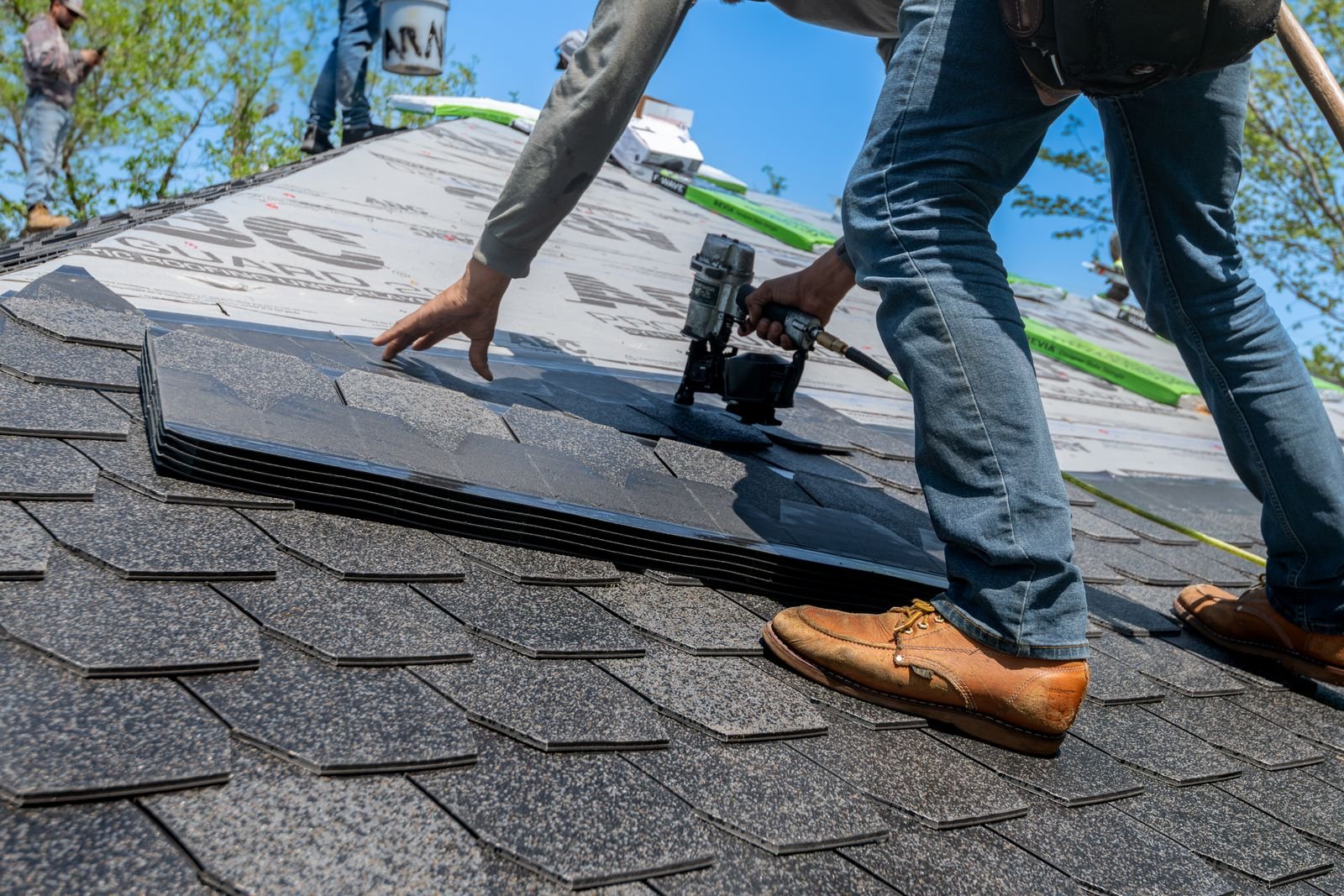
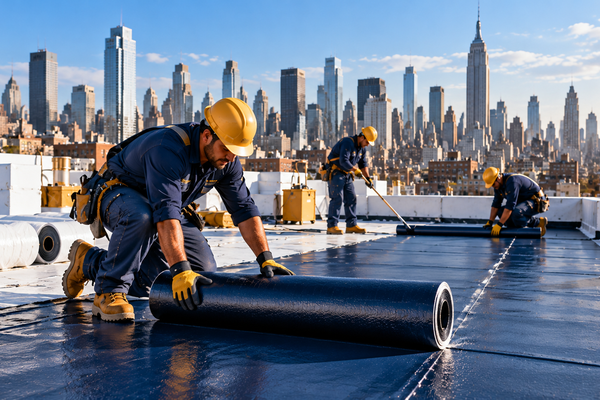
As roof repair contractors in New York, we understand the flat-roof systems common in Astoria — built-up, modified bitumen, and single-ply membranes behind parapet walls — and the way they fail on pre-war brick walk-ups, attached row homes, and co-ops and condos along 30th Avenue, Broadway, and Ditmars Boulevard. A roof here is rarely just a surface; it is a drainage system, a parapet detail, and a set of penetrations that must work together through freeze-thaw winters and summer storms. Star Construction INC serves all of our service areas with thorough inspections and lasting repairs, and in Astoria that starts on the roof itself, not from the street. We trace leaks to their source, check membranes, flashing, drains, scuppers, and parapet coping, and explain whether a targeted repair will hold or a full replacement is the honest answer. Work is planned around occupied buildings, shared roof access, and New York City Department of Buildings requirements for full replacements, including insulation and drainage. From emergency leak repairs and flashing replacement to torch-down, EPDM, and coating systems and complete flat-roof installations, the goal is the same: a watertight roof that drains properly, protects the floors below, and stands up to ponding water, clogged drains, and the shade and debris of mature street trees. That is the standard we apply to every Astoria roof, large or small.
Most Astoria roofs are flat or low-slope with parapet walls, requiring different expertise than pitched shingle roofs. We inspect membranes, flashing, drains, and parapet coping; repair blisters, splits, and ponding areas; replace failed flashing at walls and penetrations; and install full systems with tapered insulation for positive drainage. Every job addresses water management first. On a typical Astoria building, that means checking the roof-wall transition where most leaks begin, clearing drains and scuppers that ponding water depends on, and testing seams and patches that have already been repaired. Where a membrane has aged beyond patching, we strip to a sound base, add insulation that meets current energy requirements, and install a new membrane, flashing, and coping system as one coordinated assembly. Co-op boards and owners receive a clear account of what was found, what was repaired, and what should be watched, so a small leak does not become a ceiling, plaster, or structural problem below.

Building owners, co-op boards, and homeowners across Astoria call us for active leaks, ponding water, damaged flashing, skylight leaks, and aging membranes. We provide honest assessments — repairing where possible, replacing where necessary — with free inspections and detailed proposals. In Western Queens, that includes the flat roofs of brick rowhouses, multi-family homes, and pre-war apartment buildings around Ditmars and Steinway, where aging membranes and parapet flashing take the same seasonal punishment year after year. That work also covers skylight curbs, roof hatches, and the parapet flashing that ties a roof to the brick walls below, especially on buildings near Broadway and 30th Avenue where foot traffic, signage, and rooftop equipment add wear. If you notice a stain, a damp ceiling, or water after a storm, tell us where it appears and when it started; we will inspect the roof, trace the path of the water, and set out repair or replacement options in plain terms.
Our clients value the consistency, structural precision, and long-term performance we deliver on every project, from initial planning through final execution.


 Trustindex verifies that the original source of the review is Google.
 Trustindex verifies that the original source of the review is Google.
 Trustindex verifies that the original source of the review is Google.
 Trustindex verifies that the original source of the review is Google.
Contact us now to discuss your project and receive a no-obligation quote from our experts.
Every project is handled through a defined process that ensures accuracy, efficiency, and long-term structural performance from start to finish.
We begin by reviewing site conditions, understanding project objectives, and identifying structural requirements to establish a clear and practical direction before any work begins.
A detailed execution plan is developed, including material selection, sequencing of work, and coordination of labor to maintain consistency and avoid delays during construction.
Work is carried out using proven installation methods, with attention to structural integrity, proper reinforcement, and adherence to safety and quality standards.
A final walkthrough is conducted to verify workmanship, resolve any outstanding details, and ensure the completed project meets performance expectations and durability standards.
Flat roofs fail from water, not age. Here is how we keep Astoria roofs watertight.
Most Astoria leaks start at parapet walls, coping stones, or flashing details — not the field membrane. We specialize in these transitions, rebuilding deteriorated parapet flashing and installing proper counter-flashing that moves with the building.
Flat roofs in Astoria often pond after rain, accelerating membrane breakdown. We install tapered insulation systems and improve drainage with additional drains or scuppers, eliminating standing water that voids warranties.
Full roof replacements in NYC require DOB permits and must meet energy code insulation requirements. We handle the permit process, file required documents, and install to code — avoiding violations and ensuring your roof passes inspection.
Active leaks can’t wait. We provide prompt emergency repairs in Astoria — temporary waterproofing to stop damage, followed by permanent repairs. We document everything for insurance claims.
Signs include active leaks, ponding water lasting over 48 hours, blistered or split membrane, and deteriorated flashing. If repairs are localized and the membrane is under 15 years old, repair is usually sufficient. Widespread failure or multiple layers may require replacement. We provide free inspections with honest recommendations. See our comparison of roof repair vs replacement in New York.
We install modified bitumen (torch-down), EPDM rubber, and TPO single-ply systems — all proven in NYC’s climate. For coatings, we use elastomeric systems over sound substrates. Material choice depends on budget, building use, and existing roof composition.
Yes. Full roof replacements in New York City require DOB permits. We prepare and file all required documents, coordinate inspections, and ensure the installation meets energy code and building code requirements.
Yes, with limitations. We can perform emergency waterproofing and temporary repairs in cold weather. Permanent membrane installations require temperatures above 40°F for proper adhesion. We prioritize stopping active leaks, then schedule permanent work for suitable weather.
A typical residential flat roof (1,000-2,000 sq ft) takes 3-5 days. Larger commercial or multi-family buildings take 1-2 weeks. Timeline depends on tear-off requirements, insulation, and weather. We provide detailed schedules before starting.