A retaining wall almost never fails without warning. Long before a wall falls, it leans a little further each spring, bulges between its courses, cracks along its joints and starts weeping water where it never did before. Those signs are the wall telling you that the pressure behind it — soil and, above all, water — is winning. Catch them early and the fix is often a partial rebuild with proper drainage; ignore them and the fix becomes a full replacement, plus whatever the wall was holding back. Here are the seven warnings to walk your walls for, what each one means, and what can still be done at each stage.
Why Retaining Walls Fail: Water, Mostly
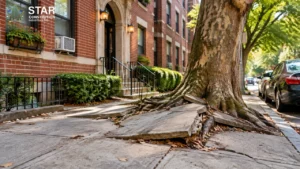
A retaining wall holds back far more than soil. After rain, the ground behind the wall saturates, and saturated soil is dramatically heavier and pushes dramatically harder than dry soil — engineers call it hydrostatic pressure, and it is the force behind most wall failures. A well-built wall manages that force with drainage: free-draining gravel behind the wall, a perforated pipe at its base, and weep holes that let water out through the face. When the drainage clogs, was never installed, or the backfill was native clay instead of gravel, every storm loads the wall like a slow hydraulic press. Add freeze-thaw prising at cracked joints and roots from nearby trees, and the wall’s margin disappears a season at a time. Almost every failure sign below is, underneath, a water story.
Sign 1: The Wall Is Leaning — and Sign 2: It Is Bulging
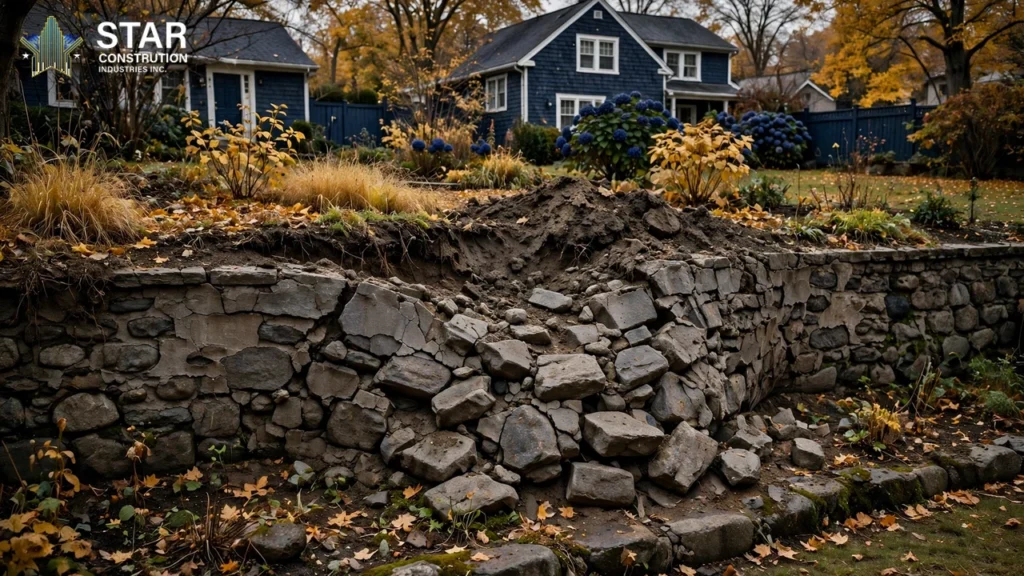
Tilt is the classic first warning. A wall that was plumb when built and now leans outward — even an inch or two over its height — is rotating under pressure it cannot shed, and lean accelerates: the further it tips, the more the soil’s weight works to tip it further. Bulging is its cousin: a section of the face bellies outward between courses while the top and base stay put, usually where water pressure concentrates or the wall’s internal bonding has broken down. Both mean movement has already happened. Neither gets better on its own, and a wall leaning over a driveway, walkway or boundary deserves prompt attention — a falling wall of stone or block is heavy enough to be a genuine safety hazard, not just a repair bill. Our masonry contractors in Mamaroneck measure lean against the wall’s height and construction before advising whether it can be stabilised or must come down and be rebuilt.
Sign 3: Cracks — and Which Ones Matter
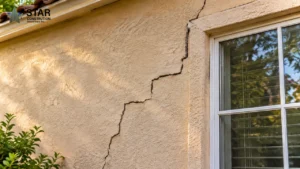
Not every crack is structural. Hairline cracks in mortar, following the joints in a shallow stair-step, are often the ordinary weathering of an old wall and a repointing matter. The cracks that matter are different: a crack that runs through the blocks or stones themselves, not just the joints; a horizontal crack along one course, especially with the wall face above it displaced outward; a crack that is wider at one end than the other, or wider this spring than last; and any crack with fresh, bright edges, which means the movement is recent and probably continuing. Mark a suspect crack’s ends with pencil and date them — a crack that grows past its marks over a season is a wall in motion, and that evidence is exactly what a contractor needs to see.
Sign 4: Water Where It Should Not Be — and Sign 5: Soil Where It Should Not Be
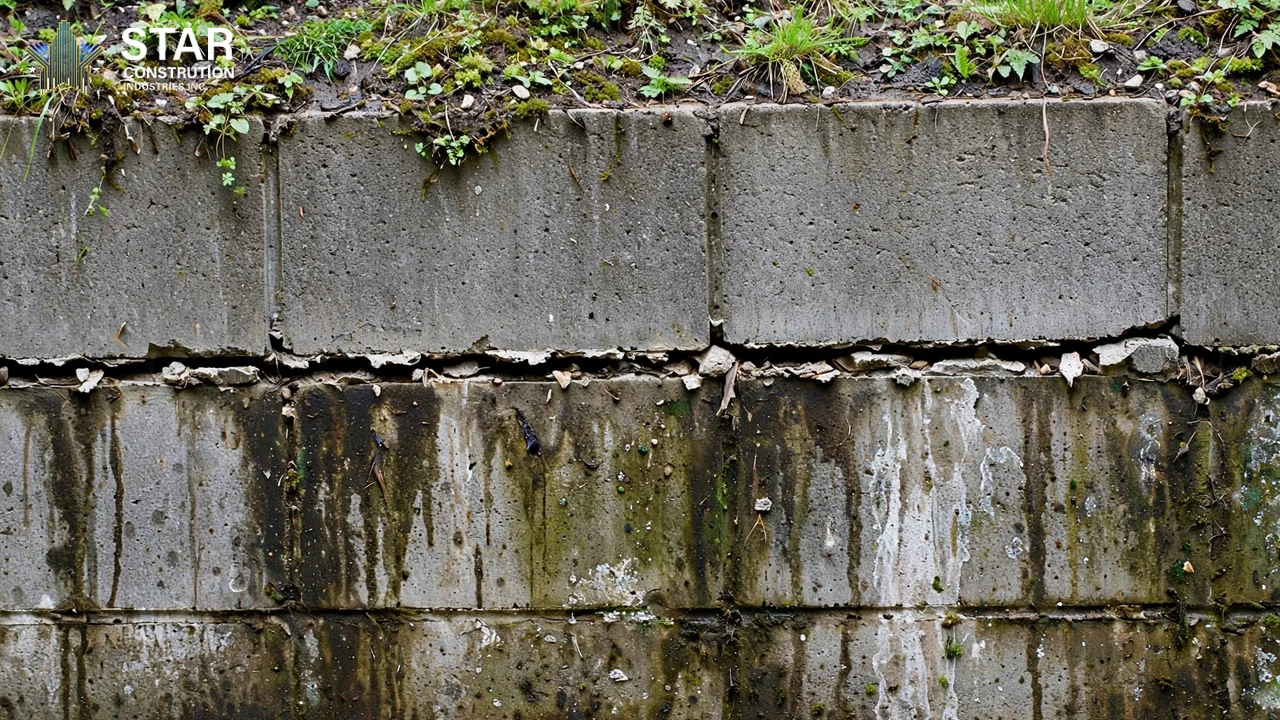
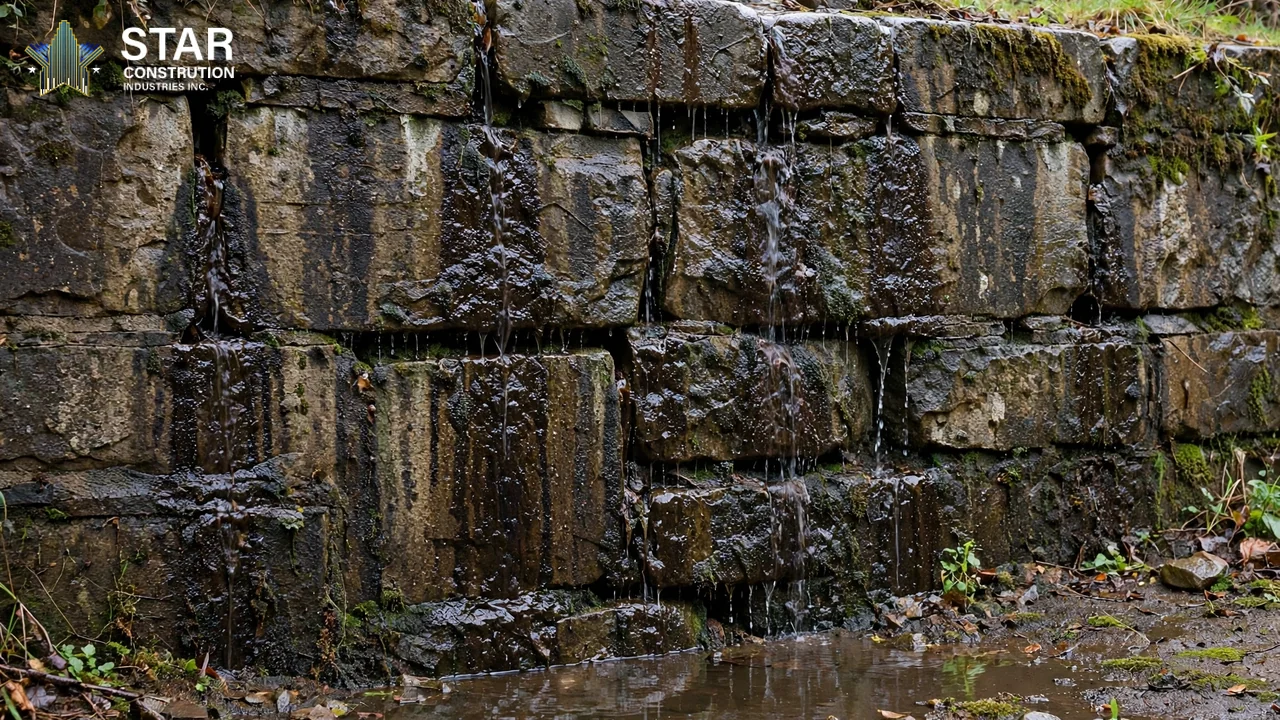
A retaining wall should weep a little through its weep holes after rain — that is the drainage working. The warnings are water arriving in new places: streaming through joints mid-wall, staining and efflorescence spreading across the face, soil-coloured water, or a base that stays boggy days after the garden has dried. Those mean water is travelling through the wall instead of around the pipe — the drainage behind it has failed, and the pressure driving the other signs on this list is building. Sign five follows: soil washing out — at the base, through joints, or in sinkholes appearing in the bed above the wall. Soil leaving means voids forming behind the face; the wall is losing the very ground it stands in and holds back, and sections can drop suddenly once the support goes.
Sign 6: Stones or Blocks Shifting — and Sign 7: The Ground Moving With the Wall
Individual units tell the truth early: stones rocking under hand pressure, blocks displaced forward out of the face’s plane, coping stones askew, a corner separating from the run of the wall. Each is a small local failure of the wall’s bond, and in a dry-stacked or older mortared wall they spread — one loose stone sheds its load onto its neighbours. Sign seven is the one homeowners miss because they watch the wall, not the garden: the ground itself moving. A fence above the wall drifting out of line, a patio or path behind the wall settling or cracking in a line parallel to it, a tree near the wall tilting — the retained earth is on the move, and the wall is going with it. By this stage a retaining wall specialist should look at it promptly, because the repair has become a rebuild with proper drainage, footings and backfill — the things that decide whether the next wall stands for five years or fifty.
What To Do When You See the Signs
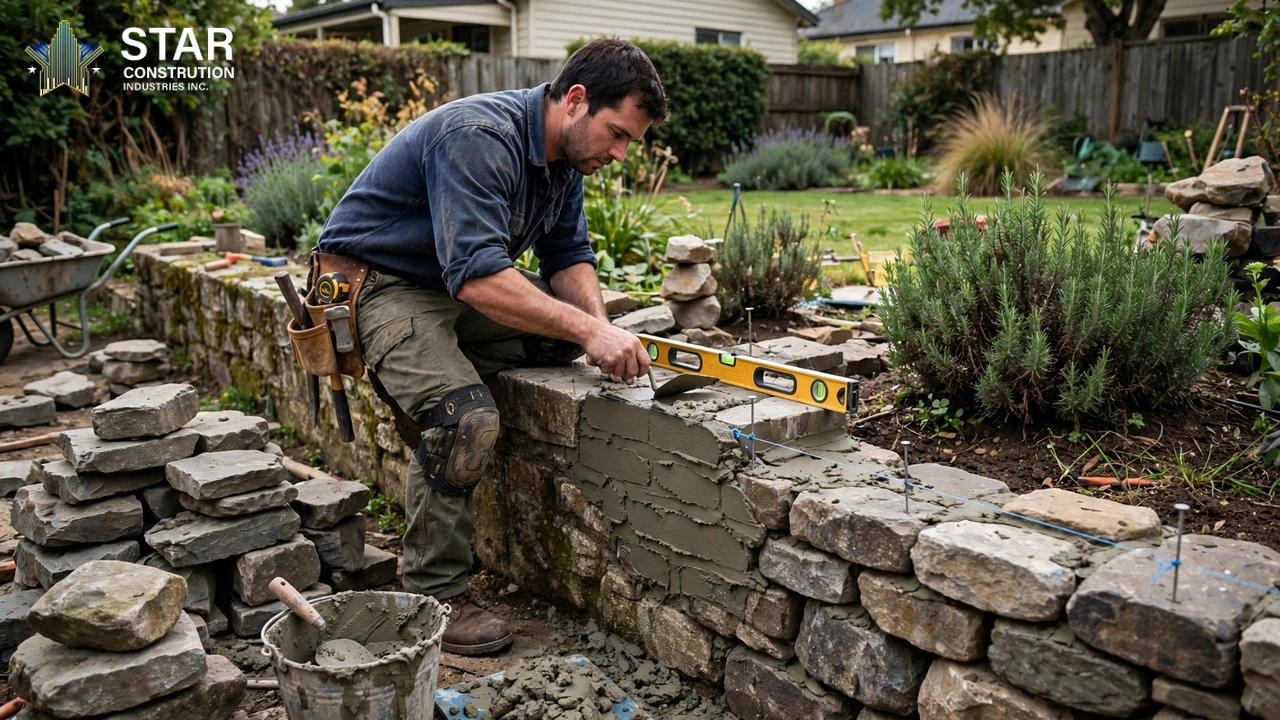
Start with water, because it is both the cause and the cheapest partial cure: clear weep holes, keep the ground above the wall graded so runoff does not pour over the top, and get downspouts discharging well away from the wall. Then get the wall assessed honestly. A wall with drainage failure but sound structure can sometimes be saved by excavating behind it, installing the drainage it always needed and repointing the face; a wall that has rotated or bulged through its structure cannot be pushed back and expected to stay — it is rebuilt, and rebuilding is also the moment to correct the original drainage mistakes so the new wall outlives the old. Star Construction INC has worked on homes across the New York area since 2018, and our masonry contractors in New York will tell you plainly which of those two jobs your wall needs. Request a free, no-obligation estimate and we will inspect, photograph and explain the options. The areas we cover are on our service areas page.
Frequently Asked Questions
What is the most common cause of retaining wall failure?
Water. Saturated soil behind the wall creates hydrostatic pressure that pushes far harder than dry soil. Most failed walls have clogged, missing or never-installed drainage — gravel backfill, a base drain and weep holes are what let a wall shed that pressure.
How much lean in a retaining wall is too much?
Any lean that is new or increasing matters. As a rough guide, a visible tilt of an inch or two over the wall’s height, or any lean that has changed since last season, means the wall is rotating under pressure and should be assessed — lean accelerates once it starts.
Can a leaning or bulging retaining wall be repaired, or must it be rebuilt?
A wall whose structure is sound but whose drainage has failed can sometimes be saved by excavating behind it, installing proper drainage and repointing. A wall that has rotated, bulged through its courses or lost its footing must be rebuilt — pushing it back does not restore its strength.
Which cracks in a retaining wall are serious?
Cracks that run through the stones or blocks themselves, horizontal cracks with the face above displaced, cracks that widen along their length or grow between seasons, and cracks with fresh bright edges. Hairlines confined to mortar joints are usually ordinary weathering.
How long should a retaining wall last?
A properly built wall — sound footing, gravel backfill, working drainage — should stand for decades. Most premature failures trace back to drainage that was skipped or has clogged, which is why maintaining weep holes and surface grading matters as much as the original build.