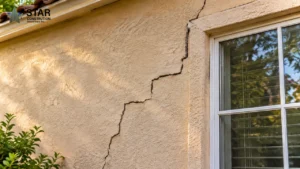

Every Hastings-on-Hudson front door is reached by a climb. The village’s pre-war houses sit above their streets on sloped, terraced lots, and the steps that connect street to front door do more work than any other masonry on the house. They carry every arrival and departure, take the hill’s runoff from above, and spend each winter in the freeze-thaw cycle that pries at mortar joints and stone faces. A stoop that looks tired in October can look dangerous by March — and one that looks dangerous may only need a careful repair. Telling the difference is the whole job. Star Construction INC has repaired and rebuilt stoops and steps across the New York area since 2018; request a free, no-obligation estimate and we will walk the run with you and tell you plainly which side of the line yours is on.
Signs the Damage Is Only Skin-Deep
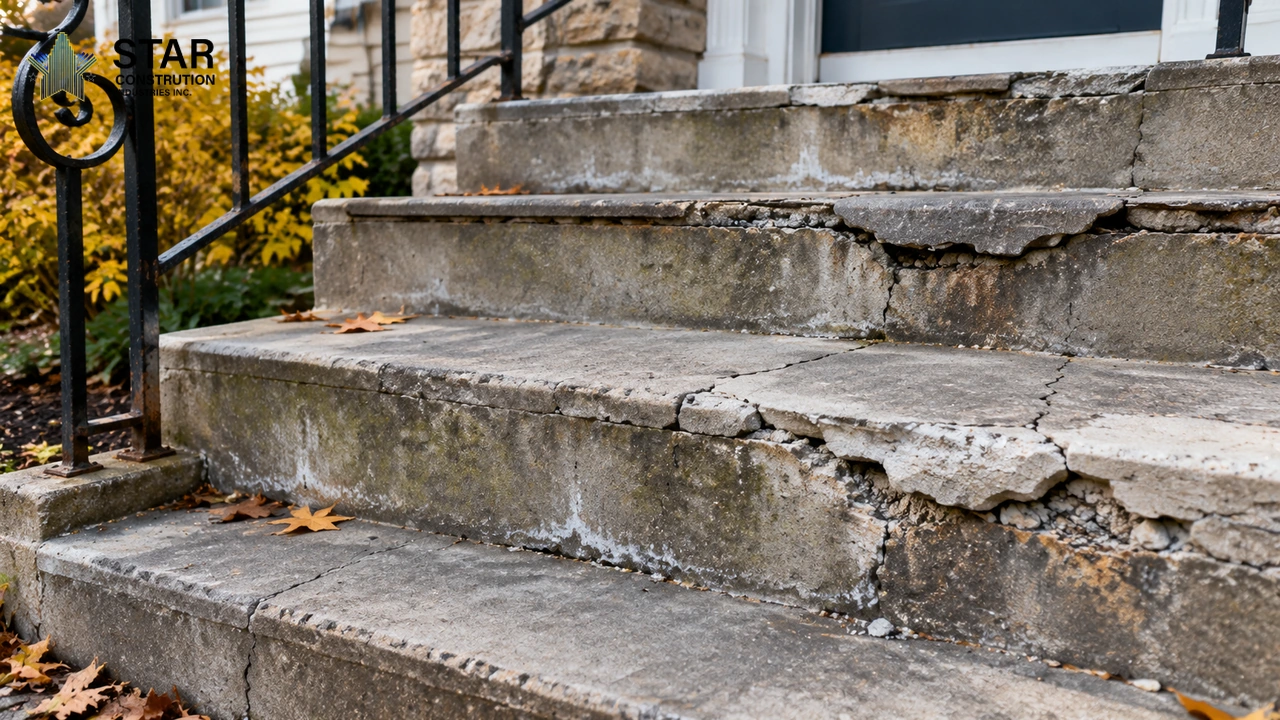
Start with what the surface is telling you. Spalling treads — where the face of a step flakes or pops while the body of the step stays solid — are the classic surface failure on a hillside run. So are unmoving hairline cracks, step nosings rounded by decades of feet, and joint mortar washed out or gone sandy to the touch. None of these, alone, means the run is failing. They mean the weather has worked on the parts of the stoop that were always meant to be sacrificial: the skin, not the structure.
The repair menu for skin-deep damage is short and honest. A spalled tread can be patched with matched material. A worn run can be resurfaced. Open joints can be raked out and repointed. A single tread cracked clean through, while its neighbors stay sound, can be cut out and replaced on its own. Patching and resurfacing are everyday work for concrete repair and installation contractors, and on a sound run, they buy years — not months — before anything more is needed.
The test is simple: if nothing rocks, the run has not moved, and water drains off the treads, the damage is skin-deep.
Signs the Structure Is Going
Structural failure announces itself differently, and patching over it wastes money. Steps pulling away from the house — a gap opening where the run meets the wall, growing a little each year — mean the run is moving independently of the building. A run that tilts or settles, so one side sinks and the treads no longer sit level, has lost its footing. Treads that rock underfoot, water that pools at the base of the run instead of draining away, and rust damage at railing posts, where expanding rust splits the stone around the post pocket, all point the same way: the problem is underneath, not on top.
These are rebuild signs because a patch inherits the movement that caused the damage. A resurfaced tread on a settling run cracks along the same line within a season. Mortar packed into a joint on a run that is pulling away from the house opens again as the gap grows. And water pooling at the base does not just stain — it undermines the footing a little more with every storm. When the base of the run is failing, the walk it lands on is usually part of the same conversation, which is why our sidewalk and driveway contractors in Hastings-on-Hudson look at the whole approach, not just the steps.
What a Proper Rebuild Involves
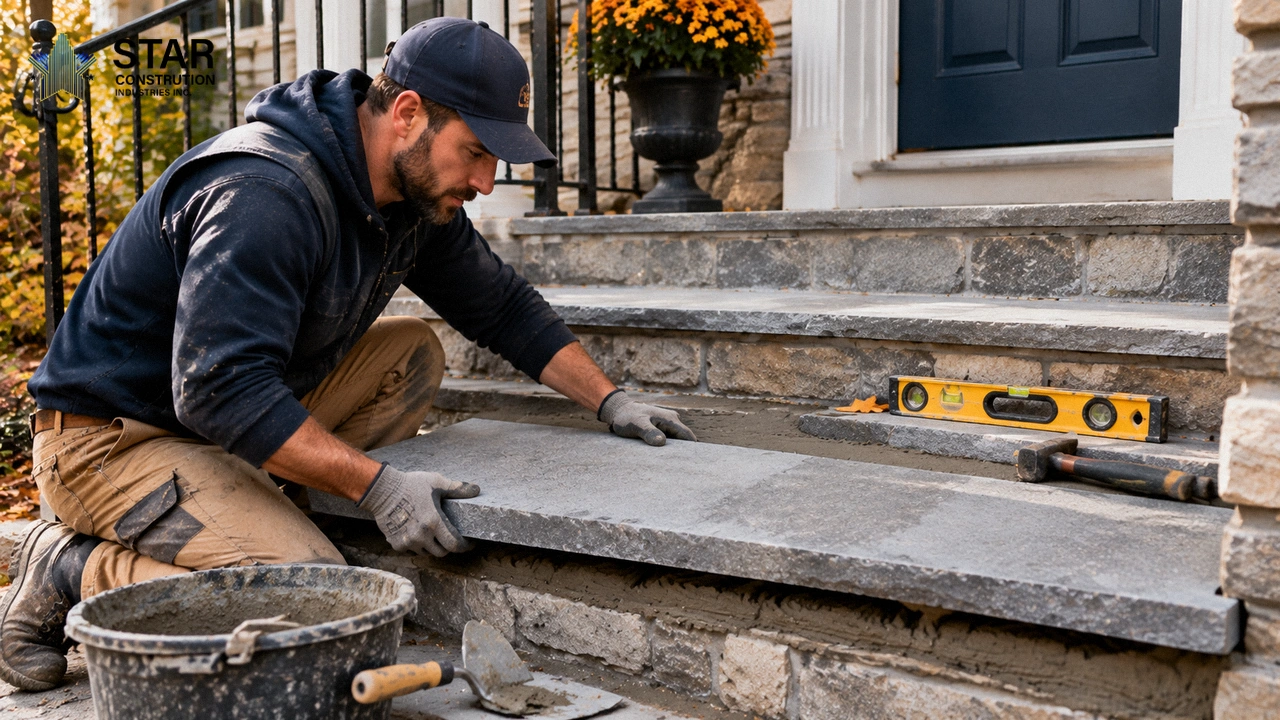
A proper rebuild starts where nobody sees it: the footing. On a hillside run, the footing must sit below frost depth, so the freeze-thaw cycle cannot heave it, and it must be built for the slope — level, drained, and tied into ground that is not going anywhere. Most failed stoops were never given this; they were set on shallow pads the hill and winters moved a fraction at a time until the whole run followed.
Drainage at the base of the run comes next. Water must be sent past the steps, not allowed to sit against them. That means a landing graded away from the house, joints that shed rather than hold water, and attention to what the slope above delivers — a gutter that overshoots, a bank draining onto the top tread. A rebuild that ignores the water above it is a repair waiting to fail.
Then comes the visible work: matching period materials on pre-war homes. Bluestone, brick, or concrete — the choice should read as the house’s own. Treads are set level with a slight fall forward so water leaves them, joints are finished to match the original, and the run is built to be walked on for decades. For concrete runs, our concrete repair and installation contractors in Hastings-on-Hudson pour and finish to the same standard as the rest of the village’s concrete.

Railings and the Safety Side
A stoop’s railing deserves its own inspection, because it fails on a different schedule from the steps. Give it the wobble test: grip the rail firmly and push. A sound rail barely moves. A rail that shifts in its socket is telling you the post pocket is failing — and post pockets are water traps. Rain runs down the post, sits in the pocket, freezes, and splits the stone a little wider each winter, until the post is held by habit rather than masonry.
On a hillside flight, a loose railing is not a cosmetic problem. It is the thing a person grabs on ice, in the dark, carrying groceries — exactly when it must hold. Fix a wobbling rail before winter, not after the first fall. Keep the run clear of ice and leaves, make sure the rail is sound at top and bottom, and do not lean on a rail that moves: it is asking to be reset, not tested.
Looking After Repaired or Rebuilt Steps
Repaired or rebuilt, a stoop still lives on a hillside, and a little routine care is what keeps a repair from becoming a rebuild. Seal the joints on a sensible cycle — every few years is honest general guidance — so water cannot sit in them and freeze. Keep runoff off the run: gutters discharging above the steps, and grading that sends the slope’s water around the flight rather than down it, matter as much as the steps themselves.
Winter habits matter too. Use de-icing salt sparingly; heavy salting drives brine into joints and accelerates scaling. Sand gives grip without the chemical attack, and clearing ice promptly beats letting meltwater sit and refreeze overnight. A stoop kept dry, drained, and sealed ages the way the village’s best old runs have — slowly, and gracefully.
Most stoops give plenty of warning before they give trouble. Read the run as this article describes — surface or structure, water or movement — and the decision mostly makes itself. Star Construction INC repairs and rebuilds stoops and steps across the New York area; request a free, no-obligation estimate and we will inspect the run and tell you plainly what it needs. The areas we cover are on our service areas page.
Frequently Asked Questions
Does a stoop repair cost much less than a rebuild?
In relative terms, yes — a repair is usually a fraction of a rebuild’s cost, because it reuses the sound structure and only replaces what has failed at the surface. A rebuild costs more because it replaces the whole run, including the footing and drainage, but it ends the cycle of patching the same failure. The exact figure depends on the run’s size, material, and how far the damage has gone.
How long does a typical stoop rebuild take?
Most residential rebuilds take several days to a couple of weeks, depending on the size of the run, the material chosen, and the weather. A short concrete flight can be turned around in days; a long terraced flight in stone takes longer, and curing time for mortar and concrete is part of the schedule either way.
Can a single damaged step be replaced?
Yes, when its neighbors are sound and the run has not moved. A single tread cracked through can be cut out and replaced, matched to the rest of the run. If the steps around it are rocking or the run is settling, replacing one tread treats a symptom — look at the whole run.
Bluestone or concrete for replacement steps?
Bluestone suits pre-war homes beautifully — it matches the village’s older runs, wears hard, and ages well — but it costs more than concrete. Concrete is practical and versatile, finished in several ways, and suits simpler runs and tighter budgets. The right choice depends on the house, the existing work, and what you want the run to look like in twenty years.
What is the best time of year for stoop work in New York?
Spring through fall, when temperatures let mortar and concrete cure properly. Deep-winter work is limited to urgent stabilization — making a run safe and weather-tight — with the full mortar work waiting for the first mild spell. Autumn is a good time to book, before freeze-thaw tests the run again.