New York City’s Facade Inspection and Safety Program — FISP, the law most owners still call Local Law 11 — does not run on a single deadline. Cycle 10, the inspection cycle now underway, is really three deadlines, and which one binds your building is decided by something as unglamorous as the last digit of its block number. Miss that detail and a board can spend a year believing it has time it does not have. This timeline sets out the three sub-cycles, what the words on a FISP report actually mean, the clocks that start the day a report is filed, what the Department of Buildings’ published penalty schedule says about letting any of it slide, and the sequence an owner follows from engaging an inspector to holding a filed amended report. It is a summary of the published rules, in the order you meet them — not legal advice.
Which Sub-Cycle Is Your Building In?
FISP applies to buildings over six stories. Once a building is in the program, its owner must engage a Qualified Exterior Wall Inspector — a QEWI — to inspect the exterior walls and file a report with the Department of Buildings once per cycle. Cycle 10 divides the city’s covered buildings into three sub-cycles by the last digit of the building’s tax block number — not its street address, and not its borough.
Sub-Cycle 10A covers buildings whose block numbers end in 4, 5, 6, or 9, and its filing window closes on 21 February 2027. Sub-Cycle 10B covers blocks ending in 0, 7, or 8, closing on 21 February 2028. Sub-Cycle 10C covers blocks ending in 1, 2, or 3, closing on 21 February 2029.
The filing window is a window, not a single day: a report may be filed at any point during the sub-cycle’s two-year span, and the closing date is the last day, not the first. The buildings with the earliest deadline are the ones whose owners should already be moving — engaging the QEWI, booking the inspection, and closing out any repair work the last cycle left unfinished before the new report lands. A building’s block number appears on its tax and Department of Buildings records, and a QEWI will confirm the sub-cycle as part of the engagement. If you own or manage a Manhattan building and are unsure where it falls, our Local Law 11 contractors in Manhattan work from these same published dates every day — but the sub-cycle itself is a matter of public record, and it is worth confirming before any other planning happens.
SAFE, SWARMP, UNSAFE — What the Words on the Report Mean
When the QEWI’s report arrives, its headline is a single word — and that word sets everything that follows.
SAFE means the inspection found no conditions requiring repair this cycle. The building is filed as safe, and the owner’s FISP obligation for the cycle is, in substance, discharged until the next cycle comes around. It is the cleanest outcome the program offers.
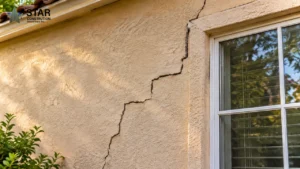
SWARMP stands for Safe With a Repair and Maintenance Program. The building is safe to occupy, but the inspector found defects that must be corrected within the window the report states: deteriorated mortar joints, cracked masonry units, failed sealant, corroded steel lintels, a coping stone working loose. The list is the repair scope, and the window is part of the filing, not a suggestion attached to it.
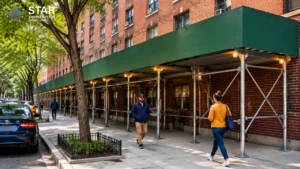
UNSAFE is the word nobody wants. It means the inspector found conditions posing a danger to public safety — loose masonry, an unstable parapet section, material at risk of falling. An UNSAFE filing requires immediate protective measures — a sidewalk shed, netting, fencing, whatever keeps the public clear of the hazard — and prompt repair. The classification is the QEWI’s professional determination, filed with the Department of Buildings; it is not something an owner can negotiate down.
The Clocks That Start When the Report Lands
The report is not the end of the process; it is the starting gun for three clocks.
For an UNSAFE condition, the owner must complete the repairs within 90 days of the report’s filing, and the QEWI must then file an amended report within two weeks of the correction. The protective measures stay in place until the amended report is accepted — a shed that comes down early leaves the building exposed in every sense.
For a SWARMP condition, the repairs must be completed within the window stated in the report. Miss that window and the condition can be reclassified as UNSAFE, with the UNSAFE clocks and penalties attached. A SWARMP item deferred across a whole cycle is how a manageable repair becomes an emergency filing.
One date deserves a red circle on every 10A building’s calendar: 21 February 2027. It is the day the 10A filing window closes — and the day that Cycle 9A SWARMP conditions not corrected by then become UNSAFE. A 10A building carrying an uncorrected 9A SWARMP item faces both deadlines at once: a new report to file and an old condition that has just escalated. The practical lesson is simple: the 90-day UNSAFE clock runs from filing, not from when the board gets around to discussing it. Engage the repair contractor as soon as the report lands.
What the Penalties Look Like If It Slides
The Department of Buildings publishes a civil penalty schedule for FISP, and the figures below are that published schedule — a description of what the city charges, not legal advice and not a prediction about any one building.
A late filing runs $1,000 per month. A failure to file at all runs $5,000 per year. An uncorrected SWARMP condition carries a $2,000 civil penalty. And UNSAFE exposure can run far higher — up to $25,000. The penalties are cumulative in effect, and the repair itself still waits to be paid for.
The Owner’s Sequence, Step by Step
Put together, the owner’s path through Cycle 10 looks like this.
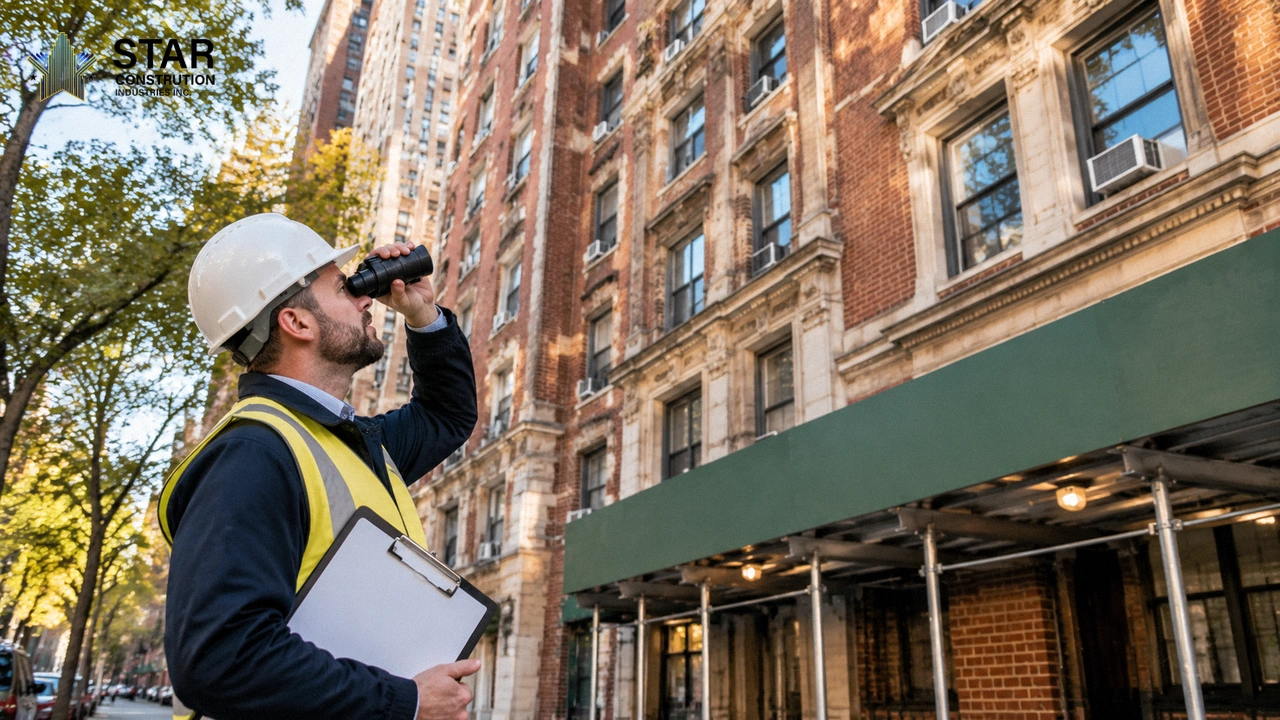
First, engage a QEWI. The Qualified Exterior Wall Inspector is a licensed design professional qualified under the program; the QEWI inspects the facade and files the report with the Department of Buildings. This part matters enough to say plainly: Star Construction performs REPAIRS only. We do not inspect and we do not file. The inspection and the filing belong to the QEWI.
Second, review the report’s repair scope line by line. Separate the UNSAFE items from the SWARMP items, note the stated windows, and check whether any Cycle 9A SWARMP conditions are still open. The scope, not the summary, is what gets quoted.
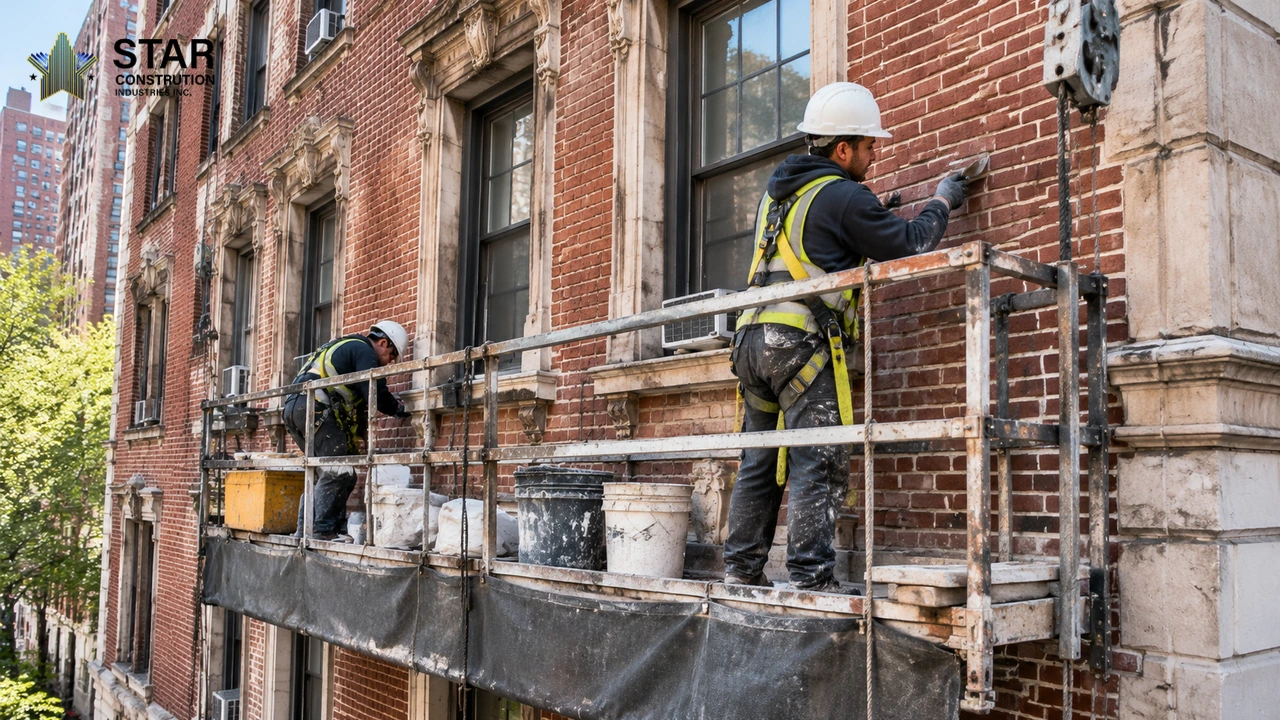
Third, get the repair work quoted and done. Our facade repair and restoration contractors in Manhattan carry out the masonry, parapet, coping, flashing and waterproofing scope that FISP reports typically name, and where the report requires protective measures — sidewalk sheds, netting, fencing — those go up first and stay until the work is accepted.
Fourth, the QEWI files the amended report once the repairs are complete. The owner does not file the amendment; the QEWI verifies the corrections and files it. And fifth, keep the full paper trail — the report, the permits, the photographs, the invoices, the filings — for the next cycle. The next cycle’s QEWI will want the history.
Star Construction INC has carried out facade repair work for New York City buildings since January 2018. Request a free, no-obligation estimate and we will read the report’s scope with you and quote the repair work it names. The areas we cover are on our service areas page.
Frequently Asked Questions
How do I find out which Cycle 10 sub-cycle my building is in?
Look at the last digit of your building’s tax block number: 4, 5, 6 or 9 puts you in Sub-Cycle 10A, closing 21 February 2027; 0, 7 or 8 puts you in 10B, closing 21 February 2028; 1, 2 or 3 puts you in 10C, closing 21 February 2029. The block number appears on the building’s tax and Department of Buildings records.
My report says SWARMP — how long do I have to make the repairs?
SWARMP items must be corrected within the window stated in the report itself — the report names the timeframe, and there is no separate grace period to assume. If the window passes without correction, the condition can be reclassified as UNSAFE, so treat the stated window as the deadline.
Can repair work start before the FISP report is filed?
Yes. Repairs to known defects can begin before filing, and early repair work often simplifies the report that follows. But doing the work does not replace the filing — only the QEWI’s filed report, and where needed the amended report after corrections, satisfies the obligation.
Who files the amended report after the repairs are done?
The QEWI. Once repairs are complete, the QEWI verifies the corrections and files the amended report with the Department of Buildings. Star Construction performs the repairs; it does not inspect or file.
What happens if we miss our filing window?
The Department of Buildings’ published schedule applies: late filing runs $1,000 per month, and failure to file $5,000 per year, with further exposure if conditions are UNSAFE or SWARMP items go uncorrected. The practical move is to engage a QEWI and file as soon as possible — the penalties accrue with time.