
The 7 warning signs are damp or stained basement walls, white efflorescence deposits, a persistent musty smell, cracks in walls or floors, water at the wall-floor joint, a sump pump that runs constantly or fails, and mould growth or peeling paint. Any one of them means water is already finding a path in — and the fix is cheaper before the next heavy storm than after it.
Basement water rarely starts with a flood — a damp patch, a white stain, or a smell noticed only after the door has been closed for days.
The Warning Signs, Grouped
Walk the basement slowly, wall by wall, in good light, checking behind stored items and in corners.
Visible water
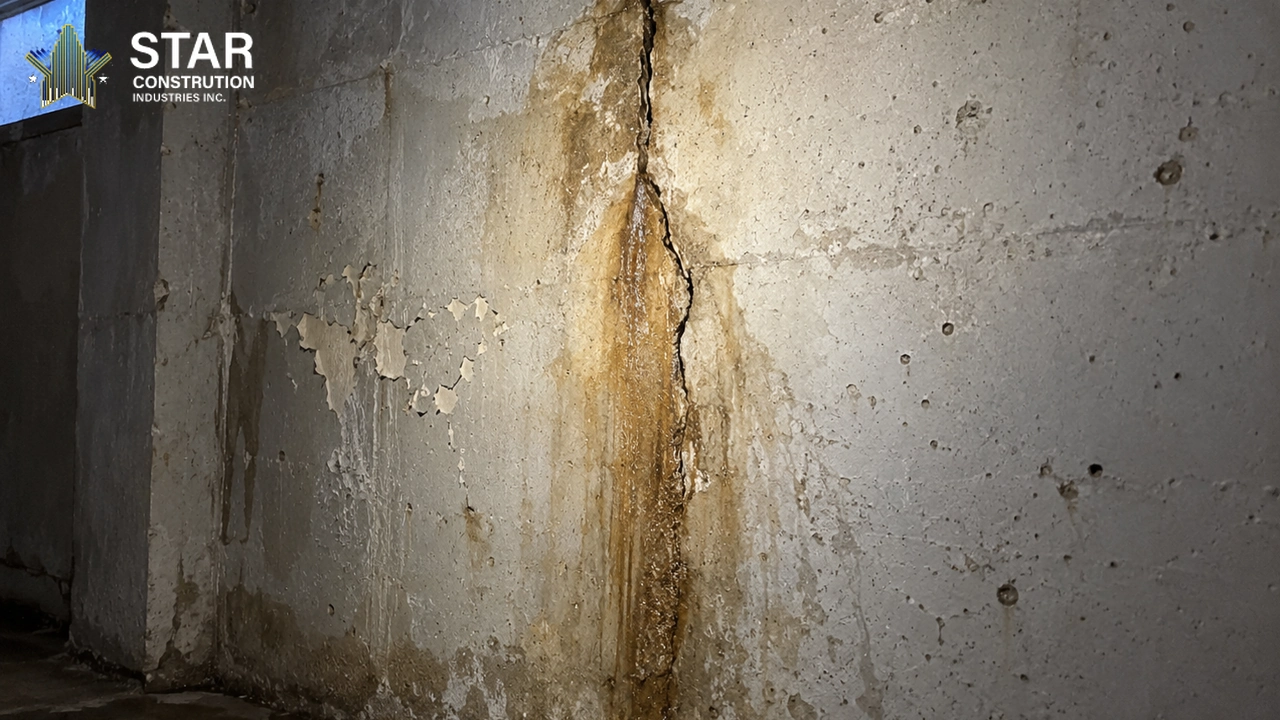
1. Damp or stained walls. Look for: dark patches, tide marks, or walls cool and damp low down. Cause: water moving through porous masonry, cracks, or joints. Next step: mark and date the stain and check again after rain.
2. Water at the wall-floor joint. Look for: a wet line where wall meets floor, or puddles in the same spot after rain. Cause: hydrostatic pressure pushing water up through the joint. Next step: keep the area clear and get it assessed promptly.
3. Standing water or a wet floor. Look for: puddles, or a floor that stays wet long after rain. Cause: a high water table, a failed drain or pump, or water through the floor or joint. Next step: move items off the floor and arrange an inspection.
Surface and structural signs
4. White efflorescence deposits. Look for: white, powdery or crusty deposits on masonry or concrete. Cause: water travelling through the wall and leaving mineral salts as it dries. Next step: treat it as evidence of ongoing water movement, not just dust.
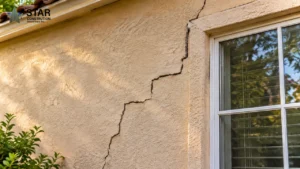
5. Cracks in walls or floors. Look for: hairline cracks, wider cracks, or stair-step cracking in block walls. Cause: settlement, shrinkage, freeze-thaw movement, or soil and water pressure. Next step: photograph and measure it, and get wider, horizontal, or growing cracks checked promptly. For concrete repair and installation in New York, a contractor can tell whether it is a simple seal or a larger movement problem.
6. Bowing, leaning, or bulging walls. Look for: a wall curving inward or blocks out of line. Cause: sustained soil and water pressure against the foundation. Next step: get a professional assessment promptly, with a structural professional involved if movement is confirmed.

7. Peeling paint, bubbling finishes, or damp drywall. Look for: paint lifting near the bottom of walls, or drywall that feels soft or stains. Cause: moisture trapped behind the finish, often from water through the wall. Next step: do not just repaint; stop the moisture first.
Air-quality and humidity signs
8. A persistent musty smell. Look for: a damp, stale smell that returns even after airing the room. Cause: ongoing dampness in walls, floors, or stored materials. Next step: find hidden damp patches and trace the source rather than masking the smell.
9. Condensation and high humidity. Look for: droplets on pipes, ducts, or walls, or a basement that always feels clammy. Cause: warm, humid air meeting cool surfaces, poor ventilation, or another damp source. Next step: improve air movement and use a dehumidifier while finding the source.
10. Mould growth or staining on finishes. Look for: dark or coloured spots on walls, wood, or stored items where air movement is poor. Cause: repeated dampness on a finish or stored material. Next step: treat it as a property and finish problem — dry the area, remove affected finishes where needed, and fix the water entry.
System-failure signs
11. A sump pump that runs constantly. Look for: a pump cycling far more often than usual, even in dry weather. Cause: a high water table, a pump too small for the inflow, or water draining back toward the foundation. Next step: check the discharge route and have the pump checked.
12. A sump pump that fails, alarms, or has no backup. Look for: a pump that hums but moves no water, trips its breaker, or leaves the basin full. Cause: a worn pump, blocked or frozen discharge, a failed switch, or a power cut. Next step: test the pump, clear the discharge, and plan backup power.
13. Damp after gutters, grading, or drainage changes. Look for: new damp patches after a gutter repair, patio change, or nearby groundworks. Cause: water now pooling or draining toward the foundation. Next step: check downspout outlets and ground levels near the walls.
Severity Triage: Urgent, Plan, or Monitor
Urgent — act this week: standing water, water at the joint after every rain, a failed pump, a bowing wall, or a widening or horizontal crack. A storm can turn these into a much larger job.
Plan — book an inspection this season: repeated damp patches, returning efflorescence, persistent musty smells, peeling finishes, or a constantly running pump.
Monitor — check and record: a single unchanged hairline crack, light condensation that clears with ventilation, or a one-off damp patch that dries fully. Photograph it, note the date, and recheck after the next heavy rain.
Why Basements Leak in New York
New York basements face several pressures at once. A high water table can push water against floors and joints after sustained rain. Sound-side humidity and coastal air keep some basements damp for long periods. Freeze-thaw cycles open small cracks wider over winter.
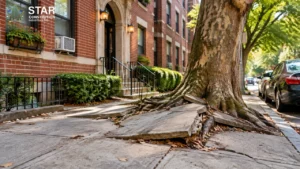
Grading and gutters matter as much as the wall itself. If soil slopes toward the house, or a downspout discharges beside the foundation, rain is delivered to the weakest point. Over time, hydrostatic pressure — water in saturated soil pressing against the foundation — finds joints, cracks, and porous spots.
Interior vs Exterior Waterproofing Approaches
Interior waterproofing manages water after it reaches the foundation, usually with an interior drainage channel and a sump pump. It is less disruptive than excavation and suits many homes where water enters at the joint or through the floor, but it does not stop water reaching the outside of the wall.
Exterior waterproofing aims to stop water before it reaches the wall, with excavation, a membrane or coating outside, and drainage at the footing. It is more disruptive and depends on access and weather, but it protects the wall itself. The right choice depends on where water comes from, wall condition, access, and budget. For masonry walls, see our masonry contractors in New York page.
Sump-Pump and Power-Outage Failure
A sump pump is only useful if it runs when water arrives. Test it by lifting the float or pouring water into the basin. Check the discharge line outside: it should carry water well away from the foundation, not dump it beside the wall where it can return. In winter, check that the outlet is not blocked by ice or debris.
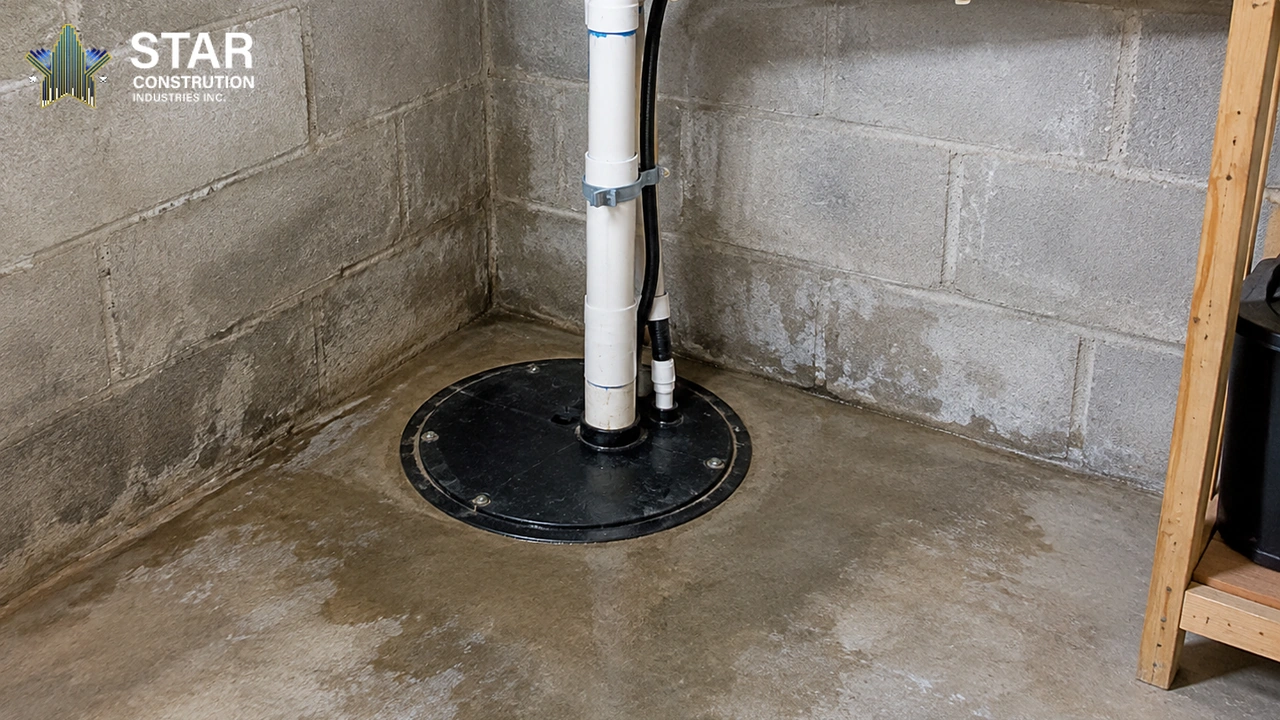
Power failure is the weak point most owners forget. A battery backup, a secondary pump, or a generator connection can keep protection running during an outage — but test any backup before storm season, not during the first storm.
Finished Basements: Wet Drywall, Peeling Paint, Hidden Damage
A finished basement hides early signs: paint and drywall can cover a damp wall for months. If a finished wall shows dampness, do not cover it with new paint or a new panel — dry the area, find the entry point, and only refinish once the wall has stayed dry through wet weather.
What Owners Can Check Themselves vs What Needs a Contractor
Owners can safely check gutters, ground levels, sump pump operation, visible cracks, and damp patches, keeping dated photographs. Bring in a contractor for repeated water entry, wall movement, failed pumps, and any job needing drainage, excavation, or structural work — and a structural professional when a wall has moved, a crack is wide or growing, or foundation stability is in doubt.
What to Do Before the Next Storm
- Clear gutters and downspouts, and make sure outlets discharge away from the foundation.
- Check that soil slopes away from the house and does not trap water against the wall.
- Test the sump pump and any backup power, and clear the discharge line.
- Move stored items off the basement floor and away from outside walls.
- Photograph stains or cracks so you can compare them after the storm.
- For winter readiness, clear leaves from drains before freeze-up, and check the basement again after the first thaw, when freeze-thaw cracks often show.
Cost Factors and How Long Waterproofing Lasts
Cost is driven by the size of the area, the cause of the leak, access around the house, and whether the work is an interior drainage system, an exterior membrane, or a combination. A single crack repair and a full perimeter system sit at very different ends of the range. A written, itemised quote after an inspection is the only reliable figure for a particular house.
Lifespan depends on the system and on maintenance. Well-installed interior drainage and pumps generally serve for many years, with pumps and batteries needing periodic replacement, while exterior membranes can last for decades when drainage stays clear. Pump tests and clear discharge lines help any system last longer. For work in the wider area, see our masonry contractors in New Rochelle, NY page, and browse our service areas to find the coverage nearest you.
If you have spotted one or more of these warning signs, do not wait for the next storm to test the basement. Star Construction INC offers a free estimate, so you can find out what is causing the problem before water does more damage.
Frequently Asked Questions
Is a damp basement wall always a waterproofing problem?
Not always, but it should never be ignored. Condensation can dampen a wall, yet repeated dampness or efflorescence usually means water is moving through the wall.
What is the white powder on my basement walls?
It is efflorescence: mineral salts left behind when water travels through masonry or concrete and dries. It is evidence that water has been moving through the wall, so the source should be found.
Interior or exterior waterproofing — which do I need?
It depends on where water enters and on access. Interior systems collect and discharge water reaching the foundation; exterior systems aim to stop water reaching the wall.
How long does basement waterproofing last?
Well-installed systems generally last many years, with exterior membranes often lasting for decades when drainage stays clear. Pumps and batteries are wear items and need periodic testing and replacement.
How urgent is a basement leak before a storm?
Very urgent if water is standing, returning after every rain, or linked to a failed pump or a moving wall. Even a small leak deserves attention before a storm, because heavy rain can turn a slow seep into a flood.