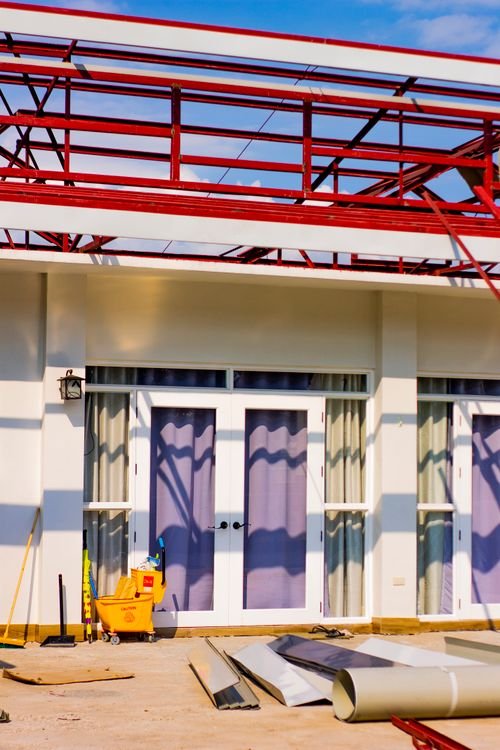

Exterior repair and renovation projects begin with a detailed condition assessment of the building envelope. We inspect masonry, stucco, siding, trim, balconies, parapet caps, window perimeters, and sealant joints, looking for where water enters rather than only where damage shows. Staining, efflorescence, spalling, cracked stucco, warped siding, and ponding on terraces are read as symptoms; the cause may be a failed joint, missing flashing, or a drainage detail that was never right. Cosmetic damage and structural damage are separated at this stage, so the scope fixes the cause instead of covering it.
Material selection is approached from a performance standpoint. Brick needs mortar softer than the brick itself so the joint, not the brick, absorbs movement; stucco mixes are matched to the substrate so they bond instead of delaminating; siding is chosen for exposure, with fiber-cement and engineered boards holding up where thinner cladding warps or rots. Brownstone patching is matched in color and texture so repairs disappear into the facade, and coatings and sealants are rated for ultraviolet light and freeze-thaw cycles. Our brownstone facade restoration guide explains how historic facades are assessed before any repair begins.
Execution is carried out through a controlled and phased process that includes surface preparation, substrate repair, waterproofing, and finishing, in that order. Power washing and surface cleaning prepare a surface; they do not repair it, so cleaning is never sold as a structural fix. Balcony and terrace work corrects drainage and waterproofing membranes before new finishes go down, and cornice and trim repairs are anchored and sealed so decorative elements do not become water entry points. For occupied homes, commercial buildings, and multi-unit properties, work is sequenced so entrances, exits, and daily use stay safe.
The decision between targeted repair and full renovation comes down to extent: isolated cracks, failed joints, or a single elevation usually call for repair, while widespread substrate failure, repeated leaks, or cladding past its service life make renovation the cheaper long-term answer. Cost is driven by access and scaffolding, the area and height involved, the substrate condition found once failed material is opened, and the finish specified, not by square footage alone. Because sealant joints and coatings age, a periodic inspection and reseal cycle keeps small failures small; and for taller buildings, New York’s periodic facade inspection rules may require a formal inspection cycle that a renovation should be planned around. Done well, envelope work also improves energy efficiency, because sealed perimeters, insulation behind new cladding, and intact siding cut drafts and heat loss.
Exterior repair and renovation involve restoring and upgrading building exteriors to address structural deficiencies, surface deterioration, and environmental damage. The direct answer is simple: the work restores the building envelope, the complete outer shell that keeps weather out and holds the structure together, including walls, cladding, trim, balconies, and the joints and flashing between them. When any part of that shell fails, water enters, and water is what turns a small crack into rot, rust, spalling, and interior damage.
The process includes inspection, removal of damaged materials, structural reinforcement, and application of new systems that improve protection and performance. Each stage is designed to ensure that repairs integrate seamlessly with the existing structure while eliminating weak points: failed material is removed rather than covered, the substrate is repaired, waterproofing and sealants are applied at joints and transitions, and only then are finishes installed. Work is phased so occupied buildings stay in use and each elevation is left weather-tight at the end of the day.
Star Construction industries inc. provides the full scope of exterior renovation contractors’ work in New York, including facade repair and restoration for aging masonry fronts, brick and stucco repair for chimneys and veneer walls, siding installation and repair for homes past the life of their cladding, waterproofing and sealants that stop intrusion at its source, power washing and surface cleaning that prepares surfaces for lasting finishes, balcony and terrace repair that corrects drainage and structure, exterior painting that protects the surface underneath, cornice and trim repair that preserves architectural detail, and brownstone restoration for historic facades.

Every successful build begins with proper evaluation, planning, and method selection to ensure structural stability and long-term performance.
Professional façade restoration services focused on correcting surface damage, stabilizing exterior materials, and restoring architectural character while improving long-term structural performance.
Specialized brick and <a href="https://starconstructioninc.org/stucco-repair-application-contractors-in-new-york/">stucco repair</a> solutions designed to address cracks, surface deterioration, and moisture intrusion while preserving the building’s strength and exterior appearance.
Durable <a href="https://starconstructioninc.org/siding-installation-repair-contractors-in-new-york/">siding installation</a> and repair services that enhance insulation, weather resistance, and overall exterior protection for residential and commercial properties.
Advanced waterproofing applications and sealant systems engineered to prevent water penetration, reduce structural wear, and extend exterior lifespan.
High-efficiency surface cleaning solutions that remove dirt, buildup, and environmental residue to restore a clean, refreshed exterior finish.
Structural balcony and terrace repair services that reinforce support systems, improve drainage performance, and ensure long-term safety compliance.
Precision <a href="https://starconstructioninc.org/exterior-painting-contractors-in-new-york/">exterior painting</a> services using weather-resistant coatings that enhance curb appeal while providing durable surface protection.
Detailed restoration of decorative cornices and exterior trim elements to maintain architectural integrity and prevent structural weakening.
Comprehensive brownstone restoration solutions focused on preserving historic character while strengthening aging stone surfaces and structural components.
If you are searching for exterior repair and renovation contractors near me in New York, including exterior repair in Bayside, exterior repair in Astoria, exterior repair in Scarsdale, exterior repair in Yonkers, and exterior repair in White Plains, it is important to choose a contractor with expertise in structural evaluation and building envelope performance. Exterior issues often originate beneath the surface and require more than basic repairs.
At Star Construction INC, we conduct comprehensive assessments to identify underlying causes of damage, including moisture intrusion, failed sealants, cornice and parapet deterioration, and balcony drainage problems. Our teams work on homes, commercial buildings, and multi-unit properties, phasing work so occupied buildings stay safe and weather-tight throughout.
New York’s climate introduces challenges such as freeze-thaw cycles, humidity, and heavy precipitation, along with coastal salt air in shoreline neighborhoods. Materials and details are specified for that exposure: compatible mortars for brick, bonded stucco mixes, sealed joints at windows and trim, and waterproofing membranes where balconies and terraces meet the wall. The result is an exterior that resists the next storm season instead of merely looking repaired until it.
Our clients value the consistency, structural precision, and long-term performance we deliver on every project, from initial planning through final execution.


 Trustindex verifies that the original source of the review is Google.
 Trustindex verifies that the original source of the review is Google.
 Trustindex verifies that the original source of the review is Google.
 Trustindex verifies that the original source of the review is Google.
Contact us now to discuss your project and receive a no-obligation quote from our experts.
Every project is handled through a defined process that ensures accuracy, efficiency, and long-term structural performance from start to finish.
We begin by reviewing site conditions, understanding project objectives, and identifying structural requirements to establish a clear and practical direction before any work begins.
A detailed execution plan is developed, including material selection, sequencing of work, and coordination of labor to maintain consistency and avoid delays during construction.
Work is carried out using proven installation methods, with attention to structural integrity, proper reinforcement, and adherence to safety and quality standards.
A final walkthrough is conducted to verify workmanship, resolve any outstanding details, and ensure the completed project meets performance expectations and durability standards.
Exterior repair and renovation services are essential for maintaining structural integrity, preventing water damage, and protecting long-term property value. The four benefits below explain how envelope work pays back: stronger structure, a drier interior, surfaces that stand up to New York weather, and fewer emergency repairs over time.
Exterior repair strengthens the parts of a building that carry load and face the weather: repointed brickwork, repaired lintels, anchored cornices, and rebuilt balcony supports. Because failed material is removed and the substrate is repaired before finishes go on, the wall works as a system again rather than hiding deterioration behind a new surface. That is what keeps a New York facade stable under freeze-thaw cycles and wind loads season after season.
Most exterior damage is water damage. Resealed joints at windows, doors, and trim, flashing at parapets and roof-to-wall transitions, and balcony and terrace membranes with working drainage all keep water out of the wall. A dry wall does not rot, rust, or crack in freeze-thaw cycles, so moisture protection is what preserves the structure behind the finish and keeps interior walls free of the stains and damp that signal a failed envelope.
New exterior surfaces only perform if the preparation underneath is right. Fiber-cement and engineered siding, bonded stucco, matched brownstone patching, and exposure-rated coatings are chosen for the substrate and exposure they face — south-facing walls, coastal salt air, and freeze-thaw cycles each demand different detailing. Thorough surface preparation is what makes paint and coatings last instead of peeling within a season, so renovated walls keep their appearance and weather resistance for years.
Addressing exterior problems early costs less than replacing a whole elevation later. A periodic inspection and reseal cycle — checking joints, flashing, and coatings and renewing sealants before they fail — turns large emergency repairs into planned, targeted work. A sound, well-kept exterior also protects curb appeal and property value, which is why owners who maintain the envelope spend less over the life of the building.
Exterior repair and renovation covers the whole building envelope: facade repair and restoration, brick and stucco work, siding installation and repair, waterproofing and sealants, power washing and surface cleaning, balcony and terrace repair, exterior painting, and cornice and trim repair. Work follows a clear order: inspect and diagnose the cause, repair the substrate, seal joints and transitions against water, then apply finishes.
Look for cracks in masonry or stucco, staining and efflorescence on walls, spalling or flaking surfaces, peeling paint, warped or loose siding, ponding water on balconies, and water stains or drafts inside near windows and exterior walls. Any of these means water is reaching the structure. In New York, freeze-thaw cycles turn small cracks into larger failures, so early signs are worth investigating before they become structural damage.
Yes. Sealing air leaks around windows, doors, and trim, adding insulation behind new cladding, and replacing failed siding and coatings all cut drafts and heat loss. The biggest efficiency gains come from fixing envelope leaks — air sealing and insulation — rather than repainting alone. A tight, dry exterior keeps conditioned air inside, so heating and cooling systems work less hard in every season.
It depends on the material, exposure, and preparation. Masonry, stucco, and siding repairs last many years when the substrate is repaired properly and finishes are applied to a clean, sound surface. Sealant joints are the exception — they need cyclical renewal as they age and lose flexibility. Coastal and south-facing exposures wear faster, and periodic inspections catch small failures before they shorten the life of the whole system.
Yes. We handle residential, commercial, and multi-unit exterior work across New York, including facades, storefronts, and apartment buildings. Commercial and multi-unit projects are phased so occupied buildings stay usable, and work is coordinated with property managers and boards where access, staging, or common areas are involved. Taller buildings also fall under periodic facade inspection cycles, and repair scopes are planned with those inspection requirements in mind. Where a project needs a permit or a code check, that requirement is confirmed during planning so the scope, materials, and inspection steps match what the building and its location require.