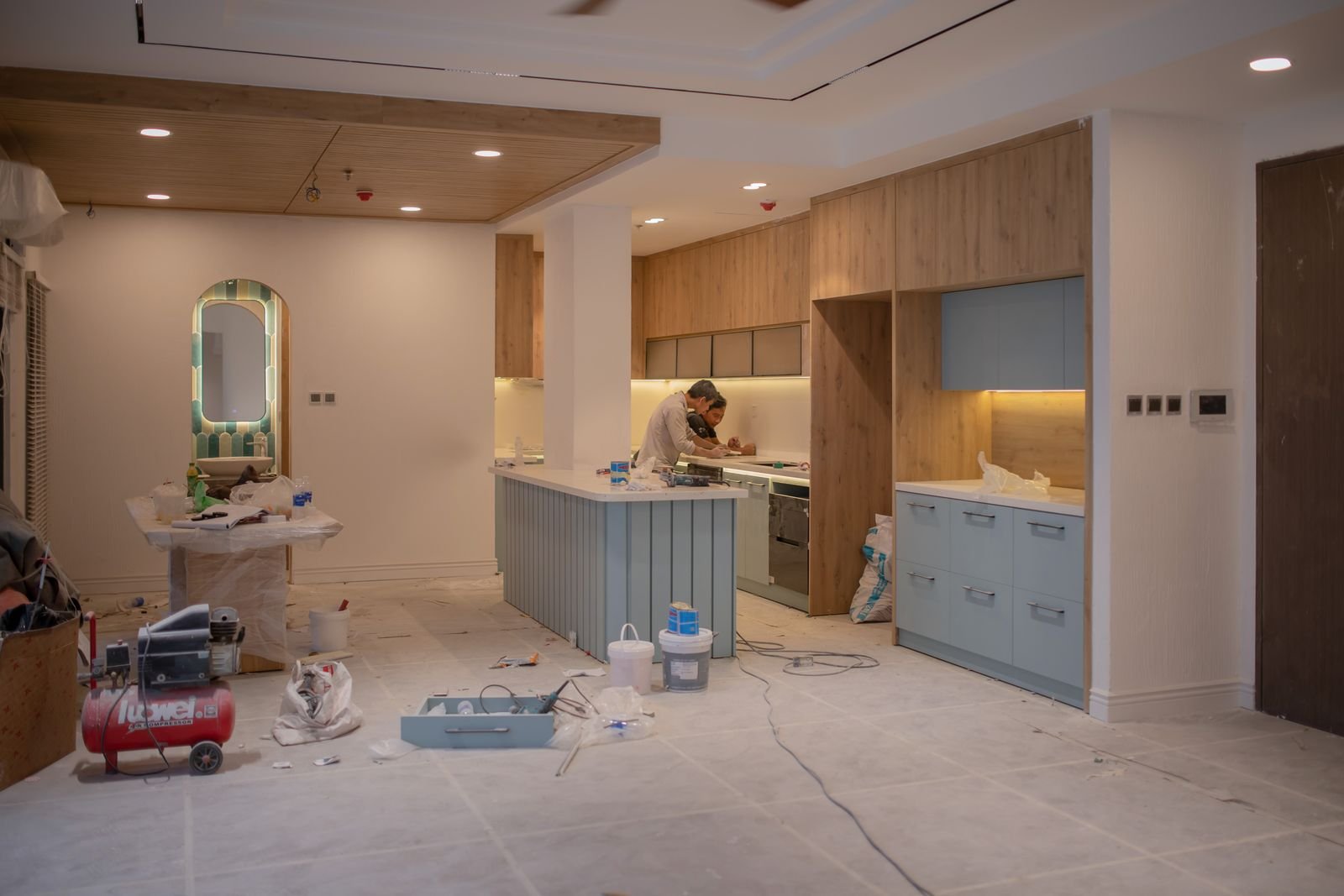
Our interior renovation work in Queens begins with the house itself: the plan, the plaster, the plumbing runs, the light. Before any wall comes down, we walk the rooms with you, measure what the structure allows, and explain which changes are straightforward and which need a different approach — because a renovation that starts with the building’s facts ends with fewer surprises. As interior renovation and remodeling contractors serving the whole New York area, we bring the same discipline to a Queens two-family as to a Manhattan co-op.
Where the renovation touches the outside of the house — a stoop rebuilt, brick repointed before the new kitchen goes in, a retaining wall made sound — the interior work pairs naturally with masonry contractors in Queens who know the same houses, so the two scopes are planned together rather than colliding on site.
Interior renovation is the renewal of the rooms you already have: new kitchens and baths, refreshed finishes, plaster repaired and trim kept, all within the existing structure. Remodeling goes further — it changes the plan itself, opening walls, moving rooms, adding a bathroom, finishing a basement — so the house lives the way a modern household needs it to. Both keep the building’s bones; the difference is how far the layout moves.
A kitchen shows the distinction plainly. A renovation may mean new cabinets, counters and appliances in the existing footprint; a remodel opens the kitchen into the dining room and moves the plumbing to suit. Our kitchen remodeling work in Queens covers both, planned around how the household actually cooks and gathers rather than around a showroom layout.

If you are searching for trusted interior remodeling contractors near you in Queens, Star Construction INC is ready to help. We serve renovation clients across the borough — single-family homes, two-family houses, garden apartments, co-ops and mid-rise multi-family buildings — and our service areas page lists everywhere we work. Request a free, no-obligation estimate and we will walk the rooms, listen, and explain the options before any work is quoted.
Our clients value the consistency, structural precision, and long-term performance we deliver on every project, from initial planning through final execution.

 Jav V
Trustindex verifies that the original source of the review is Google.
Got my bathroom remodel Team was professional on time Thank you Ever fernando Perez saldañaCrear Word
 LUIS CAYOi hire them for my home project. and everyting went smoothly. no delays
 Shahid IqbalVery reliable contractor. They did exactly what they promised and the quality was excellent. Would definitely recommend.
Contact us now to discuss your project and receive a no-obligation quote from our experts.
Every project is handled through a defined process that ensures accuracy, efficiency, and long-term structural performance from start to finish.
We begin by reviewing site conditions, understanding project objectives, and identifying structural requirements to establish a clear and practical direction before any work begins.
A detailed execution plan is developed, including material selection, sequencing of work, and coordination of labor to maintain consistency and avoid delays during construction.
Work is carried out using proven installation methods, with attention to structural integrity, proper reinforcement, and adherence to safety and quality standards.
A final walkthrough is conducted to verify workmanship, resolve any outstanding details, and ensure the completed project meets performance expectations and durability standards.
A professional renovation in Queens pays for itself in the rooms you use every day, not in the resale brochure. The gains below are the ones our Queens clients actually feel: a kitchen that works, a bathroom that stops being a queue, a lower level that earns its keep, and walls that keep their character instead of losing it to a generic refit.
In one- and two-family houses, the kitchen and the bathroom date a home fastest. A Queens kitchen renovation usually means opening a closed kitchen to the rooms beside it, moving the sink and range to a working triangle, and building storage the original plan never allowed; a bathroom renovation adds the second bath a growing household needs, often found inside an oversized bedroom or a hall closet. Planning the sequence matters — a kitchen remodel timeline keeps the household fed and sane while the work runs — and so does the plumbing: our bathroom renovation work routes new waste and supply lines through the house’s existing stacks wherever the structure allows, rather than forcing a layout the building resists.
Co-op and condo renovations in Queens come with a second client: the building. Most buildings have rules about work hours, noise, deliveries, and alterations to plumbing or structure, and many require the scope to be reviewed before work starts. We plan around those rules in plain terms — the schedule, the paperwork, the protections for common areas — without promising any approval, because the building decides. The renovation itself is the same craft as in a house: kitchens, baths, plaster and trim, fitted to the unit’s plan and the building’s constraints together.
Queens houses hide their largest unused room below grade. A finished basement adds a family room, a guest suite, or a home office without changing the footprint — but only if moisture is dealt with first. We check where water enters, how the walls dry, and what the ceiling height and stair allow before finishes are chosen, because a basement finished over a damp wall fails twice: once as a room, once as a repair bill. Our basement finishing work follows that order — dry, then insulated, then finished — so the lower level stays a living space instead of reverting to storage.
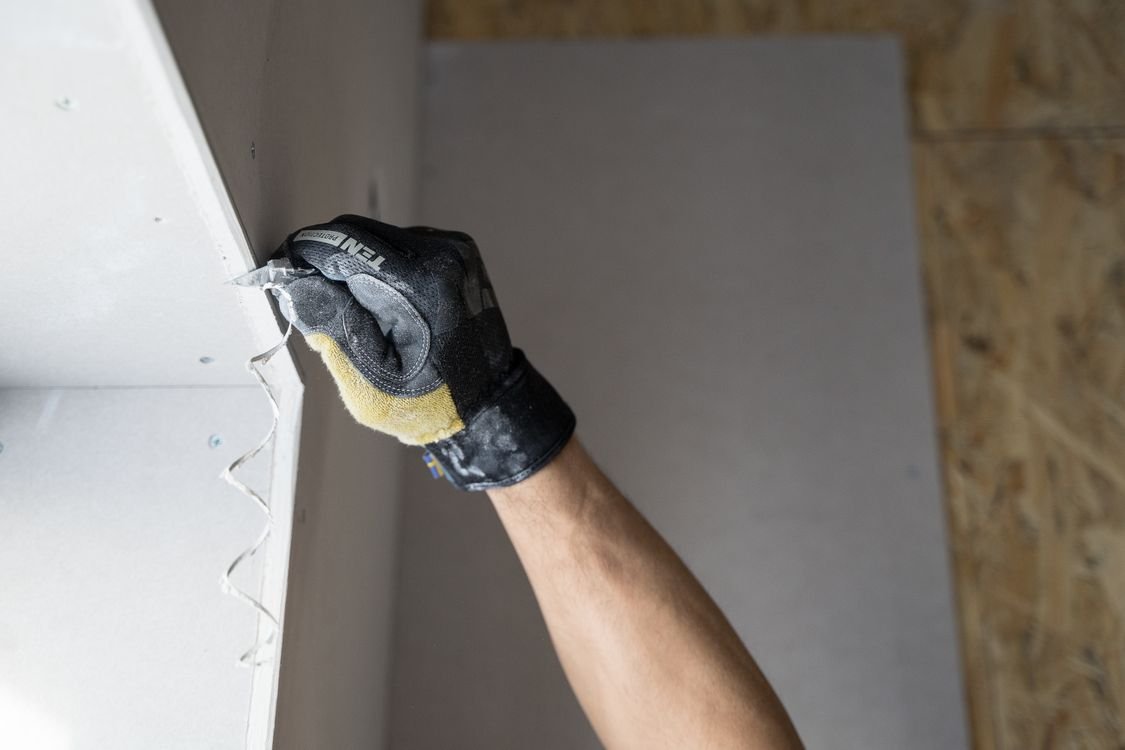
Pre-war Queens stock is plaster stock, and the plaster-or-drywall decision shapes the whole renovation. Sound plaster — tight to its lath, cracked only at the surface — is usually worth repairing and skim-coating: it keeps the wall’s depth, its quiet, and its period profiles. Plaster that has detached across wide areas, or walls opened for rewiring and re-plumbing, may honestly be better replaced with drywall. Our plaster walls guidance follows the same rule we use on site: repair what is sound, replace what has failed, and keep the original trim and proportions wherever they survive.
Usually, some form of building review is required — most co-op and condo buildings ask to see the scope before work starts, and many restrict work hours, deliveries, and changes to plumbing or structure. The rules vary building by building, so the honest answer is to ask early: we plan the schedule and the paperwork around your building’s process, but the building itself grants any approval, and no contractor can promise it.
It depends on the house. Ceiling height, emergency egress, moisture, and the city’s rules for below-grade living space all decide whether a basement can become a legal bedroom or living area. Some Queens basements qualify with modest work; others can be finished as recreation space but not as a legal bedroom. We assess the height, the exits, and the water before quoting, so the plan matches what the house can honestly support.
Repair when the plaster is still tight to its lath and the damage is cracks or isolated bulges — a repair and skim coat keeps the wall’s character and usually costs less than a full replacement. Replace with drywall when the plaster has detached across wide areas, or when the wall is already open for plumbing or electrical work. The press test settles it: plaster that sits firm is a candidate for repair; plaster that flexes and drums across a whole wall has finished its service.
It depends on scope. A straightforward bathroom refresh can run a few weeks; a full kitchen renovation with layout changes typically runs longer, and a whole-floor or multi-room renovation longer still. Co-op and condo timelines also include the building’s review period before work starts. We give a schedule with the estimate and keep it honest — the variables are the building’s condition, the permit path, and how much of the plan moves walls and plumbing.
In general New York City terms, layout, plumbing or electrical changes generally need a NYC DOB permit, while cosmetic work — painting, refinishing, replacing fixtures in place — usually does not. Co-op and condo buildings add their own review on top of the city’s. We confirm which path your scope falls on before work starts, so nothing is opened that the paperwork has not caught up with.