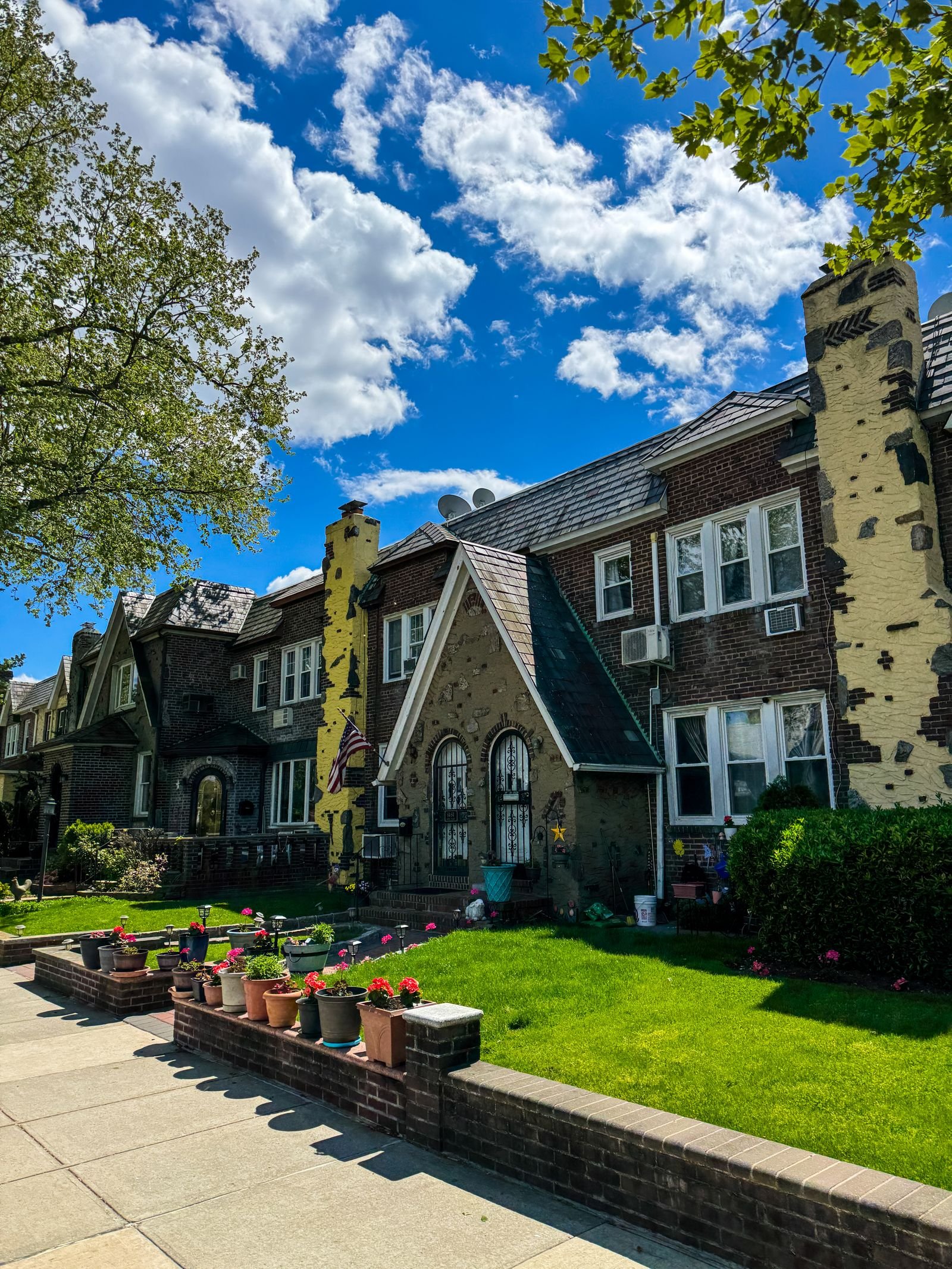
Our masonry work in Queens begins with a detailed evaluation of the existing structure: the wall’s material and age, the mortar it was built with, the way water reaches it and the way it leaves. That survey decides the repair — what can be repointed, what must be rebuilt, and what only looks like a masonry problem. As masonry contractors serving the whole New York area, we bring the same discipline to a Queens two-family as to a Manhattan facade: matched materials, sound units, and no shortcuts that move the damage into the brick itself.
Where a masonry repair is part of a larger home renovation, the work often pairs with interior updates — our interior renovation and remodeling contractors in Queens plan kitchens, baths and full interiors in the same houses whose walls we repair, so the two scopes sequence cleanly instead of colliding.
Masonry work is the building, repair and restoration of structures in brick, stone and block — the load-bearing and facing walls of a house, its stoops and steps, its chimneys, its garden and retaining walls. In Queens that means everything from a single-family home’s brick facade to a garden-apartment complex’s long runs of jointing, all of it held together by mortar that is meant to be softer than the units it beds.
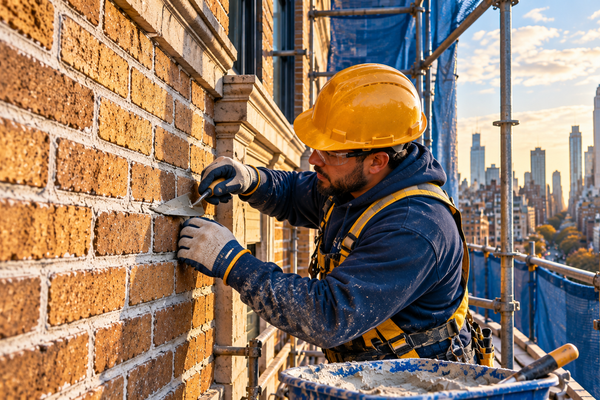
The craft is in the mortar. Brickwork repointing — cutting failed mortar out to a sound depth and packing in fresh mortar matched in strength, color and sand — is the repair most Queens walls need most often, and the one where a wrong mix does the most harm: hard modern mortar against soft old brick forces freeze-thaw damage into the brick faces, which spall. Done in the wall’s own tradition, repointing disappears into the elevation and gives it decades more service.

If you are searching for trusted masonry contractors near you in Queens, Star Construction INC is ready to help. We serve masonry clients across the borough — single-family homes, two-family houses, garden apartments, co-ops and multi-family buildings — and the full list of neighborhoods we cover is on our service areas page. Request a free, no-obligation estimate and we will inspect the walls, photograph what we find, and explain the options plainly.
Our clients value the consistency, structural precision, and long-term performance we deliver on every project, from initial planning through final execution.

 Jav V
Trustindex verifies that the original source of the review is Google.
Got my bathroom remodel Team was professional on time Thank you Ever fernando Perez saldañaCrear Word
 LUIS CAYOi hire them for my home project. and everyting went smoothly. no delays
 Shahid IqbalVery reliable contractor. They did exactly what they promised and the quality was excellent. Would definitely recommend.
Contact us now to discuss your project and receive a no-obligation quote from our experts.
Every project is handled through a defined process that ensures accuracy, efficiency, and long-term structural performance from start to finish.
We begin by reviewing site conditions, understanding project objectives, and identifying structural requirements to establish a clear and practical direction before any work begins.
A detailed execution plan is developed, including material selection, sequencing of work, and coordination of labor to maintain consistency and avoid delays during construction.
Work is carried out using proven installation methods, with attention to structural integrity, proper reinforcement, and adherence to safety and quality standards.
A final walkthrough is conducted to verify workmanship, resolve any outstanding details, and ensure the completed project meets performance expectations and durability standards.
Queens masonry fails in a handful of honest ways, and each one has a repair that fits it. The sections below follow the work our Queens crews do most: the repointing that keeps brick walls weather-tight, the stoops and entries that take daily foot traffic, the chimneys that weather hardest at the top, and the retaining walls that must manage water as well as soil. The benefit in every case is the same — a wall that keeps doing its job for decades instead of asking for the same repair twice.
Repointing is the repair Queens brickwork asks for most often. Mortar is the sacrificial layer of a masonry wall: it flexes with the building, weathers away over decades, and is meant to be replaced so the brick survives. When joints have recessed, cracked or crumbled to sand, the wall’s weather seal is gone and every rainstorm drives water into the joint beds, where freezing widens the damage. The honest repair cuts the failed mortar out to sound material and packs in a matched mix, tooled to the original profile. Our discussion of freeze-thaw masonry damage explains why that match matters so much in New York winters: the wrong mortar turns a maintenance job into a brick-replacement job.
A Queens stoop is the hardest-working masonry on the house — treads climbed daily, joints worked by salt and meltwater, cheek walls taking splash-back from the walk. Loose treads, spalled nosings and opened joints are usually repairable: individual units reset or replaced, joints repointed, surfaces patched where the damage is shallow. When a stoop has settled away from the house or its core has softened, rebuilding on a proper footing is the cheaper sentence in the long run, and we say so before quoting rather than after patching.
Chimneys take weather on all four faces plus the top, so their joints fail years before the same house’s walls do. The warning signs are plain: a cracked crown letting water into the core, flashing lifted where the stack meets the roof, spalled brick faces, and mortar that rubs away like sand. Our chimney repair and rebuilding work covers the full range — re-crowning, flashing renewal, repointing, and rebuilding the top courses when water has had its way too long. A cracked crown is the cheapest chimney repair there is and the one whose neglect costs the most.
Queens yards are rarely flat, and the borough’s retaining walls carry real soil pressure behind faces that were often built as decoration. A wall that bows, leans or weeps water through its joints is telling you about drainage before it tells you about structure: water trapped behind a wall is what pushes it over. Our retaining walls and masonry planters work starts with the drainage — weeps, backfill and grading — and rebuilds only what the wall’s condition actually requires. If you are reading a wall’s early warnings, our guide to the signs a retaining wall is failing separates the cosmetic from the structural.
Look at the joints: mortar recessed well back from the brick face, cracked, crumbling or sandy to the touch, damp appearing indoors after wind-driven rain, and early stepped cracking at corners all say the joints have stopped sealing the wall. A mason’s inspection confirms how deep the failure goes and whether repointing alone will answer it.
Sometimes. A wall that has bowed slightly but still has a sound footing and intact drainage can often be stabilized and partially rebuilt in place. A wall that leans badly, has lost its footing, or is bulging through its courses generally needs to come down and be rebuilt with proper drainage behind it. The honest answer comes from inspecting the footing and the backfill, not just the face — and cost depends on the scope of that answer.
Yes — matched in strength, color and sand. Mortar must stay softer and more breathable than the brick so it remains the sacrificial layer; hard modern mortar traps moisture in the units and forces freeze-thaw damage into the brick faces. A good match reads as the wall’s own work, not as a patch.
Many masonry repairs can be done in winter — inspections, stabilization, chimney caps and flashing work proceed in most weather. Mortar work needs temperatures that let mortar cure rather than freeze, so deep-winter repointing is often staged: make the wall weather-tight now, complete the mortar work in the first mild spell.
It depends on the scope. Like-for-like repairs — repointing, resetting a tread, rebuilding a garden wall to the same footprint — usually do not need a permit. Structural work, taller retaining walls and anything that changes a building’s structure generally does need a permit from the New York City Department of Buildings. We flag the permit question at inspection, before work is quoted.