Local Law 126 requires owners of buildings with parapets in New York City to have those parapets observed every year, with the annual observation completed by January 1. The law was created after falling parapet masonry injured pedestrians, and it makes the building owner responsible for keeping rooftop masonry safe. If your building has a parapet — the low wall around the edge of a roof — you most likely need to comply.
This guide explains who Local Law 126 covers, what the annual observation involves, the problems inspectors most often find, and what to do if your parapet wall repair and installation needs attention before the next deadline.
What Is Local Law 126?
Local Law 126 of 2021 added a parapet observation requirement to the New York City Building Code. It requires that the parapets of covered buildings be observed at least once a year for signs of deterioration or unsafe conditions. Unlike the Facade Inspection Safety Program (FISP, formerly Local Law 11), which applies to taller buildings on a five-year cycle, Local Law 126 is an annual requirement focused specifically on parapets — because a single loose brick at the roofline can be lethal to someone on the sidewalk below.
The observation must be performed by a qualified professional — typically a licensed design professional or someone working under their supervision — who documents the condition of the parapet and any appurtenances attached to it. The building owner keeps the observation report on file and must be able to produce it for the Department of Buildings on request.
Who Must Comply with Local Law 126?
The rule applies to owners of buildings that have parapets. In practice, that covers the vast majority of New York City’s low- and mid-rise building stock: rowhouses, tenements, brownstones, small apartment buildings, and commercial buildings with flat roofs ringed by masonry parapets. If you are unsure whether your building falls under the requirement, the safe assumption is that it does — and a quick consultation with a design professional or experienced masonry contractor can confirm it.
Building owners in Manhattan, Queens, the Bronx, and across the five boroughs should treat the January 1 deadline as non-negotiable, the same way they treat FISP cycles and NYC DOT sidewalk violation cures: as a recurring compliance obligation tied to the property.
The Annual January 1 Deadline
Under Local Law 126, the parapet observation must be completed every year by January 1 — meaning each calendar year’s observation covers the year ahead. Smart owners schedule the observation in the fall, which leaves time to complete any needed repairs before winter weather arrives. Waiting until December compresses the timeline dangerously: if the observation reveals problems, there may not be enough time to mobilize scaffolding, pull permits, and finish masonry work before the deadline passes.
Keep the annual report with your building records alongside FISP reports, boiler inspection certificates, and elevator records. Organized compliance paperwork is also what buyers, lenders, and insurers ask for during transactions.
What Does a Parapet Observation Involve?
A parapet observation is a close visual assessment, not a casual glance from the street. The qualified observer examines the parapet from the roof and, where needed, from the sidewalk or adjacent vantage points, checking:
- Mortar joints for deterioration, missing mortar, and open joints that admit water.
- Brick and masonry units for cracking, spalling, displacement, and bulging.
- Coping stones and caps for looseness, cracking, and failed joints.
- Appurtenances — railings, antennas, signs, and equipment attached to or near the parapet — for secure anchorage.
- Flashing and roofing ties where the parapet meets the roof membrane.
- Vegetation and staining, which signal chronic moisture problems.
Conditions are documented with photographs, and any unsafe conditions must be addressed promptly — an observation that finds a dangerous parapet is not the end of the process, it is the beginning of the repair.
Common Parapet Problems Inspectors Find
New York’s parapets endure brutal conditions: full sun, driving rain, and relentless freeze-thaw cycling. The defects that show up most often include:
- Deteriorated mortar joints — the number one finding. Open joints let water into the wall, and each freeze cycle widens the damage.
- Loose or displaced bricks, especially at corners and near coping, where movement concentrates.
- Failed or missing coping, which exposes the top of the wall directly to water.
- Spalling brick faces caused by trapped moisture freezing inside the units.
- Vegetation growth in joints, whose roots wedge masonry apart.
- Loose railings or equipment anchored into weakened masonry.
What Happens If Your Parapet Needs Repair?
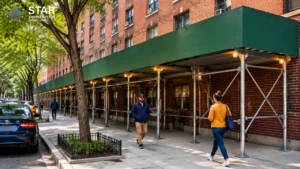
If the observation identifies deterioration, the owner is responsible for having it repaired — and unsafe conditions require immediate protective measures, such as a sidewalk shed, until the repair is complete. Typical Local Law 126-driven repairs include repointing deteriorated joints, replacing spalled or loose bricks, resetting or replacing coping, and rebuilding parapet sections that have lost structural integrity.
Because parapet work happens at the roofline, access planning matters: sidewalk sheds, roof protection, and material hoisting all factor into the project. An experienced parapet contractor will scope the repair from the observation report, advise on permits, and sequence the work so the building is compliant and safe.
Parapets and the Bigger Exterior Picture
A parapet does not deteriorate in isolation. The same water and weather attacking the parapet are working on the facade below it, the roof membrane behind it, and the chimney beside it. Owners who address parapet findings often find it efficient to assess the whole building envelope at the same time — our facade repair and restoration guide covers what to look for on the walls below, and our exterior restoration services address the full envelope as one project.
Keeping Your Parapet Compliant Year-Round
Compliance is easier when the parapet is maintained, not just inspected. Repoint open joints before water enters, keep coping sealed and secure, make sure roof drainage does not dump water against the parapet, and address small displacements before they grow. A parapet that is maintained annually will sail through its Local Law 126 observation — and, more importantly, will never endanger anyone below.
Frequently Asked Questions
What is Local Law 126 in NYC?
Local Law 126 of 2021 requires owners of buildings with parapets in New York City to have those parapets observed every year by a qualified professional, with the observation completed by January 1 each year.
Does Local Law 126 apply to my building?
If your building has a parapet — the low wall around the roof edge — it most likely applies. The rule covers the broad stock of NYC low- and mid-rise buildings with masonry parapets. When in doubt, have a professional confirm.
Who can perform the annual parapet observation?
The observation must be done by a qualified professional, generally a licensed design professional or someone under their supervision. The owner keeps the resulting report on file for the Department of Buildings.
What happens if my parapet fails the observation?
You must have the deficiencies repaired. Unsafe conditions require immediate protective measures like a sidewalk shed until repairs are complete. Typical fixes include repointing, brick replacement, and coping repair or rebuild.
Is Local Law 126 the same as the facade inspection law?
No. The Facade Inspection Safety Program (FISP) covers taller buildings on a five-year cycle and examines the whole facade. Local Law 126 is annual and focused specifically on parapets, and it applies to far more buildings.
Star Construction INC helps NYC building owners stay compliant with Local Law 126 — from pre-observation repairs and repointing to full parapet rebuilds across the five boroughs, Westchester, and surrounding areas. Contact us for a free, no-obligation estimate, or call +1 (516) 998-4133 to discuss your building’s parapet.
Who Counts as the Owner Under Local Law 126?
Compliance responsibility sits with the building owner, but in practice the person handling the paperwork is often someone else: a property manager, a co-op or condo board, or a managing agent acting on the owner’s behalf. The owner remains responsible for making sure the observation happens and the report is kept, even when day-to-day coordination is delegated. If you manage a building for someone else, confirm in writing who books the observer, who holds the report, and who acts when repairs are needed, so nothing falls between two desks.
Ownership changes deserve the same attention. When a building is sold, the new owner inherits the annual obligation, and the observation report is a document worth requesting during the transaction, alongside FISP reports and other compliance records. A missing report does not remove the requirement; it simply means the new owner starts without a record of the parapet’s condition. Asking for the most recent report before closing gives the buyer a clearer picture of what roofline work may be coming.
What the Annual Observation Report Should Contain
A local law 126 parapet inspection report is more than a one-line statement that the parapet was looked at. A useful report identifies the building and the observer, describes the parapet’s construction and condition, lists each deficiency found with its location, and states whether any condition is unsafe. Photographs supporting the findings, and a clear statement of what repairs are recommended, turn the report from a compliance document into a practical work plan.
Keep the report with the building’s other compliance records, and keep it accessible. The post’s earlier advice stands: the owner keeps the observation report on file and must be able to produce it for the Department of Buildings on request. Filing it in a folder that only one person can find defeats the purpose. Store a digital copy with the rest of the building’s records, and note the date of the next observation alongside it, so the following year’s scheduling starts from a known date rather than a guess.
Unsafe Conditions, Repairs, and Timing
Not every finding carries the same urgency. Deteriorated mortar or a cracked coping stone is a repair item to schedule; a loose brick or an unstable section of wall is an unsafe condition that needs immediate protective measures, such as keeping people away from the area below and arranging prompt repair. The distinction matters because it drives the response: routine findings go into a planned scope of work, while unsafe conditions come first, before anything else on the maintenance list.
Repair timing also depends on access and weather. Parapet work at the roofline often needs sidewalk protection below, and masonry repairs made in freezing conditions do not cure properly, which is one reason the post recommends scheduling the observation in the fall rather than waiting until December. When repairs are scoped from the observation report, a parapet wall repair and installation contractor can advise whether the work is a straightforward repointing job or something larger, and can sequence it so the parapet is sound well before the next annual cycle.
Common Parapet Defects, Explained in More Detail
The earlier list of findings deserves a closer look, because each defect points to a different cause and a different fix. Open mortar joints are usually the first sign of weathering and the easiest to correct, but left alone they let water behind the brick, where freeze-thaw cycles widen the damage each winter. Bulging or displaced brick suggests something deeper, such as corroded wall ties or a failed backup wall, and it calls for a closer structural look before any cosmetic repair.
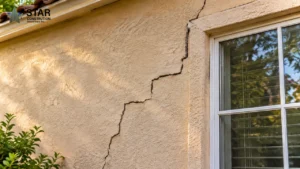
Coping failure is easy to overlook because the damage is on top of the wall, out of sight from the street. A cracked or missing cap lets water pour directly into the wall’s core, and it is often the hidden cause of staining and spalling on the faces below. Similarly, flashing failures where the parapet meets the roof membrane can send roof water into the wall, producing damp patches that look like a roof leak but are really a parapet problem. When a crack appears in a parapet, our guide to cracked parapet wall repair in NYC explains how to tell whether it is a surface crack or a sign of movement that needs a rebuild.
Local Law 126 and FISP: How the Two Programs Fit Together
Owners of taller buildings often deal with both programs at once, and confusing them is easy. FISP, formerly Local Law 11, covers exterior walls of buildings taller than six stories on a five-year cycle, with a detailed report filed with the Department of Buildings. Local Law 126 is narrower and more frequent: it covers parapets only, and it applies every year, regardless of whether the building is also in the FISP program. A building can therefore have a current FISP filing and still need its annual parapet observation.
The two programs complement each other rather than duplicating. The annual parapet observation catches roofline deterioration early, between FISP cycles, and a clean parapet record supports the broader facade report when that cycle comes around. Owners who coordinate the two, using the same observer or at least sharing reports between them, avoid paying twice for the same roofline access and keep a single, consistent record of the building’s exterior condition.
More Frequently Asked Questions
What should a Local Law 126 observation report include?
It should identify the building and the observer, describe the parapet’s condition, list each deficiency with its location, include supporting photographs, state whether any condition is unsafe, and recommend repairs. Keep the report on file, because the owner must be able to produce it for the Department of Buildings on request.
Does Local Law 126 apply if my building is already covered by FISP?
Yes. FISP covers exterior walls of buildings taller than six stories on a five-year cycle, while Local Law 126 covers parapets every year. A building in the FISP program still needs its annual parapet observation, and the two reports complement rather than replace each other.
What is the difference between a repair finding and an unsafe condition?
A repair finding, such as deteriorated mortar or a cracked coping stone, is scheduled as planned work. An unsafe condition, such as loose or unstable masonry, needs immediate protective measures and prompt repair, because falling material at the roofline is a danger to people below.
Who is responsible for Local Law 126 if a managing agent runs the building?
The building owner remains responsible, even when a manager or board handles the coordination. Confirm in writing who books the observer, who holds the report, and who acts on repairs, so the annual obligation is clearly owned by someone.