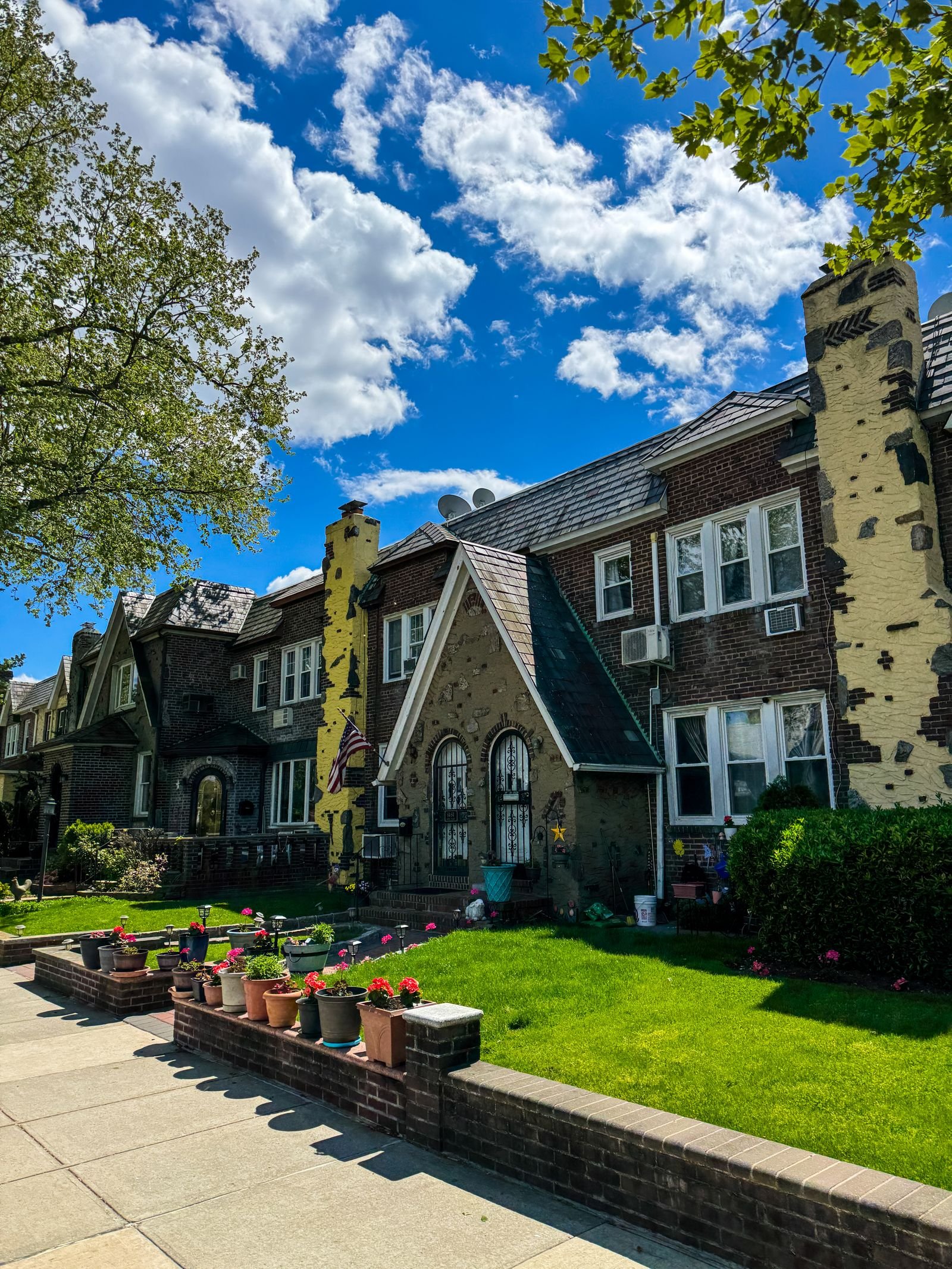
Star Construction INC has worked on masonry across the New York area since 2018, and Pelham Manor’s larger homes ask for that experience at estate scale: brick and stone colonials and Tudors set back on generous lots, garden walls and gate piers built in the same masonry as the houses, and chimneys tall enough to need proper staging. Our masonry contractors in New York bring that same approach to every Manor elevation, whatever its size.
At ground level the work is garden walls, gate piers and entrances rebuilt on footings that have done a century’s work, and steps and stoops reset level and properly drained. Where water is getting in, masonry waterproofing and sealants work traces the entry point before anything is sealed, and where a parapet has moved or opened, our parapet wall repair team assesses whether repointing and new coping will hold or the wall needs rebuilding.
On the taller stacks, chimney repair and rebuilding is scoped from a full inspection of the stack — brick, mortar, crown and flashing — and the low walls and entrances get the same care: custom masonry steps and entryways and retaining walls and masonry planters built level, drained and matched to what is already there.
Masonry restoration in Pelham Manor starts with diagnosis, because the village’s larger homes fail in a handful of familiar ways: mortar joints opened by freeze and thaw, stone settled along damp shaded walls, estate walls leaning where footings have given up, chimney crowns cracked by winters of wetting and freezing, and salt air along Shore Road working at every joint it can reach. An inspection photographs each failure and names its cause before any scope is written.
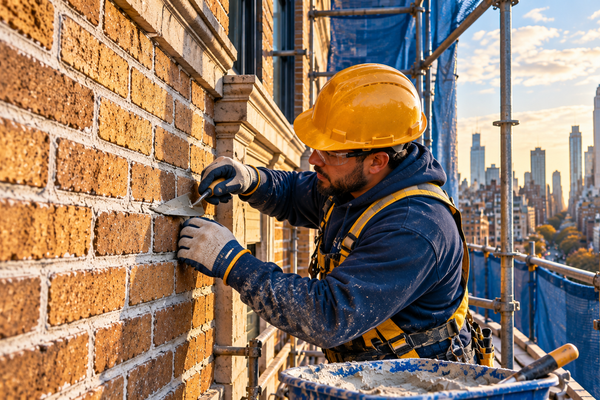
A restoration scope therefore follows the house, not a template. It may mean raking out failed joints and repointing in a mortar matched for strength and color — the same brickwork repointing work our teams do across the region — or it may mean rebuilding a garden wall, renewing a chimney crown and flashing, or resetting stone that has moved. Where stone or veneer is damaged, decorative stone and veneer repairs are matched to the existing units rather than replaced wholesale.
In every case the sequence is the same: inspect, photograph, explain the options and the order of work, and agree the scope in writing before work starts. Request a free, no-obligation estimate and we will walk the walls with you.

If you own a Pelham Manor home and the brickwork is opening, an estate wall is leaning, or a chimney is showing its age, the next step is an inspection, not a quote over the phone. You can see all the areas we serve on our service areas page, and read more about our wider masonry work from our masonry contractors in New York page.
Star Construction INC has served homes across the New York area since 2018. Request a free, no-obligation estimate and we will inspect, photograph and explain what we find before any work is quoted.
Our clients value the consistency, structural precision, and long-term performance we deliver on every project, from initial planning through final execution.

 Jav V
Trustindex verifies that the original source of the review is Google.
Got my bathroom remodel Team was professional on time Thank you Ever fernando Perez saldañaCrear Word
 LUIS CAYOi hire them for my home project. and everyting went smoothly. no delays
 Shahid IqbalVery reliable contractor. They did exactly what they promised and the quality was excellent. Would definitely recommend.
Contact us now to discuss your project and receive a no-obligation quote from our experts.
Every project is handled through a defined process that ensures accuracy, efficiency, and long-term structural performance from start to finish.
We begin by reviewing site conditions, understanding project objectives, and identifying structural requirements to establish a clear and practical direction before any work begins.
A detailed execution plan is developed, including material selection, sequencing of work, and coordination of labor to maintain consistency and avoid delays during construction.
Work is carried out using proven installation methods, with attention to structural integrity, proper reinforcement, and adherence to safety and quality standards.
A final walkthrough is conducted to verify workmanship, resolve any outstanding details, and ensure the completed project meets performance expectations and durability standards.
Pelham Manor’s homes reward a contractor who reads the house before quoting: its scale, its stone, its walls and gates, and the salt air at the Sound’s edge. The work below is how that reading turns into scope.
A Manor elevation is not a village patch job: repointing here usually means whole elevations, not a few joints, and the mortar must match originals that were mixed when the village was new — soft enough to stay the sacrificial layer, close enough in color and sand that the repair reads as the wall’s own. Stone is treated the same way: units are matched, dressed and bedded to the existing work, not swapped for the nearest modern equivalent. Our brickwork repointing crews scope elevation by elevation, so the estimate names the walls, the joints and the mortar, not a lump sum for ‘the house.’
The walls and piers that frame a Manor lot are part of the house’s architecture, not its landscaping, and they are repaired as masonry: leaning walls are taken down and rebuilt on footings that will hold for another century, piers are replumbed and recapped, and entrances are reset level with proper drainage so water stops working at the base. Where a low wall also holds back a grade, retaining walls and masonry planters are rebuilt as structures, with the drainage they should have had the first time; and where the entry itself has settled, custom masonry steps and entryways are rebuilt to match the house’s stone and brick, not patched over.
On a Manor house the chimney is often the tallest masonry on the lot, and it is inspected as a structure: the stack for lean and joint failure, the crown for cracks that let water into the core, and the flashing where the stack meets the roof for the openings that show up as stains rooms away. Where the core is sound, repointing and a rebuilt crown with renewed flashing return the stack to service; where the stack has failed, it is taken down to sound masonry and rebuilt in matching brick. Our chimney repair and rebuilding work is always staged properly — a tall stack is no place for shortcuts.
Along Shore Road and the Sound’s edge, masonry works a second shift: salt air keeps joints damp and carries chlorides into the mortar, and Westchester winters then freeze that moisture in place, widening every hairline a fraction each year. The defense is unglamorous and it works — sound mortar matched to the original, joints fully packed and tooled, crowns and copings that shed water instead of holding it, and masonry waterproofing and sealants applied only where the wall is dry and sound enough to take them. For the full picture of how winter attacks a wall, read our notes on freeze-thaw masonry damage before the cold arrives.
It depends on the cause. A wall that has leaned because its footing has settled or failed usually needs rebuilding on a new footing — repointing a wall that is still moving only buys a season. A wall that is sound but has lost mortar or a few units can often be repointed and repaired in place. An inspection of the footing, the core and the lean tells which one yours is, and we will say plainly which it is. Cost depends on the wall’s length, height and how much of it must come down.
Look at the joints: mortar recessed well back from the brick face, cracked, crumbling or sandy to the touch, damp appearing indoors after rain, and early stepped cracks at corners all say the joints have stopped sealing the wall. A mason can confirm how deep the failure goes, and whether the wall needs repointing now or can wait a season with monitoring.
Usually, yes. Stone is matched by type, color and dressing, and new units are cut to the existing sizes so the repair sits in the wall rather than standing out from it. An exact match to a century-old weathered face is not always possible, and we will show you the sample before work starts so you can judge it in daylight against the existing stone. Cost depends on the stone type and how many units must be replaced.
Yes, within limits. Repointing and rebuilding need temperatures and curing conditions that let mortar set properly, so a hard cold snap pauses the work and winter jobs are scheduled around the forecast. Emergency stabilization — making a leaning wall or a loose chimney safe — can usually be done in any season, with the full repair following when the weather allows.
In general village terms: like-for-like repairs — repointing, replacing individual units, recapping a pier — usually do not, while structural work, rebuilding a wall, changing a chimney or altering a footprint generally needs village approval. We will tell you which side of that line your job falls on before work starts, and what the village will need to see.