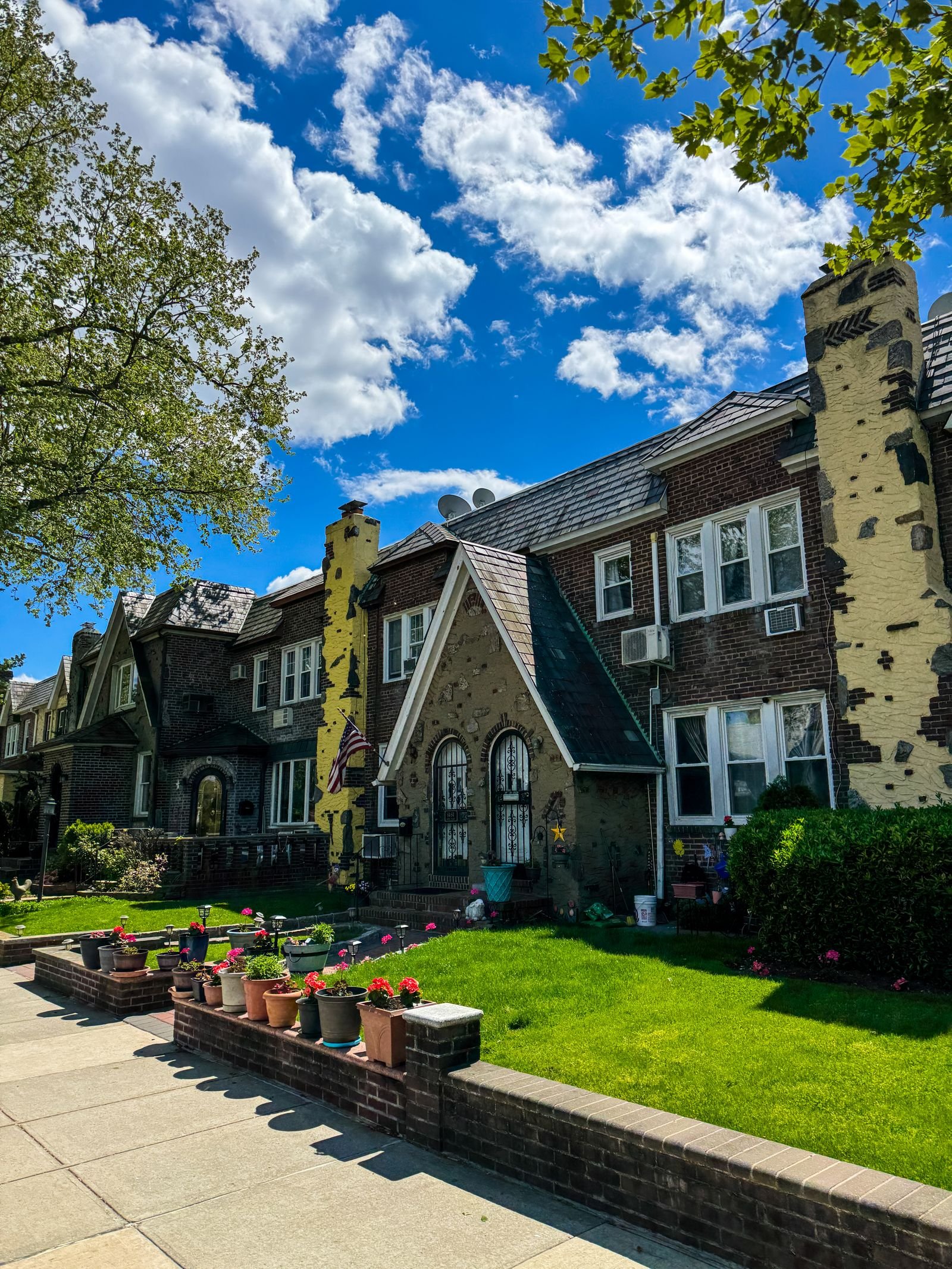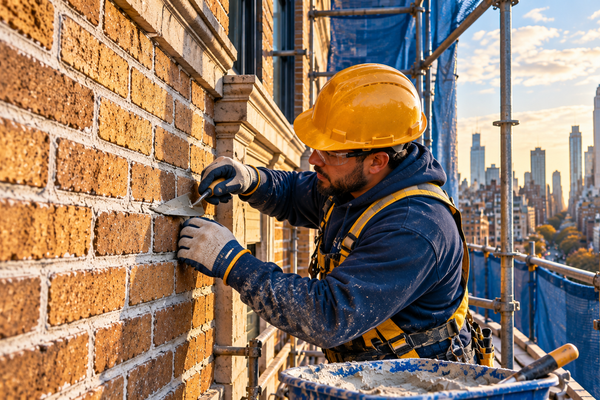
Star Construction INC has worked on masonry across the Westchester area since 2018, and the Village of Pelham is the kind of place that rewards that experience: homes built when masonry was the structure, not the decoration. Our masonry contractors in New York bring that same approach to every Pelham home, whatever its age — inspect first, photograph the failure, and explain the options before any work begins.
Most Pelham masonry work is repair and restoration rather than new construction. Joints that have opened to Westchester winters, stone that has shifted on a tired footing, chimneys that need crowns and flashing before the water they admit reaches the rooms below — the work is quiet, careful and matched to what is already there. Where a wall needs waterproofing, our masonry waterproofing and sealants work traces the entry point before anything is sealed.
At the front of the house, the work is the work visitors see first: custom masonry steps and entryways and retaining walls and masonry planters rebuilt level, drained and matched to the house — finished to be walked on, leaned on and lived with, and to look as if they had always been there.
Masonry restoration in Village of Pelham starts with diagnosis, because the village’s homes fail in a handful of familiar ways: mortar joints opened by freeze and thaw, stone settled along damp shaded walls, chimney crowns cracked by winters of wetting and freezing. An inspection photographs each failure and names its cause before any scope is written.
A restoration scope therefore follows the house, not a template. It may mean raking out failed joints and repointing in a lime mortar matched for strength and colour — the same brickwork repointing work our teams do across the region — or it may mean rebuilding a chimney crown, renewing flashing, or resetting stone that has moved. Where stone or veneer is damaged, decorative stone and veneer repairs are matched to the existing units rather than replaced wholesale.
In every case the sequence is the same: inspect, photograph, explain the options and the order of work, and agree the scope in writing before work starts. Request a free, no-obligation estimate and we will walk the walls with you.

If you own a home in the Village of Pelham and the brickwork is opening, the chimney is leaning, or the front steps have settled, an inspection will tell you which of those are maintenance and which are repairs that should not wait. We work on colonials, Tudors and the village’s other pre-war homes, and we explain what we find in plain language, with photographs.
You can see all the areas we serve on our service areas page, and read more about our wider masonry work from our masonry contractors in New York page. Star Construction INC has served homes and buildings across the New York area since 2018. Request a free, no-obligation estimate and we will inspect, photograph and explain the options.
Our clients value the consistency, structural precision, and long-term performance we deliver on every project, from initial planning through final execution.

 Jav V
Trustindex verifies that the original source of the review is Google.
Got my bathroom remodel Team was professional on time Thank you Ever fernando Perez saldañaCrear Word
 LUIS CAYOi hire them for my home project. and everyting went smoothly. no delays
 Shahid IqbalVery reliable contractor. They did exactly what they promised and the quality was excellent. Would definitely recommend.
Contact us now to discuss your project and receive a no-obligation quote from our experts.
Every project is handled through a defined process that ensures accuracy, efficiency, and long-term structural performance from start to finish.
We begin by reviewing site conditions, understanding project objectives, and identifying structural requirements to establish a clear and practical direction before any work begins.
A detailed execution plan is developed, including material selection, sequencing of work, and coordination of labor to maintain consistency and avoid delays during construction.
Work is carried out using proven installation methods, with attention to structural integrity, proper reinforcement, and adherence to safety and quality standards.
A final walkthrough is conducted to verify workmanship, resolve any outstanding details, and ensure the completed project meets performance expectations and durability standards.
Pelham’s homes reward a contractor who reads the house before quoting: its age, its materials, its damp corners and its sunny ones. The village’s pre-war brick and stone were built to last, and they do — provided the mortar stays softer than the brick, the water is kept out at its entry points, and repairs are matched rather than merely patched. That is the standard every section below is held to.
The colonials and Tudors of the Village of Pelham were laid in lime mortar that flexes with the building and lets the wall breathe. A century of Westchester weather has opened many of those joints, and later decades added a second problem: hard Portland-cement patches that crack the softer historic brick around them. Our repair starts by identifying which mortar the house was built with, so the new work protects the old.
We rake out failed joints by hand where the brick is soft, repoint in a lime mortar matched for strength and colour, and replace spalled or broken units with brick that belongs to the home’s era. The same brickwork repointing discipline applies to stone: reset on proper footings, joints finished to shed water, and the wall left reading as one wall again.
A chimney is the most exposed masonry on a Pelham home: it takes weather on every side, and its crown — the cap that sheds water — is often the first element to crack. Once water gets under a cracked crown, freeze and thaw work down through the stack, opening joints and, over years, leaning the whole structure a degree at a time. A lean is never cosmetic; it is the visible end of a process that started at the top.
Our chimney work begins at the crown and flashing, because that is where the water enters: crowns rebuilt, flashing renewed, and only then the stack itself repointed or partially rebuilt where it has moved. Our chimney repair and rebuilding teams photograph each stage, so you can see what was failing and what was done about it.
Westchester winters are hard on masonry. Water enters a joint or a hairline crack in autumn, freezes, expands and prises the joint a little wider; by spring the opening is big enough to admit more water, and the cycle repeats. The damage shows as spalled brick faces, crumbling mortar and garden walls that have shifted over a single cold season.
The defence is timing and material: repoint before the water has a full winter to work, use mortar that breathes and moves with the wall rather than trapping moisture behind a hard skin, and keep copings, flashings and drainage details doing their job. Our guide to freeze-thaw masonry damage explains the cycle in more detail, and our inspections in autumn are planned around catching the joints that will not survive another winter intact.
The masonry a Pelham homeowner touches every day is at the front of the house: the stoop, the front steps, the low garden walls along the shaded, damp north sides. These settle, shift and crack for ordinary reasons — a footing that has softened, a tree root that has lifted a section, a winter of salt and ice — and they are the repairs that most reward doing properly, because they are walked on daily.
The work here is as careful as the wall work, at a different scale: rebuilding on a properly drained footing, matching brick and mortar to the house rather than the catalogue, and leaving edges and joints that will hold through winters of salt and freeze. Our custom masonry steps and entryways and retaining walls and masonry planters work is finished to be walked on, leaned on and lived with — and to look as if it had always been there.
Look for mortar joints that are cracked, crumbling or sitting recessed behind the brick faces, bricks that are spalling or flaking, and damp patches on interior walls near the outside face. A simple test: if a key or screwdriver can rake loose mortar from a joint, that joint has failed. If you are unsure, an inspection with photographs will show exactly which joints have failed and which still have years of life in them. Costs depend on the scope — how much wall, how high, and how much brick needs replacing alongside the joints.
A lean should always be inspected, even a slight one. It usually means water has been entering through a cracked crown or failed flashing and weakening the stack over time, or that the footing has moved. A small lean caught early can often be corrected by rebuilding the upper stack; a lean left alone can reach the point where the whole chimney must come down. The inspection is free and no-obligation, and it will tell you which situation you are in.
Yes, with limits. Mortar must be kept above freezing while it cures, so winter work is scheduled around the forecast and protected with coverings and, where needed, gentle heat. Some work needs dry, warmer conditions and may be better deferred: waterproofing membranes and some sealants, for example. Emergency stabilisation — a loose chimney section, a dangerous wall — is done whenever it is needed, with the finishing work timed to the weather.
Yes — and on a pre-war Pelham home, matching matters more than most owners realise. The original mortar was almost certainly a soft lime mortar; repointing with hard modern cement traps moisture and cracks the brick faces, damage that cannot be undone. We match the original in strength, colour and joint profile, and we can show you test patches before the full work begins, so you can see the match rather than take it on trust.
It depends on the work. Cosmetic repointing and like-for-like repairs usually need no permit. Structural work — rebuilding a chimney, a retaining wall above a certain height, or work that changes the structure — generally requires a village permit, and we will tell you before work starts whether your project falls in that category and what the process involves. Costs depend on the scope of the work.