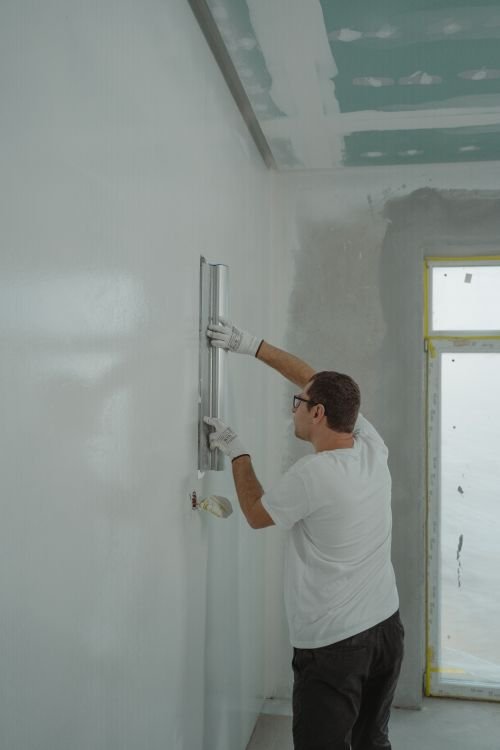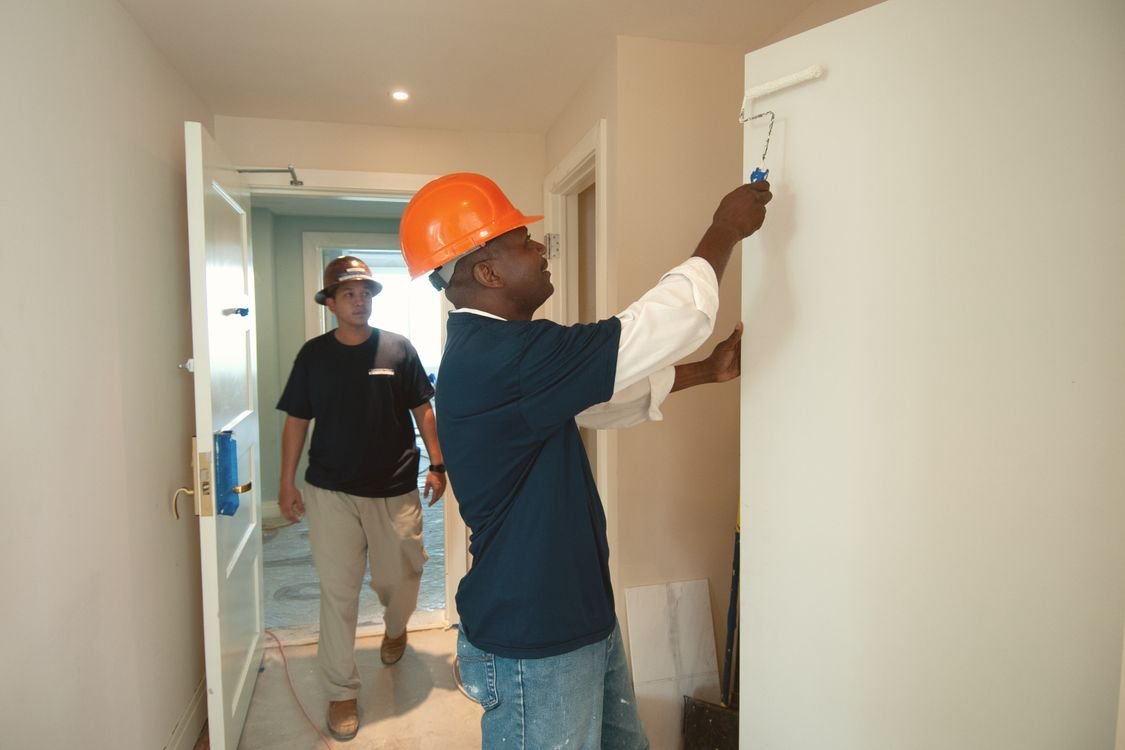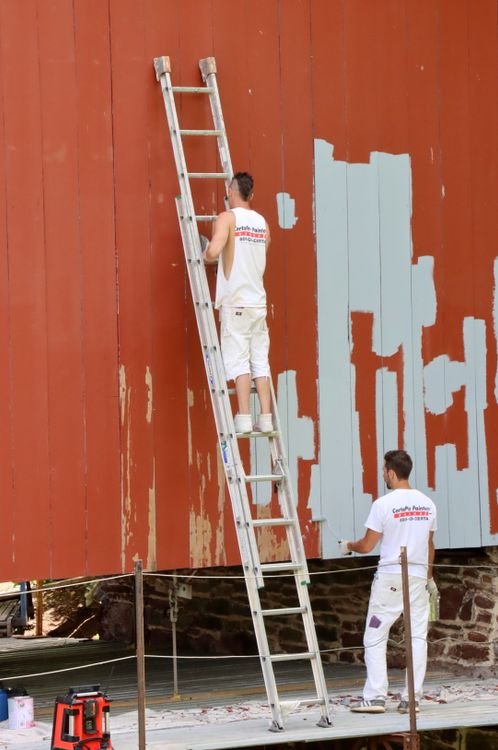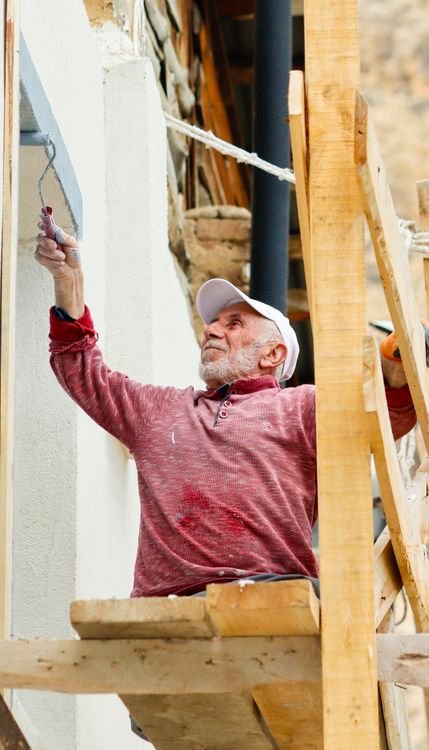
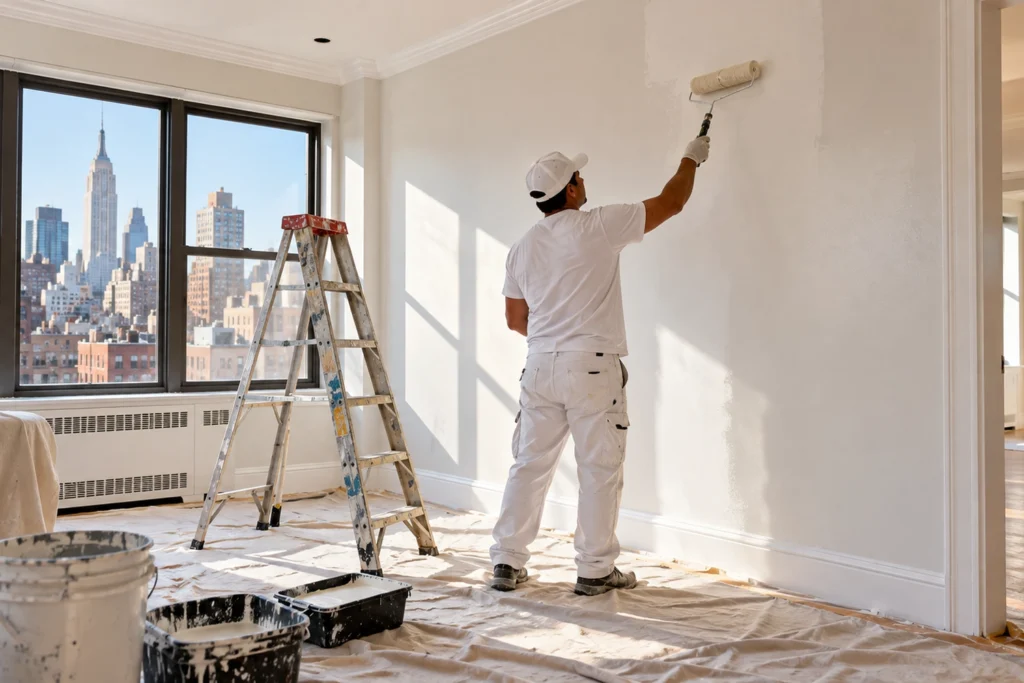
Our paint renovation process in Jerome Park begins with a room-by-room and elevation-by-elevation evaluation: the condition of the plaster, the layers of old paint, the state of the trim, and where moisture has been working behind the finish. That evaluation matters more here than in a new building, because the neighborhood’s pre-war apartments, co-ops, and brick houses all carry a century of paint history — and the right system for a 1920s plaster wall is not the system for new drywall. As paint renovation and general contractors in New York, we plan the preparation around what the surface actually is, not what a product label assumes.
Material selection follows the surface. Interiors get low-odor, durable finishes suited to daily apartment life; common areas get scrubbable, scuff-resistant systems that stand up to foot traffic and luggage carts; exteriors get primers and topcoats chosen for brick, limestone, and wood trim in Bronx weather. Execution follows a structured sequence: protection of floors and furnishings, repair and preparation, priming, finish coats, and a final walk-through in daylight. For occupied apartments and buildings, phasing and scheduling keep the rest of the property usable while work proceeds.
Two decisions separate a lasting paint job from a quick one. First, preparation — the unglamorous majority of the work — must be priced and done honestly, not skipped to win a bid. Second, the finish must suit the building: period-appropriate colors and sheens inside, weather-appropriate systems outside, so the work looks right on day one and still looks right in five years.
Paint renovation is the work of renewing a building’s painted surfaces properly, not just recoating them: repairing the substrate, stabilizing what has failed, priming for the material underneath, and then applying finish coats in the right system for the room or elevation. General contracting, in this context, means the job is handled as a whole — plaster repair before paint, carpentry repair before trim paint, and coordination with other trades when a room needs more than paint alone. In Jerome Park, where pre-war apartments, common areas, and brick houses all need painting on different cycles, that whole-job view is what keeps a paint job from failing at the first weak layer.
The distinction matters most on old surfaces. A interior and exterior painting project in a pre-war building starts with what is already on the wall: how many layers, whether any are failing, and whether the plaster beneath is sound. Exterior painting adds weather to the equation — brick that holds moisture, limestone that stains, and wood trim that moves with the seasons. When the preparation matches the surface, the finish lasts; when it does not, the prettiest color in the building becomes the next owner’s peeling problem.

If you are searching for a trusted paint renovation contractor in Jerome Park, start with a walk-through, not a quote. A good contractor will look at the surfaces before naming a price — the plaster, the layers of old paint, the trim — and will explain what the preparation involves and why. Ask what is included in the prep, how lead-safe practices are handled in a pre-1978 building, and how common areas will be phased so the building keeps running. The answers tell you more than any brochure.
Star Construction INC has painted interiors, common areas, and exteriors across the New York area since 2018, and Jerome Park’s pre-war buildings are familiar work for us: plaster walls that need patience, trim profiles worth keeping, and street faces that need weather-appropriate systems. Request a free, no-obligation estimate, and we will walk the rooms and elevations with you and explain the options in plain terms. You can see the full list of neighborhoods we serve on our service areas page — and when you are ready, Star Construction INC is the call to make.
Our clients value the consistency, structural precision, and long-term performance we deliver on every project, from initial planning through final execution.


 Trustindex verifies that the original source of the review is Google.
 Trustindex verifies that the original source of the review is Google.
 Trustindex verifies that the original source of the review is Google.
 Trustindex verifies that the original source of the review is Google.
Contact us now to discuss your project and receive a no-obligation quote from our experts.
Every project is handled through a defined process that ensures accuracy, efficiency, and long-term structural performance from start to finish.
We begin by reviewing site conditions, understanding project objectives, and identifying structural requirements to establish a clear and practical direction before any work begins.
A detailed execution plan is developed, including material selection, sequencing of work, and coordination of labor to maintain consistency and avoid delays during construction.
Work is carried out using proven installation methods, with attention to structural integrity, proper reinforcement, and adherence to safety and quality standards.
A final walkthrough is conducted to verify workmanship, resolve any outstanding details, and ensure the completed project meets performance expectations and durability standards.
A professional paint renovation in Jerome Park delivers more than fresh color. It stabilizes the surfaces that have carried a century of paint, repairs the plaster and trim that give pre-war rooms their character, and protects the street face against Bronx weather — so the building looks cared for and stays that way. The four sections below describe where that value shows up most in this neighborhood’s buildings.
Most Jerome Park apartments are painted over plaster, not drywall, and that changes the job. Plaster that has hairline-cracked with the seasons needs stabilizing before it is painted — cracks chased, loose keys re-secured, and the surface skimmed where it has gone uneven — or the new paint simply maps every old crack within a year. Trim is the other half of the room: deep pre-war casings, baseboards, and door frames that were milled to profiles nobody stocks anymore. They are repaired, not replaced, and painted in a sheen that suits their depth — flat on the walls, a harder finish on the woodwork that hands and furniture actually touch.
When painting is part of a larger interior renovation, the sequence matters: plaster and trim work first, paint last. Our interior renovation contractors in Jerome Park plan that order with you, so the paint crew is never asked to cover work that is not ready for paint.
A building’s common areas are its handshake — the lobby a visitor judges, the hallway every tenant walks daily, the stairwell that takes the hardest wear in the building. Painting them is a logistics job as much as a paint job: work phased floor by floor so residents are never locked out of their own hallway, low-odor products so the building stays livable, and durable, scrubbable finishes on the lower walls where luggage, strollers, and furniture do their damage. Handrails, mail areas, and elevator surrounds get the same attention as the walls, because a freshly painted hall with a battered handrail still reads as neglected.
Scheduling is agreed with the building in advance — which floors on which days, what hours, and where materials are staged — so the work is predictable rather than a surprise. A common-area repaint done this way refreshes the whole building’s impression for a fraction of a renovation budget, and it is often the first thing a prospective tenant or buyer notices.
Good preparation is unglamorous, and it is most of the job. On a Jerome Park interior it means washing the surface, scraping only what is loose, filling and sanding so repairs disappear, caulking the gaps that move, and priming every repaired area plus any surface changing from oil to latex or from dark to light. On an exterior it means the same discipline plus weather: failed paint taken back to a sound edge, bare wood primed the same day it is exposed, and no topcoat applied over a damp or chalking surface.
In buildings from before 1978, preparation also means lead-safe practices as a matter of routine: paint of that era is assumed to contain lead until testing shows otherwise, work follows lead-safe practices and the federal renovation rule, and testing settles the question. No certification is claimed here — the point is that a contractor who treats old paint casually is not a contractor to hire. Preparation is also where a bid is won or lost honestly: a price that skips it is not cheaper, it is just a shorter-lived paint job with the failure scheduled a year out.
Jerome Park’s street faces are brick and limestone, and they fail a paint job in their own ways. Painted brick that is sound can be repainted, but brick that is spalling, efflorescing, or holding moisture needs the masonry problem solved before any paint goes on — paint over a wet wall is a blister waiting for the first freeze. Limestone trim and terra-cotta details are usually left unpainted and cleaned instead, because their color and texture are the building’s ornament; painting them hides the detail and traps moisture behind the film. Wood trim, cornices, and entry doors are the surfaces that actually want paint, and they want it in a system built for exterior movement and sun.
The judgment call is honest: repaint what is painted, repair what is failing, and leave alone what was never meant to be painted. A street face treated that way looks cared for without looking coated, and it stays that way through Bronx winters.
Paint from before 1978 must be assumed to contain lead until testing shows otherwise. That does not mean every old wall is dangerous — intact paint that is not peeling or chalking is generally left alone — but any work that disturbs it, like sanding, scraping, or demolition, must follow lead-safe practices and the federal renovation rule: containment, careful cleanup, and no dry-scraping large areas. Testing settles the question for your building specifically, and it is worth doing before a large repaint. No certification is claimed here; the point is that a contractor who treats pre-1978 paint casually is not following the rules that protect your household.
Yes, with phasing. Common-area work is scheduled floor by floor, so residents are never locked out of their own hallway, and noisy or odorous work is clustered into agreed hours. Low-odor products keep the building livable while work proceeds, and each floor is returned to use at the end of the day. The schedule is agreed with the building in advance — which floors on which days, where materials are staged — so the work is predictable. A full-building common-area repaint typically takes a few weeks depending on the number of floors and the amount of repair work, and the cost depends on scope.
It depends on the scope agreed in the estimate, and a good estimate names it. Minor repair — hairline cracks, small holes, loose paint edges — is normally part of the preparation for any paint job. Larger work — re-securing loose plaster, skimming whole walls, or rebuilding sections — is priced as its own line, because it is plastering work, not painting work. The honest approach is a walk-through that separates the two: what the paint crew handles as prep, and what needs a plasterer first. Costs depend on scope — the area involved, the condition of the plaster, and the finish chosen.
It depends on the brick’s condition. Painted brick that is sound — paint adhering well, no spalling or moisture problems — is usually repainted, because stripping risks damaging the brick face and the paint is already part of the wall’s protection. Brick that is spalling, efflorescing, or holding moisture should not simply be repainted: the masonry problem needs solving first, and stripping may be part of that repair if the paint is trapping water. Where brick was never meant to be painted — limestone trim, terra-cotta details — cleaning is usually the right call rather than painting. A walk-through settles which case your wall is.
Cosmetic painting generally does not need a permit. Work that goes beyond painting — moving walls, changing plumbing or electrical systems, or structural repairs found during preparation — generally does need approval, and in New York City that means the Department of Buildings process for the scope involved; in a co-op or condo building, the building’s own alteration rules apply on top of that, and those vary by building. We identify what your scope needs during the walk-through and explain it in general terms before work begins — no specific board or permit outcome is promised, because each building decides its own.