Tuckahoe’s pre-war homes reward a painter who reads the wall before opening a can. The village’s Victorians, colonials and Tudors carry plaster walls, deep trim and a century of paint layers, and on compact lots every elevation sits close to its neighbor’s — which means preparation dust, staging and access all need village manners. Our paint renovation contractors begin with a surface-by-surface walk, not a color chart, and price the preparation honestly before any work is quoted.
The work itself is plaster-first: stabilize what has loosened, take failed paint back to a sound edge, repair wood rather than bury it, and prime for the surface that is actually there. Request a free, no-obligation estimate and we will walk the rooms and elevations with you and explain the options.
Paint renovation in Tuckahoe means restoring painted surfaces properly, not just recoating them. The scope covers interior and exterior painting — rooms, trim, siding, shingles and painted brick — with the repair work that makes a paint job last: plaster stabilization, wood repair, caulking and priming matched to century-old surfaces.
Where the elevation needs it, exterior painting follows the same discipline: wash and scrape back to sound material, repair rather than fill over, and prime before the finish coats. A paint job that skips the preparation looks fine for a season and fails by the second winter; one that honors it holds for years.

If you are looking for paint renovation contractors in Tuckahoe, NY, start with a walk-through rather than a price. At Star Construction INC, we inspect every surface, explain what the preparation will actually involve, and quote the job that fits — plaster-first where plaster is the problem, full prep where the layers have failed.
We have painted interiors and exteriors across the New York area since 2018, and the areas we serve are listed on our service areas page. Request a free, no-obligation estimate and we will walk the rooms and elevations with you before quoting anything.
Our clients value the consistency, structural precision, and long-term performance we deliver on every project, from initial planning through final execution.

 Jav V
Trustindex verifies that the original source of the review is Google.
Got my bathroom remodel Team was professional on time Thank you Ever fernando Perez saldañaCrear Word
 LUIS CAYOi hire them for my home project. and everyting went smoothly. no delays
 Shahid IqbalVery reliable contractor. They did exactly what they promised and the quality was excellent. Would definitely recommend.
Contact us now to discuss your project and receive a no-obligation quote from our experts.
Every project is handled through a defined process that ensures accuracy, efficiency, and long-term structural performance from start to finish.
We begin by reviewing site conditions, understanding project objectives, and identifying structural requirements to establish a clear and practical direction before any work begins.
A detailed execution plan is developed, including material selection, sequencing of work, and coordination of labor to maintain consistency and avoid delays during construction.
Work is carried out using proven installation methods, with attention to structural integrity, proper reinforcement, and adherence to safety and quality standards.
A final walkthrough is conducted to verify workmanship, resolve any outstanding details, and ensure the completed project meets performance expectations and durability standards.
Tuckahoe paint work divides itself by surface, not by room count. Each of these four — the interiors, the exteriors, the preparation, and the color choices — decides whether a paint job lasts or merely looks fresh. Here is how we approach each.
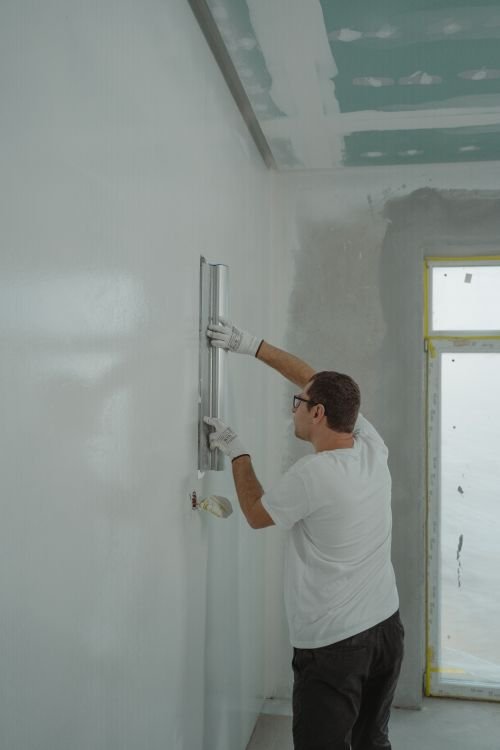
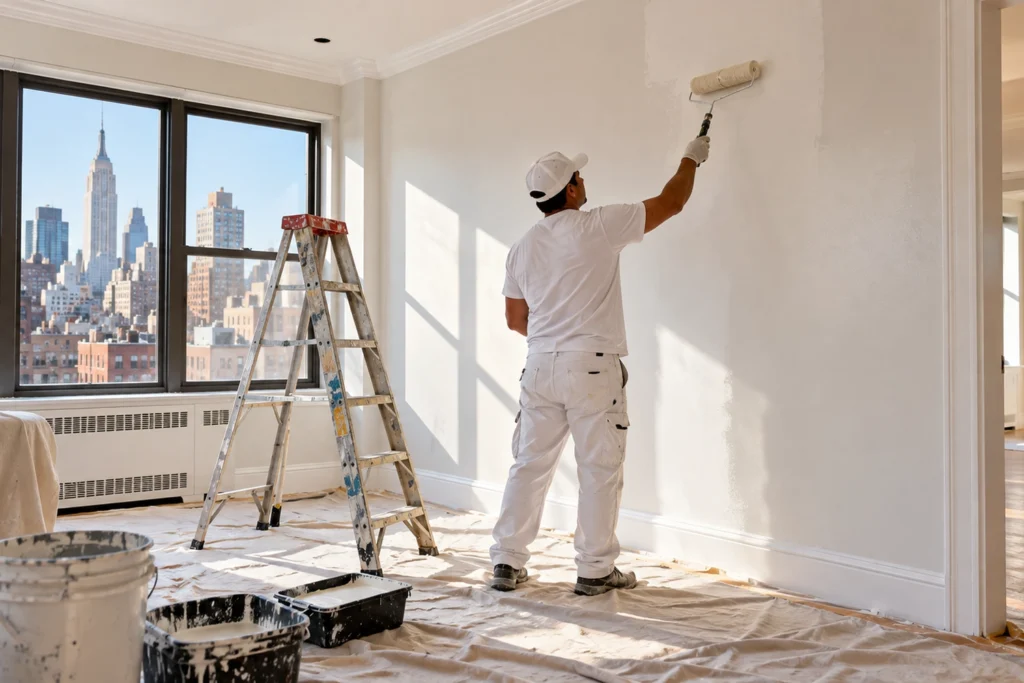
Tuckahoe interiors are plaster interiors, and plaster is the whole job before the paint. Hairline cracks from a century of seasons, ceilings that have keyed loose in places, and trim profiles milled to shapes nobody stocks anymore — the paint can only be as good as the surface beneath it. We stabilize loose plaster, cut out and repair cracks properly, and match trim profiles rather than replacing character with stock molding.
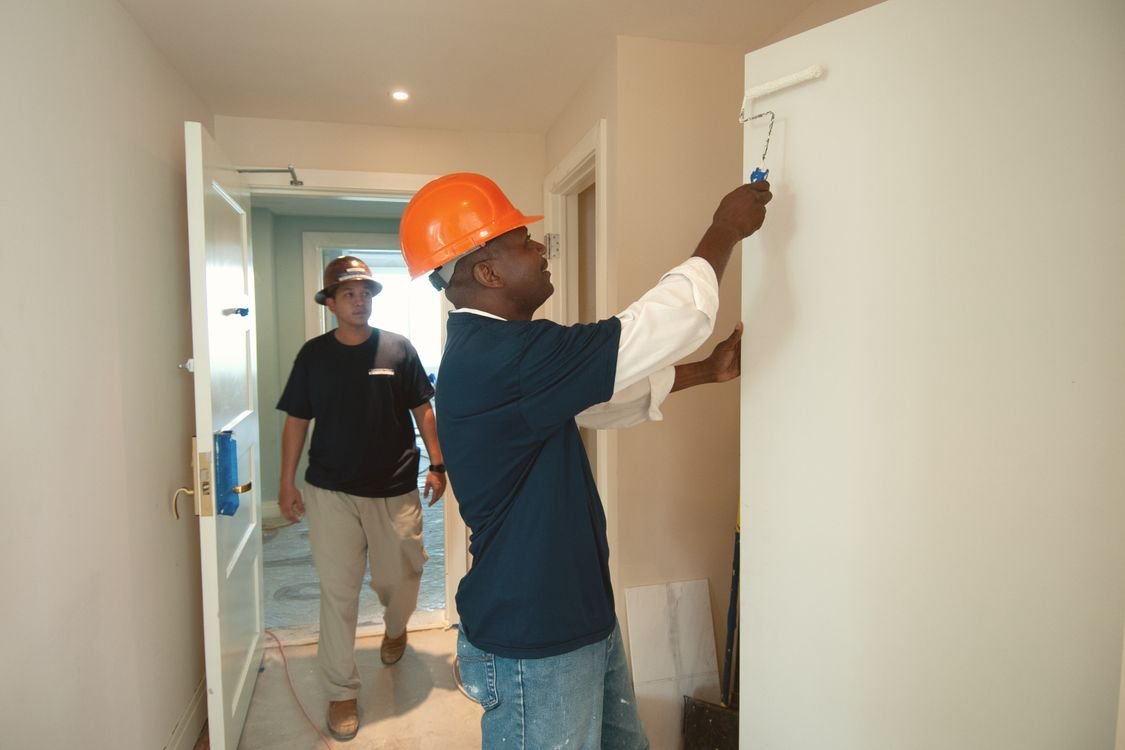
Where painting follows a renovation, the sequence matters — plaster first, fully cured, then paint — and our interior renovation contractors in Tuckahoe plan the two trades together so fresh plaster is never rushed under a finish coat.
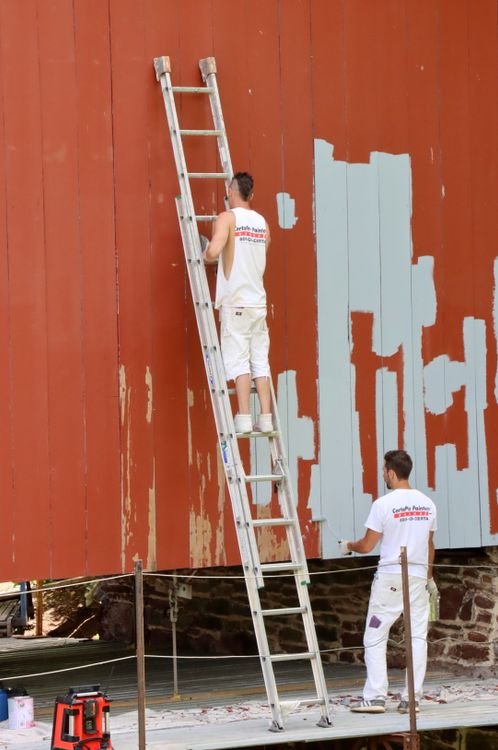
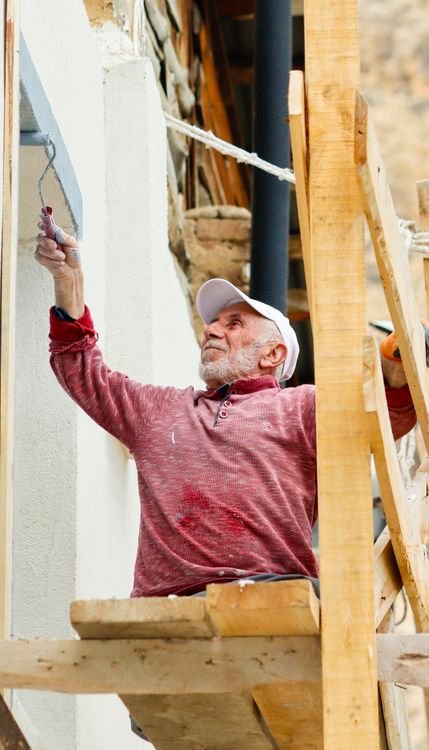
Tuckahoe exteriors are close-quarters exteriors: wood siding, shingle courses and painted trim on compact lots, where every elevation is seen from the street or the neighbor’s walk and where staging, access and neighborliness all matter. The failures are the usual ones — paint film broken at the water lines, siding split where the sun works it, trim rotted where gutters have overflowed into it — and each is repaired before it is painted, not covered by paint.
The village’s shade matters too: north elevations and tree-shaded walls stay damp longer, so mildew and slow drying are planned for rather than discovered mid-job. We wash, scrape, repair and prime elevation by elevation, and we schedule the work so each coat cures properly in the shade it actually faces.
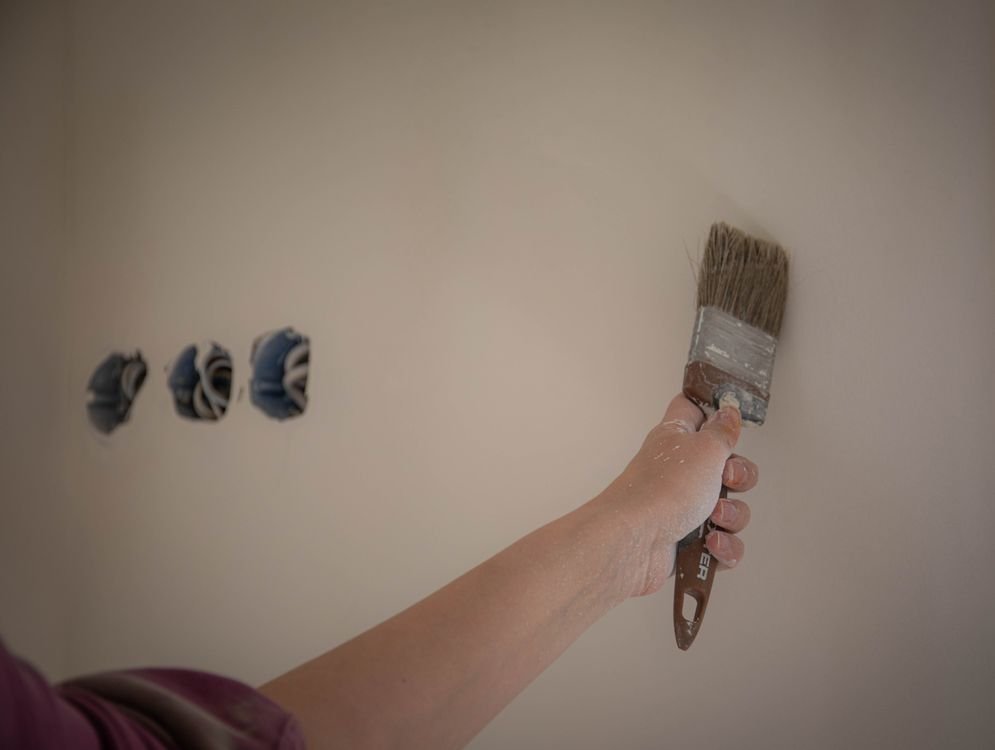
Good preparation is a sequence, and skipping a step is how paint jobs fail. First, the inspection: every surface read for loose paint, failed caulk, cracked plaster and rotted wood. Second, the taking-back: failed layers scraped and sanded to a sound edge, never feathered over failure. Third, the repair: plaster stabilized and patched, wood repaired or replaced in kind, joints re-caulked — our drywall and plaster repair work covers the interior half of this step.
Fourth, the priming: primers matched to the surface — plaster, bare wood, previously painted wood — rather than one primer for everything. Fifth, the finish coats, applied at the manufacturer’s spread rate, not stretched thin. A job quoted without these steps is not cheaper; it is a repaint waiting to happen, and we would rather lose that job than sell it.
Period-appropriate color is guidance, not a lecture, and it starts from what the house already is. Tuckahoe’s Victorians can carry deeper, more confident colors than a cautious palette allows; the colonials reward restraint and contrast at the trim; the Tudors want their stucco and half-timbering to read as one composition rather than two competing ones. We bring samples to the wall, in the light the wall actually gets, because a chip in a store is a promise a wall rarely keeps.
The practical rules are simple: match the existing trim color and sheen where the house’s character depends on it, test large swatches before committing, and remember that the sun side and the shaded side of the same house will read a full shade apart. The choice stays yours — our job is to make sure it is an informed one, and that the paint that carries it is applied over preparation worthy of it.
Assume pre-1978 paint contains lead until testing says otherwise. Work on such surfaces follows lead-safe practices under the federal renovation rule — containment, careful removal methods, and thorough cleanup — and testing settles whether lead is actually present. We do not claim certifications we do not hold; what we promise is honest practice: if testing shows lead, the work is planned around it, and if it does not, the job proceeds normally. The test, not the assumption, decides.
The plaster repair that a paint job needs is included in our preparation pricing: stabilizing loose areas, cutting out and patching cracks, and smoothing the surface to a paint-ready finish. What is priced separately is structural plaster work — ceilings that need re-keying over large areas, or walls whose plaster has failed to the lath throughout a room — because that is replastering, not preparation. We show you which yours is during the walk-through, before quoting, so the preparation line in the estimate is never a surprise.
Usually yes, and we match both, not just the color. We take a chip or a sample from an undisturbed area, match it against fan decks and, where the finish matters, test a swatch on the trim itself in the room’s own light — because sheen changes how a color reads as much as pigment does. Exact matches on century-old paint are sometimes impossible where the original has faded unevenly; in those cases we match the least-faded reference and blend the transition so the eye does not catch it.
A well-prepared exterior paint job on a pre-war Westchester home typically lasts seven to ten years, with the sun side and the weather side aging first. Shade, tree cover, and the quality of the previous preparation move that range in either direction — a shaded north elevation can hold longer, while a south-facing wall with thin preparation may need attention sooner. Repainting is due when the film chalks heavily, cracks at the joints, or peels at the water lines, not on a calendar date.
Cosmetic painting generally does not need a village permit. Work that changes structure, adds or moves openings, or involves regulated materials beyond ordinary painting practice is a different conversation, and the village can confirm the requirement for a specific job. Straight repainting — interiors and exteriors, like-for-like — is usually the simplest category of work a village sees.