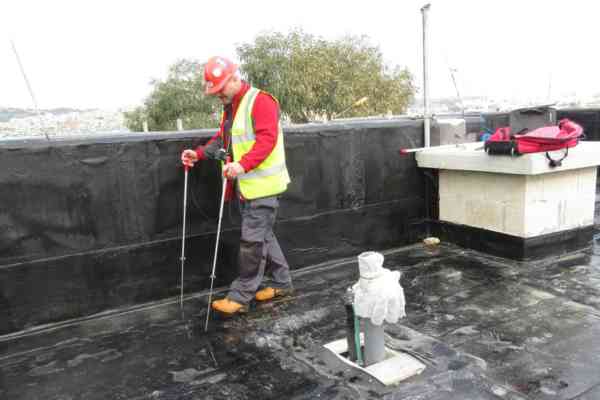

Jerome Park’s roofscape is defined by its two building generations, and a roofer who treats them as one roof will misread both. The pre-war apartment buildings and brick multi-family houses carry flat roofs — membrane systems drained through interior drains and scuppers, edged by parapets whose coping and flashing take the weather first. The single-family homes on the reservoir hills carry pitched roofs — shingle fields, valleys, dormers and chimney stacks that shed water fast but punish any flashing shortcut. Our work as roof repair and installation contractors in New York starts from that distinction, because the repair that suits a membrane will not suit a shingle slope, and the detail that fails on one is rarely the detail that fails on the other.
Age has added a second layer to the picture. Many of Jerome Park’s flat roofs have been recovered rather than replaced, so a leak today may be traveling between two membrane generations before it shows indoors. Many pitched roofs still carry their original decking under newer shingles, and the valleys and chimney flashings are older than the field around them. A proper inspection therefore reads the roof’s history as well as its surface: how many systems are up there, where each one ends, and which junction is actually letting the water in.
That inspection is where every Jerome Park roof job begins. We walk the roof, photograph the drains, parapets, valleys and penetrations, and explain what we find in plain terms — what is a repair, what is a section replacement, and what genuinely needs a new system — before any work is quoted. Request a free, no-obligation estimate and the first visit is the diagnosis, not the sales pitch.
Professional roof repair and installation means treating the roof as a system, not a surface. On a flat roof, that system is the membrane, the insulation and drainage beneath it, and the edge details — parapet flashing, coping joints, scuppers and drains — that decide whether water leaves the roof or sits on it. On a pitched roof, it is the shingle field plus the valleys, step flashing, chimney flashing and ventilation that keep the deck dry. A repair that patches the visible damage while ignoring the system behind it is a repair that will be repeated.
In Jerome Park the two systems sit side by side, sometimes on the same block. The apartment buildings’ flat roof systems need drain discipline and membrane care; the hillside homes’ asphalt shingle roofs need flashing discipline and valley work. Both need the same honesty at the start: an inspection that names the failed detail, not just the wet ceiling below it.

If you are searching for roof repair contractors near Jerome Park, the useful question is not how fast a crew can arrive but how carefully the roof will be read. A stain on a top-floor ceiling can start at a parapet joint two apartments away; ponding water can be a drain problem rather than a membrane problem; a valley leak can masquerade as a chimney leak for years. The contractor who finds the real entry point saves you the second repair.
Star Construction INC has repaired and replaced roofs across the New York area since 2018, and our Jerome Park work covers both roof types the neighborhood actually has. The areas we cover are on our service areas page, and every project starts with the same offer: an inspection, photographs of what we find, and a plain explanation before any work is quoted. Request a free, no-obligation estimate from Star Construction INC and we will start on the roof itself.
Our clients value the consistency, structural precision, and long-term performance we deliver on every project, from initial planning through final execution.


 Trustindex verifies that the original source of the review is Google.
 Trustindex verifies that the original source of the review is Google.
 Trustindex verifies that the original source of the review is Google.
 Trustindex verifies that the original source of the review is Google.
Contact us now to discuss your project and receive a no-obligation quote from our experts.
Every project is handled through a defined process that ensures accuracy, efficiency, and long-term structural performance from start to finish.
We begin by reviewing site conditions, understanding project objectives, and identifying structural requirements to establish a clear and practical direction before any work begins.
A detailed execution plan is developed, including material selection, sequencing of work, and coordination of labor to maintain consistency and avoid delays during construction.
Work is carried out using proven installation methods, with attention to structural integrity, proper reinforcement, and adherence to safety and quality standards.
A final walkthrough is conducted to verify workmanship, resolve any outstanding details, and ensure the completed project meets performance expectations and durability standards.
Professional roof work in Jerome Park pays for itself in the repairs it prevents. A membrane kept draining, a flashing joint kept sealed, a gutter kept clear — each is a small job that stands between a building and the slow water damage that turns a leak into a ceiling, a wall, and a mold conversation. The four sections below are the four places Jerome Park roofs actually fail, and what proper work looks like in each.
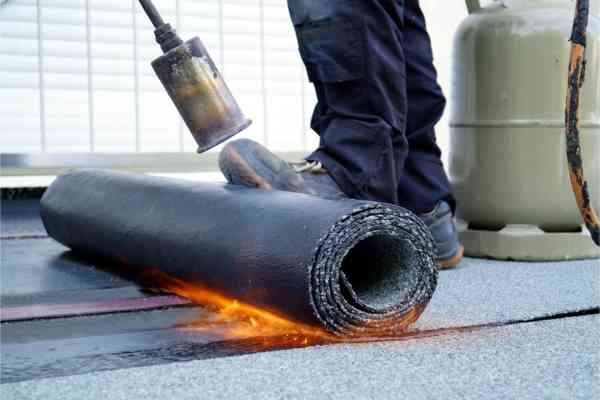
A flat roof is not flat; it is pitched just enough to drain, and its whole life depends on that slight pitch surviving. Jerome Park’s apartment-building roofs drain through a small number of drains and scuppers, and when one clogs with leaves and debris, water spreads across the membrane and stays there. Standing water accelerates membrane aging, finds every seam weakness, and adds dead load the structure was not designed to carry indefinitely. Drain discipline — cleared drains, checked scuppers, verified pitch at the low points — is the cheapest roof maintenance a building can buy.
When a flat roof does leak, the entry point is rarely above the stain. Water travels under the membrane along the deck until it finds a seam, a penetration or a ceiling below. That is why roof leak detection matters more than patching the spot that looks wet: the inspection traces the water’s path, tests the suspect seams and drains, and only then names the repair. A membrane patch over the stain, without the trace, is a patch over the symptom.
Ask any roofer where Jerome Park roofs leak and the answer is the same: at the junctions, not in the field. Parapet walls are the worst offenders — the membrane must turn up the parapet and be sealed by counter-flashing, and when that seal opens, water runs behind the membrane and down the wall, appearing as a stain floors below. The same is true of chimney flashings, vent penetrations and skylight curbs: each is a hole in the system that depends on metal work staying sealed through freeze and thaw.
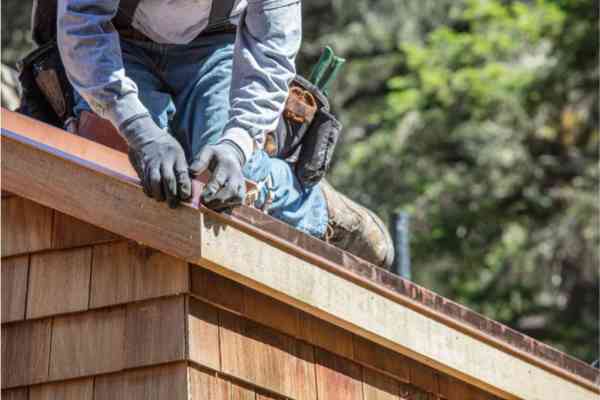
Proper roof flashing repair is metal work, not caulk work: step flashing woven course by course, counter-flashing set into the masonry joint, and coping joints repointed where the wall itself has opened. That last detail is why roof work on these buildings so often meets masonry work — the parapet is a brick wall first and a roof edge second, and our masonry contractors in Jerome Park repair the same parapets from the wall side. When the wall and the flashing are fixed together, the leak stays fixed.
The reservoir hills’ single-family homes carry pitched roofs in shingle, and their failures are the familiar ones: valleys worn by two slopes’ worth of water, chimney flashings lifted by ice, dormer cheeks where a wall meets a slope, and shingle fields thinned by age and shade. Repair here means repair in kind — matching shingle, reweaving valleys, re-flashing chimneys with step flashing rather than surface sealant — so the repair ages with the roof instead of standing out from it.
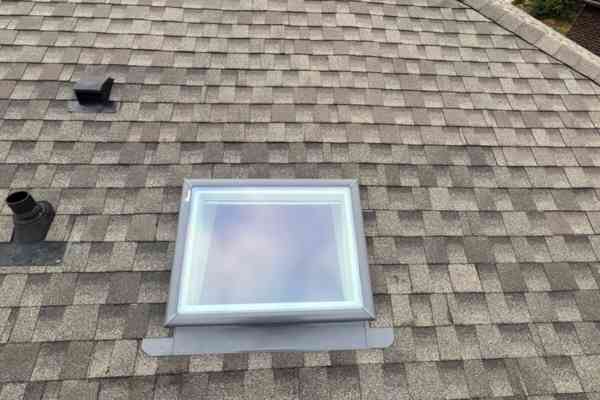
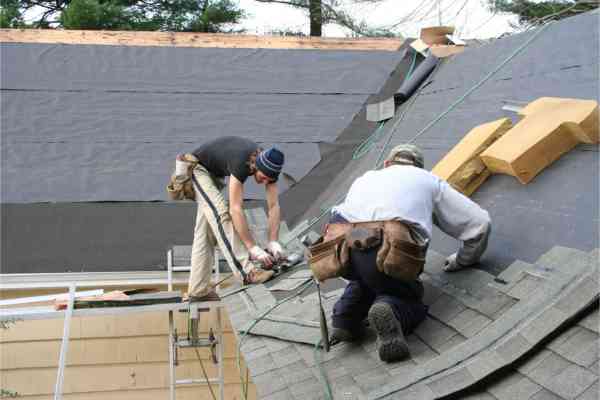
Skylights deserve their own sentence, because they leak more often than any other pitched-roof feature and are misdiagnosed more often too. A skylight leak is usually a flashing or curb problem, not a glass problem, and skylight leak repair means re-flashing the curb properly rather than resealing the frame. And when a pitched roof is genuinely spent — widespread granule loss, soft decking, valleys failed on both slopes — the honest answer is a new roof installation, judged slope by slope and priced by scope, not a patch program that postpones the same conversation a year.
Bronx winters test a roof twice: first with ice, then with melt. Ice dams form where heat escapes into the roof deck and melts snow that refreezes at the colder eaves, and the backed-up water then exploits every flashing weakness on its way in. The defense is unglamorous — insulation and ventilation that keep the deck cold, ice-and-water membrane at the eaves and valleys, and flashings that were properly sealed before the first freeze — and it is work best done before winter, not during it.
Gutters are the other half of the winter story. A gutter choked with autumn leaves overflows at exactly the moment the roof needs it most, sending water down the wall and into the foundation line, and in a freeze that overflow becomes ice at the eaves. Regular gutter and downspout cleaning and repair — verified flow, secure brackets, downspouts carried clear of the wall — is the small seasonal job that keeps winter from becoming a roof repair. Costs throughout depend on scope: what is repaired, how much of it, and how high and steep the roof is.
Some brief ponding right after heavy rain is normal on a low-slope roof — the drains need time to clear the volume. Ponding becomes a problem when water still stands 48 hours after the rain stops, or when it stands in the same place after every storm: that means a drain is blocked, the pitch has settled, or the membrane has sagged. Persistent ponding accelerates membrane aging and adds load, so it should be investigated rather than watched. The fix depends on the cause — a cleared drain, a re-pitched section, or a membrane repair — and cost depends on scope.
Water rarely drops straight down. On a flat roof it travels under the membrane along the deck; on a pitched roof it follows rafters and joists; in both cases it can appear rooms away from the entry point, often at a light fixture or a ceiling seam where it finally finds a way through. Finding the leak means working backward: inspecting the roof above and uphill of the stain, checking parapet joints, flashings, valleys and penetrations, and testing suspect details rather than patching the ceiling. A careful inspection usually narrows it to one or two details before any repair is proposed.
Most flat-roof problems are repairable: a failed seam, a blocked drain, a flashing joint, a localized membrane patch — all are repairs, and a roof with isolated failures and a sound deck underneath is a repair candidate. Replacement enters the conversation when the failures are widespread: saturated insulation across large areas, a membrane that has aged past patching, or a deck that has softened. A core sample and a deck check settle which side of the line a roof is on, and any honest quote will say which evidence it is based on. Cost depends on scope either way.
In general New York City terms, like-for-like repairs — patching a membrane section, replacing flashing, repairing gutters — usually do not need a permit, while a full roof replacement generally does involve the Department of Buildings approval process, and larger buildings can have additional filing and facade considerations. Co-op and condo buildings add their own alteration rules, which vary by building. No specific outcome can be promised for any one building; the approval path is confirmed for the actual scope before work is quoted.
Many roof repairs can be done in winter: emergency weather-tightening, flashing work, drain clearing and gutter repair proceed in most weather, and stopping an active leak should never wait for spring. Membrane and adhesive work is more temperature-sensitive — some materials need a minimum temperature to bond and cure properly — so deep-winter membrane repairs are sometimes staged: make the roof weather-tight now, complete the permanent membrane work in the first mild spell. Ice and snow on the roof itself can also delay safe access. The honest answer for any given repair depends on the material and the week’s weather.