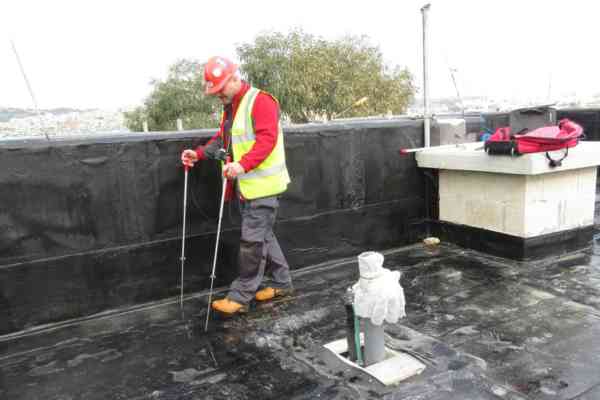

Tuckahoe’s roofs are not a single roof type but a village of them: steep Victorian and Tudor pitches, slate on the oldest houses, dormers punched through slopes, and chimney stacks in brick that has outlived three generations of shingles. The Bronx River valley’s damp and the shade of mature trees keep those roofs wet longer than the street below, and the work that matters most is rarely the field of shingles — it is the detail at the edge of it. Our roof repair and installation contractors start on the roof itself, slope by slope.
We inspect, photograph and explain what we find before any work is quoted — which slopes are sound, which details have failed, and which repairs can honestly wait. Request a free, no-obligation estimate and we will walk the roof with you, in plain language, before quoting anything.
Roof repair in Tuckahoe means diagnosing the detail that failed, then repairing it in kind. Most calls here are not for a worn-out field of shingles but for roof flashing opened at a chimney, a valley that has been sealed instead of flashed, or a slate course cracked by a fallen limb. The repair is only as good as the diagnosis, so the inspection comes first and the quote second.
Where the entry point is not obvious, roof leak detection traces the water’s path from the stain inside back to the detail outside — because water travels along timbers and rarely drips where it entered. A roof that is repaired at the true entry point stays repaired; one patched at the stain does not.

If you are looking for roof repair contractors in Tuckahoe, NY, start with an inspection, not a price. At Star Construction INC, we climb the roof, photograph what we find, and explain it slope by slope — what needs doing now, what can wait, and what would be wasted money.
We have repaired and replaced roofs across the New York area since 2018, and the areas we serve are listed on our service areas page. Request a free, no-obligation estimate and we will inspect, photograph and explain before any work is quoted.
Our clients value the consistency, structural precision, and long-term performance we deliver on every project, from initial planning through final execution.


 Trustindex verifies that the original source of the review is Google.
 Trustindex verifies that the original source of the review is Google.
 Trustindex verifies that the original source of the review is Google.
 Trustindex verifies that the original source of the review is Google.
Contact us now to discuss your project and receive a no-obligation quote from our experts.
Every project is handled through a defined process that ensures accuracy, efficiency, and long-term structural performance from start to finish.
We begin by reviewing site conditions, understanding project objectives, and identifying structural requirements to establish a clear and practical direction before any work begins.
A detailed execution plan is developed, including material selection, sequencing of work, and coordination of labor to maintain consistency and avoid delays during construction.
Work is carried out using proven installation methods, with attention to structural integrity, proper reinforcement, and adherence to safety and quality standards.
A final walkthrough is conducted to verify workmanship, resolve any outstanding details, and ensure the completed project meets performance expectations and durability standards.
Tuckahoe roofing divides itself by detail, not by square footage. These four — the roofscape itself, the leaks, the materials, and the repair-or-replace judgment — decide whether a roof job holds or merely looks new. Here is how we approach each.
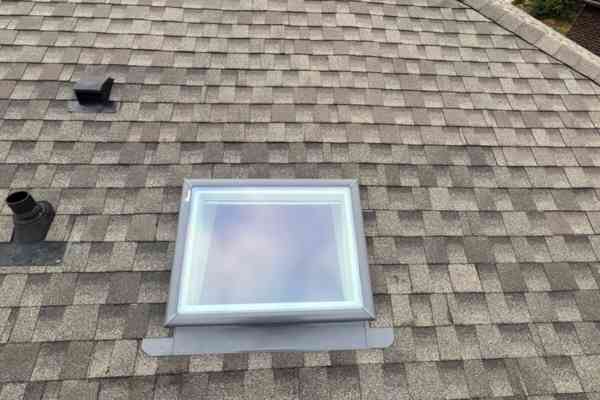
Tuckahoe’s roofscape is steep, broken and characterful: Victorian and Tudor pitches that shed water fast, dormers that punch three junctions through every slope they interrupt, and chimney stacks in brick that rise through the whole assembly. Each of those features is a flashing detail, and on a pre-war roof the flashing is usually older than the shingles around it — which is why the roof’s age and the flashing’s age are two different questions.
The brick stacks deserve their own note: a chimney that has outlived three generations of shingles still needs its crown, its flashing and its joints maintained, and our masonry contractors in Tuckahoe handle the stack itself when the roof work exposes brickwork that needs repointing or a new crown. Roof and chimney are one weather system, and we treat them that way.
When a Tuckahoe roof leaks, the field of shingles is almost never the culprit. The usual suspects are the flashing at the chimney, the valley where two steep planes meet and argue, the step flashing up a dormer cheek, and the apron where a lower roof dies into a wall. Each fails quietly — a quarter inch of opening, a sealant joint that has given up — and each announces itself rooms away from where the water entered.
Gutters belong in the same conversation: the tree line fills them by October, and a gutter that overflows sends water back under the eaves and into the fascia it was meant to protect. Our gutter and downspout work keeps that water moving to the ground, where it belongs, rather than back into the roof edge.
Tuckahoe’s mixed stock is repaired in kind, not by conversion. Slate on the oldest houses is repaired slate by slate: individual courses replaced, cracked units swapped, the roof’s weight and character undisturbed — because a slate roof that is otherwise sound does not need to come off, and replacing it with a lighter material changes the house. Asphalt shingles, the village’s other half, are repaired by course and by slope, matched to the existing exposure.
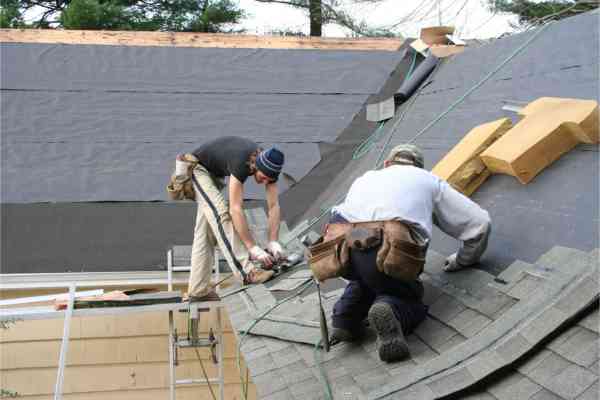
Our shingle roof repair and replacement work follows the same rule: repair what is repairable, replace what is spent, and never sell a full replacement where a slope-by-slope repair will honestly do. The material matters less than the judgment, and the judgment is slope by slope.
The honest assessment on an old roof starts with remaining life, judged slope by slope. A south-facing slope that has baked for thirty years and a shaded north slope of the same age are not the same roof, and quoting them as one is how homeowners pay for work they do not need. We photograph each slope, note its granule loss, its flashing condition and its deck soundness, and tell you which slopes have years left and which are done.
Replacement is the right answer when the field itself is spent across most slopes, when the deck has softened, or when the flashing system has failed so widely that patching it is false economy. Repair is right when the field is sound and the failures are details. Either way, the evidence is shown to you before the quote — because a roof decision made from photographs beats one made from a sales pitch.
Usually yes — slate is repaired slate by slate. Individual cracked or slipped units are replaced, flashings renewed, and the roof keeps its weight and character. A slate roof needs to come off only when the slates themselves are widely delaminating, when the fasteners have failed across whole slopes, or when the deck beneath has deteriorated. Most Tuckahoe slate we see is repairable; the roofs that must come off announce themselves plainly, with slates shedding across the slope rather than failing one by one.
Because wind-driven rain does not fall on the roof — it is pushed into it. In ordinary rain, water runs down the slope and off; in a wind-driven storm, it is driven sideways and upward under shingle edges, into valleys, and against flashing laps that shed downward water perfectly well. A roof that only leaks in those storms usually has a flashing or lap detail that is adequate for gravity but not for pressure — the chimney flashing, a valley, a dormer cheek. Finding it means inspecting those details, not the field of shingles.
On a steep, well-ventilated Westchester roof, asphalt shingles typically last twenty to twenty-five years, and steepness helps — water sheds fast and snow slides rather than sitting. Shade, tree debris and poor ventilation shorten that range, while a shaded north slope may outlast a sun-baked south one on the same house. The honest measure is not age but condition: granule loss, curling, and brittle tabs tell you more than the installation year.
Roof replacement generally does need a village permit, and the village can confirm the requirement for a specific job. Like-for-like repairs — replacing a course of shingles, renewing a flashing — are usually simpler, while a full replacement, a material change, or any structural work is the category that villages most often require permitted and inspected. We will tell you which yours is before work starts, so the permit is never an afterthought.
Many can. Emergency repairs — tarping, sealing an active leak, replacing slipped slates or shingles in a mild spell — proceed in most weather, and stopping water matters more than waiting for spring. Full replacements and adhesive-dependent work need temperatures that let materials seal properly, so deep-winter work is often staged: make the roof weather-tight now, complete the full job in the first mild spell. What winter forbids is not roofing but rushed roofing.