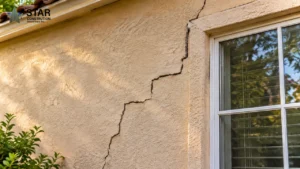

Every pre-war Westchester home eventually has the conversation. A crack stair-steps across the living room wall, or a patch of plaster bulges gently away from the lath when you press it, and two opinions arrive with it: repair the plaster, or rip it all out and hang drywall. The first voice belongs to the house itself, the second usually to whoever is quoting the job — and the honest answer depends on what the plaster is actually doing, not on which option the contractor would rather sell. Tuckahoe’s Victorians, colonials and Tudors have carried their plaster for a century, and most of it is still earning its keep. Star Construction INC has worked on plaster walls across the New York area since 2018; request a free, no-obligation estimate and we will press, probe and tell you plainly which walls deserve repair and which have genuinely had their day.
What Lath and Plaster Actually Is
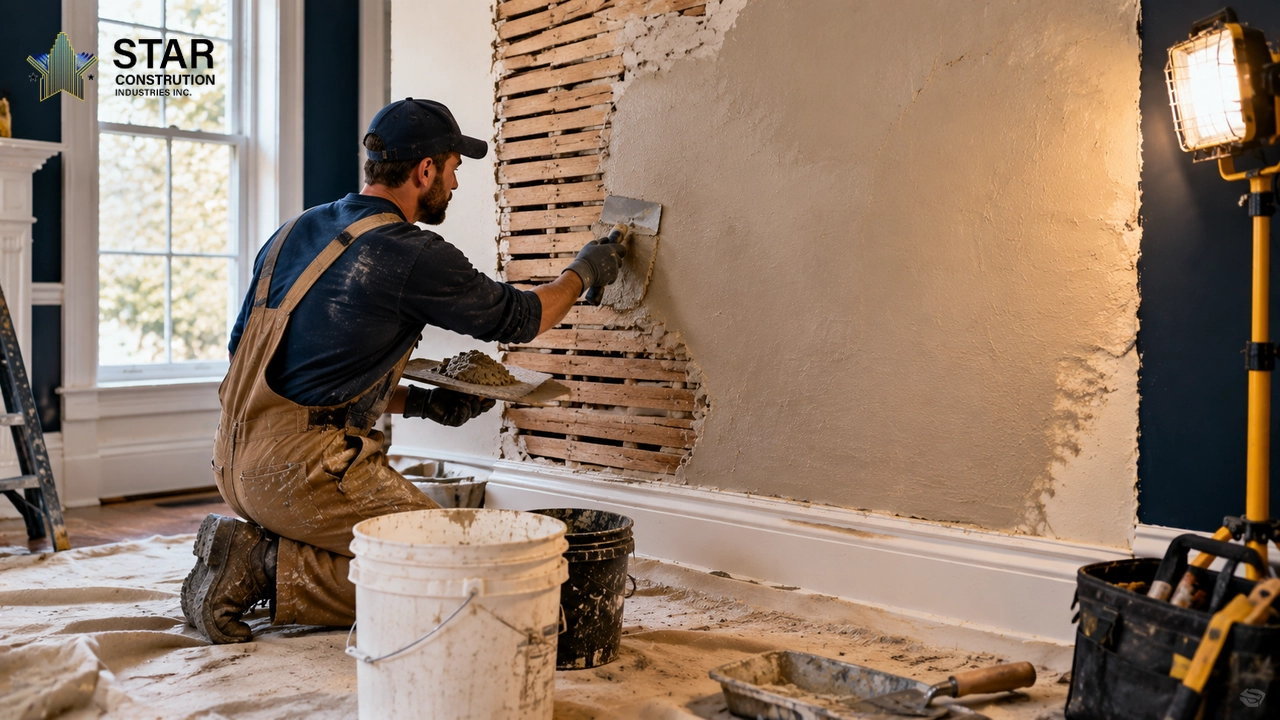
A lath-and-plaster wall is built, not hung. Narrow strips of wood lath are nailed across the studs with small gaps between them, and plaster is pushed on in three coats: the scratch coat, forced through the gaps so it mushrooms into keys that grip the lath from behind; the brown coat, which builds the wall out to its thickness; and the finish coat, troweled smooth or textured. The result is a wall nearly an inch thick, and it behaves like it. It feels denser under the knuckles than drywall, it deadens sound between rooms in a way a single sheet of gypsum never will, and it can be run around curves, arches and ceiling coves that flat board simply cannot follow. Kept dry, it is also remarkably durable — the plaster in a Tuckahoe colonial has already outlasted several generations of paint, wallpaper and fashion, and the failures it does develop almost always start with water, not age. Understand that construction and the repair question answers itself more often than not: you are not patching a surface, you are re-keying a system.
When Plaster Can — and Should — Be Repaired
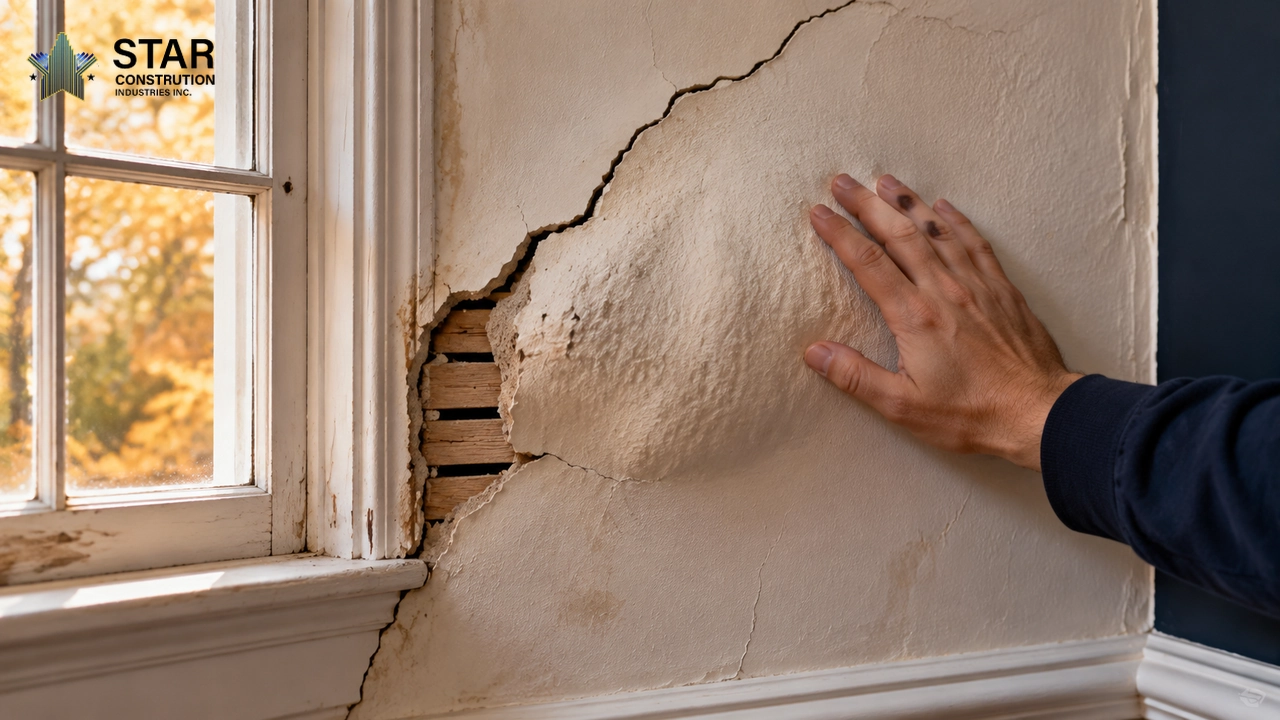
Most plaster damage is repairable, and the repairs are not cosmetic tricks. Hairline cracks and the fine settlement cracks that open above doors and windows are routine: they are opened slightly, filled, taped where movement is expected, and finished so the wall reads as one surface again. An isolated bulge — where a section of plaster has lost its keys but the lath behind it is sound — can be re-keyed to the lath with adhesive and mechanical fasteners, pulling the plaster back tight without opening the wall. Sound plaster that is simply ugly, scarred by decades of picture hooks, patches and paint, is a candidate for skim coating: a thin new finish coat over the whole wall that returns it to paint-ready condition without disturbing anything behind it, and a skim-coated wall is the best surface a painter can ask for — our paint renovation contractors in Tuckahoe treat a fresh skim coat as the ideal starting point for a lasting paint job. And where a section is genuinely gone — a burst pipe’s aftermath, a corner demolished by a long-ago leak — new lath and three-coat plaster can rebuild that section to match the rest. Plaster repair is often the first trade on site when a room is being updated, and our interior renovation and remodeling contractors sequence it before the finishes, not after. The press test settles the candidacy: press the wall firmly. Plaster that still sits tight, even if it is cracked, is a repair candidate. Plaster that flexes and drums across wide areas is telling you its keys are gone, and that changes the answer — which is the subject of the next section.
When Replacement Honestly Wins
There are walls where replacement is the honest recommendation, and a good contractor says so plainly. Widespread detachment is the first: when the press test drums across most of a wall rather than one patch, the keys are gone wholesale, and re-keying the whole surface costs more in time and uncertainty than new board. A history of water damage is the second: plaster that has been wetted repeatedly loses its keys and its strength, and no skim coat fixes a core that has been softened again and again — the leak must be fixed first, and the wall judged after it has dried. The third case is practical, not structural: when major layout, plumbing or electrical work is opening the walls anyway, hanging drywall on the opened sections is often the sensible call, since the plaster is already coming down for the work. And the fourth is the one genuine opportunity replacement offers — insulation. An opened wall is the only time you can insulate it properly, and in a pre-war house that has never had wall insulation, that opportunity is worth weighing honestly, not as a sales line but as a once-in-the-wall’s-life chance.
The Middle Path Most Houses Actually Need
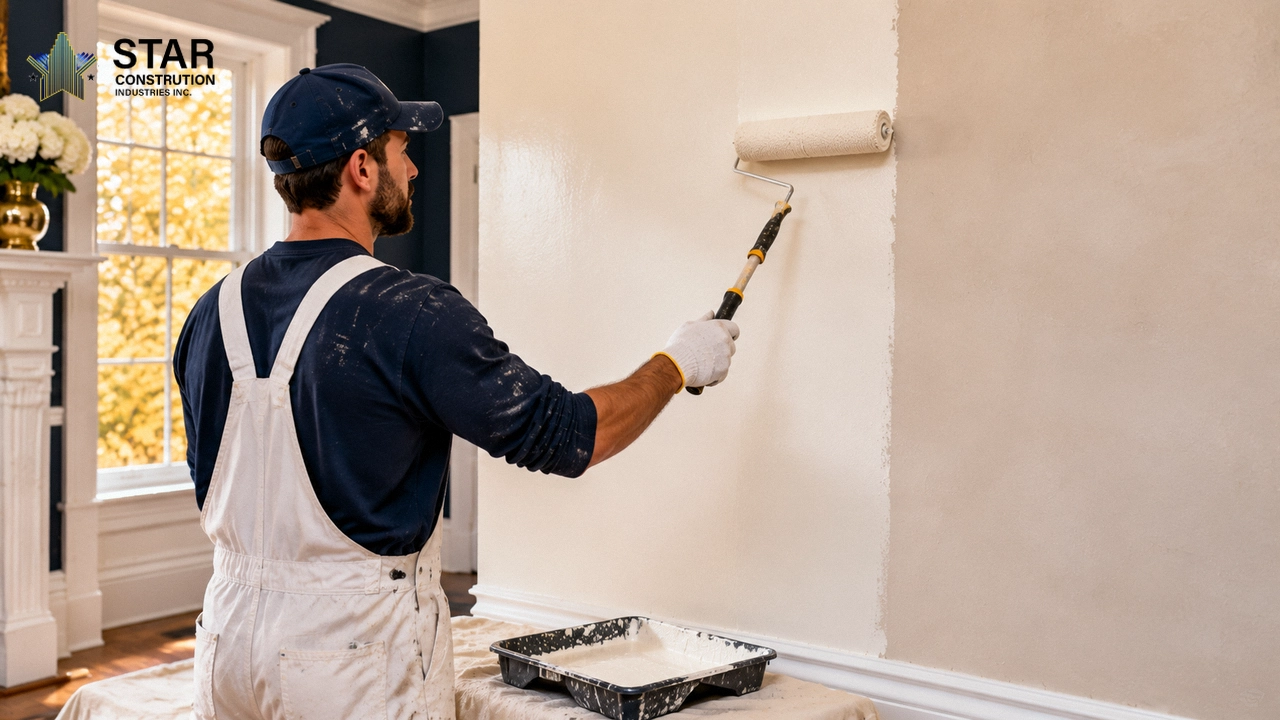
Most houses, in practice, need neither wholesale repair nor wholesale replacement. They need the middle path: repair what is sound, replace only the rooms or sections that have truly failed, and skim coat the result so old and new read as one wall. A Tuckahoe Victorian might keep its plaster in the front rooms, where the cornices and curves are the house’s character, while a failed kitchen wall — opened for plumbing anyway — goes to drywall. It is the kind of room-by-room judgment our interior renovation contractors in Tuckahoe make on site, wall by wall. The discipline is in the transitions: original trim and profiles stay wherever they survive, because trim is what makes a repaired wall look original rather than patched, and the skim coat bridges the line between old plaster and new board. Done that way, a visitor cannot tell where the plaster ends and the board begins — which is exactly the point.
So: press the wall, find the water, and judge section by section. Plaster that is still keyed is worth keeping; plaster that has let go across a whole wall is not a failure of taste, it is a fact of the building. Star Construction INC has repaired and replaced plaster across the New York area since 2018; request a free, no-obligation estimate and we will tell you which of the three paths your walls actually need. The areas we cover are on our service areas page.
Frequently Asked Questions
Is plaster better than drywall?
In some ways, yes: plaster is denser, quieter and more durable, and it handles curves and ornate profiles drywall cannot. Drywall is faster to install, easier to repair in small patches and simpler to work with around modern wiring and plumbing. Neither is universally better — the right choice depends on the wall in front of you, its condition and what the room needs.
Can cracked plaster be skim coated?
Hairline and stable settlement cracks, yes — once the cause is understood and the wall is sound, a skim coat gives a fresh, paint-ready finish. Cracks that are still moving, or plaster that has detached from its lath, need repair or re-keying first; skimming over a failed wall only hides the problem until it cracks through again.
Does removing plaster create a lot of mess?
Yes, honestly — plaster removal is dusty, heavy work, and the debris is substantial. A careful crew seals the room, protects floors and trims, and removes debris as it goes, but anyone promising a dust-free plaster rip-out is promising something the work cannot deliver.
How long does a plaster repair last?
A well-executed repair on a dry wall lasts decades — the repaired section becomes part of a wall that has already stood for a century. What shortens its life is the same thing that damaged the original: water. Fix the leak first, and the repair lasts; skip that step, and no repair will hold.
Which costs more — plaster repair or drywall replacement?
It depends on scope. Small plaster repairs and skim coating are usually the cheaper path, because the wall stays up and the work is contained. Full-wall replacement costs more once demolition, disposal, boarding, taping and finishing are counted — though on a wall that has failed wholesale, replacement is the cheaper sentence in the long run, since it is done once.