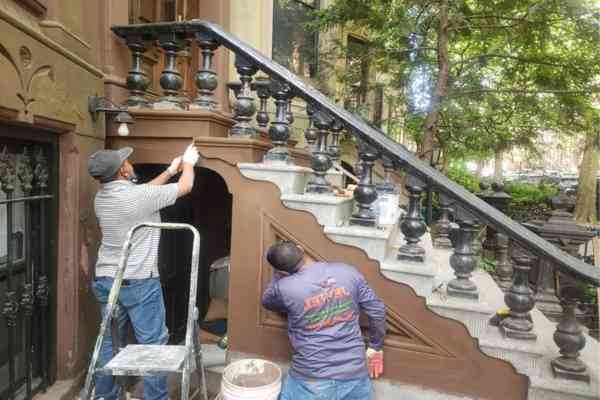
Our brick and stucco work in Eastchester covers both of the town’s masonry faces. The colonials’ full masonry walls — brick laid as structure, stone lintels and sills, chimneys that have stood a century — and the post-war homes’ brick and stone veneer fronts, laid as the elevation’s public face over frame, with stucco as original finish on the older homes and as accent on the newer. As brick and stucco contractors, we repair in the material’s own tradition: mortar matched to the original in strength and color, stucco coats rebuilt rather than patched over, and flashing and water management fixed at the same time, because the wall that keeps failing is usually the wall that keeps getting wet.
Request a free, no-obligation estimate and we will inspect the walls and tell you honestly what is surface and what is structure.
Brick and stucco work in Eastchester starts with reading the wall correctly, because the town’s two generations of homes fail differently. On the colonials, the brick is the structure: full masonry walls whose mortar joints, stone lintels and chimney stacks have carried a century of weather, and whose failures — recessed joints, spalled faces, leaning stacks — are structural news, not cosmetic. On the post-war homes, the brick and stone is usually veneer: a single wythe tied to frame, laid as the elevation’s public face, whose failures — cracked veneer, failed ties, water trapped behind the face — need a different repair, one that opens the wall honestly rather than patching its surface. Stucco crosses both generations: original three-coat work on the older homes, and later accents on the newer ones.
Our work follows the wall’s own logic. Mortar is matched to the original in strength, color and sand, so it stays the sacrificial layer and the repair reads as the wall’s own. Damaged units are cut out and replaced rather than smeared over. Stucco is rebuilt coat by coat where it has failed, not skimmed with cement that traps the moisture behind it. And every repair includes the water question — flashing, coping, gutters, grade — because a wall that keeps getting wet will keep failing no matter how good the patch.

If your Eastchester home’s brick or stucco is showing its age — a crack that keeps returning, joints that have gone sandy, stucco that has lost its texture — get it read before the next winter widens it. Star Construction INC has repaired brick and stucco across the New York area since 2018, and we will tell you honestly what is surface and what is structure. See the areas we cover on our service areas page, then request a free, no-obligation estimate.
Our clients value the consistency, structural precision, and long-term performance we deliver on every project, from initial planning through final execution.


 Trustindex verifies that the original source of the review is Google.
 Trustindex verifies that the original source of the review is Google.
 Trustindex verifies that the original source of the review is Google.
 Trustindex verifies that the original source of the review is Google.
Contact us now to discuss your project and receive a no-obligation quote from our experts.
Every project is handled through a defined process that ensures accuracy, efficiency, and long-term structural performance from start to finish.
We begin by reviewing site conditions, understanding project objectives, and identifying structural requirements to establish a clear and practical direction before any work begins.
A detailed execution plan is developed, including material selection, sequencing of work, and coordination of labor to maintain consistency and avoid delays during construction.
Work is carried out using proven installation methods, with attention to structural integrity, proper reinforcement, and adherence to safety and quality standards.
A final walkthrough is conducted to verify workmanship, resolve any outstanding details, and ensure the completed project meets performance expectations and durability standards.
Eastchester’s brick and stucco reward the contractor who reads the wall before touching it. The four sections below follow the town’s two generations of homes and the two materials — structural brick, veneer fronts, stucco in both its roles, and the question every later home eventually asks: is this stucco, or is it EIFS?
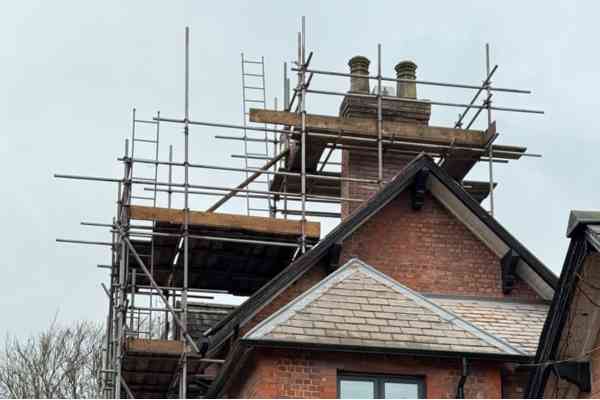
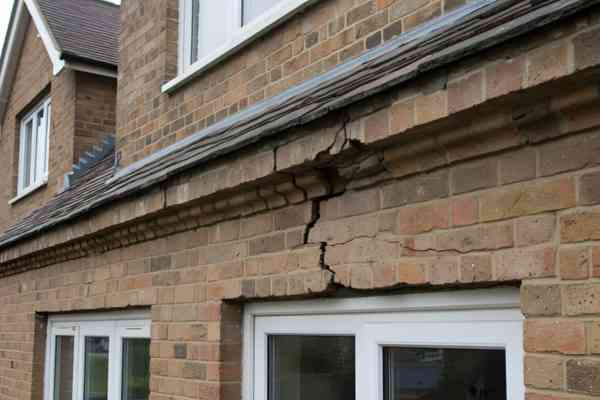
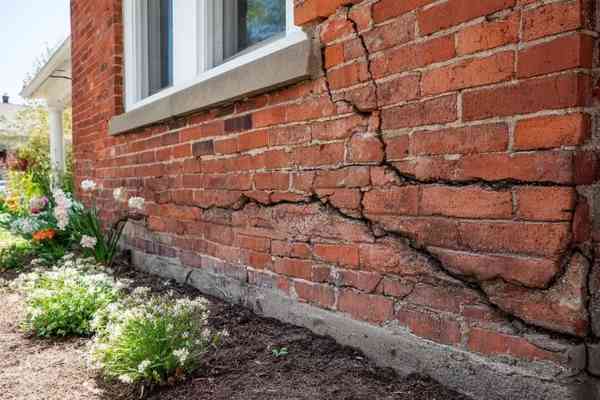
On Eastchester’s colonials, the brick is the building. Full masonry walls, stone lintels and sills, chimneys that have carried a century of weather — and the failures that come with that age: mortar joints recessed and sandy, units spalled where hard modern mortar was forced against soft old brick, lintels that have rusted and lifted the courses above them. The repair starts with the mortar: matched in strength, color and sand, so it stays softer than the brick and the repair reads as the wall’s own. Damaged units are cut out and replaced, not smeared over, and brick pointing and repointing is done joint by joint, elevation by elevation, because a colonial’s wall is only as good as its weakest joint. Where a crack has opened — a stepped crack at a corner, a lintel crack above a window — brick crack repair begins with reading the cause: settlement, lintel failure, or water, each with a different honest fix.
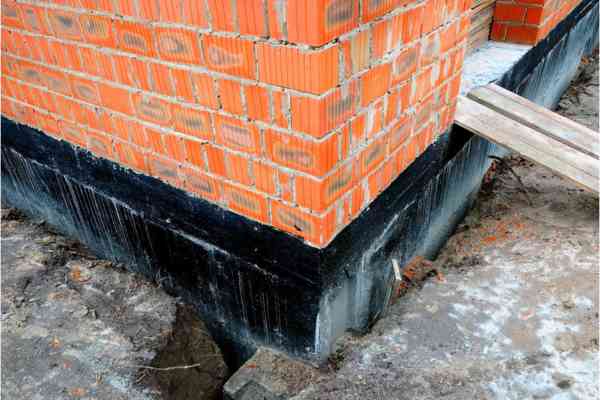
The post-war homes wear their brick differently: a single wythe of brick or stone veneer tied to the frame, laid as the elevation’s public face. It looks like masonry and weathers like masonry, but it is not the wall — and its failures are its own. Cracks that follow the tie lines, veneer that has pulled away from the frame where ties corroded, water trapped behind the face because the weeps were mortared shut or the flashing was never there. Repairing veneer honestly means opening the wall: replacing failed ties, restoring the drainage plane, re-laying the affected sections in matching units and mortar, and re-establishing the weeps and flashing that let the wall dry. A surface patch over a failed tie line is a promise the wall cannot keep.
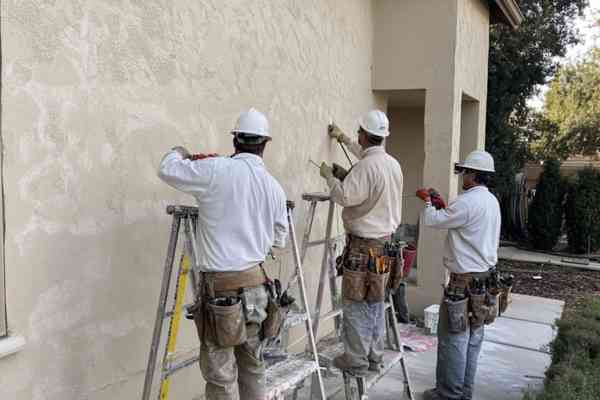
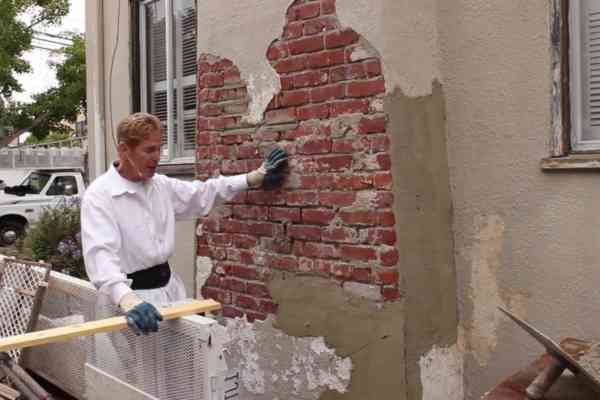
Stucco on Eastchester’s older homes is usually the real thing: three coats over masonry or lath, textured by hand, painted and repainted over decades. Its failures are slow and readable — hairline cracking that follows the framing, delamination where water got behind a coat, soft spots where the finish has been patched with cement instead of stucco. Stucco repair and application in this tradition means rebuilding the coats: scratch, brown and finish, matched in texture and color, with the water entry — a failed flashing, a missing drip edge, a grade that sends water at the wall — fixed at the same time. On the newer homes, stucco is often an accent — a gable, a chimney breast, a frontispiece — and the same discipline applies at smaller scale: rebuild the coat, don’t smear the patch.
Not every textured wall in Eastchester is stucco. Later homes and additions often wear EIFS — synthetic stucco over foam board — which looks similar but behaves differently: it is lighter, softer under the knuckles, and its failures (cracking at the foam joints, moisture trapped behind an un-drained system) need a different repair. Telling the two apart matters before anyone quotes, because a repair priced for stucco will not fix EIFS, and vice versa. Our EIFS vs stucco guide explains the knock test, the thickness check and the questions to ask; on site, we confirm the system, then repair it in its own terms — traditional coats for stucco, system-compatible repair for EIFS, and honest advice when a full reclad is the cheaper sentence.
It depends on the crack. Hairline cracks in the finish coat are common and often cosmetic — the wall moves with the seasons, and the finish shows it. Cracks that widen, follow a pattern (stepped, horizontal, or radiating from a corner), or come with bulging, hollow sounds when tapped, or damp inside mean the wall is telling you more: water entry, a failed coat, or movement behind the finish. A crack that is growing, or one you can fit a coin into, deserves an inspection before the next winter. Repair cost depends on the cause and the area — a finish-coat repair is a small job; a delaminated section rebuilt coat by coat is larger, and we quote after inspecting, not before.
Sections, in most cases. Veneer is laid in panels between control joints and openings, and a failed section — cracked units, corroded ties, water damage in one bay — can be taken down and re-laid in matching brick and mortar while the rest of the front stays untouched. The whole front comes off only when the failure is systemic: ties failed across the elevation, the drainage plane missing throughout, or the frame behind it compromised. We inspect the ties and the wall behind the veneer before recommending either, because the honest answer depends on what is behind the face, not just what the face shows.
Closely, and usually invisibly from the street — but matching is a craft, not a catalog order. For brick, we match the unit’s size, color and texture, then the mortar’s sand, color and joint profile; for older homes, that often means sourcing reclaimed or custom-matched units, because the original kilns are long closed. For stucco, we match the texture — the hand-troweled or floated finish — and the color, which is why we rebuild coats rather than skim over them. A perfect match on day one still weathers in over a season; we tell you that honestly, and we show you samples before the work starts.
Properly built three-coat stucco lasts a very long time — fifty years and beyond is common, and the stucco on Eastchester’s older homes has already proven it by surviving a century. What shortens its life is water: failed flashing, missing drip edges, grade that sends water at the wall, or a cement patch that traps moisture behind the finish. Maintained — paint renewed when it chalks, cracks sealed early, flashings kept sound — stucco is one of the longest-lived finishes a house can wear. Neglected at the water lines, it fails from behind, which is why we fix the water entry with every repair.
Like-for-like repairs — repointing, replacing damaged units, rebuilding a stucco coat in kind — usually do not need a permit, though work that touches the public walk or the road edge may need town coordination. Structural changes — rebuilding a wall section, altering an opening, changing the wall’s structure or footprint — generally do need town permits, and we flag that before quoting so the schedule accounts for it. If your project sits near that line, we will tell you which side it falls on after inspection.