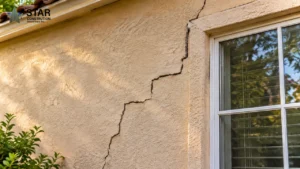


From the street, EIFS and traditional stucco can look identical — the same smooth or textured finish, the same colours, the same clean lines on a Tudor in Bronxville or a colonial anywhere in Westchester. Under the surface they are completely different wall systems, and the differences decide how the wall handles water, how it takes a knock, how it insulates, and what it costs to repair when something goes wrong. EIFS is a lightweight synthetic system built over foam insulation board; traditional stucco is a hard coat of real cement plaster applied in three coats. Neither is simply “better” — but each fails in its own way, and choosing or maintaining the wrong one for your house is an expensive education. Here is the honest comparison.
What Traditional Stucco Actually Is
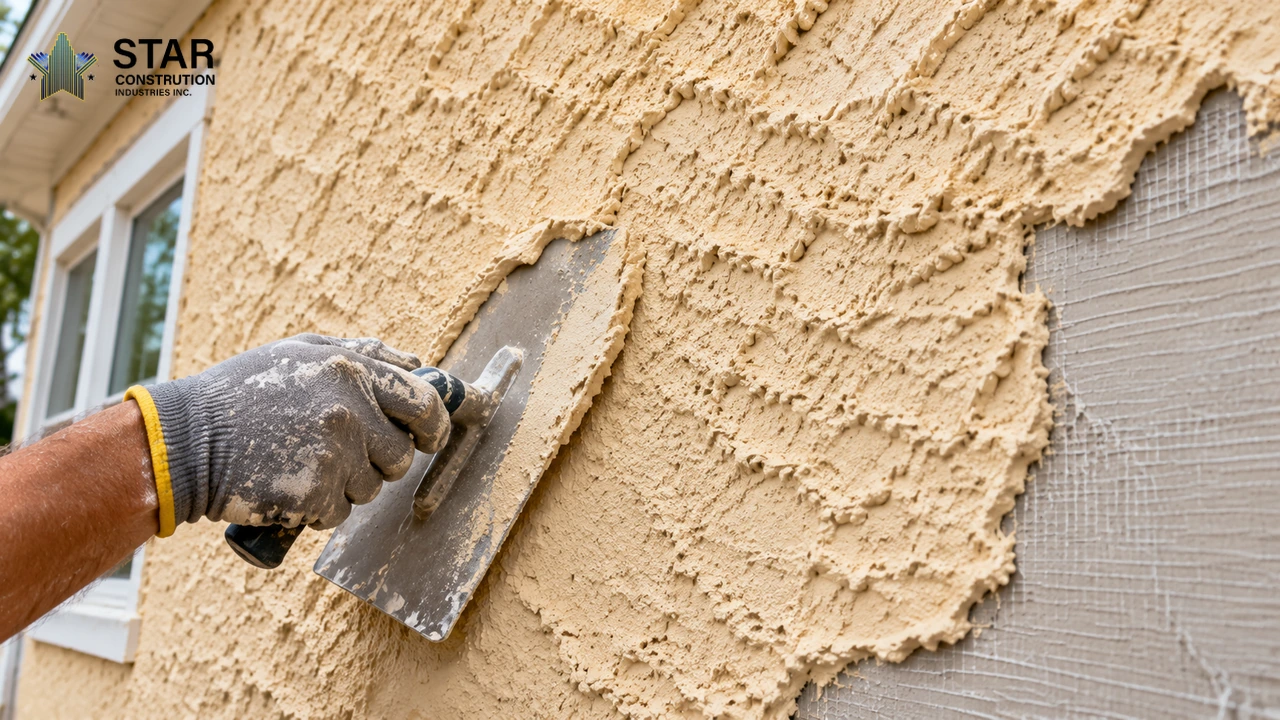
Traditional stucco — hard-coat stucco — is Portland cement, sand, lime and water, applied by hand in three coats over metal lath: a scratch coat, a brown coat and a finish coat, together roughly an inch thick. It cures into a genuine masonry shell: hard, heavy, breathable and very durable. It has been the finish on New York-area homes for over a century, it tolerates our freeze-thaw winters well when the detailing is right, and small damage can be patched by any competent stucco repair mason. Its weaknesses are weight, labour cost, and cracking: because it is rigid, movement in the building shows up as hairline cracks that need sealing before they admit water.
What EIFS Actually Is
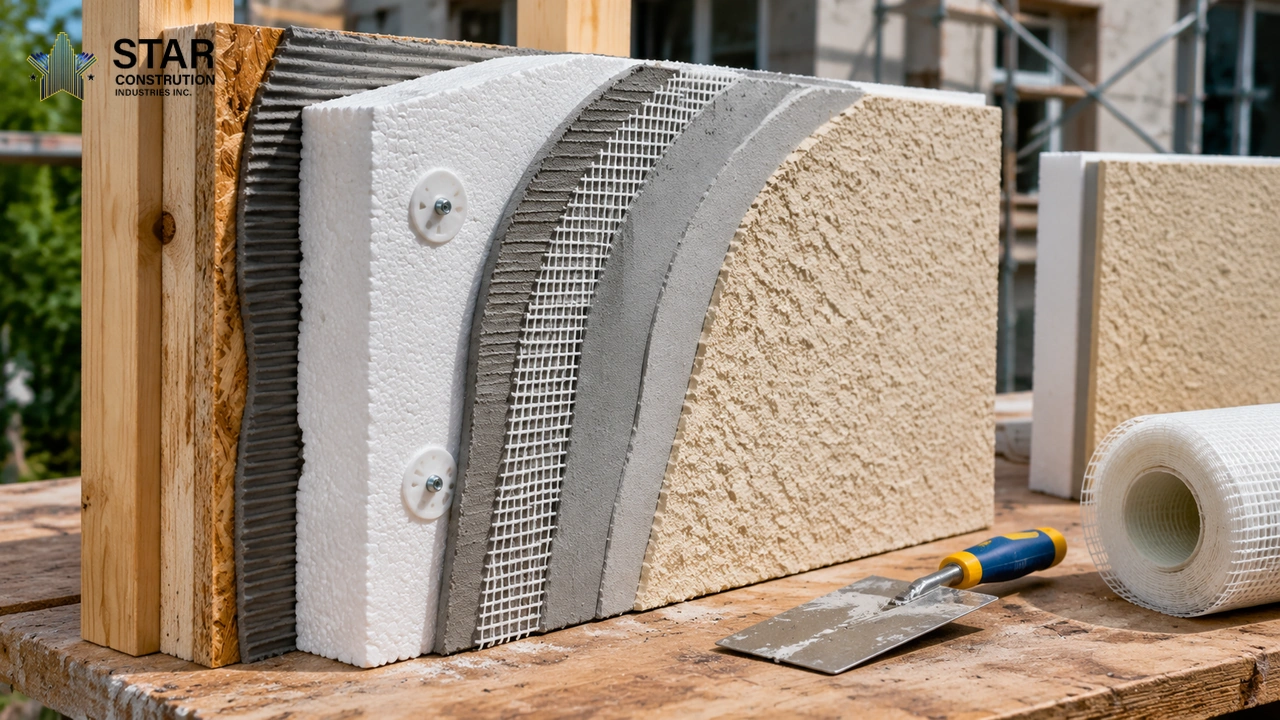
EIFS — Exterior Insulation and Finish System — arrived from Europe after the Second World War and spread through American suburbs from the 1980s. Instead of cement plaster, an EIFS wall is built from a board of expanded polystyrene foam fixed to the sheathing, a thin base coat with reinforcing mesh, and an acrylic finish coat that mimics stucco’s texture. The whole skin is only a few millimetres thick over the foam. That construction makes EIFS light, comparatively quick to install, and an excellent insulator — the foam is a continuous thermal blanket with no studs bridging the cold through it. It also makes it soft: a ladder, a baseball or a woodpecker can dent or puncture it in ways that would not mark hard-coat stucco at all.
The Difference That Matters Most: Water
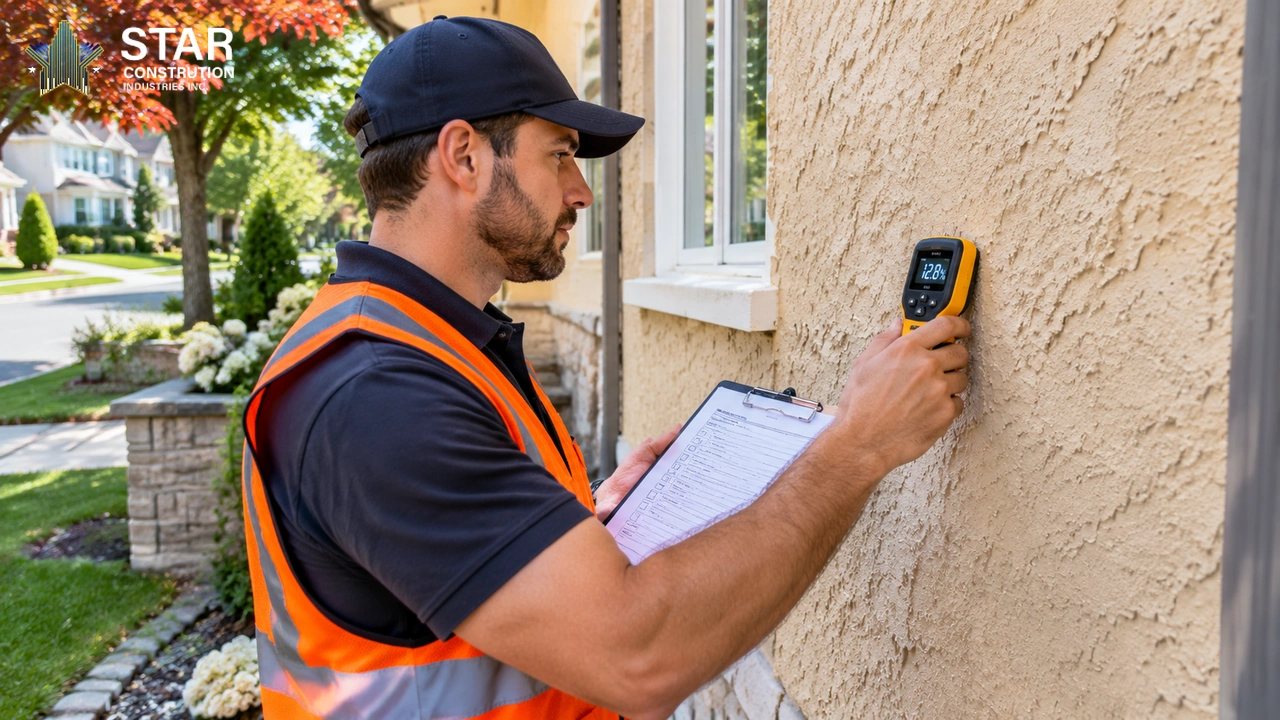
Both systems shed rain at the surface; they differ in what happens when water gets behind the surface — and eventually, at some window corner or flashing, water always tries. Traditional stucco is breathable: moisture that enters can dry back out through the wall, slowly, and minor leaks often announce themselves as stains before they do structural harm. Early EIFS was designed as a barrier system that assumed the surface would never leak; when it did — usually at windows and joints — the water had no drainage path and no way to dry, and sheathing and framing rotted silently behind a wall that still looked perfect. Modern EIFS includes a drainage layer and is far more forgiving, but the lesson stands: EIFS lives or dies by its flashing and joint detailing, and any EIFS wall with soft spots, bulges or staining deserves a moisture inspection before it is believed. Our brick and stucco contractors in Bronxville check what is behind the finish before recommending any repair on either system.
Durability, Impact and Maintenance
Day to day, hard-coat stucco is the tougher surface: it shrugs off impacts that dent EIFS, and it does not interest woodpeckers. Its maintenance is periodic crack sealing and repainting or recoating when the finish tires. EIFS is more flexible, so it hairlines less, and its acrylic finish holds colour well and resists the grime that chalks old stucco. But EIFS repairs are more specialised — a patch must rebuild the foam, mesh and finish in layers or it will show and may trap moisture — and its joints and sealants are maintenance items with a real lifespan, not fit-and-forget details. Both systems want the same autumn walk-around: check sealant joints, sills and the ground line, and deal with openings before winter drives water into them.
Cost and Insulation, Honestly Compared
In general terms, EIFS usually costs less to install on new work because it is lighter and faster, and it adds meaningful insulation in the bargain — on an older, poorly insulated house that thermal blanket is a real advantage. Traditional stucco costs more in labour and materials and adds little insulation, but it typically lasts longer with less specialised maintenance, and repairs are within any good mason’s craft. On resale, condition matters more than system: a sound wall of either type is an asset, and a neglected one is a negotiation. Anyone quoting either system should be able to explain, in plain language, how their detailing handles water at windows, joints and the base of the wall — that answer tells you more than the price.
Which Suits Your Home?
If your house already wears one of these systems, the practical answer is usually to maintain and repair it in kind — mixing systems on one elevation invites exactly the joint failures both suffer from. For a new finish on an older masonry or timber house in our climate, traditional stucco remains the conservative, long-lived choice our brick and stucco contractors in New York install most often, while EIFS earns its place where insulation is a priority and the detailing will be done properly and inspected. Either way, the system is only as good as its flashing, joints and maintenance. Star Construction INC has worked on homes across the New York area since 2018; if you are choosing between the two — or living with one that is showing stains, cracks or soft spots — request a free, no-obligation estimate and we will inspect the wall and tell you honestly what you have and what it needs. The areas we cover are listed on our service areas page.
Frequently Asked Questions
What is the main difference between EIFS and stucco?
Traditional stucco is a hard, roughly one-inch shell of cement plaster applied in three coats. EIFS is a lightweight synthetic system: foam insulation board, a thin mesh-reinforced base coat and an acrylic finish. They can look the same but behave very differently.
Is EIFS warmer than traditional stucco?
Yes. The continuous foam board in EIFS insulates the wall and reduces thermal bridging, while traditional stucco adds very little insulation value. This is EIFS’s biggest advantage on older, poorly insulated homes.
Which is more durable, EIFS or stucco?
Traditional stucco is harder and far more impact-resistant, and it tolerates minor water entry by drying out. EIFS resists hairline cracking better but dents and punctures more easily, and its sealant joints need periodic renewal.
Can EIFS be repaired like stucco?
Not exactly. A proper EIFS repair rebuilds the foam, base coat with mesh, and finish in layers; a surface smear will show and can trap moisture. Stucco patching is simpler and within any experienced mason’s craft.
How do I know if my wall is EIFS or stucco?
Knock on it. Stucco sounds and feels like stone — hard and solid. EIFS feels light and slightly springy, and gives a hollow sound. A contractor can confirm with a small probe at an inconspicuous spot if it matters for a repair.