As brick and stucco contractors in New York, we assess the surface and what lies behind it before quoting — every joint checked, every crack traced, every substrate sounded — because the right repair depends on what caused the damage, not just on what it looks like from the street.
Our scope covers the full brick and stucco range. We carry out brick pointing and repointing for opened and weathered joints, stucco repair and application for failed and debonded coatings, brick crack repair and replacement where units have split or spalled, brownstone and historic facade restoration where the original character must be preserved, and exterior waterproofing for masonry where water is the force behind the failure.
Every job starts with an inspection that separates what can be patched from what honestly needs rebuilding, and we say which before quoting. Request a free, no-obligation estimate and we will photograph the wall, explain the options and price the work in plain language.
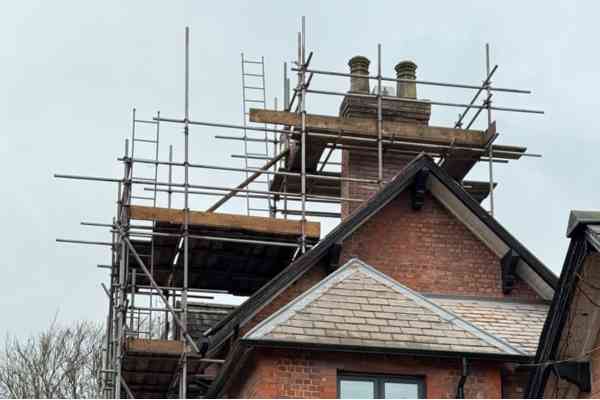
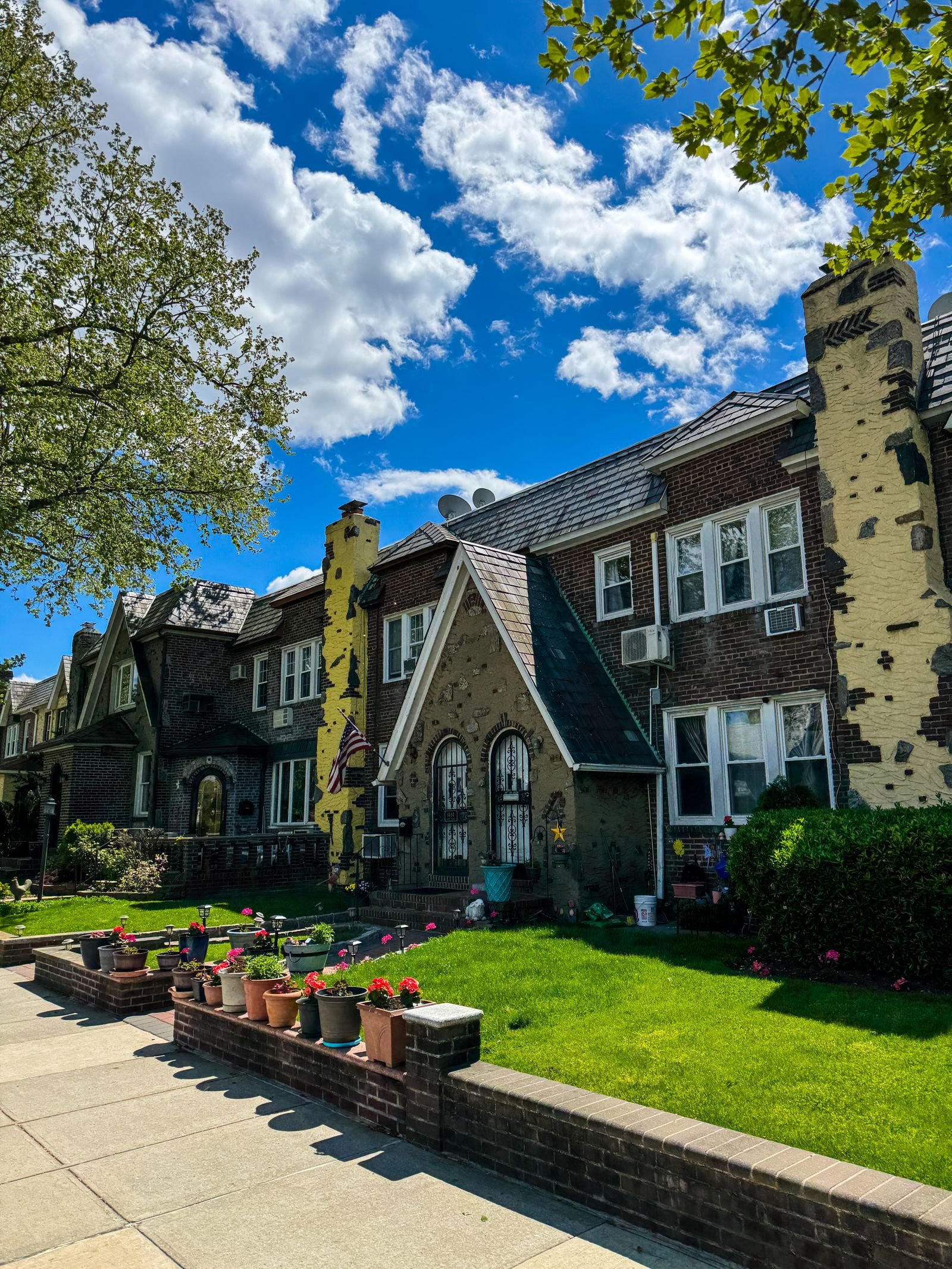
Brick and stucco work in Long Island City starts with reading the wall. On the converted industrial buildings, that means thick brick walls laid in soft lime mortar, joints opened by a century of East River weather, and later hard cement patches that have cracked the softer brick around them. On the towers, it means podium and penthouse stucco, townhouse rows and bulkheads, and the joints and flashings where one material meets another.
The work itself runs from diagnosis to finish. Failed joints are cut out and repointed with mortar matched in strength and colour; spalled or split bricks are replaced with units that belong to the building’s era; cracked stucco is cut back to sound material, re-coated and textured to disappear under paint. Where a parapet or lintel is part of the same elevation, the repair is sequenced with it so the facade is fixed as one system rather than patched in pieces.
What lies behind the surface decides the scope. Water trapped behind stucco debonds it from its base; water entering through failed joints rots backup and rusts steel. We trace the entry point — the coping, the flashing, the failed sealant joint — and correct it as part of the repair, so the new work is not asked to hold back water it was never designed to stop.

See all the areas we serve on our service areas page, and read about our broader work as brick and stucco contractors in New York. Where a wall’s problems run deeper than the surface — a failed backup, a rusted lintel, a parapet in the same elevation — our masonry contractors in Long Island City cover the structural side of the same facade.
Star Construction INC has served New York homes and buildings since 2018. Request a free, no-obligation estimate and we will inspect the wall, photograph the damage and explain the options in plain language.
Our clients value the consistency, structural precision, and long-term performance we deliver on every project, from initial planning through final execution.

 Jav V
Trustindex verifies that the original source of the review is Google.
Got my bathroom remodel Team was professional on time Thank you Ever fernando Perez saldañaCrear Word
 LUIS CAYOi hire them for my home project. and everyting went smoothly. no delays
 Shahid IqbalVery reliable contractor. They did exactly what they promised and the quality was excellent. Would definitely recommend.
Contact us now to discuss your project and receive a no-obligation quote from our experts.
Every project is handled through a defined process that ensures accuracy, efficiency, and long-term structural performance from start to finish.
We begin by reviewing site conditions, understanding project objectives, and identifying structural requirements to establish a clear and practical direction before any work begins.
A detailed execution plan is developed, including material selection, sequencing of work, and coordination of labor to maintain consistency and avoid delays during construction.
Work is carried out using proven installation methods, with attention to structural integrity, proper reinforcement, and adherence to safety and quality standards.
A final walkthrough is conducted to verify workmanship, resolve any outstanding details, and ensure the completed project meets performance expectations and durability standards.
Compatible materials, honest diagnosis and water shut out at its source — here is how we work on Long Island City’s brick and stucco, from the first inspection to the final walk-through.
The industrial-era walls of Long Island City were laid in soft lime mortar, and the right repair respects that. We cut out failed joints to a proper depth and repoint with mortar matched in strength, composition and colour — soft enough to move with the old brick, not harder than it. That matching matters more than the trowel work itself: a joint that is too hard traps moisture and cracks the brick faces around it, turning a maintenance job into a replacement job.
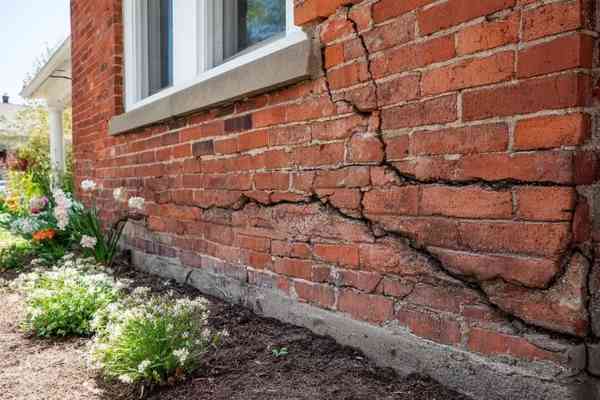
Where later decades left hard Portland-cement patches, we deal with the problem honestly. A hard patch over soft brick rarely stays put, and removing it needs care so the surrounding units survive. Spalled or split bricks are replaced with units that belong to the building’s era, and every section is inspected before we quote — some walls need repointing alone, others need rebuilding where the brick itself has failed.
A converted warehouse facade is not a blank wall — it is a record of a building’s working life, and a repair that ignores that record shows at once. We match brick by size, colour, texture and firing, and mortar by composition and tone, testing patches on the wall before committing to a full elevation. The goal is a repair that a passer-by cannot pick out, and that ages at the same rate as the wall around it.
The same discipline applies where brick meets other materials — stone lintels and sills, terra cotta trim, steel shelf angles that have rusted and jacked the courses above them. A mismatched patch at a material junction draws the eye and invites water in; a matched one disappears and lets the whole elevation read as it was built to read. Where a detail is beyond matching — a badly rusted lintel, a displaced sill — we say so and price the structural fix alongside the cosmetic one.
Stucco in Long Island City sits in three very different places, and each fails its own way. At podium level it takes foot traffic, planters and splash-back; on townhouse rows it takes movement between neighbouring structures; on penthouse bulkheads it takes full river wind and the movement of the tower itself. Hairline cracks over movement are common and often cosmetic — but they still let water in, and water behind stucco is what turns a hairline into a debonded sheet.
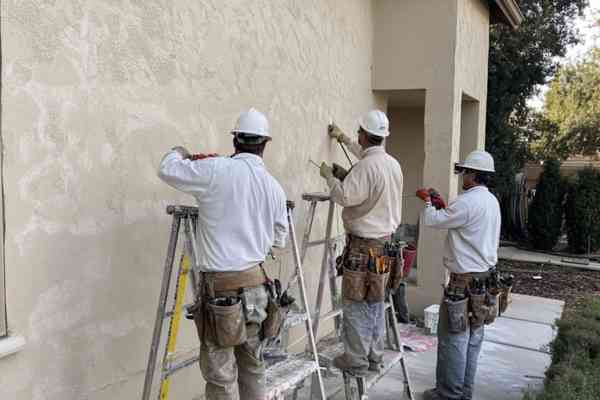
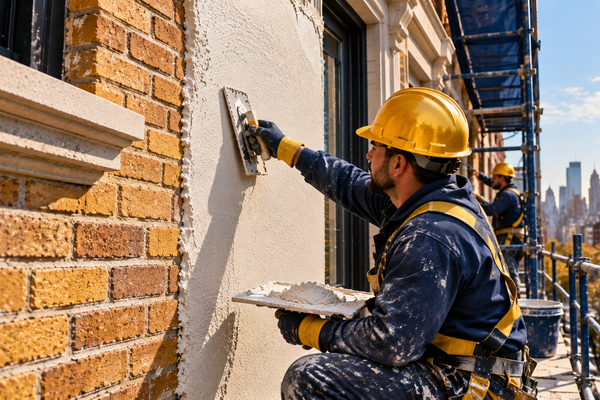
The repair starts with sounding the wall: solid stucco stays, hollow stucco comes off back to sound material. We re-coat in layers matched to the original build-up, and the finish coat is textured to disappear under paint — a patch that reads as a patch has failed its first test, however sound it is underneath. Where cracking keeps returning in the same place, we look for the movement joint or flashing detail that is missing, because re-coating the same crack a third time is not a repair plan.
Almost every brick and stucco failure in Long Island City is, underneath, a water story. River wind drives rain into open joints and failed sealant; coping and flashing failures let it travel down inside the wall; a planter or podium detail sends it somewhere it was never meant to go. The stain on the inside wall is rarely above the entry point — water travels along steel, along floor slabs, behind finishes — so chasing the stain itself usually misses the cause.
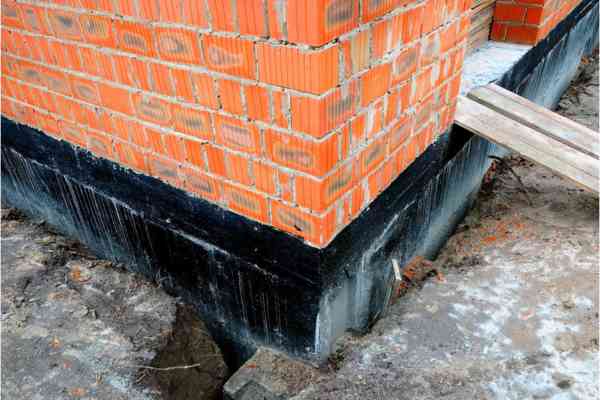
That is why our inspection always traces the water path before the repair is priced: the coping, the flashing, the sealant joint, the drainage detail above the damage. Fix the entry and the surface repair lasts; skip it and the same wall is back on the programme within a season or two. Where a wall needs waterproofing as part of the repair, we say so plainly and price it as part of the job, not as a surprise later.
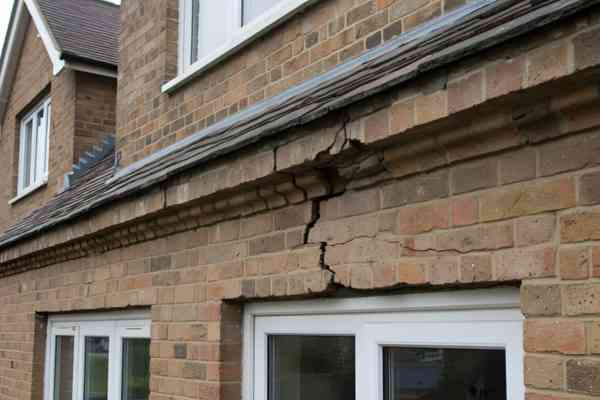
Look for mortar that is crumbling, cracked or missing from the joints, joints that have opened to the weather, and brick faces that are spalling or flaking — especially where hard cement patches from earlier repairs are cracking the softer brick around them. Water stains on interior walls below the brickwork are another sign. The reliable test is an inspection: sound joints are probed and photographed, and only the failed sections are priced for repointing — a wall does not need full repointing just because a few joints have failed.
Yes — matching is a matter of composition and colour, not guesswork. We identify whether the original is a soft lime mortar, as on the industrial-era buildings, and mix a compatible mortar of similar strength and tone, testing patches against the existing wall before the full job. A mortar that is harder than the brick traps moisture and cracks the brick faces, so matching strength matters as much as matching colour. On most walls the repointed joints weather in and become difficult to pick out.
Stucco cracks where the wall moves or where water gets behind it. On podium levels, splash-back and foot traffic work the surface; on townhouse rows, movement between neighbouring structures opens hairlines; on penthouse bulkheads, river wind and tower movement do the same. Hairline cracks are often cosmetic at first, but they let water in, and water behind stucco debonds it from its base — so a crack that keeps returning in the same place usually means a missing movement joint or a failed flashing detail, not just a surface problem.
In most cases a patch can be made to disappear: the hollow or failed stucco is cut back to sound material, the wall is re-coated in layers matched to the original build-up, and the finish coat is textured to match so it disappears under paint. Full resurfacing is only needed when the failure is widespread — large areas debonded, or the same cracking returning across the whole elevation. We sound the wall first and show you which areas are solid and which are not, so the scope follows the evidence.
It depends on the scope: a small repointing or stucco patching job is typically measured in days, while repointing a full elevation or rebuilding sections of wall can take several weeks, with weather, access and drying times between coats all affecting the schedule. We give a written timeline with the quote, explain what it depends on, and keep the site protected and tidy each day on an occupied building. Costs depend on the scope found at inspection.