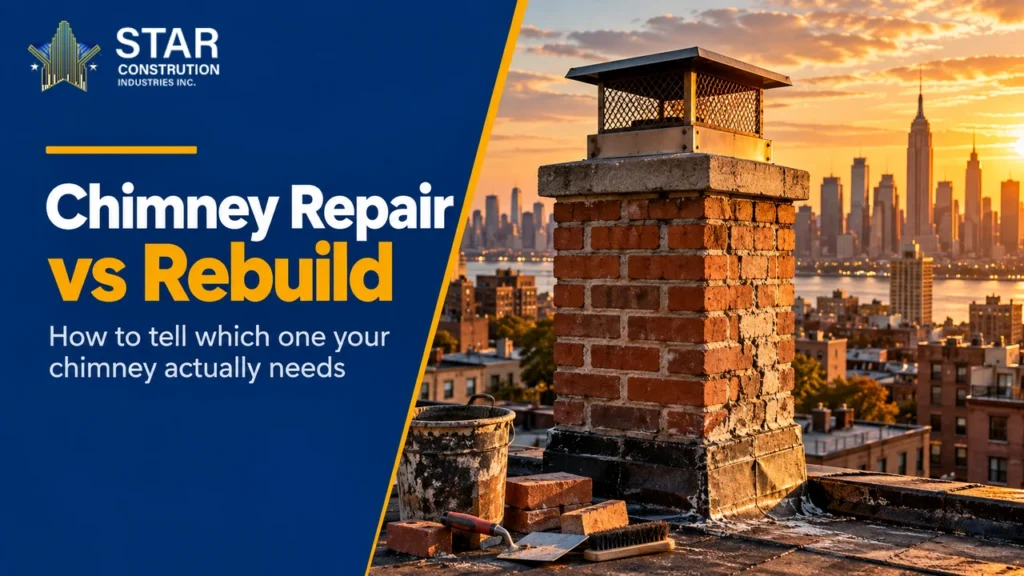
If your chimney shows cracked mortar, a damaged cap, or worn flashing, a targeted chimney repair is usually all it needs. But if the bricks are spalling, the stack is leaning, or the mortar crumbles when you touch it, a partial or full chimney rebuild is the safer, and often cheaper long-term, answer. The deciding factor is structural integrity: repairs fix the surface, rebuilds fix the structure. Below is exactly how to tell which one your chimney needs, what each option costs in the New York market, and when to call a professional.
What a chimney repair covers
A chimney repair addresses localized damage while the overall structure stays sound. Common repairs we perform across New York include repointing (raking out failed mortar joints and packing in fresh mortar), chimney cap and crown replacement, flashing repair or replacement where the chimney meets the roof, flue liner repair, and breathable waterproofing to slow freeze-thaw damage. These are one-to-three-day jobs in most cases, and they make sense when the brick itself is solid and the chimney is plumb. If your home’s chimney was built or last rebuilt in the past couple of decades and shows only surface wear, repair is the right call. Our masonry contractors in New York handle these repairs as standalone jobs or as part of larger exterior work.
What a chimney rebuild means
A rebuild is exactly what it sounds like: the damaged portion of the chimney is taken down and reconstructed with new brick, block, mortar, and flashing. There are two levels. A partial rebuild removes the chimney from the roofline (or from the point of failure) upward and rebuilds it. This covers the most common case, since the exposed stack above the roof takes the worst weather punishment. A full rebuild takes the chimney down to the ground or foundation and starts over, which is necessary when deterioration runs deep or the chimney was built without a proper foundation. Rebuilds also bring the chimney up to current code: proper flue sizing, a code-compliant crown, and correct clearances. Many of the chimneys we rebuild in Westchester and Queens are original to homes built in the 1920s-1950s. After 70+ years of nor’easters and freeze-thaw cycles, even well-built masonry reaches the end of its service life.
7 signs your chimney needs a rebuild, not a repair
Walk around your home and check the chimney from the ground (binoculars help). These seven signs point to a rebuild:
1. The chimney leans or tilts. Even a slight lean means the structure has shifted, often a failing foundation or deteriorated mortar deep inside. Repointing a leaning chimney is cosmetic; it needs to come down and go back up straight.
2. Spalling bricks. If brick faces are flaking, popping, or crumbling, the classic freeze-thaw signature in New York winters, the bricks themselves are compromised. New mortar cannot save dead brick.
3. Mortar that crumbles to the touch. Scrape a joint with a screwdriver. If mortar falls out like sand throughout the stack (not just in a few joints), repointing alone will not restore the bond the chimney needs.
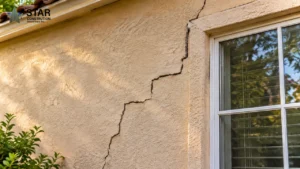
4. Large cracks or a separated flue. Wide vertical cracks through brick courses, or a visible gap between the flue liner and the masonry, indicate movement and structural failure.
5. Rust stains running down the brick. Rust streaks from the cap or crown area usually mean the damper or flue components are corroding, and water has been entering the system for a long time.
6. Water inside the firebox. Moisture where it should never be means the crown, cap, or flashing has failed and water is traveling down the flue, saturating the masonry from inside.
7. Repairs that keep failing. If the same chimney has been repointed or patched more than once and problems return within a few years, the structure itself is spent.
See two or more of these together, especially leaning, spalling, and crumbling mortar, and a rebuild is the honest recommendation. Our masonry contractors in Scarsdale and across Westchester typically advise homeowners to stop patching and start planning a rebuild at that point.
5 signs a repair is enough
Not every chimney problem is structural. These five point to repair:
1. Hairline cracks in mortar joints only. Thin, shallow cracking confined to joints, with solid bricks and a plumb stack, is a textbook repointing job.
2. A cracked or missing chimney cap. Caps are sacrificial by design. Replacing a damaged cap is a quick repair that stops water entry before it damages the stack below.
3. Failing flashing. If the leak is at the roof-chimney intersection and the masonry above is sound, new step and counter flashing will solve it without touching the stack.
4. Minor crown cracks. Small cracks in the concrete crown can be sealed or the crown resurfaced, unless water has already saturated the masonry beneath.
5. Surface efflorescence. White salt deposits on brick faces signal moisture movement but not necessarily structural damage. Find and fix the water source, then clean the surface.
When the chimney is straight, the bricks are hard, and damage is confined to joints, caps, crowns, or flashing, repair protects the chimney for years at a fraction of rebuild cost.
Brownstone and Pre-War Chimneys in New York City
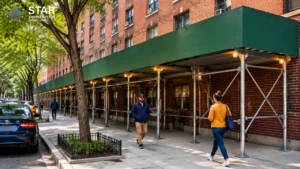
New York City chimneys deserve special attention, because many of them sit on brownstones, rowhouses, and pre-war apartment buildings where the chimney is not a freestanding stack in a yard. It may share a party wall with a neighbor, rise beside a parapet, or sit on a roof that is also used for access, mechanical equipment, or a roof deck. That context changes both diagnosis and logistics: access may be through a neighboring roof or a tight rear yard, scaffolding and sidewalk protection may be needed, and work on a shared wall should be coordinated with the adjoining owner so one building’s repair does not become the next building’s leak.
Older NYC chimneys also tend to use softer brick and lime-based mortar, which behave differently from modern hard brick and cement mortar. Repointing a pre-war chimney with a mortar that is too hard can trap moisture and accelerate spalling, so matching the mortar’s hardness and composition to the original brick matters as much as matching its color. For chimneys on brownstones, the visible stack is part of the facade as well as a working flue, so brick matching, joint profile, and crown detail all affect how the building reads from the street. If the building is in a historic district or is individually landmarked, exterior work may also be subject to Landmarks Preservation Commission review, so ask early whether that review applies to your scope and build any review time into the schedule. Owners planning wider facade work at the same time should also consider how the chimney, parapet, and roofline interact, since our Local Law 126 parapet inspection guide for NYC explains why roofline masonry is often assessed as a system rather than as isolated parts.
A Repair-vs-Rebuild Decision Scorecard
Use this scorecard on site, or ask your contractor to walk through it with you. The more items in the rebuild column, the stronger the case for rebuilding rather than patching again:
| Check | Points to repair | Points to rebuild |
|---|---|---|
| Stack alignment | Straight and plumb | Leaning, tilting, or bulging |
| Brick condition | Hard faces, only surface wear | Spalling, flaking, or crumbling faces |
| Mortar condition | Failed in a few joints only | Crumbling throughout the stack |
| Cracks | Hairline, in joints only | Wide, through bricks, or stair-stepping |
| Water entry | At one flashing or cap point | Inside the firebox or through the flue |
| Repair history | First problem, or long gap since last repair | Same problem returning after repeated repairs |
| Age and exposure | Recent build or rebuild, sheltered exposure | Pre-war stack, decades of freeze-thaw exposure |
One rebuild item alone, such as a cracked cap, does not force a rebuild. Two or more structural items together, especially lean plus spalling plus crumbling mortar, usually do. That is the line between spending money on the surface and spending money on the structure.
New York realities: freeze-thaw, age, and permits
Chimneys in the New York area fail faster than in milder climates. Every winter, water absorbed into brick and mortar freezes, expands, and breaks the material apart from inside. That freeze-thaw cycle is why a chimney that looked sound in October can show new spalling by March, and why breathable waterproofing, proper crowns, and sound flashing matter more here than in drier regions. Age compounds the effect: a 1920s chimney has lived through a century of those cycles, and its mortar may be softer and more porous than a modern stack.
On permits, the pattern in New York is straightforward to check but easy to get wrong if you assume. Minor repairs usually do not require a permit, but a rebuild almost always does, in NYC through the Department of Buildings, and in Westchester through your village or town building department. Our brick and stucco work in New York will handle the permit and inspection sequence as part of the job. Confirm, in writing, which filings your contractor expects for your exact scope, and whether landmark review applies, before scaffolding goes up.
What each option costs in the New York market
Costs vary with chimney height, access (steep roofs and tight lots add labor), and material matching. As general New York market ranges, not any one contractor’s fixed prices:
Minor repairs (cap replacement, flashing repair, crown sealing): roughly $500-$2,500.
Repointing (partial to full stack): roughly $1,500-$5,000 depending on joint condition and height.
Partial rebuild (from the roofline up): roughly $3,000-$8,000.
Full rebuild: roughly $8,000-$20,000+ for tall or complex stacks with premium brick matching.
The honest math: two rounds of major repairs on a failing chimney often exceed the cost of one proper rebuild, and they leave the structural problem in place. For a fuller picture of how masonry pricing is built up, see our guide to masonry repair cost in New York, which breaks down the same access, height, and matching factors.
How a professional assessment works
A proper chimney assessment takes about 30-45 minutes on site. The contractor checks the chimney from the ground and the roof, tests mortar hardness, looks inside the firebox and flue where accessible, and photographs the cap, crown, flashing, and brick condition. You should leave with a clear recommendation, repair or rebuild, the reason for it in plain language, and a scope that states whether the work is partial or full, what brick and mortar will be used, and which permits are expected. If a contractor recommends a rebuild without explaining which structural signs support it, ask them to walk the scorecard above with you.
Frequently Asked Questions
Can a leaning chimney be repaired, or does it need a rebuild?
A leaning chimney needs a rebuild. The lean means the structure has shifted or its internal mortar bond has failed, and repointing the surface will not restore its alignment or stability.
How long does a rebuilt chimney last?
A properly rebuilt chimney with quality brick, correct mortar, a code-compliant crown, and good flashing should last for decades. Its lifespan depends on the same factors as any masonry: material quality, workmanship, and protection from water and freeze-thaw cycles.
Will a rebuild change how my chimney looks?
It should not. A good mason matches the existing brick color, size, and mortar joint profile so the rebuilt stack blends with the original building, which matters most on brownstones and pre-war homes.
Do I need a permit for chimney work in New York?
Minor repairs usually do not require a permit, but a rebuild almost always does, through the NYC Department of Buildings, or through your village or town building department outside the city. Confirm the expected filings for your exact scope before work starts.
How often should my chimney be inspected?
Once a year, per National Fire Protection Association (NFPA 211) guidance, ideally in late summer or early fall so any repair or rebuild can be completed before winter.
Can a brownstone chimney be rebuilt to match the original?
Yes, with care. Matching the brick size, color, and texture, and using a mortar suited to softer pre-war brick, is what makes a rebuild read as original rather than as a new stack on an old building. Ask for a brick sample and mortar match before work begins.
Does a chimney rebuild in a NYC historic district need extra review?
It may. If the building is landmarked or in a historic district, exterior chimney work may be subject to Landmarks Preservation Commission review in addition to any DOB filing. Check that question early, because review time should be built into the schedule.
Should chimney and roof flashing be fixed together?
Usually, yes, when the leak or damage is at the roof-chimney joint. Flashing belongs to both systems, so replacing flashing during a chimney repair or rebuild, and coordinating it with the roof condition, avoids paying twice for the same access and scaffolding.
Star Construction INC provides masonry services in New York, from targeted chimney repairs to full rebuilds. Contact us for a free assessment, or call +1 (516) 998-4133 to discuss your chimney.