
Star Construction INC has poured, repaired and replaced concrete across New York City since 2018, and Manhattan’s concrete asks for a particular discipline. Our concrete repair and installation contractors begin every Manhattan job with an honest assessment of the slab in front of them: what can be ground, lifted or patched, and what has reached the age or condition where replacement is the safer and cheaper answer.
Most of our Manhattan concrete work is sidewalk work — the flags in front of co-ops, condos, townhouses and mixed-use buildings, where a lifted edge is both a trip hazard and, under city rules, the owner’s responsibility. Our sidewalk repair and replacement crews replace broken and heaved flags, re-establish honest grades to the curb, and match the new work to the run it joins. Where a DOT inspector has already marked the defects, our DOT violation removal service handles the repair the notice requires, flag by flag, so the walk can be presented for re-inspection. Beyond the walk, our concrete driveway installation work covers the aprons and service drives that Manhattan buildings rely on, and where stoops and areaway walls meet the concrete, we coordinate with our masonry contractors in Manhattan so the masonry and the flatwork meet cleanly.
Concrete repair and installation is the work of keeping flatwork safe, level and watertight. Repair starts with diagnosis: is the slab cracked through or only at the surface, has it settled or heaved, is water getting underneath it? The answers decide the fix — grinding a small lift, lifting a settled section, patching a spall, resurfacing a worn surface, or replacing a slab that has finished its service. Installation means building new concrete properly from the ground up: a compacted base, the right mix for the exposure, control joints placed where cracking can be managed, and a finish and cure that give the surface its working life.
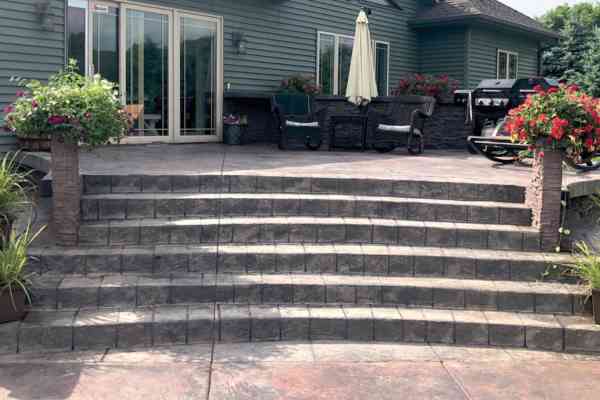
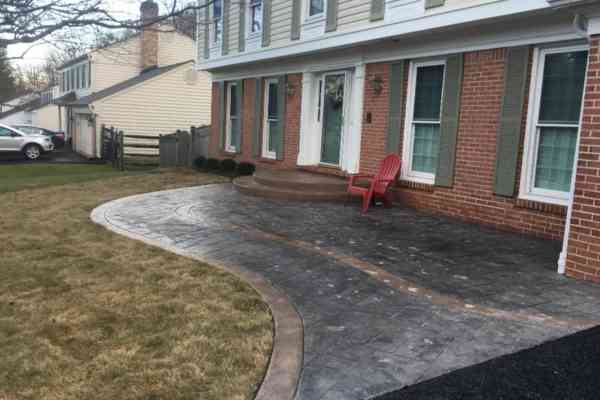
In Manhattan, that work covers a wider cast than a suburban driveway. Sidewalk flags and curbs take the city’s foot traffic; concrete steps and staircases carry the entrances of townhouses and apartment buildings; areaway walls and vaulted walks are structural concrete, not decoration. Where a surface is worn but the slab beneath is sound, concrete resurfacing and repairs can renew it without the cost of full replacement, and where a building has garden or rear-yard space, concrete patios and walkways extend the same discipline to the private side of the property. A good concrete contractor says plainly which of these a slab needs, because the cheapest fix on a failed slab is the one you pay for twice.

If the sidewalk in front of your Manhattan building is lifting, cracking, or already carrying a DOT notice, talk to a contractor who starts by walking the run and explaining what each slab actually needs. Star Construction INC has repaired and installed concrete across New York City since 2018, from townhouse stoops to the sidewalk runs of the borough’s largest buildings. Request a free, no-obligation estimate and we will measure the run, photograph the defects, and tell you plainly which slabs need replacing and which can be saved. See the full list of areas we serve on our service areas page.
Our clients value the consistency, structural precision, and long-term performance we deliver on every project, from initial planning through final execution.

 Jav V
Trustindex verifies that the original source of the review is Google.
Got my bathroom remodel Team was professional on time Thank you Ever fernando Perez saldañaCrear Word
 LUIS CAYOi hire them for my home project. and everyting went smoothly. no delays
 Shahid IqbalVery reliable contractor. They did exactly what they promised and the quality was excellent. Would definitely recommend.
Contact us now to discuss your project and receive a no-obligation quote from our experts.
Every project is handled through a defined process that ensures accuracy, efficiency, and long-term structural performance from start to finish.
We begin by reviewing site conditions, understanding project objectives, and identifying structural requirements to establish a clear and practical direction before any work begins.
A detailed execution plan is developed, including material selection, sequencing of work, and coordination of labor to maintain consistency and avoid delays during construction.
Work is carried out using proven installation methods, with attention to structural integrity, proper reinforcement, and adherence to safety and quality standards.
A final walkthrough is conducted to verify workmanship, resolve any outstanding details, and ensure the completed project meets performance expectations and durability standards.
Manhattan’s concrete work divides into four kinds of problem, and each needs a different judgment. The sidewalk run in front of the building, beaten by the city’s foot traffic; the DOT notice that turns a trip hazard into a deadline; the stoops, areaways and vaulted walks that are structure, not surface; and the street trees and winters that keep moving and cracking what was just repaired. The sections below take each in turn — what fails, what fixes honestly, and when replacement is the right call.
No sidewalk in the city works harder than a Manhattan sidewalk. The run in front of a pre-war co-op or condo, a brownstone, or a mixed-use building carries residents, shoppers, delivery carts and scaffolding crews from morning to midnight, and every flag in it is expected to stay level, sound and safe under that traffic. The failures arrive in a familiar order: a joint opens, water gets under the slab, freeze and thaw lift one corner, and a flag that was level last spring is a trip edge by fall.
Our sidewalk repair and replacement work treats the run as a whole, not a patchwork. Broken and heaved flags are replaced with new concrete on a proper base, joints are cut where cracking can be managed, and grades are re-established so water runs to the curb instead of pooling on the walk. Where a flag is only slightly lifted and the slab beneath is sound, grinding or lifting may be the honest fix; where the slab is cracked through or still moving, replacement is the answer, and we say so before work starts rather than after a patch fails.
Under New York City rules, the property owner is responsible for the sidewalk adjoining the property — and the Department of Transportation enforces that responsibility by inspection. A DOT inspector walking the block marks defective flags: trip hazards where one flag sits higher than its neighbor, broken or cracked flags, improper slope, and patchwork that has failed. The result is a violation notice listing the defects that must be repaired.
A violation notice is a repair order, not by itself a fine — but it does start a clock, and it does not go away on its own. The owner arranges the repair, and the city re-inspects; if the defects remain, the city may make the repair itself and bill the owner. Our DOT violation removal work follows the notice flag by flag: every marked defect repaired to the city’s standard, with photographs and paperwork kept so the re-inspection has a clean record to check. We never promise a dismissal outcome — that decision belongs to the city after re-inspection — but a complete, well-documented repair is what gives the notice its best chance of being closed.
Manhattan’s entrances are concrete and masonry working together. A brownstone stoop rises from the sidewalk to the parlor floor; beside it, an areaway — the sunken light well between the building and the street — is held back by retaining walls that carry the sidewalk’s edge; and beneath many older sidewalks, a vault extends the building’s basement out under the walk itself. These are structural elements, and they fail structurally: a stoop tread undermined by water, an areaway wall bowing under the sidewalk’s load, a vault roof that has thinned with age.
Our work here is planned with that in mind. Stoop repairs replace failed treads and repoint or rebuild the supporting walls; areaway walls are rebuilt with proper drainage behind them, since water trapped against a wall is what pushes it over; and vaulted sidewalks get a structural look before any surface repair is quoted, because resurfacing a walk whose vault roof is failing hides the real problem. Where the retaining element is the wall itself, our retaining walls and curbs work covers the rebuild, and the curb line is re-established so the street edge drains as it should.
Manhattan’s street trees are part of what makes the sidewalks worth walking — and one of the main forces lifting them. A tree pit confines roots to a small square of soil, so as the tree grows, its roots push outward under the adjoining flags and heave them, a fraction at a time, until the walk is a trip hazard. The honest fixes, in order of scale, are grinding a small lift, root pruning done carefully with the tree’s health in mind, and replacing the affected flags with a layout that gives the roots somewhere to go — never simply paving over the problem and expecting it to stay solved.
Winter finishes what roots start. Water that gets into a joint or under a slab freezes, expands, and scales the surface a little more each season — the same freeze-thaw damage that wears down the city’s masonry wears down its concrete, just at ground level. Sealing joints, keeping water from standing on the walk, and repairing small defects before winter are the unglamorous habits that keep a Manhattan sidewalk run from becoming a violation notice.
Yes — under New York City rules, the property owner is responsible for maintaining the sidewalk adjoining the property, including keeping it safe and in good repair. For a co-op or condo building, that responsibility sits with the building’s ownership, which is why sidewalk work in those buildings is usually arranged through building management. The city owns the street and, generally, the street trees — but the walk itself is the adjoining owner’s duty, and a defective walk is the owner’s repair to make.
A DOT sidewalk violation is a notice from the Department of Transportation listing defects found on the sidewalk adjoining a property — typically trip hazards, broken or cracked flags, or improper slope. It is a repair order, not by itself a fine: the owner is required to repair the listed defects. Once the repair is made, the city re-inspects and decides whether the violation can be dismissed. If the defects are ignored, the city may make the repair itself and bill the owner. Repairing promptly and completely, with photographs and paperwork kept, is what gives a notice its best chance of being closed — but no contractor can promise dismissal, because that decision belongs to the city after re-inspection.
Sometimes — for a small lift on an otherwise sound slab, grinding the raised edge down can remove the trip hazard and is the least disruptive fix. But grinding has limits: it only works where the lift is modest and the slab is stable. A flag that is cracked through, still moving because of roots or a failed base, or lifted by a large amount cannot be ground into a safe walk — grinding it thin weakens the slab and the trip edge returns as the slab keeps moving. In those cases, replacing the flag on a proper base is the honest repair, even though it costs more up front, because it is the repair that stays repaired.
A vaulted sidewalk is a sidewalk built over a vault — a basement space that extends out from the building underneath the public walk. Vault lights are the glass prisms set into the sidewalk surface above such a vault; they let daylight down into the space below. Both are common in older Manhattan districts. The important point for repairs is that a vaulted walk is structural: the sidewalk slab is the vault’s roof, so damage to it is not just a surface problem. A contractor should check the vault structure before quoting a surface repair, and any work on a vaulted walk needs to respect that structure.
In general terms, work on the public sidewalk usually does: sidewalk repairs and replacements in New York City generally require Department of Transportation permits and coordination, and vault work or structural changes add further approvals. Small like-for-like repairs are usually simpler than full replacements, but the permit question depends on the scope and the location, so it is worth confirming before work starts. In co-op and condo buildings, the building’s own management process runs alongside the city’s. A reputable contractor will tell you before quoting which approvals your particular job needs.