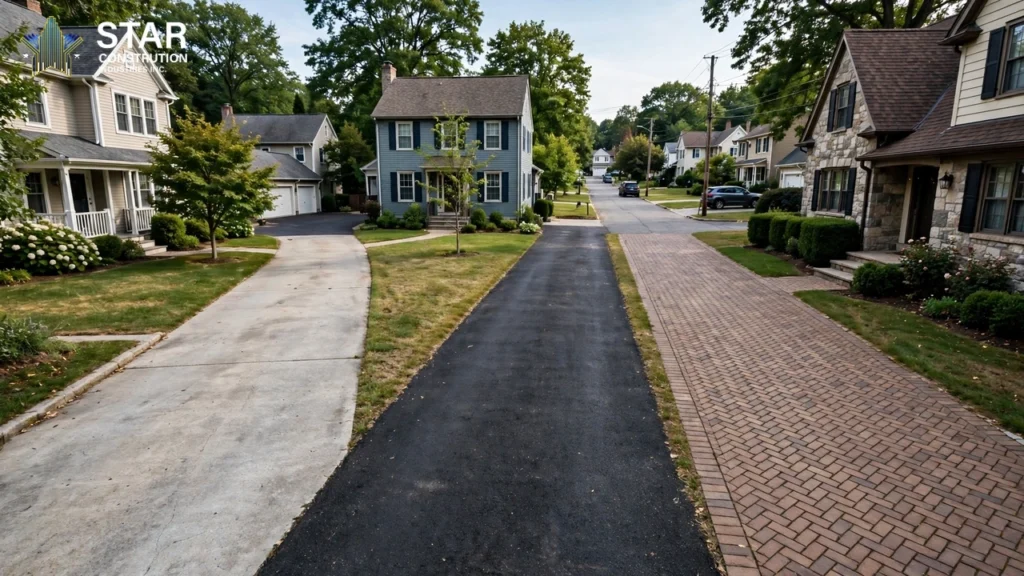
Choosing a driveway material is choosing how you want to spend money and weekends for the next thirty years. Concrete, asphalt and pavers all carry a car perfectly well on day one; they differ in what they ask of you afterwards — how long they last, how they behave through New York winters, what their repairs look like, and how gracefully they age. Here is the honest comparison we give homeowners, material by material, ending with the questions that actually decide it.
Concrete: The Long, Clean Middle
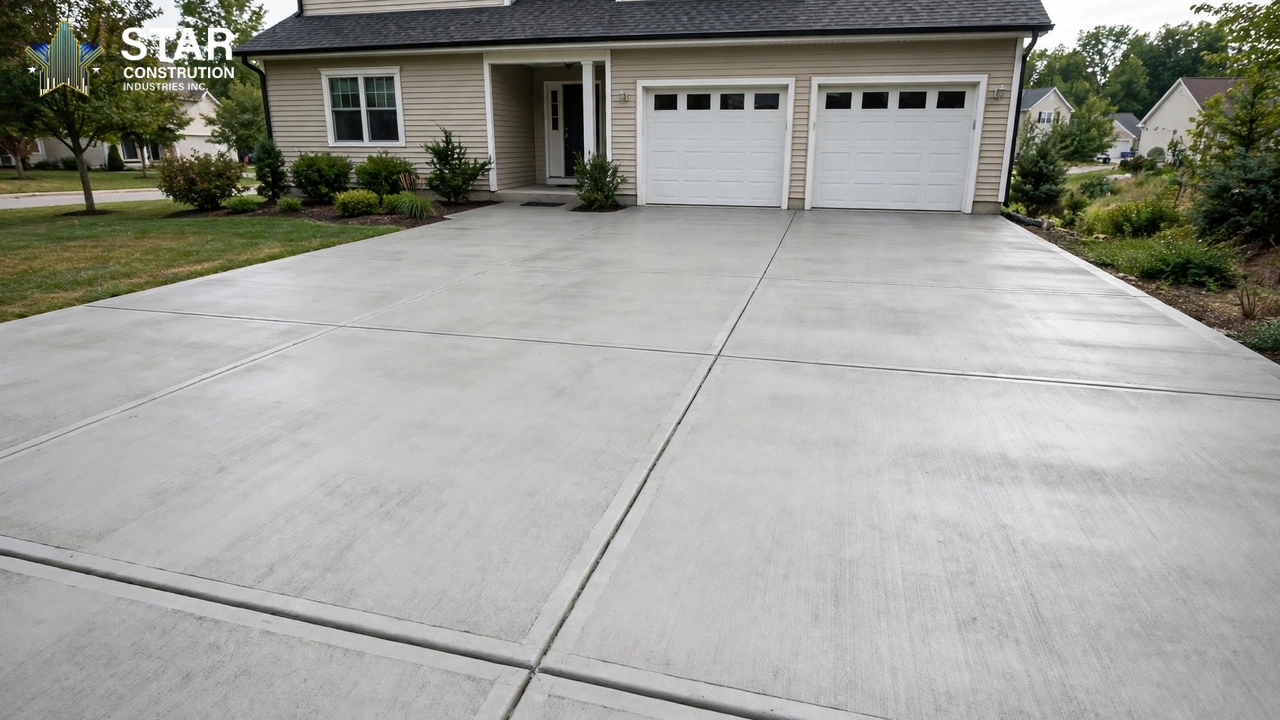
Concrete is the default for a reason. A properly built concrete driveway — adequate thickness, a compacted base, steel or fibre reinforcement, control joints cut at the right spacing — gives decades of service with almost no routine maintenance beyond keeping joints sealed and the surface reasonably clean. It handles New York winters well in one respect (it does not soften in summer heat or rut under a parked car) and poorly in another: de-icing salts can scale and pit the surface, especially in its first winter, so sand rather than salt is the kinder choice. Its weaknesses are about repair and appearance. Concrete cracks eventually — good construction controls where — and a cracked or stained section cannot be patched invisibly; replacing a section always shows as a section. It is also the middle option on installation cost: more than asphalt, less than pavers. For most homeowners who want to install once and think about it rarely, our concrete contractors recommend it as the balanced choice.
Asphalt: Cheaper Now, Maintained Forever
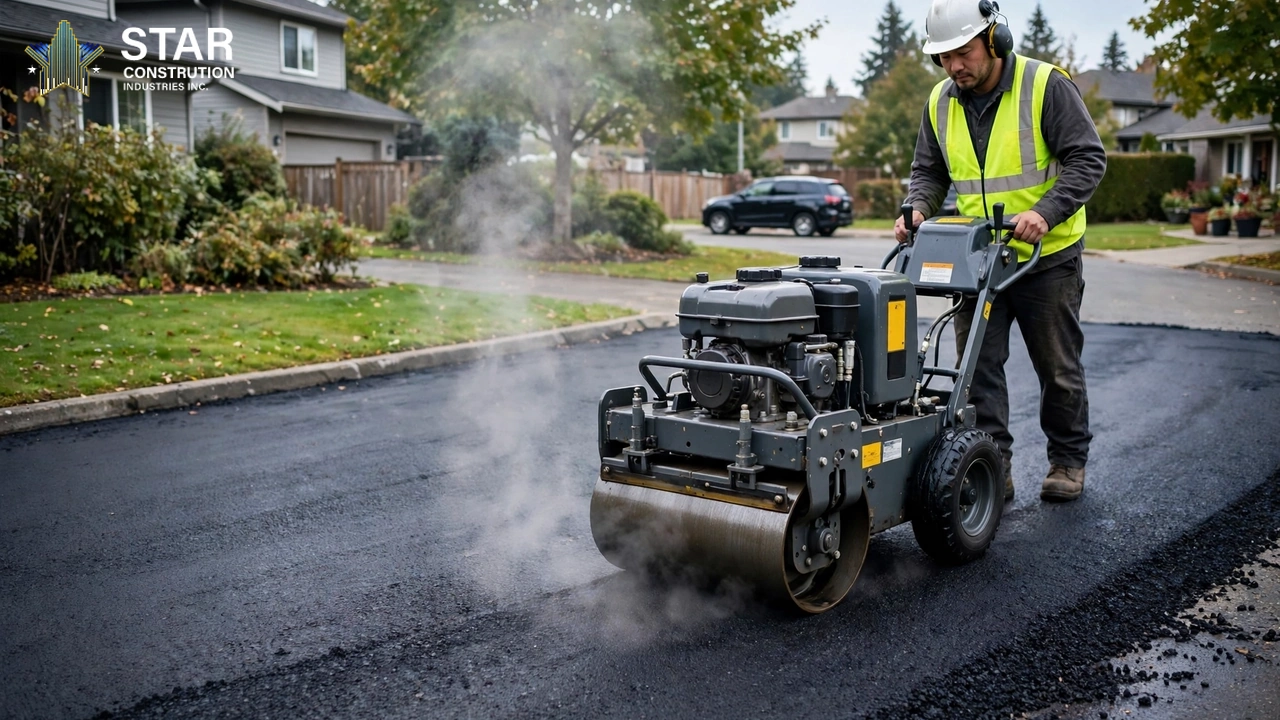
Asphalt wins the first invoice. It is the least expensive of the three to install, it goes down fast, and its black surface melts snow quicker in winter sun and tolerates freeze-thaw movement by flexing rather than cracking. The bill arrives in instalments: asphalt needs resealing every few years to keep the binder from drying and raveling, edges crumble if vehicles stray off them, and in summer heat it can soften enough to take dents from kickstands and furniture legs. Its typical service life is meaningfully shorter than concrete’s, though a mid-life resurfacing (a fresh layer over a sound base) can extend it economically. Repairs, at least, blend in better than concrete’s — new asphalt weathers toward the old within a season or two. Asphalt suits long driveways, where its per-foot advantage compounds, and owners who accept a small recurring maintenance rhythm. In the city itself, driveway work sits alongside the sidewalk rules our sidewalk and driveway contractors in Long Island City deal with daily — the apron where driveway meets sidewalk is DOT territory and must be built to the city’s detail.
Pavers: The Premium You Can Repair One Stone at a Time
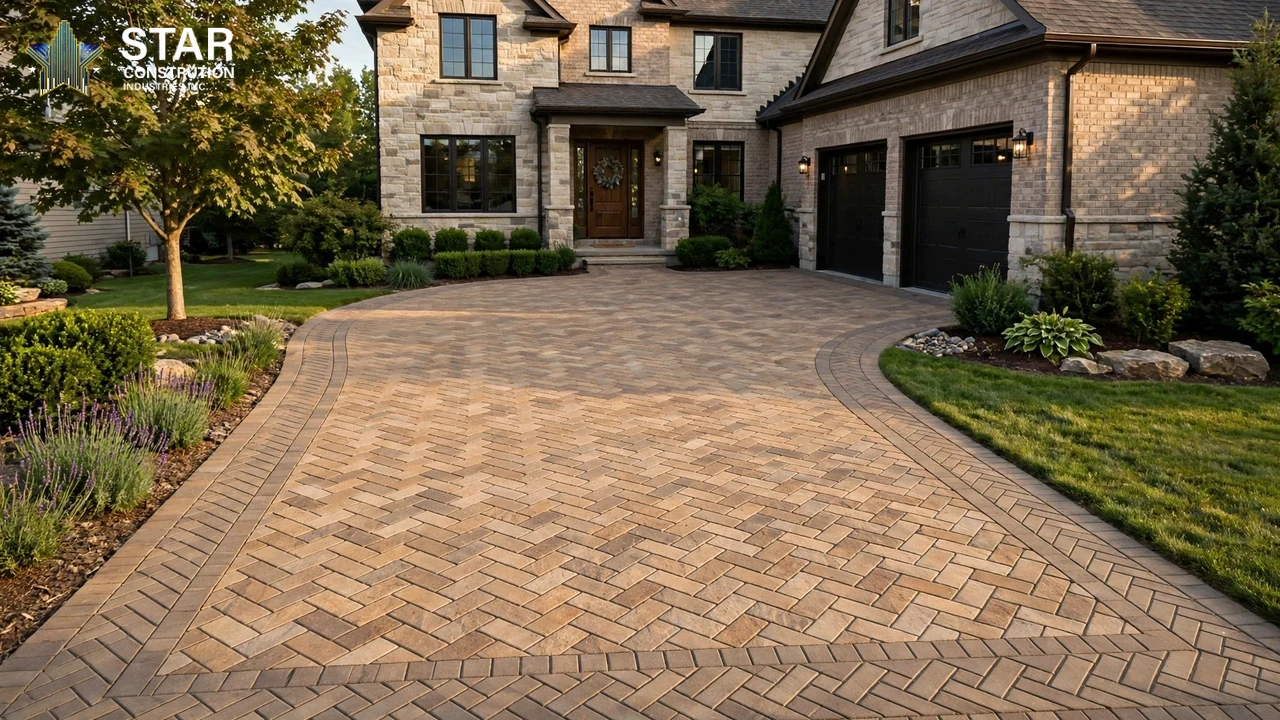
Pavers — concrete or clay units laid on a prepared bed — are the most expensive to install and, for many owners, the cheapest to live with. Their structural trick is segmentation: the surface is thousands of small units with flexible joints, so freeze-thaw movement that would crack a slab is absorbed invisibly, and a stained, cracked or sunken spot is repaired by lifting and relaying the affected units — the only driveway material whose repairs genuinely disappear. They also carry the design argument: patterns, borders and colours no poured surface can match, which is why they front so many of the area’s renovated homes. The honest downsides: weeds and ants work the joints unless they are maintained with polymeric sand, snowplow blades and shovels can catch edges, and a poorly compacted base will telegraph every failure as dips and spreads — paver quality is base quality. Lifespan of the units themselves is the longest of the three; it is the bedding that decides whether the surface stays true.
The Decision, and What It Costs
Strip the comparison down and it reads like this. Lowest installation cost: asphalt. Longest low-maintenance life: concrete. Best repairability and appearance, at the highest installation cost: pavers. Winter behaviour splits honestly — asphalt melts snow faster and flexes with frost; concrete shrugs off summer heat and heavy point loads; pavers flex like asphalt and repair like neither. Then ask the local questions: How long will you stay? (Asphalt’s economics improve the shorter the horizon; pavers pay back over decades.) How long is the driveway? (Length multiplies asphalt’s advantage.) What does the house deserve at the curb? (A renovated facade over a tired driveway is a sentence unfinished.) Star Construction INC has installed and repaired driveways across the New York area since 2018; our sidewalk and driveway contractors will price the material that fits your answers — and tell you when the cheaper option is honestly the right one. Request a free, no-obligation estimate and compare with confidence. The areas we cover are on our service areas page.
Frequently Asked Questions
Which driveway material lasts the longest?
Paver units themselves can outlast both poured surfaces, and concrete generally outlasts asphalt. In practice, installation quality decides more than material: a well-based concrete or paver driveway outlives a poorly built one of any type by decades.
Which is cheapest — concrete, asphalt or pavers?
Asphalt is typically the least expensive to install, concrete sits in the middle, and pavers cost the most. Over a full life the order can change: asphalt’s resealing cycle and shorter life, and pavers’ cheap unit-by-unit repairs, narrow the gap considerably.
Which driveway material is best for New York winters?
Each has a winter trade-off. Asphalt flexes with freeze-thaw and melts snow faster; concrete is stronger under loads but can be damaged by de-icing salts, especially when new; pavers flex and can be repaired unit by unit if frost heaves a section.
Can a damaged driveway be repaired, or does the material decide?
The material decides. Pavers repair invisibly, unit by unit. Asphalt patches blend in within a season or two. Concrete section replacements always show as a new section against the old, which is why controlled cracking and joint layout matter so much at installation.
How long does a new driveway take to install, and when can it be used?
Most residential driveways take a few days of work. Asphalt can usually be driven on within a day or two; concrete needs about a week of curing before cars; pavers can be used almost immediately once the joints are sanded and compacted.