An NYC DOT sidewalk violation is a formal notice from the New York City Department of Transportation stating that the sidewalk in front of your property has defects that must be repaired. In New York City, the property owner — not the city — is legally responsible for maintaining the sidewalk adjoining their lot. When you receive a violation, you must repair the defective sidewalk within the cure period stated on the notice, or request a hearing if you believe it was issued in error. If you ignore the notice, the city can perform the repair itself and bill you for the work, typically at a significant premium over hiring your own contractor.
This guide explains what a DOT sidewalk violation means, the defects that trigger one, and the step-by-step process for clearing it — so a notice on your door does not turn into a lien on your property.
What Is an NYC DOT Sidewalk Violation?
The DOT inspects sidewalks across the five boroughs — often in response to 311 complaints, but also through routine surveys. When an inspector finds defects, the agency issues a Notice of Violation to the property owner of record. The notice identifies the defective conditions and sets a cure period for completing the repair. A violation is not a fine at the outset; it is an order to fix the sidewalk. Fines and city-performed repairs come into play only when the owner fails to act.
Violations attach to the property, not the person. That means an open sidewalk violation can complicate a sale or refinancing in Manhattan, Queens, the Bronx, or anywhere else in the city — title searches routinely surface them, and buyers will demand they be cleared before closing.
Common Sidewalk Defects That Trigger Violations
DOT inspectors flag conditions that make the sidewalk unsafe or non-compliant. The most common include:
- Trip hazards. Vertical displacement between adjacent flags — even as little as half an inch — is the single most cited defect.
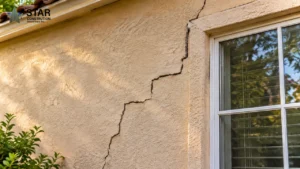
- Cracked, broken, or missing flags. Fractured concrete squares, missing chunks, or holes in the walking surface.
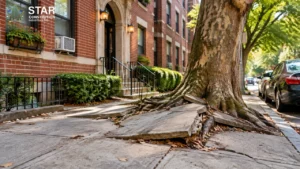
- Tree root damage. Roots lifting or cracking flags, very common along tree-lined streets in neighborhoods like Astoria, Flushing, and Harlem.
- Improper slope or ponding. Sidewalk that pitches the wrong way or holds standing water after rain.
- Patchwork and disrepair. Asphalt patches over concrete, spalled surfaces, or flags that have settled unevenly.
- Obstructions and hardware issues. Defective cellar doors, vault covers, or grates within the sidewalk area.
What to Do When You Receive a Violation Notice
Do not ignore it, and do not panic. Follow these steps in order:
- Read the notice carefully. Note the violation number, the defects cited, the cure deadline, and the hearing request instructions.
- Inspect the sidewalk yourself. Walk the full frontage of your property and photograph every defect. Compare what you see with what the notice cites.
- Decide: repair or contest. If the defects are real — and they usually are — plan the repair. If you believe the notice is wrong (for example, it cites a neighbor’s frontage), you can request a hearing, but do so within the stated window.
- Get a contractor lined up promptly. Sidewalk work in NYC requires DOT permits, and reputable sidewalk and driveway contractors book out — start the process immediately so the cure period does not slip away.
- Complete the repair to DOT specifications. The work must meet city standards for materials, thickness, slope, and finish — a handyman patch will not clear a violation.
- Request a re-inspection. Once the work is done, contact DOT to have the violation re-inspected and dismissed.
The Cure and Dismissal Process
After the repair is complete, the violation is not automatically cleared — the dismissal must be documented. Keep your contractor’s invoice, permit records, and before-and-after photos, and request a DOT re-inspection of the repaired sidewalk. When the inspector confirms the defects are corrected, the violation is dismissed. Hold onto the dismissal confirmation with your property records; it is the proof a future buyer or lender will ask for.
If you miss the cure deadline without requesting a hearing, DOT may step in and do the repair itself, then place the cost — plus administrative charges — on your property tax bill as a lien. City-performed work is consistently more expensive than hiring your own contractor, which is why acting within the cure period is always the economical choice.
Sidewalk Repair Permits in NYC
Nearly all sidewalk work in New York City requires a DOT permit before the first flag is lifted. Your contractor typically pulls the permit, which covers the construction zone, pedestrian protections, and restoration standards. Permit lead times vary, so factor them into your cure-period planning. Work done without permits — or to the wrong specification — can result in the violation remaining open even after you have paid for the repair.
What Does Sidewalk Violation Repair Cost?
Costs depend on how many flags must be replaced and site conditions. In the New York market, replacing individual concrete sidewalk flags generally runs $15 to $30 per square foot, with full-frontage replacements for a typical city lot landing in the low-to-mid four figures. Tree root remediation, curb work, and extensive concrete work add to the total. These are general market ranges that vary by scope and access — an on-site evaluation is the only way to price your specific violation. Whatever the number, it will be less than the city’s bill if DOT does the work for you.
Preventing Future Violations
Once the violation is cleared, a little maintenance keeps the next notice away. Walk your sidewalk frontage once or twice a year and look for new cracks, lifting flags, and root intrusion. Address tree wells before roots become a structural problem, keep heavy equipment off the flags, and re-caulk expansion joints when they deteriorate. In freeze-thaw climates like New York’s, small defects become big ones over a single winter — catching them early is the difference between a minor repair and another violation.
Sidewalk compliance is one part of owning property in New York City. Owners of buildings with parapets face a parallel obligation: Local Law 126 requires annual parapet observations, with its own yearly deadline. Staying ahead of both keeps your building safe and your title clean.
Frequently Asked Questions
Who is responsible for sidewalk repair in NYC — the owner or the city?
The property owner. New York City law makes owners responsible for maintaining the sidewalk in front of their property, including repairing defects cited in a DOT violation.
How long do I have to fix a DOT sidewalk violation?
The cure period is stated on the violation notice itself. Deadlines vary, so read your notice carefully and start the repair process immediately — permits and contractor scheduling take time.
What happens if I ignore a sidewalk violation?
DOT can perform the repair itself and bill you, placing the cost plus administrative charges on your property as a lien. An open violation can also delay or derail a property sale or refinancing.
Can I contest a DOT sidewalk violation?
Yes. The notice includes instructions for requesting a hearing if you believe the violation was issued in error. Request it within the stated window and bring evidence, such as photos and surveys.
Do I need a permit to repair my sidewalk in NYC?
In nearly all cases, yes. DOT permits are required for sidewalk construction work, and your contractor typically handles the application. Unpermitted or substandard work will not clear the violation.
If you have received an NYC DOT sidewalk violation, Star Construction INC can help you clear it — from the initial inspection and DOT permits through spec-compliant repair and re-inspection support. We serve property owners across New York City, Westchester, and surrounding areas. Contact us for a free, no-obligation estimate, or call +1 (516) 998-4133 to get started.
How a Sidewalk Violation Is Issued
Most violations start with an inspection, and inspections start in a few common ways. A neighbor, pedestrian, or tenant may file a 311 complaint about a tripping hazard or broken flag; DOT also conducts routine surveys of sidewalk conditions across the boroughs. Either way, an inspector walks the property’s frontage, notes each defective condition, and records it against the property. The result is a Notice of Violation sent to the owner of record, identifying the defects and setting a cure period for completing the repair.
It is worth understanding what the notice is and is not. As the post explains, a violation is not a fine at the outset; it is an order to fix the sidewalk. Fines and city-performed repairs come into play only when the owner fails to act. That distinction matters for owners who panic on receiving a notice: the notice is a deadline and a scope of work, not an immediate penalty, and acting promptly keeps the owner in control of the cost and the contractor.
Reading Your Violation Notice: What Each Part Means
Start with the violation number, which you will need for every later step, from permit applications to the re-inspection request. Next, read the defects cited, flag by flag: the notice describes the conditions DOT found, and your repair must address each one, not just the worst-looking section. Then note the cure period stated on the notice itself, since deadlines vary by case; the post deliberately does not state a single number, because the notice is the authoritative source for your property. Finally, read the hearing instructions, which explain how to request a hearing if you believe the violation was issued in error.
Photograph everything before any work begins, and keep the photographs with the notice. If a flag you believe was sound is cited, dated photographs are your evidence. If the defects are real, the same photographs help the contractor scope the job and help you confirm afterward that every cited condition was addressed. Owners who skip this step often find themselves in disputes about whether a particular flag was part of the original violation.
What Counts as a Compliant Sidewalk Repair
A repair that clears a violation must meet DOT specifications for materials, thickness, slope, and finish. In practice, that usually means removing the defective flags entirely and pouring new concrete to the required standard, rather than patching the surface. Patches, asphalt overlays, and thin skim coats may look better for a season, but they do not restore the sidewalk’s structure and will not satisfy a re-inspection. Proper slope matters as much as the concrete itself: the new walk must drain away from the building and toward the street without ponding, and it must sit flush with adjoining flags so no new trip edge is created.
Tree roots complicate many repairs, especially on tree-lined streets. Cutting roots carelessly can kill the tree or destabilize it, and in some cases the right solution involves root pruning done properly, a revised sidewalk layout, or coordination with the city’s tree programs. A contractor experienced with sidewalk and driveway contractors in New York will flag root issues during the estimate rather than discovering them mid-pour. If your violation involves many flags, our guide to how much sidewalk replacement costs in NYC explains how full-replacement pricing differs from spot repairs.
Contesting a Violation: When a Hearing Makes Sense
Contesting is appropriate when the notice is genuinely wrong: the cited defect does not exist, the sidewalk in question is not yours, or the work was already completed before the inspection. It is not a way to buy time for a repair you intend to do anyway, and it does not pause the underlying obligation unless the hearing process says otherwise. Follow the hearing instructions on the notice itself, gather your evidence — photographs, prior repair records, and any earlier dismissal paperwork — and present the facts plainly.
If the violation is upheld, the cure obligation stands, and the time spent contesting is time that could have gone to permits and scheduling. For that reason, many owners pursue both tracks at once: they request a hearing for the portion they dispute while arranging repair for the defects that are clearly real. A contractor can help separate the two, so the undisputed work is not held up by the disputed portion.
Sidewalk Violations and Property Transactions
Because violations attach to the property rather than the person, an open violation follows the building through a sale or refinancing. Title searches routinely surface open violations, and buyers commonly require them to be cleared before closing, which can delay or derail a transaction if the repair has not been scheduled. Sellers who receive a violation while a property is on the market should treat it as urgent for exactly this reason: a cleared violation with dismissal paperwork is a clean file, while an open one is a negotiation point against the seller.
The same logic applies to refinancing and to co-op and condo buildings, where the board or managing agent typically coordinates the repair across the building’s frontage. If you are buying a property, ask specifically whether any DOT sidewalk violations are open and whether dismissal paperwork exists for any past violations. A clean sidewalk record is one of the simpler due-diligence items, and it is far easier to verify before closing than to resolve afterward.
What Happens If DOT Does the Work
If the cure period passes without repair or a hearing, DOT may step in and perform the repair itself, billing the owner for the work plus administrative charges, with the cost placed on the property’s tax bill. City-performed work is generally more expensive than hiring your own contractor, because the owner loses control over the scope, the timing, and the contractor selection. It also removes the owner’s ability to bundle the repair with other planned work, such as driveway or curb improvements, which is often the most economical way to handle a large frontage.
The practical lesson is simple: the cheapest violation is the one you cure yourself, on your own schedule, with a contractor you chose. Once DOT performs the work, the bill is set, and the opportunity to manage the cost is gone. Owners who receive a notice should therefore start the permit and contractor process immediately, even if the cure period seems generous, because permits, scheduling, and weather can consume weeks.
More Frequently Asked Questions
Can I repair only the flagged flags, or must I replace the whole sidewalk?
Only the flagged flags must be repaired to clear the violation, but replacing adjacent deteriorated flags at the same time is often economical, since the crew, permits, and concrete delivery are already mobilized. Your contractor can price the flagged work and the optional additional flags separately so you can decide with full information.
How long does a sidewalk violation repair take?
Most residential violation repairs take a few days of on-site work once permits are in hand, though the full timeline from notice to dismissal is longer because permits, scheduling, curing time for the new concrete, and the re-inspection itself all take time. Start the process as soon as you receive the notice rather than waiting for the cure period to run down.
Does an open sidewalk violation affect selling or refinancing my property?
Yes. Violations attach to the property, so title searches surface them and buyers commonly require them to be cleared before closing. Clearing the violation and keeping the dismissal paperwork on file protects both a sale and a refinancing.