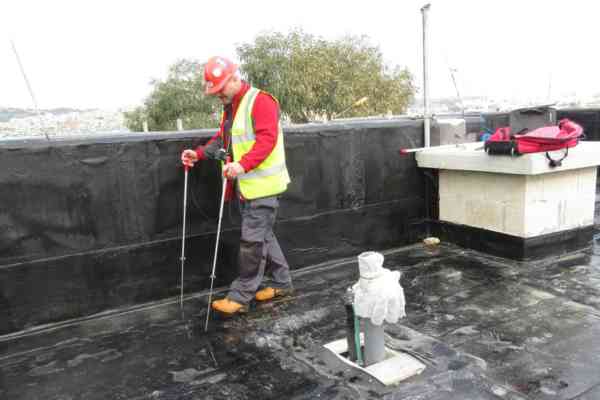

Star Construction INC has worked on roofs across New York City since 2018, and Manhattan’s roofs demand a particular kind of attention. Our roof repair and installation contractors begin every Manhattan job on the roof itself, walking the field, checking seams and flashing lines, and tracing any interior stain back to its entry point before quoting a repair.
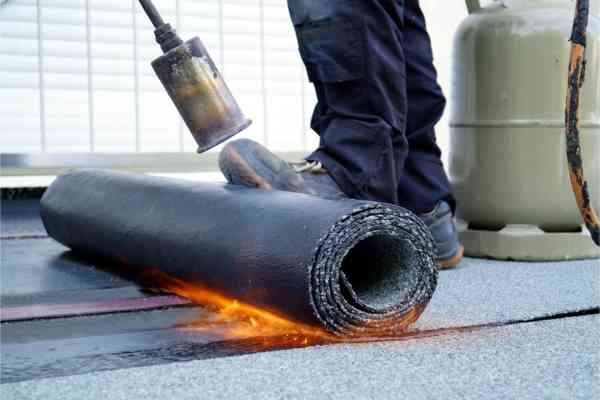
Most of the borough’s roofs are flat, and flat work is where our crews spend most of their time: membrane systems over multi-family and mixed-use buildings, with parapets, bulkheads, equipment curbs and dunnage breaking the field at every turn. Our flat roof installation and repair work covers both targeted repairs — a failed seam, a punctured membrane, a flashing line that has opened — and full replacements where the system has reached the end of its service. When a leak’s source is not obvious, our roof leak detection approach traces water paths methodically rather than guessing, because a leak that appears in a top-floor bedroom may have entered at a parapet two rooms away.
Roof work in Manhattan rarely stands alone: parapet walls are masonry, and where a parapet needs repointing or rebuilding alongside its flashing, we coordinate with our masonry contractors in Manhattan so the wall and the roof edge are repaired as one assembly, not two separate jobs that meet badly at the joint.
Professional roof repair and installation is the work of keeping a building dry from the top down. It starts with diagnosis: walking the roof, checking the membrane or shingles, the flashing lines, the drains and the penetrations, and tracing any interior evidence back to its source before prescribing a fix. Repair means restoring the failed detail — a seam, a flashing, a drain — with materials compatible with the existing system. Installation means replacing a roof that has reached the end of its service life with a complete new system: deck, underlayment or membrane, flashing, and drainage, built to shed water for decades.
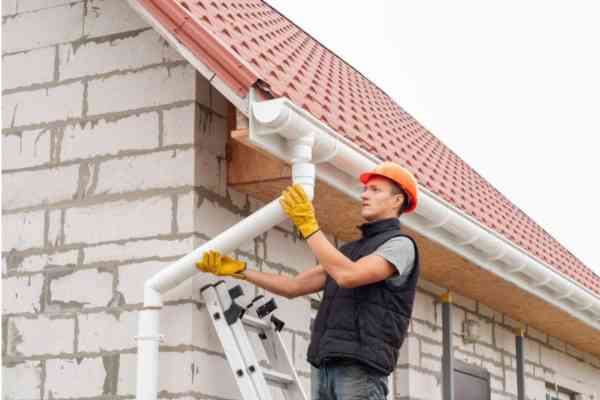
In Manhattan, that work spans two very different roof families. Flat roofs over multi-family and mixed-use buildings use membrane systems — modified bitumen, single-ply, or built-up — where the detailing at parapets, bulkheads and drains matters more than the field itself. Pitched roofs on townhouses use shingle or slate, where valleys, chimneys and eaves are the details that decide whether the roof lasts. A professional contractor judges each roof on its own construction and condition, and says plainly when a repair will hold and when replacement is the honest recommendation. Our new roof installation work and our repair work are both planned that way: inspected first, explained in full, and priced for the system the building actually needs, including gutter and downspout work where drainage is part of the problem.

If your Manhattan building’s roof is leaking, ponding, or simply past the age where patching makes sense, talk to a contractor who starts on the roof and explains what is actually there. Star Construction INC has repaired and installed roofs across New York City since 2018, from townhouse pitches to the flat roofs over the borough’s largest buildings. Request a free, no-obligation estimate and we will inspect, photograph and explain the options — repair, targeted replacement, or a full new system — before any work is quoted. See the full list of areas we serve on our service areas page.
Our clients value the consistency, structural precision, and long-term performance we deliver on every project, from initial planning through final execution.

 Jav V
Trustindex verifies that the original source of the review is Google.
Got my bathroom remodel Team was professional on time Thank you Ever fernando Perez saldañaCrear Word
 LUIS CAYOi hire them for my home project. and everyting went smoothly. no delays
 Shahid IqbalVery reliable contractor. They did exactly what they promised and the quality was excellent. Would definitely recommend.
Contact us now to discuss your project and receive a no-obligation quote from our experts.
Every project is handled through a defined process that ensures accuracy, efficiency, and long-term structural performance from start to finish.
We begin by reviewing site conditions, understanding project objectives, and identifying structural requirements to establish a clear and practical direction before any work begins.
A detailed execution plan is developed, including material selection, sequencing of work, and coordination of labor to maintain consistency and avoid delays during construction.
Work is carried out using proven installation methods, with attention to structural integrity, proper reinforcement, and adherence to safety and quality standards.
A final walkthrough is conducted to verify workmanship, resolve any outstanding details, and ensure the completed project meets performance expectations and durability standards.
Manhattan’s roofs reward a contractor who thinks in systems, not patches. A flat roof over a multi-family building is a membrane, a drainage plan and a set of flashing details working together; a townhouse roof is a pitched surface whose valleys and eaves do the deciding. The benefits below are the places where Manhattan roof work is actually won or lost: the flat field, the parapet and bulkhead junctions, the drains that must keep working through every storm, and the pitched townhouse roofs that still crown so many of the borough’s side streets.
Flat roofs are Manhattan’s default. Walk the roof of almost any pre-war co-op, condo, or mixed-use building in the borough and you will find a membrane field broken by parapet walls, bulkhead enclosures, stair and elevator overruns, vent stacks, and the steel dunnage that carries mechanical equipment. Each of those interruptions is a seam or a flashing line, and each is a place where water can enter if the detail is wrong.
Our flat roof work respects that reality. Repairs target the failed detail — a seam that has opened, a membrane punctured by foot traffic or a dropped tool, a flashing that has pulled away from the wall — and are made with materials compatible with the existing system, so the repair ages with the roof rather than against it. Full replacements, when the membrane is broadly failed or the insulation beneath it is saturated, rebuild the system properly: deck repairs where needed, insulation and tapered falls toward the drains, a new membrane, and fresh flashing at every wall and penetration. Because these buildings are occupied, the work is planned around residents and tenants: access agreed in advance, work areas kept tidy, and noisy or disruptive phases scheduled with the building’s management rather than sprung on it.
Ask any Manhattan roofer where leaks start and the answer is rarely the middle of the roof. It is the edge: the parapet wall where the membrane turns up and must be sealed to masonry, the bulkhead where a stair or elevator enclosure rises through the roof, the vent pipe or conduit that was flashed once and never checked again. These junctions move — the wall and the roof deck expand at different rates — so the flashing that seals them must be detailed to flex, with counter-flashing let into the masonry rather than simply smeared with sealant.
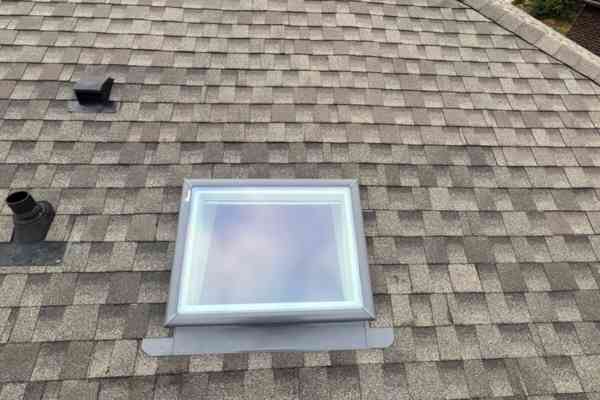
Our roof flashing repair and replacement work rebuilds these junctions properly: old flashing removed, the substrate checked, new flashing installed in layers that shed water outward, and counter-flashing secured into reglets in the wall. Skylights deserve the same care — a skylight is a hole in the roof with a frame around it, and our skylight leak repairs address the curb flashing and the skylight’s own seals rather than caulking over the symptom. Where the parapet masonry itself is failing, we say so plainly and coordinate the masonry repair with the flashing work, because new flashing on a crumbling wall is money spent twice.
A flat roof is not meant to hold water, yet ponding — water still standing days after rain — is one of the most common conditions our Manhattan inspections find. It usually traces to one of three causes: a drain or scupper blocked by leaves and debris, insulation that has settled and created a low spot, or a roof built without enough fall to drain in the first place. Standing water accelerates membrane aging, stresses seams, adds dead load the structure was not designed to carry, and in winter becomes ice that pries at every joint it touches.
The fix depends on the cause. A blocked drain is cleared and, where needed, fitted with a strainer that keeps it clear. A settled low area may be corrected with tapered insulation or a localized rebuild that restores fall toward the drain. A roof with no fall at all needs a proper tapered system at replacement time. Interior drains, scuppers and leaders all get checked as part of the same visit, and where the problem shows up at the edge — overflowing leaders, stained walls below — our gutter and downspout work is planned alongside the roof repair, because the drainage system is one system from membrane to street. On townhouse pitches, the winter version of the same problem is ice damming: meltwater backing up under shingles at the eaves, which is why eave detailing and attic ventilation are part of any pitched-roof conversation in Manhattan.
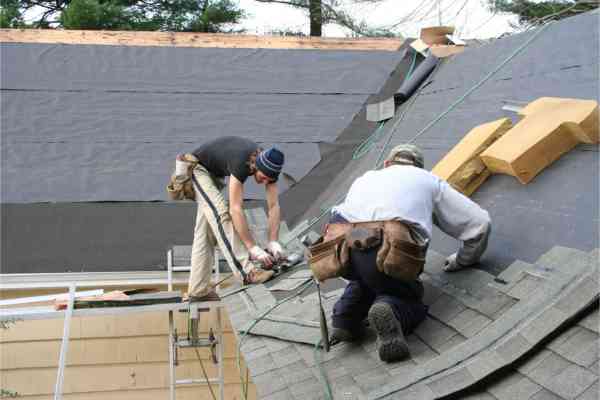
Below the flat roofs, Manhattan’s townhouses carry the borough’s pitched work: brownstones and row houses with slate or shingle slopes, dormers, chimneys and rear extensions whose roofs meet the main slope at valleys that must be flashed, not just shingled over. Pitched work here has its own logistics — access is often through a rear yard or over a sidewalk, materials come up by hoist or by hand, and in landmarked or period streets the replacement material must respect the original appearance, which is why slate is repaired in slate and shingle in shingle wherever the roof allows.
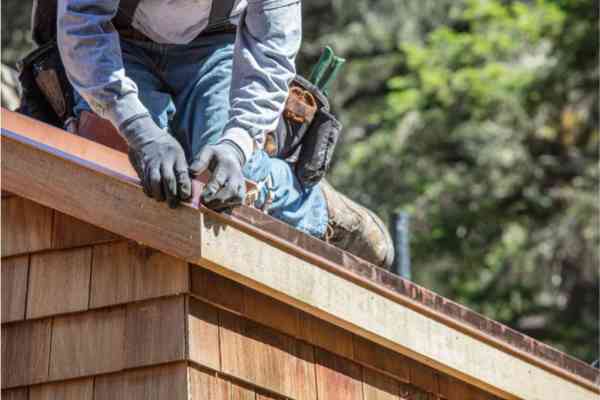
Our shingle roof repair and replacement work covers the pitched stock: missing or wind-lifted shingles, failed valleys, chimney flashing, and the eave and ridge details that decide how a pitched roof weathers. Where a townhouse roof is broadly spent, our new roof installation service rebuilds it completely, including any flat rear-extension roof that drains into the same system, so the townhouse ends up with one coherent roof rather than a pitched front and a neglected back.
Yes — ponding is a warning sign, though it is not always an emergency. Water that still stands on a flat roof days after rain means the roof is not draining as designed. The usual causes are a blocked drain or scupper, insulation that has settled into a low spot, or a roof built without enough fall. Left alone, standing water ages the membrane faster, stresses seams, and in winter turns to ice that pries at joints. The right response is an inspection that finds which cause applies: clearing a blocked drain is a small job, while a settled low area may need tapered insulation or a localized rebuild to restore drainage. What ponding should never get is another coat of sealant over the puddle — that hides the symptom while the water keeps working underneath.
Because that is where the roof stops being a surface and starts being a set of joints. A parapet is a wall meeting a roof deck, and the two move differently with temperature and moisture, so the flashing between them works harder than any other detail on the roof. Bulkheads add more of the same: doors, vents, pipes and curbs, each needing its own flashing, each a potential entry point. The field of a membrane, by contrast, is one continuous sheet with relatively few weak points. That is why a leak investigation in Manhattan starts at the walls and penetrations and works inward — and why so many leaks that appear in the middle of a ceiling turn out to have entered at a parapet or bulkhead and traveled along the deck before dripping through.
It depends on the extent and the cause of the failure. A flat roof with a localized problem — one failed seam, one punctured area, one flashing line — is usually a good repair candidate, and a sound repair can add years of service. A roof needs full replacement when the failure is widespread: the membrane is brittle or split across large areas, the insulation beneath it is wet and no longer insulating, or leaks keep returning in new places after repairs. The honest answer comes from inspection, not from the roof’s age alone: a core sample or moisture survey shows whether the system beneath the surface is dry and sound. Any contractor who quotes replacement without inspecting the roof’s condition, or promises a repair will hold on a saturated system, is guessing — and the building pays for the guess.
It depends on the membrane system, the quality of the installation, and — more than owners usually expect — the drainage and maintenance. A well-built flat roof system that drains properly and gets its drains cleared and its seams checked can commonly serve for two decades or more. A roof that ponds, has blocked drains, or suffers repeated foot traffic and punctures will fail far sooner, whatever the membrane. The honest way to judge a particular roof is by inspection: the membrane’s condition, whether the insulation beneath it is dry, and how the flashing details have held up. Those three answers say more about remaining life than any manufacturer’s headline figure.
In general terms, yes for larger work and often no for small repairs. Like-for-like repairs — replacing a section of membrane, re-flashing a parapet, clearing and repairing a drain — are usually straightforward, though the building’s management and any applicable Department of Buildings requirements still need to be respected. A full roof replacement, structural work, or changes to drainage and roof use generally require DOB permits and filings, and in co-ops and condos the building’s own alteration process runs alongside the city’s. A reputable contractor will tell you before work starts which approvals your particular job needs, rather than discovering it halfway through.