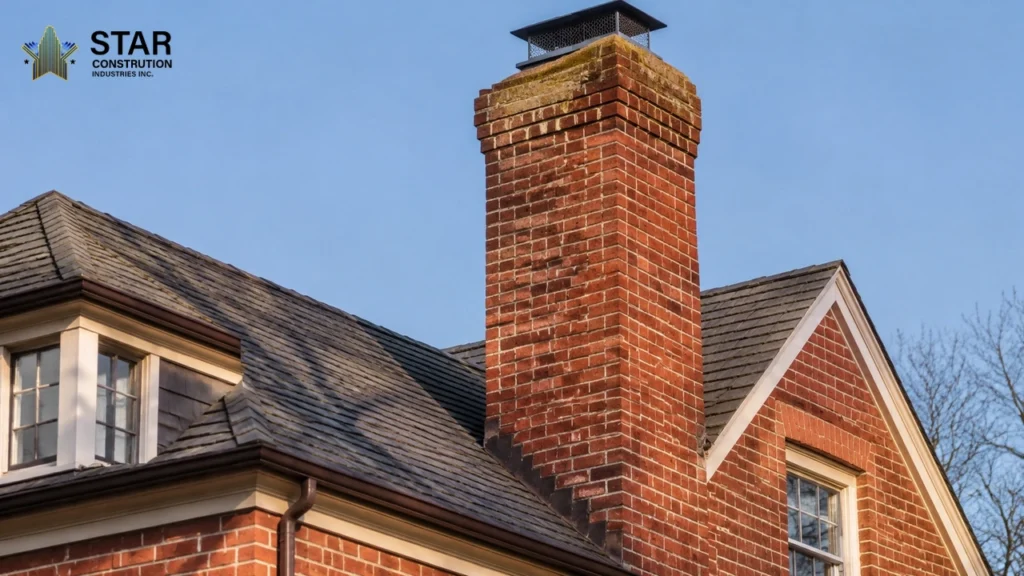
A chimney fails from the top down and from the outside in, and it does most of its failing in winter, when freeze-thaw works the cracks that summer’s rain found. The good news is that a chimney announces its problems early, in plain sight, to anyone who walks across the street and looks up. Here are the seven signs our masons check first — what each one means, how urgent it is, and what the honest repair looks like — so you can read your own stack before the heating season leans on it.
The Top of the Stack: Crown and Flashing Signs
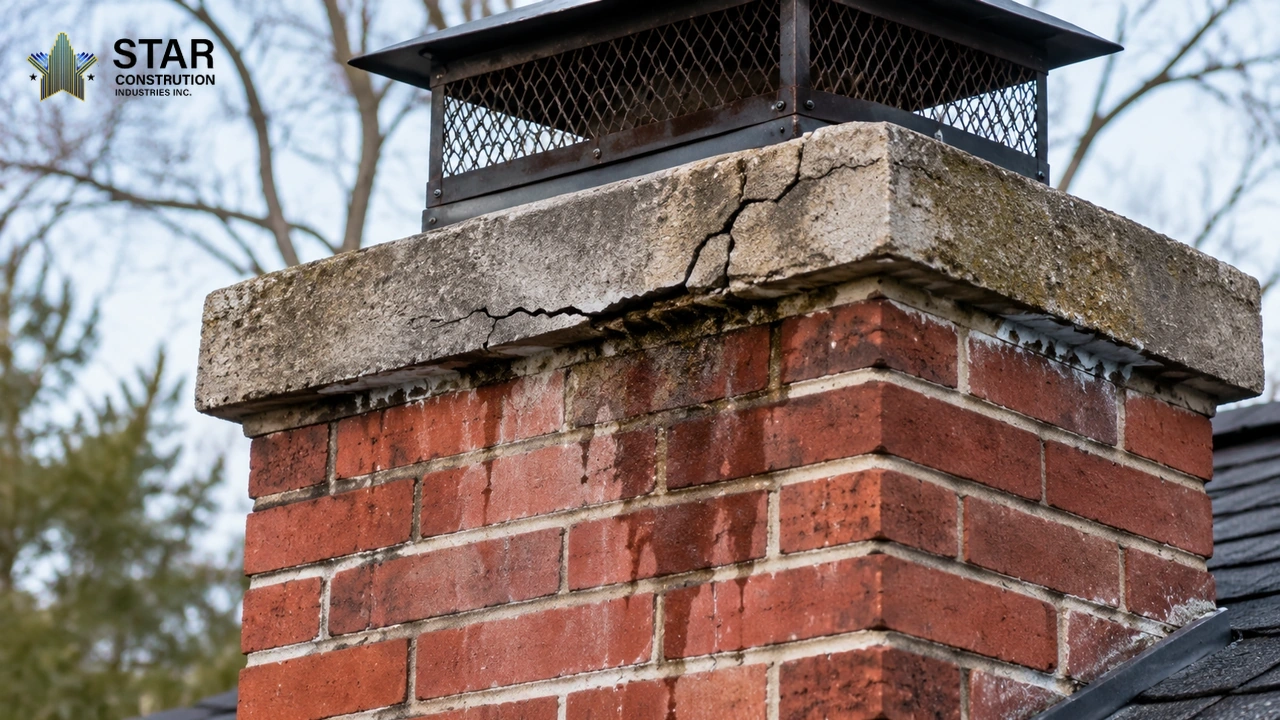
1. A cracked or crumbling crown. The crown is the concrete or stone cap that sheds water off the top of the stack. When it cracks — and unprotected crowns always eventually crack — every rain pours water directly into the masonry core, where it freezes, widens the crack, and starts spalling the bricks below from inside. A cracked crown is the cheapest chimney repair there is and the one whose neglect costs the most: re-crowning, or fitting a proper cap, is a small job compared with rebuilding the top courses the water ruins. 2. Staining or leaks where the chimney meets the roof. Rust streaks below the stack, a ceiling stain in the room beneath, or daylight visible around the flashing line all point to the flashing — the metal work sealing chimney to roof. Flashing fails by lifting, rusting through, or having been sealed with caulk instead of properly stepped into the mortar joints. It is a repair, not a catastrophe — but left through a winter of ice, it rots the roof timbers it was meant to protect.
The Brickwork Signs
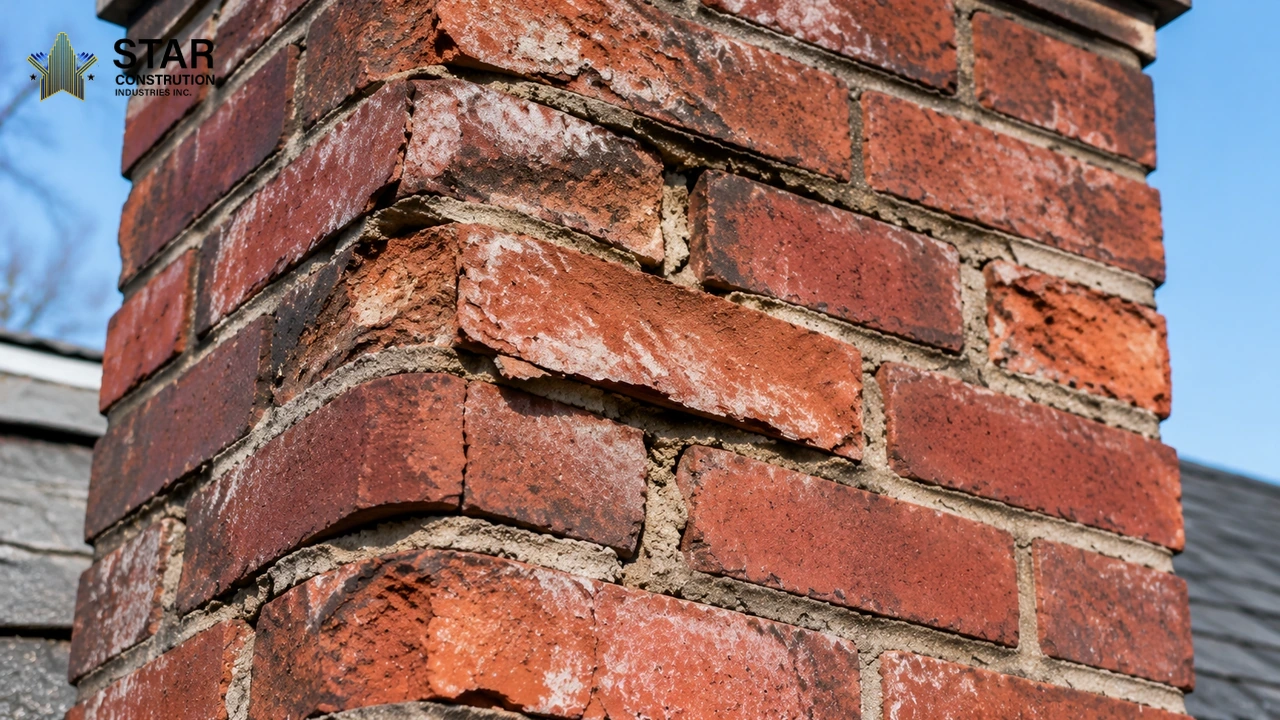
3. Spalling bricks. When brick faces flake, pop or crumble away, water has been freezing inside the brick itself — almost always because failed mortar or a failed crown has been feeding it in. Spalled bricks cannot be patched back to strength; the damaged units are cut out and replaced, and the water source fixed, or the new bricks inherit the same fate. 4. Recessed, cracked or sandy mortar. Mortar is the chimney’s sacrificial layer, and a stack takes weather on all four faces plus the top, so its joints fail years before the same house’s walls do. Joints recessed a quarter inch or more, or mortar that rubs away like sand, mean the stack is drinking rain. The repair is our chimney repair contractors’ daily work: cut out, repack with matched mortar, retool. 5. White staining (efflorescence). That white, salty bloom is water travelling through the masonry and leaving its minerals on the face — a chimney’s way of saying it is wet inside. The bloom itself washes off; what matters is the water path it reports: crown, joints or flashing, in that order of likelihood.
The Structural Signs
6. A leaning or separated stack. A chimney that leans, or has opened a gap where it leaves the house wall, has a footing or a core problem — this one does not wait. A leaning stack is heavy masonry in slow motion, and its repair ranges from underpinning to a partial or full rebuild depending on how far the movement has gone. 7. Pieces in the yard. Brick fragments, mortar chunks or crown concrete found below the stack after a storm are the chimney voting with its parts. Something up there is coming apart, and winter will accelerate it. Our masonry contractors read these signs on houses across the area every autumn — the tall pre-war stacks our masonry contractors in Pelham Manor maintain are textbook cases, sound for a century and then suddenly in need of their top six courses.
What To Do With What You Find
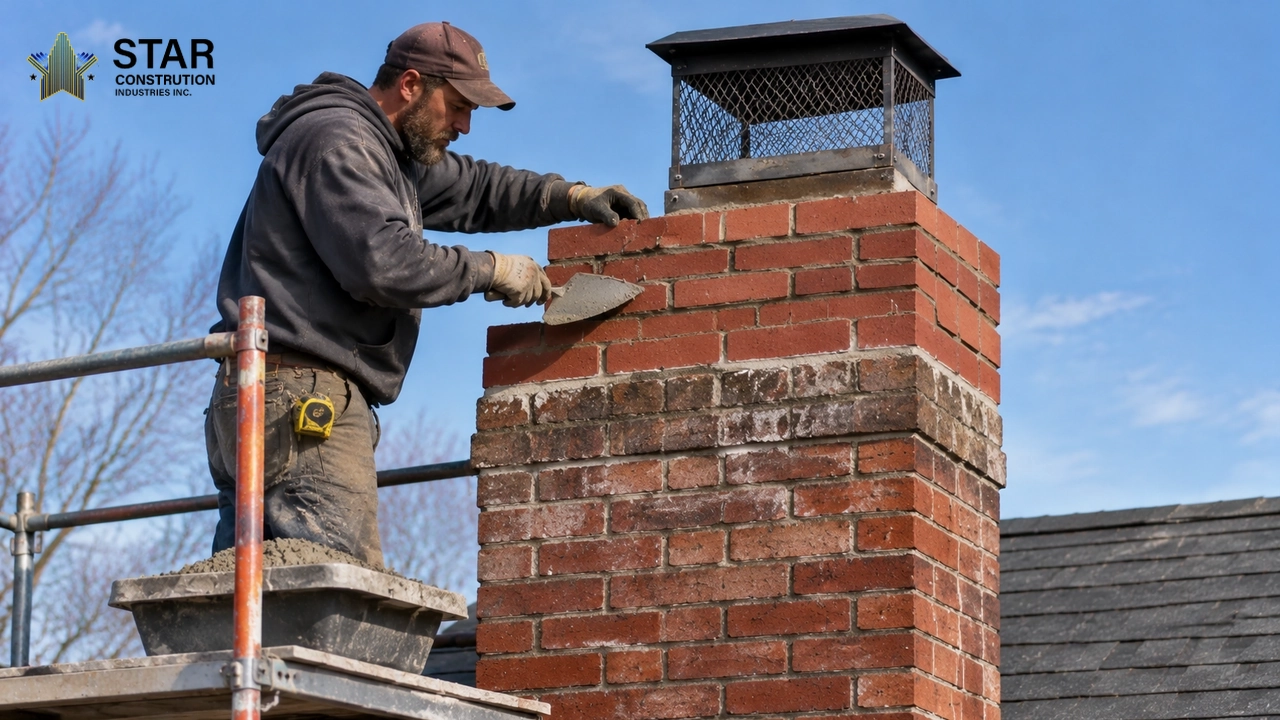
Group the signs honestly. Crown cracks, tired mortar and efflorescence are maintenance — book them before winter and they stay small. Flashing leaks are repairs with a season’s grace at most. Spalling means water has a route in and the route must be closed, not just the bricks swapped. A lean or fallen pieces mean call now and keep the area below clear. Star Construction INC has repaired and rebuilt chimneys across the New York area since 2018; request a free, no-obligation estimate and we will inspect the stack, photograph what we find, and tell you plainly which list your chimney is on. The areas we cover are on our service areas page.
Frequently Asked Questions
How often should a chimney be inspected?
A visual check from the ground every autumn catches most developing problems — crown, joints, flashing lines and any lean. A hands-on masonry inspection is worth booking when you spot any of the signs in this article, when the house changes hands, or every few years on older stacks as routine.
Can a cracked chimney crown just be sealed?
A hairline crack in an otherwise sound crown can be sealed as a holding measure, but a crown that is cracked through, crumbling or flat — holding water instead of shedding it — needs re-crowning. Sealing over a failed crown traps the water already inside the masonry.
Is efflorescence on a chimney dangerous?
The white staining itself is harmless mineral deposit and washes off. What it reports is not harmless: water is moving through the masonry, and until the entry point — usually the crown, joints or flashing — is fixed, freeze-thaw will keep damaging the stack from inside.
When does a chimney need rebuilding instead of repair?
When the damage is structural or widespread: a leaning stack, spalling through many courses, or a core softened by years of water entry. Localised damage — the top courses, one face’s joints, a failed crown — is usually repairable. A mason’s inspection settles which side of the line a stack is on.
Can chimney repairs be done in winter?
Many can — flashing work, caps and urgent stabilisation proceed in most weather — but mortar work needs temperatures that let mortar cure rather than freeze, so deep-winter repointing is often staged: make the stack weather-tight now, complete the mortar work in the first mild spell.