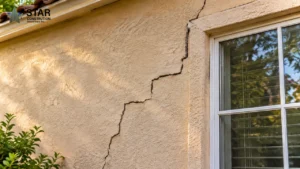
Next time you walk past your building look up at the edge of the roof. See a thin crack in the brick? Maybe a patch of mortar that has crumbled away? Most owners shrug and move on. It’s just a line. It can wait.
Here’s the catch. That thin line is an open door. Rain finds it every time and a little more water gets through with each storm. Every freezing night forces it a little wider. Give it a few winters and a small crack turns into a loose section of wall hanging over a sidewalk.
If you’re searching for cracked parapet wall repair NYC this post will help. I’ll explain why these walls crack and which cracks matter. I’ll also show you what a repair that actually lasts looks like.
What Your Parapet Does All Day
A parapet is the short wall that rises above the edge of your roof. It looks simple. It does a lot of work. It keeps water from running off the roof edge and down the face of the building. It protects the roofing along the perimeter. On many buildings it also acts as a safety barrier for anyone who goes up there.
And because it sits out in the open with weather hitting it from every side it takes more punishment than any other part of your building.
Why Parapet Walls Crack in New York
Most damage comes from water. That’s the short answer. Here’s the longer one.
Freezing and thawing. Water soaks into brick and mortar during the day. At night it freezes and expands. In the morning it melts and the cycle starts over. Do that all winter and the masonry starts to split from the inside.
Open on every side. A regular wall has a roof over it. A parapet doesn’t. Rain and snow hit the top and both faces. That means it has three times the exposure of a normal wall.
Failed coping stones. The cap on top of the wall is supposed to shed water. When a cap stone cracks or shifts or comes loose water pours straight into the middle of the wall.
Old mortar. Mortar doesn’t last forever. After decades it turns sandy and soft. Once the joints open up water gets in everywhere.
Bad flashing. Flashing is the metal or membrane that seals the joint between the roof and the wall. When it fails water slips behind the wall instead of running off it.
Movement. Buildings move a little over time. Roofs swell in summer and shrink in winter. A parapet is tall and thin so it feels that movement more than any other wall.
Which Cracks Are Okay and Which Are Not
Not every crack is an emergency. But you should know the difference.
Thin hairline cracks that don’t run through the brick are usually cosmetic. They still need to be sealed so water can’t use them. But they aren’t a sign the wall is failing.
These are the ones to worry about:
- Cracks that step up and down along the mortar lines like a staircase
- Cracks wider than a pencil line that keep growing
- Bricks that wiggle or sit out of line with their neighbors
- A wall that bulges or leans outward
- White chalky powder on the brick (this means water is moving through it)
- Missing chunks of brick or mortar
- Water stains on the top floor ceiling right below the wall
If you see any of these call someone this week. Not next season.
This Is Also a Safety Issue
I want to be straight with you about this part. A failing parapet doesn’t just leak. Loose brick can fall. And in a city this crowded what’s under that wall is usually a sidewalk full of people.
New York takes this seriously. The city has parapet inspection rules for many buildings and owners are expected to keep walls in safe condition. If you want the details read our guide to Local Law 126 parapet inspections in NYC. You can also check the NYC Department of Buildings to see the current rules.
Here’s the good part. Catching a problem early costs far less than cleaning up after a brick falls.
How Cracked Parapet Walls Get Fixed
Not every wall needs the same fix. A good contractor looks at how bad the damage really is and picks the repair that fits.
Crack sealing
For small cracks in otherwise healthy masonry the answer is often a proper seal. The crack gets cleaned out first and then filled with the right material. This stops water and keeps the crack from growing. See our page on crack sealing and structural gap filling.
Repointing
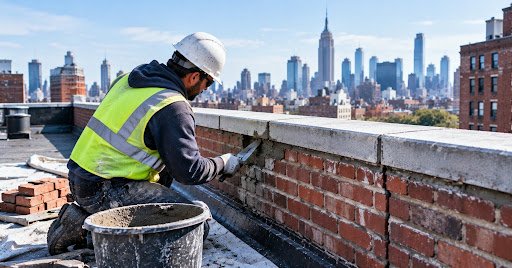
When the mortar between bricks has crumbled it needs to be ground out and replaced with fresh mortar. This is called repointing. It’s one of the most common fixes we do and it makes a huge difference. Learn more about parapet wall repair and repointing.
Coping stone replacement
If the cap stones on top are cracked or loose they have to be reset or replaced. Fixing the wall below without fixing the cap is a waste of money because water will just keep coming in from above. Here’s more on coping stone installation and replacement.
Waterproofing and flashing
You can repair every brick perfectly and still end up with a leak. If water keeps sneaking in around the edges the wall will break down again. New flashing and a good waterproofing layer are what protect it for years. That’s why parapet wall waterproofing and flashing should always be part of the plan.
Rebuilding
Now and then a wall is just too far gone. If the brick is bulging or crumbling or leaning it’s safer to take that section down and rebuild it right. A rebuilt wall will outlast a patched wall by decades. Read about parapet wall demolition and rebuilding.
What a Good Repair Looks Like
You can tell a lot about a contractor by how they work. Here’s what you should expect.
A good contractor looks at everything. The brick. The mortar. The cap on top. The flashing. The spot where the roof meets the wall. They also check for signs of water inside the building. Then they explain what they found in plain words and tell you which repair makes sense.
When the work starts they remove whatever is loose or damaged. They don’t just cover it up. New material goes in using brick and mortar that match the building. The cap gets reset properly. The flashing gets tied into the roof so water has no way around it. When the job is done you should get a walk through with the crew. Ask them what to watch for so you can catch trouble early.
If someone offers to smear sealant over a crack and call it done walk away. That’s a cosmetic fix and it’ll fail.
Mistakes That Cost Owners Money
Painting over the crack. It looks better for a month. Then the paint peels and the crack is back.
Fixing the brick but not the cap. Water will keep coming in from the top and ruin the new work.
Waiting for winter to pass. Freezing weather makes things worse fast. A small crack in October can be a big problem by March.
Choosing the cheapest bid. Low quotes often skip flashing and waterproofing. Those are the parts that make the repair last.
Never inspecting. A quick look once a year catches most issues while they’re small. Our annual inspection and maintenance plans are built for exactly this.
How to Pick a Parapet Contractor
Before you sign anything ask to see their license and insurance. Then ask for the scope in writing. It should say what they will do and which materials they will use and how long it will take. Look for someone with real masonry experience since parapet work isn’t the same as general roofing. And make sure they understand New York buildings. Old brick behaves very differently from new construction.
It also helps to hire a team that does both masonry and roofing. Parapet problems often start where the roof meets the wall. If two companies split the job each one can blame the other. At Star Construction INC we handle parapet wall repair and installation together with masonry and roof repair. One crew handles the whole thing.
Quick Answers to Common Questions
How much does cracked parapet wall repair cost in NYC?
It depends on the size of the wall and how bad the damage is. Sealing a few cracks costs far less than rebuilding a section. The only real way to get a number is to have someone inspect the wall and give you a written quote.
How long does the repair take?
Most projects take anywhere from a few days to a couple of weeks. It depends on how much work is needed and what the weather does.
Can I just seal the cracks myself?
You can buy sealant at a hardware store but the real problem is usually deeper. If water is getting behind the wall a surface patch won’t stop it. Plus working at the edge of a roof is risky. It’s worth getting a pro to look.
Do I need a permit?
Sometimes. Minor repairs often don’t but larger rebuilds can. A good contractor will tell you what your project needs before work starts.
Final Thoughts
A cracked parapet wall won’t fix itself. It also won’t stay small. The longer it sits the more water gets in and the more it will cost to repair.
If you need cracked parapet wall repair NYC or you’ve spotted a crack or loose brick or a stain on your top floor ceiling Star Construction INC is ready to take a look. We serve NYC and Westchester. We’ll inspect the wall and tell you honestly what it needs. You’ll get a clear plan before any work begins.
Call us at +1 516 998 4133 or request your free consultation today.
Repair or Rebuild: How to Decide
The hardest question in cracked parapet wall repair is not how to fix the crack, but whether the wall is worth fixing at all. Repair makes sense when the damage is localized: the mortar has failed but the bricks are sound, a coping stone has cracked but the wall beneath it is plumb, or a short run of bricks has loosened while the rest of the parapet is solid. In those cases, repointing, brick replacement, and new coping restore the wall’s weather resistance without disturbing sound masonry.Rebuilding is the right call when the wall itself has lost its integrity. A parapet that bulges or leans, brickwork that crumbles across a wide area, or a wall that has already been patched more than once and keeps cracking is telling you the problem is structural, not cosmetic. Corroded wall ties, a failed backup wall, or a missing bond between the parapet and the building can all produce cracks that no amount of repointing will hold. A rebuild also resets the clock: new brick, new mortar, new coping, and new flashing installed as one system, rather than a series of repairs layered over a failing base.When the decision is close, the annual parapet observation required by Local Law 126 parapet inspections in NYC can help settle it, because the observer documents the wall’s condition section by section and flags anything unsafe. An owner who already has that report in hand can compare its findings with the contractor’s scope and see whether the proposed work matches the documented damage.
What Cracked Parapet Repair Costs in New York
Costs vary widely with the size of the wall and the extent of the damage, so treat the following only as general New York market ranges, not as any contractor’s quote. Sealing a small number of hairline cracks is typically a minor job, often in the hundreds of dollars. Repointing a parapet section usually runs into the low thousands, depending on how many linear feet of joints need grinding and refilling. Replacing coping stones adds material and labor on top of that, and a partial rebuild of a damaged section commonly runs several thousand dollars. A full rebuild of a long parapet, especially one that needs sidewalk protection and scaffold access, can reach five figures.Access is often the biggest cost variable. A parapet on a low building with easy roof access costs far less to reach than one on a tall building that needs a sidewalk shed, hoisting, and protection for pedestrians below. Other factors include the height and length of the wall, whether matching brick or stone is still available, the condition of the flashing and roof membrane at the parapet base, and whether permits or filings are needed for a rebuild. Getting a scope in writing that separates masonry work, coping, flashing, and access costs makes it much easier to compare bids fairly, and a parapet wall repair and installation contractor can walk the roofline with you and explain which items your wall actually needs.
More Answers to Common Questions
Will the crack come back after repair? It should not, if the repair addressed the cause rather than just the symptom. A crack that was sealed but whose failed coping was never replaced will reopen, because water is still entering from the top. Ask the contractor what caused the crack and what in the scope prevents it from returning.How do I know if my parapet needs rebuilding instead of repointing? Repointing fixes failed mortar; it cannot fix a wall that is out of plumb, bulging, or crumbling through the brick itself. If the wall leans, if bricks move when pressed, or if the same section has been repaired before and cracked again, a rebuild is usually the safer and cheaper long-term choice.Does a cracked parapet affect my Local Law 126 compliance? Yes, in the sense that the annual observation documents the parapet’s condition, and any unsafe condition it finds must be addressed. Repairing a cracked parapet before the observation, rather than after, keeps the report clean and avoids the urgency of an unsafe-condition finding.