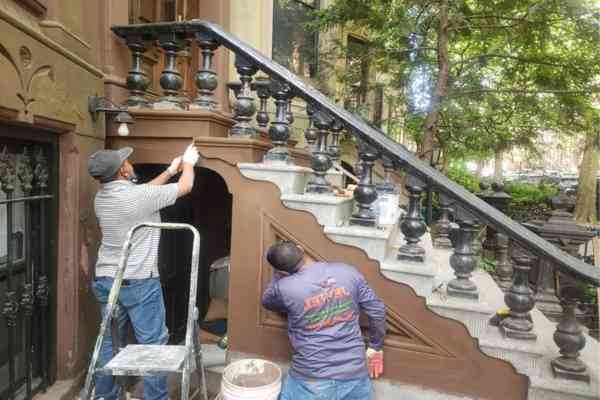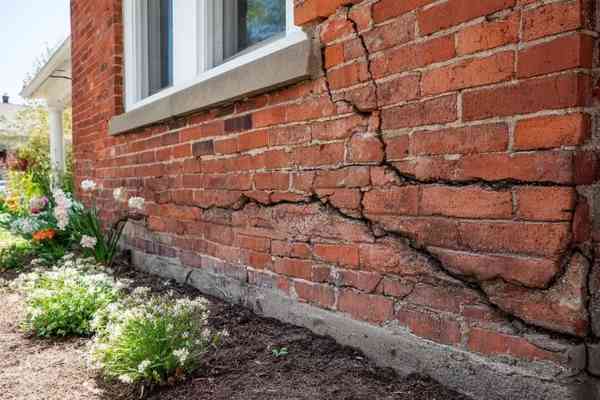
Fresh Meadows wears two skins, and both of them are masonry. The neighborhood’s single-family homes are brick — solid, handsome, and now old enough that their mortar joints are opening grain by grain — and a great many of them wear stucco too, on garden apartments and later homes, in finishes laid down when the neighborhood was built. Both skins fail the same slow way: water finds the crack, the joint or the failed flashing, and each winter widens it a fraction further. Both also punish the wrong repair — hard modern mortar against soft old brick, a cement patch smeared over stucco that needed its coats rebuilt. Our brick and stucco contractors in Fresh Meadows repair in each material’s own tradition, matched to the original finish. Request a free, no-obligation estimate and we will inspect the walls and tell you honestly what is surface and what is structure.
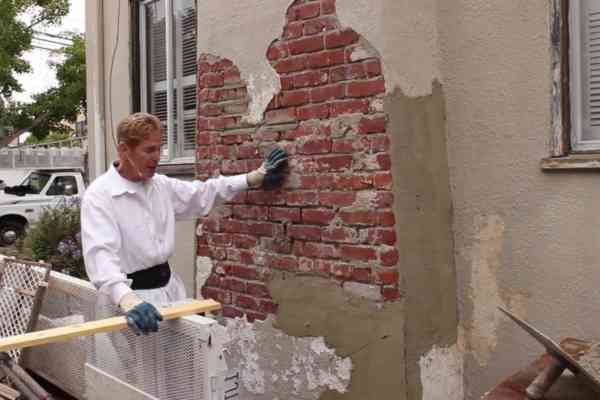
Our brick and stucco work in Fresh Meadows covers the neighborhood’s two masonry traditions side by side: brick repair and repointing on the single-family homes and garden apartments, and stucco repair and refinishing on the many stucco homes among them. The parent service — brick and stucco contractors in New York — sets the standard we work to: matched mortar, rebuilt coats, and no shortcuts that trade a tidy year for the wall’s fabric. Where brick and stone meet on the same elevation, our masonry contractors in Fresh Meadows keep the materials consistent across the whole property.
Brick and stucco are the two faces of masonry construction. Brick is laid as structure or as veneer: individual units bedded in mortar, with the mortar joint doing much of the weatherproofing and all of the visual work. Stucco is a plaster skin — traditionally three coats (scratch, brown and finish) over masonry or lath — textured by hand and tinted through, so the finish is the material rather than a coating on it. Both systems breathe: they take in small amounts of moisture and give it back, which is why the repair material matters as much as the repair itself. Hard, impermeable patches on either system trap water behind them and move the damage into the brick or the coats beneath.

If you are searching for brick and stucco contractors near you in Fresh Meadows, start with the wall itself: step back and look at the joints, the stucco field and the sills, and note where the damage concentrates — that pattern usually names the cause before anyone climbs a ladder. Then talk to a contractor who will name the material, the mortar and the coats before quoting a price. The areas we serve include Fresh Meadows and the surrounding Queens neighborhoods. Star Construction INC has worked on brick and stucco across New York since 2018; request a free, no-obligation estimate and we will read your walls with you, element by element.
Our clients value the consistency, structural precision, and long-term performance we deliver on every project, from initial planning through final execution.

 Jav V
Trustindex verifies that the original source of the review is Google.
Got my bathroom remodel Team was professional on time Thank you Ever fernando Perez saldañaCrear Word
 LUIS CAYOi hire them for my home project. and everyting went smoothly. no delays
 Shahid IqbalVery reliable contractor. They did exactly what they promised and the quality was excellent. Would definitely recommend.
Contact us now to discuss your project and receive a no-obligation quote from our experts.
Every project is handled through a defined process that ensures accuracy, efficiency, and long-term structural performance from start to finish.
We begin by reviewing site conditions, understanding project objectives, and identifying structural requirements to establish a clear and practical direction before any work begins.
A detailed execution plan is developed, including material selection, sequencing of work, and coordination of labor to maintain consistency and avoid delays during construction.
Work is carried out using proven installation methods, with attention to structural integrity, proper reinforcement, and adherence to safety and quality standards.
A final walkthrough is conducted to verify workmanship, resolve any outstanding details, and ensure the completed project meets performance expectations and durability standards.
Reading the Wall — Fresh Meadows’ brick and stucco, and what each failure asks of a repair.
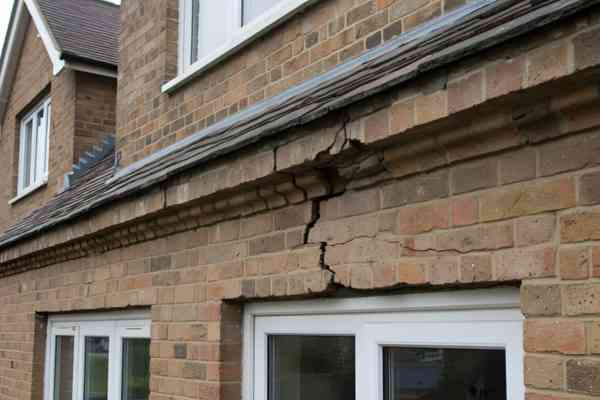
Brick fails at its joints first. Mortar is the sacrificial layer of a brick wall — softer than the units, meant to weather away over decades so the brick survives — and on Fresh Meadows’ single-family homes and garden apartments, a century of weather has now opened many of those joints. Our brick pointing and repointing work cuts the failed mortar out to a sound depth and packs in fresh mortar matched to the original in strength, sand and color, so the repair reads as the wall’s own and stays the sacrificial layer. Where a unit itself has cracked or spalled, brick crack repair and replacement swaps the damaged brick rather than patching over it — a patch on a cracked unit hides the failure for a season and then fails with it.
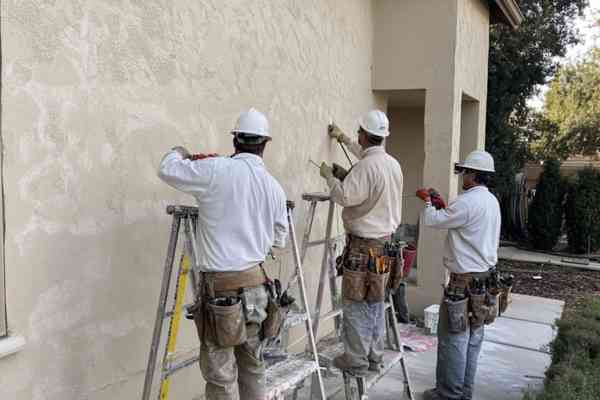
Stucco fails differently: it cracks, drums hollow where it has lost its key, and stains where water has traveled behind it. Small hairline cracks in an otherwise sound field are often cosmetic and can be sealed; drummy sections and wide, stepped cracks say the coats have detached or the substrate is moving, and those sections need to come off and be rebuilt in their coats rather than skimmed over. Our stucco repair and application work rebuilds the scratch, brown and finish coats where they have failed, and stucco skim coating and refinishing gives a sound but tired field a fresh, even finish coat matched to the original texture. The texture is the hard part — a smooth patch on a dashed or sand-float finish reads from the street, so the finish is matched, not approximated.
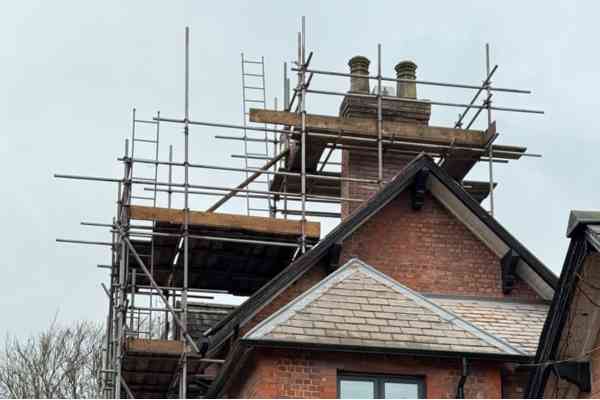
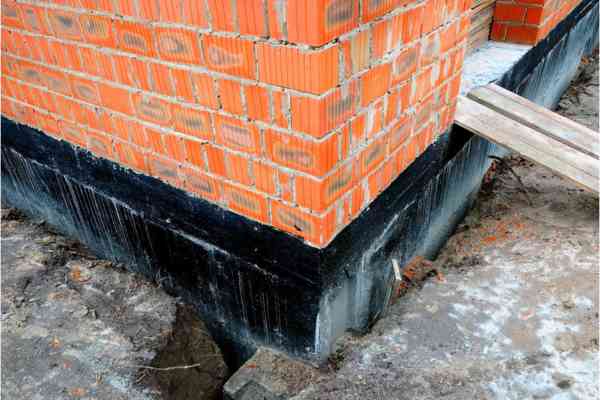
Most brick and stucco damage starts where water concentrates: at the sill, the lintel and the chimney. A stone or concrete sill that has cracked or lost its drip edge sends water straight into the wall below it; a steel lintel that has rusted jacks the brickwork above it apart, course by course; a chimney crown that has cracked pours water into the stack and down the wall it serves. Our lintel and shelf angle repair work addresses the rust and the bearing before repointing the disturbed courses, and exterior waterproofing for masonry keeps ground-level water out of the base of the wall rather than letting it wick upward. Where the chimney is the source, chimney repair and rebuilding closes the crown and the joints so the wall below it stops being watered from above.
Not every stucco-looking wall in Fresh Meadows is traditional stucco. Later homes and additions often wear EIFS — an exterior insulation and finish system, a foam-backed synthetic skin that looks like stucco but behaves differently: it does not breathe the same way, it fails at its seals and terminations rather than in its coats, and it is repaired with its own system materials rather than cement plaster. Our EIFS stucco systems work treats that distinction seriously, because the wrong repair on either system — cement over foam, or a synthetic patch over traditional coats — fails quickly and expensively. Our comparison of EIFS vs stucco lays out how to tell which system your home wears and what each one honestly needs.
It depends on the crack. Fine hairline cracks in the finish coat are usually cosmetic — the stucco moving with the seasons — and can be sealed and monitored. Cracks that are wide, stepped, growing, or accompanied by a hollow, drummy sound when tapped say the coats have detached or the wall behind them is moving, and those need investigation before they are patched. Water staining around a crack is a further warning: it means water is already traveling behind the finish. When in doubt, have the wall read before it is repaired — patching a structural crack cosmetically only hides it for a season.
Usually, yes — and matching is most of the craft. For brick, the mortar is matched in strength, sand, color and joint profile, and replacement units are chosen to sit with their neighbors rather than stand out from them. For stucco, the finish coat is matched in texture — sand-float, dash, smooth — and tint, since a smooth patch on a textured field reads from the street. An exact match on a century-old wall is not always possible, because the original has weathered, but a good repair disappears into the elevation rather than announcing itself.
Painted stucco can usually be recoated, provided the paint is sound and the coats beneath it are solid. The preparation is the work: loose or peeling paint is removed, cracks are addressed rather than painted over, and the new coating is chosen to breathe — a heavy impermeable paint over stucco traps moisture and pushes the finish off from behind. Where the paint is failing across wide areas or the stucco beneath it is drummy, the failed sections are better stripped and rebuilt in their coats before any new finish goes on.
Traditional three-coat stucco, properly applied and kept dry at its details, is a very long-lived finish — many decades, and on well-kept homes longer than the other systems around it. What shortens its life is water: failed flashing, cracked sills, ground contact at the base of the wall, and coatings that trap moisture. A stucco wall that is inspected now and then, with its cracks sealed and its details kept sound, rarely needs more than a fresh finish coat in a generation.
In New York City, like-for-like repairs — repointing, patching, recoating — usually proceed without a permit, while structural changes, alterations to the facade’s appearance on certain buildings, or work that changes the wall’s construction generally require DOB permits and coordination. The exact requirement depends on the scope and the building. A contractor should confirm what the job needs before work starts, and the estimate should say plainly whether permits are part of the plan.