Jerome Park’s brick and stucco are the neighborhood’s two skins, and they age differently. Brick — laid as structure on the pre-war apartment buildings, with limestone sills and terra-cotta panels — fails at its joints: mortar washed out grain by grain, units spalled where a hard modern patch trapped moisture against soft old brick. Stucco — over masonry on some buildings, over wood lath on others — fails at its bond: hairlines that admit water, patches gone drummy where the coats separated from the wall behind them. Both punish the generic repair, and both reward the repair made in the material’s own tradition. Star Construction has repaired brick and stucco across the New York area since 2018, and our brick and stucco contractors bring that discipline to Jerome Park: inspect first, match the material second, and never sell a coating to hide a failure that needs rebuilding.
The inspection is the job’s first half. We read each elevation the way the building’s own mason would: joints by joint on the brick, sounding the stucco for hollow patches, tracing every stain back to the sill, lintel, or flashing line that let the water in. Only then do we price — pointing where pointing is enough, unit replacement where a brick has finished, stucco rebuilt in its coats where a patch would only fail again. For the wider masonry picture on a Jerome Park building — parapets, chimneys, and retaining walls alongside the brick and stucco — see our masonry contractors in Jerome Park, who handle the same walls at the same standard.
What owners notice, once the work is done properly, is how little of it shows. Matched mortar disappears into the joint; matched stucco texture reads as the wall’s own finish; a rebuilt lintel carries the brick above it without announcing itself. That invisibility is the point. A brick or stucco repair that draws the eye has failed at the one thing it was hired to do — to return the building to the elevation its builder drew, and to keep the weather out of it for another generation.
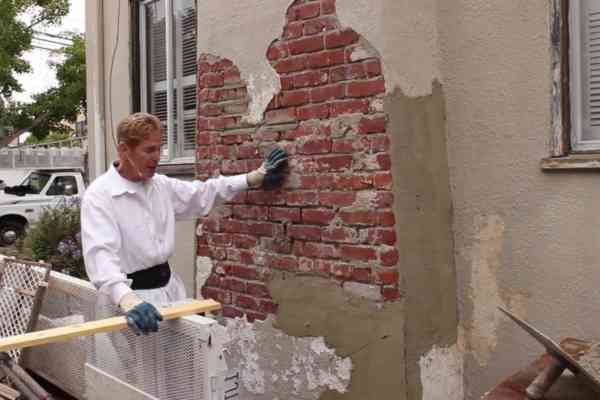
Brick and stucco are the two masonry skins that cover most of Jerome Park, and they are built on opposite principles. Brick is a unit material: thousands of fired clay units laid in mortar, each joint a small expansion gap and each wall a structure in its own right. Its repair is the repair of its joints and its units — cut out the failed mortar, pack in mortar matched to the original in strength and color, replace the units that have spalled past saving. Stucco is a coating material: layers of cement plaster, traditionally three coats over masonry or wood lath, finished in a texture chosen when the building was built. Its repair is the repair of its coats and its bond — cut back to sound material, rebuild the coats in order, and re-create the texture so the patch reads as the wall’s own finish.
The two materials share one enemy: water that gets behind the face. On brick, it enters through failed joints and failed flashing, then freezes in the joint beds and widens them a fraction each winter. On stucco, it enters through hairline cracks and failed sealant joints, then sits between the coats and the wall, drumming the finish loose from the inside. That is why a brick or stucco contractor’s first question is never ‘what do you want it to look like’ but ‘where is the water coming from’ — because a beautiful repointing over an unflashed lintel, or a smooth stucco patch over a wall that is still wet behind, is a repair that will fail on schedule. Our brick pointing and repointing crews and our stucco repair crews work from the same rule: stop the water first, then repair the face it damaged.
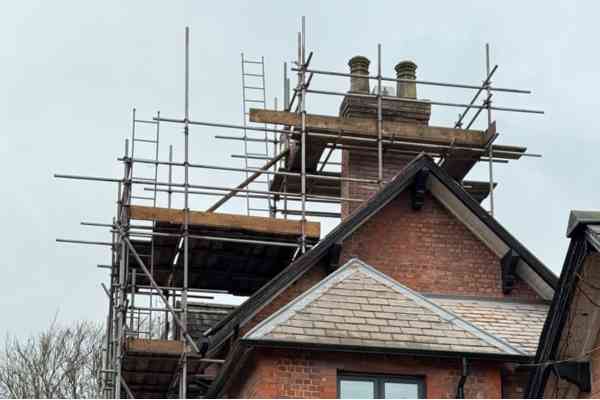
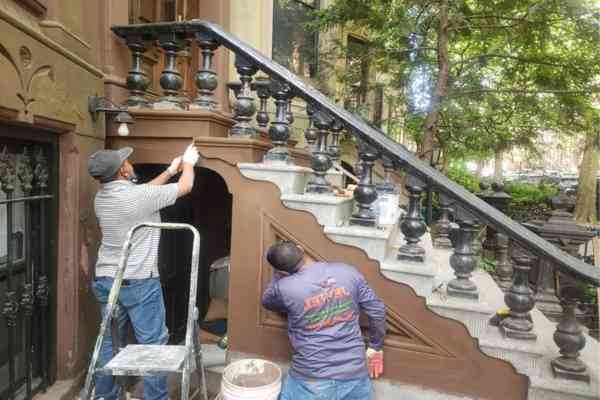
Jerome Park adds its own wrinkle to both materials: the neighborhood’s buildings are tall, and their brick and stucco rise several stories above sidewalks that never stop moving. A repair at the fourth floor is not a ladder job; it is a scaffold, a sidewalk shed, and a schedule that respects the building’s tenants. Our crews stage that work the way the buildings require — safely, with the sidewalk protected and the entrance kept open — because a masonry repair that closes a building’s front door has already failed its first test.

If your Jerome Park building’s brickwork is opening at the joints, or its stucco is cracking, drumming, or staining at the sills, the honest next step is an inspection from the scaffold, not a quote from the sidewalk. Our crews read the wall up close — joints, units, coats, flashing lines — and tell you plainly which repairs are surface, which are structural, and which can wait a season without getting worse. No coating sold to hide a failure; no rebuild sold where a repointing will do.
We work the way multi-family buildings require: staged access, protected sidewalks, entrances kept open, and schedules coordinated with building management so tenants are disrupted as little as a scaffold allows. Whether the job is a single elevation’s repointing, a stucco section rebuilt in its coats, or a full facade’s brick and stucco restored together, the approach is the same — matched materials, honest scope, and a finish that holds through Bronx winters. See the full list of neighborhoods we serve on our service areas page, and request a free, no-obligation estimate from Star Construction INC today.
Our clients value the consistency, structural precision, and long-term performance we deliver on every project, from initial planning through final execution.


 Trustindex verifies that the original source of the review is Google.
 Trustindex verifies that the original source of the review is Google.
 Trustindex verifies that the original source of the review is Google.
 Trustindex verifies that the original source of the review is Google.
Contact us now to discuss your project and receive a no-obligation quote from our experts.
Every project is handled through a defined process that ensures accuracy, efficiency, and long-term structural performance from start to finish.
We begin by reviewing site conditions, understanding project objectives, and identifying structural requirements to establish a clear and practical direction before any work begins.
A detailed execution plan is developed, including material selection, sequencing of work, and coordination of labor to maintain consistency and avoid delays during construction.
Work is carried out using proven installation methods, with attention to structural integrity, proper reinforcement, and adherence to safety and quality standards.
A final walkthrough is conducted to verify workmanship, resolve any outstanding details, and ensure the completed project meets performance expectations and durability standards.
Professional brick and stucco work pays for itself in the ways that matter on a multi-family building: a facade that stays weathertight instead of admitting water year after year, a repair that matches instead of announcing itself, and a wall whose next major repair is a generation away rather than a season. The benefits below are the ones Jerome Park owners actually see — in the elevation, in the apartments behind it, and in the maintenance budget.
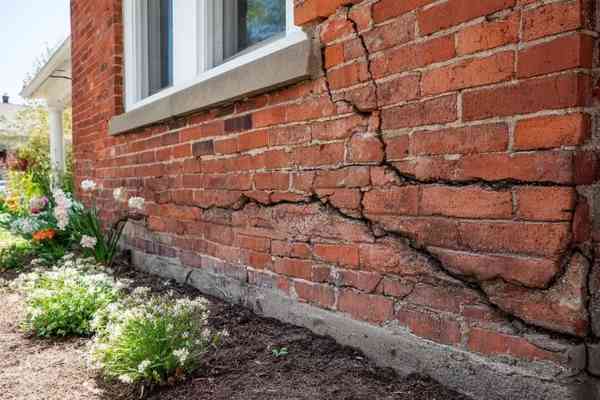
Jerome Park’s apartment buildings wear their brick as structure, not decoration: load-bearing walls, several stories tall, with limestone sills and terra-cotta panels set into the field. The failures are the failures of age and exposure — mortar joints washed out by decades of wind-driven rain, individual bricks spalled where a hard patch trapped moisture, and lintels rusting quietly above the windows. Our brick crack repair and replacement work starts with the mortar: lime-rich mixes matched to the original, so the joint stays the sacrificial layer and the brick stays the structure. Units too damaged to save are cut out and replaced with brick matched in size, color, and texture — not the nearest brick from a yard, but the right one.
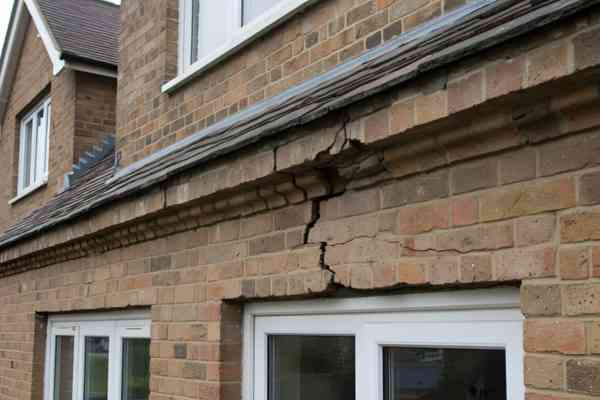
Lintels deserve their own attention, because a rusting steel lintel does not announce itself politely. It expands as it rusts, jacking the brick above it into stepped cracks that owners often mistake for settlement. Our lintel and shelf angle repair crews treat the cause — clean, prime, and protect the steel, or replace the angle where it has thinned past saving — before repointing the brick it carries. And where a building’s chimneys rise above the roofline, our chimney repair and rebuilding crews handle the stacks at the same standard, because a chimney is simply the building’s brick at its most exposed.
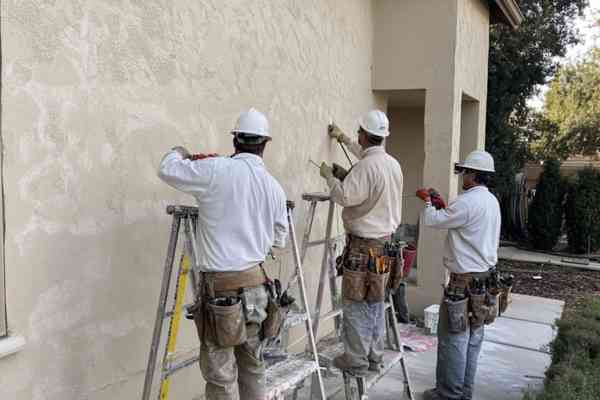
Stucco in Jerome Park sits on two very different substrates, and the substrate decides how it fails. Over masonry, stucco is bonded directly to brick or block; its failures are usually at the surface — hairline cracking from movement, or a patch that delaminated because it was applied over a dirty or painted base. Over wood lath, stucco hangs on a nailed framework, and its failures run deeper: water that gets behind the coats rots the lath, and the finish goes drummy in sheets rather than lines. Our stucco skim coating and refinishing crews diagnose the substrate before they price, because the same crack means a skim coat on one wall and a rebuild on the other.
Texture is the second half of a stucco repair, and it is where most cheap work gives itself away. A period stucco finish — smooth, sand, dash, or the heavier textures on the neighborhood’s older homes — was applied by hand, and a patch that does not match it reads as a scar from the sidewalk. We match the finish by building it the same way: same coats, same aggregate, same trowel work, tested on a sample area before the wall is touched. The result is a repair that disappears into the elevation, which is the only kind of stucco repair worth paying for.
Almost every brick or stucco failure in Jerome Park starts at the same two places: the sill beneath a window and the lintel above it. A sill that has lost its pitch, or whose joints have opened, sends water into the wall below the window instead of shedding it; a lintel whose flashing has rusted through lets water into the brick above it, where it freezes and spalls the face. The stains that appear inside — a damp patch below a window, a ceiling mark near an exterior wall — are usually reporting one of these two details, rooms away from where the water actually entered. That is why our inspections start at the openings: sills re-pitched and re-pointed, lintels flashed and protected, and the wall below them allowed to dry before any cosmetic repair is attempted.
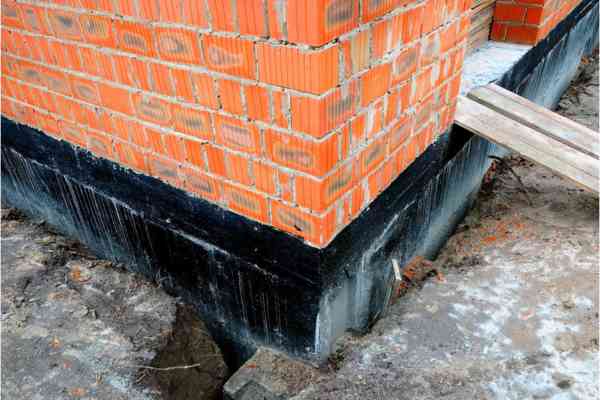
Waterproofing, done properly, is the quiet partner of every brick and stucco repair: not a coating smeared over the face, but the flashing, sealant joints, and drainage details that keep water out of the wall assembly in the first place. Our exterior waterproofing for masonry work treats the wall as a system — sill, lintel, joint, and parapet edge together — because sealing one joint while the lintel above it still leaks is how the same stain returns next winter. Where a wall’s water problem is at the roof edge rather than the window, the same logic applies: fix the entry, then repair the face.
Owners of later Jerome Park buildings — additions, rear extensions, and homes built after the pre-war stock — often ask whether their stucco is really stucco, or EIFS, the synthetic system that looks like stucco but behaves differently. The distinction matters for repairs: traditional stucco is a hard, breathable cement coating, while EIFS is a foam-backed system whose water management depends on its sealant joints and drainage plane. Patching one with the other’s methods fails. Our crews identify the system first — a sounding test and a look at the wall’s edge details settle it — and then repair in kind, or explain honestly when a wall’s system has reached the point where sectional replacement is the cheaper sentence.
For the full comparison — what EIFS is, where it performs well, and where traditional stucco is the better call — see our EIFS vs stucco guide. The short version is the same rule that governs everything on this page: match the material, respect the system, and never let a coating hide a wall that is still taking water.
It depends on the crack, and the honest answer starts with what kind of crack it is. A hairline crack — thin, stable, and not growing — is usually the stucco’s normal response to a building’s movement, and it is sealed and monitored rather than rebuilt. A crack that is widening, one that runs in a stair-step through the coats, or a crack with a hollow, drummy sound when tapped is reporting something else: water behind the finish, a failed bond, or movement in the wall itself. Those cracks are serious in the sense that they will get worse if the cause is not fixed, even though the wall is rarely in immediate danger. A mason’s inspection settles which kind yours is — and a crack that is growing should be looked at before the next winter, not after it.
Because the mortar is the wall’s sacrificial layer, and on a pre-war building it was designed to be softer than the brick. Old brick is relatively soft and porous; it moves with the building and breathes moisture out through its joints. A modern, hard cement mortar does neither — it traps moisture in the brick, forces freeze-thaw damage into the brick faces, and causes spalling that a softer mortar would have absorbed in the joint instead. The repair that looks tidiest on day one — a hard, gray, perfectly tooled joint — is often the repair that destroys the brick within a decade. Matching the original mortar in strength, sand, and color is not a cosmetic nicety; it is the decision that determines whether the wall survives its next fifty winters or spends them shedding its face.
Usually, yes — and the match is made by sampling, not by guessing. For brick, we match the unit’s size, color range, and texture, and the mortar’s sand, color, and strength, testing a sample panel against the existing wall before the repair begins. For stucco, we match the coats and the finish texture the same way, building a sample patch and comparing it in daylight. A perfect match is not always possible where the original brick came from a quarry or kiln that no longer operates, but a close match that weathers in with the wall is achievable in nearly every case — and a contractor who promises an invisible match without testing a sample first is promising more than the material allows.
Traditional three-coat stucco, kept dry and maintained, is a century material — Jerome Park’s own pre-war stucco is the proof, still serviceable after generations when its flashing and sealant joints were kept up. What shortens its life is water: a failed flashing, an unsealed joint, or a coat applied over a wet wall can cut decades off the finish, because water behind stucco does its damage out of sight. The maintenance that preserves it is modest and regular — re-seal the joints when they open, re-point the sills, and recoat the finish when it chalks or thins — and a stucco wall maintained that way is typically re-coated, not replaced, when its finish finally tires.
Like-for-like brick or stucco repair — repointing, patching, and refinishing in the same materials — usually proceeds without a separate permit, though work on a multi-family building often still needs the building’s own approvals and, for scaffold work, the city’s sidewalk and scaffold permits. Structural changes, such as rebuilding a wall section, replacing a lintel, or altering an opening, generally involve the Department of Buildings approval process. The rule of thumb is simple: if the work changes the structure or the opening, plan for permits; if it restores the existing wall in kind, the paperwork is usually lighter. We scope permits as part of the job, not as a surprise after it starts.