Most property owners call masonry contractors NYC has to offer only after something breaks. A brick falls off a ledge. Stucco peels off in sheets. A dark stain shows up under a window and nobody knows why.
The wall warned you first. Brick and stucco do not fail overnight. They crack and stain and sound hollow for a year or two before they give out.
Below are seven warning signs and a few questions to ask before you hire. If your building needs both brick and stucco work read about our brick and stucco contractors in New York. Want the bigger picture? See our masonry contractors nyc page.
Warning Signs on Brick Walls
Stand on the sidewalk and look up. Then step up close. The joints between the bricks are where trouble starts.
Cracked Bricks and Crumbling Mortar
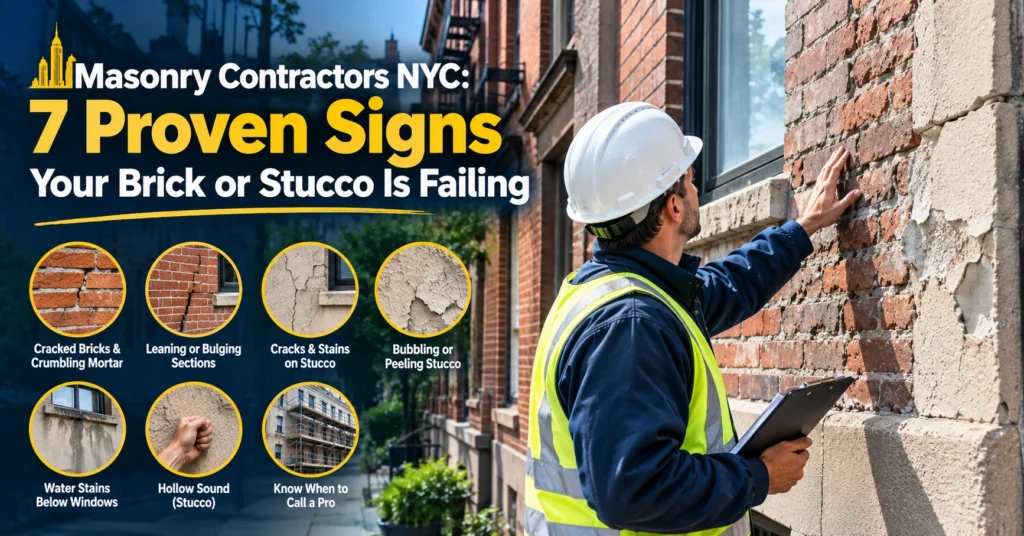
Sign one is crumbling mortar. Push a key into a joint. If it sinks in or the mortar turns to sand the joint is done. Fresh mortar fixes it and the job is called brick pointing.
Do not patch it with whatever is in the garage. New mortar has to match the old in strength and color. The wrong mix can damage the bricks around it.
Sign two is a cracked or loose brick. You do not have to redo the whole wall. A crew can cut out one bad brick and set a new one in. That is how our brick crack repair works.
Why Failed Joints Let Water In
Water goes for the mortar first. Once a joint opens rain gets in and stays behind the brick. Come winter that water turns to ice. Ice swells and shoves the brick out of place.
Flashing and tight joints stop the water before it gets that far. That is what our exterior waterproofing for masonry work is about.
Fix the joints early and the bricks survive. Wait and you pay for both.
Leaning or Bulging Sections Above Windows
Sign three is the one to take seriously. Look at the brick over every window and door. A crack that zigzags like stairs is bad news. So is a row of brick that dips in the middle. The steel beam holding it up may have rusted or shifted.
Brick sitting on a bad beam can move. Do not wait on this one. Call a crew this week. Our lintel and shelf angle repair team handles it.
Warning Signs on Stucco Walls
Stucco is a coating. It keeps weather out of the wall behind it. When it fails the damage stays hidden until it gets big.
Cracks and Stains Below Windows
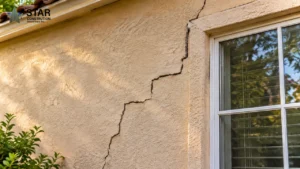
Sign four is cracking. Hairline cracks show up on most stucco and many are harmless. A crack you can catch with a fingernail is different. So is one that runs a long way across the wall.
Skip the paint. It hides the crack for a month and the water keeps coming in.
Sign five is staining. Dark streaks under a window or near the ground mean water is soaking in behind the finish.
Sign six is bubbling or peeling. The stucco has lost its grip. The next big storm will pull off more.
How to Spot Hollow Stucco by Tapping
Sign seven only needs your knuckle. Knock lightly on the wall in a few places. Good stucco gives a flat thud. Loose stucco sounds hollow like a drum.
A drum sound means the stucco has let go of the wall. Small spots can be patched. A big hollow area usually has to come off and go back on.
Stucco goes on in coats and each coat has to dry before the next one. That is why big jobs take longer than people expect. Read more on our stucco repair page.
When to Call Masonry Contractors NYC Property Owners Trust
Spotted two signs or more? Call someone this month. Freeze and thaw does its worst work from December to March. One more winter will not help.
Does your building stand taller than six stories? Then the city wants a façade inspection every five years. The DOB filing instructions explain the rules. Your contractor should already know them.
What Masonry Contractors NYC Crews Check Before Any Repair
A real inspection does not stop at the crack in front of you. The crew studies the mortar and the brick. They tap the stucco to see if it is still attached and they look at what sits underneath.
Then they work out why it failed. It could be trapped water or movement or bad flashing or just age. The cause decides the fix. A contractor who skips this step is guessing.
Questions to Ask Masonry Contractors NYC Before You Sign
Ask how the crew will match your mortar color and stucco texture. Patches that stand out look cheap and can stress the wall around them.
Ask what caused the damage. Check that the quote names each area and each material. Ask how long each stage runs and what keeps your property safe in the meantime.
Then get it all in writing.
Repair or Restore: How the Decision Gets Made
One damaged spot usually means a small repair. Cracks that spread across the wall or a base that crumbles under your finger call for more.
Brownstones and older fronts are trickier because the new work has to blend with the original. That work is called façade restoration.
What Changes the Price and the Timeline
Nobody can price a wall they have not seen. Three things move the number. The size of the damaged area. The brick or stucco needed to match what is already there. And what the wall looks like underneath once the old layer comes off.
Access and Scaffolding Costs
Tall fronts and tight lots cost more. Crews have to put up scaffolding or bring in a lift to reach the work. A low back wall costs much less. Our stucco repair cost guide shows what moves the price.
A small fix can wrap up in a few days. Stucco on a large wall takes more time since every coat has to dry first.
Book a Wall Inspection Before Winter
Masonry contractors NYC property owners trust start with an honest look at the wall. Grab your phone and walk the outside of your building this week. Snap the cracks and the dark stains and any brick that moves when you push it. Then book an inspection before the first freeze.
A small repair in November costs less than a big one in March. Star Construction INC offers a free consultation and you can request a quote here.