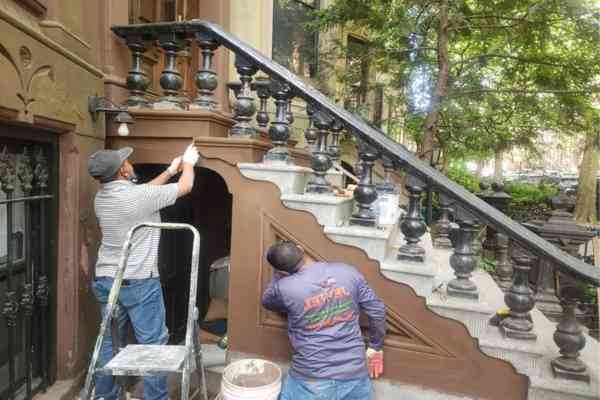
The North Side’s pre-war apartment buildings and garden apartments wear brick the way the neighborhood’s detached homes wear stucco: as the face the street knows. On the apartment buildings, brick is the whole elevation — running bond, soldier courses over the windows, stone or terra-cotta sills — and it ages joint by joint. Mortar recedes, a few units spall where water has sat, and the facade slowly stops shedding weather the way it did when it was built. On the detached homes and extensions, stucco does the same job in a different material: three coats over masonry or lath, textured by hand when the house was built, and just as dependent on its surface staying sealed.
Our brick and stucco contractors work both skins in their own traditions. Brick work here is mostly repointing — cutting out failed mortar and packing in a softer, matched mix that stays the sacrificial layer — plus unit replacement where bricks have spalled beyond saving. Stucco work is stucco repair done coat by coat, not smeared over: failed sections cut back to sound material, new coats keyed in, texture matched to the surrounding wall. Where a facade needs both trades at once, the work is sequenced with our masonry contractors in North Side, so brick, stone and stucco repairs read as one elevation when they are done.
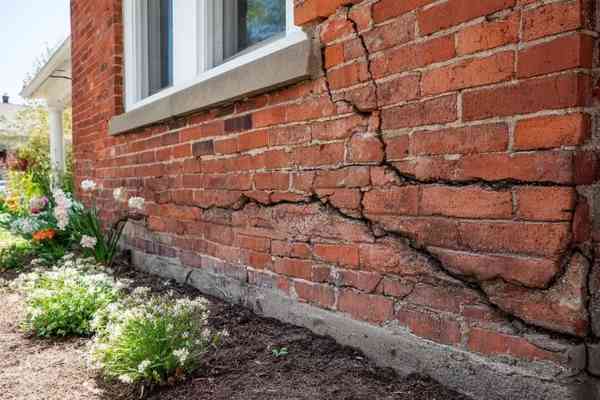
Brick and stucco are the two masonry skins of the North Side, and they fail differently because they are built differently. Brick is a unit system: thousands of individual bricks held by mortar joints. When the mortar fails — and mortar is designed to fail first, sacrificially — water enters the joints, freezes, and widens them, and eventually the bricks themselves start to spall. The repair is brick crack repair and unit replacement: damaged units cut out, new ones matched in size, color and absorption, and joints repointed in a mortar softer than the brick.
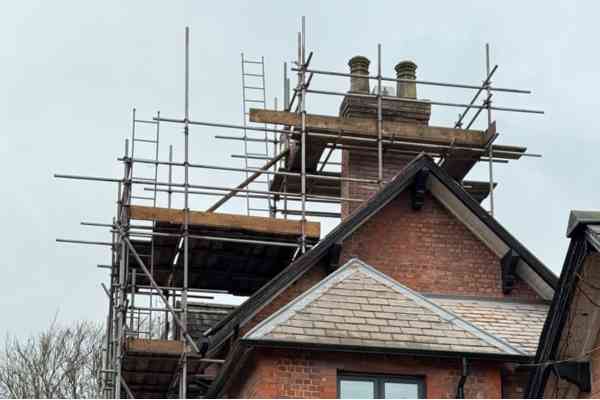
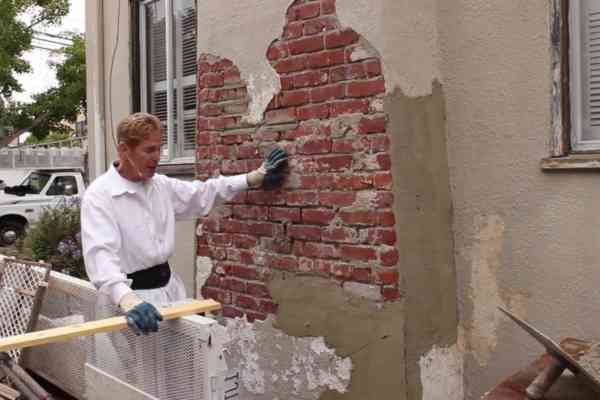
Stucco is a coat system: a scratch coat keyed to its substrate, a brown coat that builds the plane, and a finish coat carrying the texture. Its failures are drummy patches where coats have separated, hairline map cracking from movement, and soft spots where water has been getting behind the surface. Stucco skim coating and refinishing restores the finish coat, but only after the failed coats beneath it are rebuilt — a skim over a drummy wall is a cosmetic delay, not a repair. The two trades meet at the details: chimneys where brick stacks rise through stucco walls, lintels and shelf angles where steel rust-jacks the masonry above it, and exterior waterproofing for masonry where grade-level water keeps finding the base of the wall.

If you are searching for brick and stucco contractors near you in the North Side, start with a walk around the building, not a quote. Look at the joints: are they recessed, sandy, or cracked? Look at the stucco: are there hairlines, drummy patches, or stains below the sills? Then call us. We inspect first — photographing what we find, explaining what is surface and what is structure — and only then price the work, section by section, in the material’s own tradition.
Star Construction INC has repaired brick and stucco across New York City since 2018. Request a free, no-obligation estimate and we will read your walls with you, honestly, before any work begins. The areas we serve are listed on our service areas page.
Our clients value the consistency, structural precision, and long-term performance we deliver on every project, from initial planning through final execution.


 Trustindex verifies that the original source of the review is Google.
 Trustindex verifies that the original source of the review is Google.
 Trustindex verifies that the original source of the review is Google.
 Trustindex verifies that the original source of the review is Google.
Contact us now to discuss your project and receive a no-obligation quote from our experts.
Every project is handled through a defined process that ensures accuracy, efficiency, and long-term structural performance from start to finish.
We begin by reviewing site conditions, understanding project objectives, and identifying structural requirements to establish a clear and practical direction before any work begins.
A detailed execution plan is developed, including material selection, sequencing of work, and coordination of labor to maintain consistency and avoid delays during construction.
Work is carried out using proven installation methods, with attention to structural integrity, proper reinforcement, and adherence to safety and quality standards.
A final walkthrough is conducted to verify workmanship, resolve any outstanding details, and ensure the completed project meets performance expectations and durability standards.
Reading the Wall — the North Side’s two masonry skins, and how each fails. Before any repair is priced, the wall has to be read. Brick tells its story in its joints: the mortar that has receded, the units that have spalled, the stepped cracking that follows a lintel or a corner. Stucco tells its story in its surface: the hairline that follows a framing member, the drummy patch that sounds hollow when tapped, the stain that maps the water’s path. The four sections below follow that reading, skin by skin and detail by detail.
The North Side’s pre-war apartment buildings and garden apartments present their brick to the street for five or six stories, and the repair vocabulary is consistent: repointing, unit replacement, and lintel work. Repointing is the bulk of it — brick pointing done properly means cutting failed mortar out to a sound depth, usually twice the joint’s width, and packing in a matched, softer mix, tooled to the original profile. Done well, a repointed elevation disappears into the wall; done badly, with hard modern mortar forced against soft old brick, the brick spalls instead of the joint, and the repair becomes the damage.
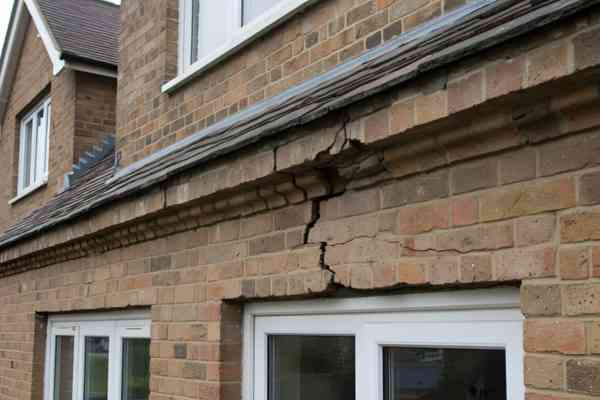
Unit replacement follows the same discipline: spalled or cracked bricks are cut out and replaced with units matched in size, color and absorption, so the repair does not read as a patchwork a year later. And where cracking follows a lintel or a shelf angle, the steel is dealt with first — rust-jacking steel will crack any masonry laid over it, however good the mortar. The honest sequence is steel, then units, then joints, and we price it in that order.
The North Side’s detached homes and extensions wear real stucco: three coats over masonry or over wood lath, textured by hand when the houses were built — sand float, dash, or the combed patterns that catch the light on a garden-apartment court. The tradition matters because stucco is only as good as its coats. A finish coat over a failed brown coat will crack along the same lines within a season; a cement patch smeared over a lime-based wall will trap moisture and peel.
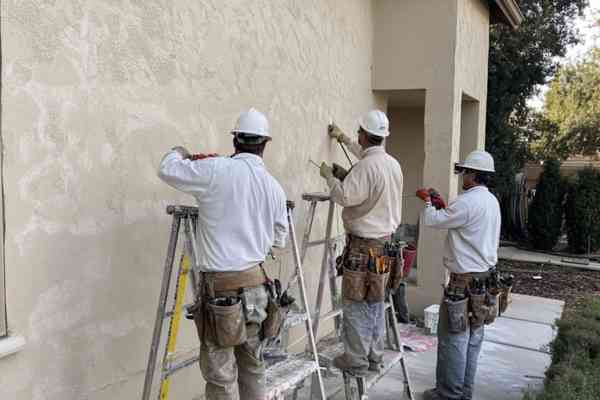
Our stucco repair cuts failed sections back to sound material, rebuilds the coats in order, and matches the texture to the surrounding wall — not approximately, but by the same hand techniques. Where the whole elevation has weathered evenly, stucco skim coating and refinishing gives a sound wall a fresh finish coat without rebuilding what does not need rebuilding. The judgment between the two — section repair versus full refinishing — is made on the wall, tapping and sounding it, not from the street.
Most masonry failures on the North Side are water failures first and material failures second, and the water almost always enters at a detail: a sill that has lost its drip edge, a lintel whose flashing has rusted through, a parapet coping joint opened a fraction, a downspout discharging at the base of a wall. The stain on the interior plaster is the last symptom, not the first — by the time it appears, the wall has been wet for seasons.
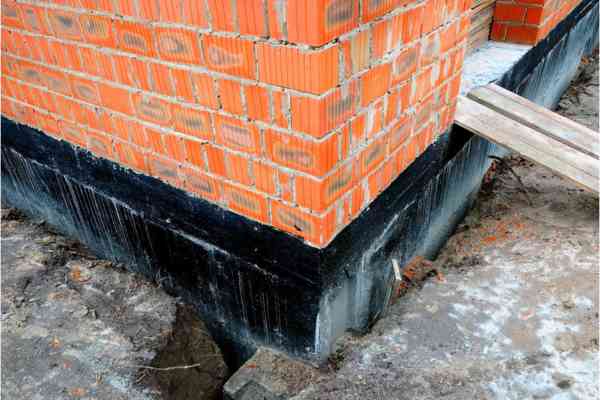
Reading the wall before repairing it means tracing that path. A rust-stained lintel means the steel is expanding and jacking the brick above it; the repair is the steel, not the crack. A stain below a sill means the sill is pitching water into the wall instead of off it. And at grade, where splash-back and snowmelt keep the base of the wall wet, exterior waterproofing for masonry — proper flashing, drainage and coatings that breathe — is what keeps a rebuilt section from failing the same way. Repairing the crack without closing the water’s entry is how the same wall gets repaired twice.
Later North Side homes and additions sometimes wear EIFS — synthetic stucco, a foam-backed system that looks like stucco and behaves nothing like it. EIFS is lighter, more insulating, and far less forgiving of water entry: once water gets behind it, it stays, and the damage hides until it is extensive. Traditional stucco, by contrast, is a masonry system — it breathes, it can be repaired coat by coat, and it tolerates the wet-dry cycles of a New York winter.
The honest answer to ‘stucco or EIFS?’ depends on the building. On a period home, traditional stucco matched to the original is almost always the right call. On a later addition, EIFS may be what is already there, and the repair is an EIFS repair, not a stucco repair — different materials, different detailing, different failure modes. Our comparison of the two systems, EIFS vs stucco, sets out the differences plainly. Whichever system your building wears, we repair it as that system, not as the other one.
Usually it depends on the crack. Hairline cracks — thin, stable, following no pattern — are often the normal movement of a stucco wall and can be sealed and refinished. What is serious is a crack that is wide, growing, or patterned: stepped cracking that follows the framing or the masonry beneath, a crack that opens at a corner or above a lintel, or any crack with staining, bulging or a hollow sound when tapped. Those mean water is getting behind the stucco or the substrate is moving, and sealing the surface will not fix it. If a crack worries you, have it looked at: the inspection is what separates a cosmetic hairline from a section that needs rebuilding, and catching the second kind early is what keeps it a section instead of an elevation.
Because mortar is supposed to be the weak link. On a pre-war building, the brick is relatively soft and the original mortar was lime-rich — it flexed with the building, breathed moisture out of the wall, and weathered away slowly so the bricks survived. Modern Portland cement mortar is much harder and far less permeable. Packed against soft old brick, it traps moisture in the units, and freeze-thaw then damages the brick faces, which spall — an expensive injury caused by a cheap shortcut. Matching the mortar is not cosmetic fussiness: it is the difference between a repair that protects the wall for decades and one that destroys the brick it was meant to save. We match strength first, then color and sand, so the repair reads as the wall’s own and behaves as the wall’s own.
Usually, closely — and honestly, never perfectly on day one. Brick units are matched by size, color and absorption from current manufacturers and, where needed, salvaged stock; mortar is matched by sand, color and joint profile; stucco texture is matched by the same hand techniques that made the original. A good repair disappears into the wall from the street. The honest limit is weathering: a new section has not had decades of sun, rain and soot, so up close it may read slightly fresher than the wall around it for a season or two. That difference fades as the new work weathers in. What we will not do is promise an invisible match or use a hard modern material to buy a tidy year at the wall’s expense.
A well-built three-coat stucco wall, kept dry at its details, lasts many decades — the North Side’s own stucco homes, some of them a century old, are the proof. What shortens its life is water: failed flashing, a broken drip edge, grade piled against the base of the wall, or a coating that traps moisture instead of breathing. With its details maintained — flashing sound, sills shedding water, the base of the wall kept clear — stucco needs periodic refinishing of its finish coat, not rebuilding. The maintenance that matters most is the cheapest: keep water out at the details, and the coats take care of themselves.
In general New York City terms, like-for-like repairs — repointing, unit replacement, stucco section repair and refinishing — usually proceed without a major permit, though work on the public-facing facade of a taller building can involve facade-safety and sidewalk-protection requirements, and any work affecting the structure, the building’s envelope in a major way, or a landmarked facade needs the proper approvals. Structural rebuilding, lintel replacement affecting load paths, and scaffolding or sidewalk sheds over a public walk all have their own requirements. We confirm what a given scope needs before work starts, so the repair is not held up by a filing nobody checked.