Pelham’s two masonry skins ask for two different kinds of knowledge, and the same discipline in both: find where water is getting in before you repair what it has damaged. A colonial’s brickwork fails at its joints and its units — mortar that has weathered to sand, bricks that have spalled where water sat, cracks that open a fraction wider each winter. A Tudor’s stucco fails at its coats — hairline cracks that let water behind the finish, hollow-sounding patches where the coats have separated from their base, and textures that were laid by hand and cannot be patched with a trowel and hope. As brick and stucco contractors in New York, we work in both traditions, and we repair in the material’s own terms rather than imposing a modern shortcut on an old wall.
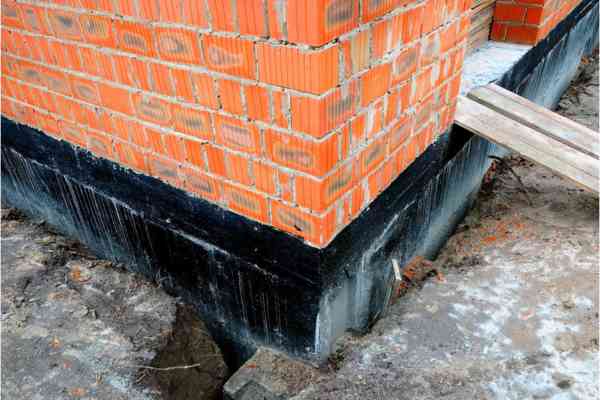
That range covers the full masonry envelope: brick pointing and repointing with mortar matched to the original in strength and color; brick crack repair and replacement where units have failed or movement has opened a joint; stucco repair and application in the traditional three-coat system, with textures matched to the house; and exterior waterproofing for masonry that keeps repaired work dry rather than merely covered.
Every job starts with reading the wall — the crack pattern, the damp line, the flashing above — and an honest account of what is surface and what is structure. A wall that is only weathered needs a different answer from a wall that is moving, and we would rather tell a homeowner that a section must be rebuilt than sell a cosmetic patch over a structural problem. The sections below set out how we judge each part of a Pelham brick or stucco wall, and how the parts belong to one plan.
Brick and stucco are the two finishes that give Pelham’s pre-war streets their character, and they work in very different ways. Brick is a load-bearing, jointed skin: individual units laid in mortar, with joints that weather, soften and open over decades, and with ties, lintels and flashing that carry the wall’s loads and keep its water out. Traditional stucco is a plaster skin built in three coats — scratch, brown and finish — over masonry or lath, textured by hand while the finish coat is still workable, and colored either in the coat itself or by paint applied over it. Both were built to be maintained in their own materials, and both reward repairs that respect that fact.
What ages them in Pelham is water and winter, working together. A failed joint lets water behind the brick, where it freezes and spalls the face; a hairline stucco crack does the same behind the finish, where it can travel and loosen a whole patch before the surface shows much damage. The honest repair in either case begins with the water’s path — the gutter above, the flashing at a sill or a chimney shoulder, the grade at the wall’s base — and only then with the visible damage. Repoint a joint with mortar harder than the brick and the brick fails next; patch stucco with a cement smear and the patch reads as a scar and traps the moisture it was meant to stop.
That is why this page treats brick and stucco as one trade with two disciplines: matching mortar to the original brick, rebuilding stucco coats in sequence with textures matched to the house, and judging every wall by what its cracks and stains are actually saying before a trowel is lifted.

If your Pelham home’s brick is shedding joints, its stucco is cracking or sounding hollow, or a damp patch keeps returning to the same wall, that is a conversation worth having before the next winter widens it. Star Construction INC has served Westchester homeowners since 2018, and our brick and stucco work in the Village of Pelham is built around one promise: an honest reading of the wall first, a repair in the material’s own tradition second, and no cosmetic cover-up sold as a cure. Request a free, no-obligation estimate and we will inspect the walls, explain what is surface and what is structure, and set out the options in plain language.
We work across the village’s pre-war streets — colonials, Tudors and the later homes that sit alongside them — and you can see the full range of places we serve on our service areas page. Whether the job is a single repointed elevation, a stucco wall rebuilt coat by coat, or a whole envelope brought back to watertight, the approach is the same: match the material, respect the period, and leave the wall drier than we found it.
Our clients value the consistency, structural precision, and long-term performance we deliver on every project, from initial planning through final execution.


 Trustindex verifies that the original source of the review is Google.
 Trustindex verifies that the original source of the review is Google.
 Trustindex verifies that the original source of the review is Google.
 Trustindex verifies that the original source of the review is Google.
Contact us now to discuss your project and receive a no-obligation quote from our experts.
Every project is handled through a defined process that ensures accuracy, efficiency, and long-term structural performance from start to finish.
We begin by reviewing site conditions, understanding project objectives, and identifying structural requirements to establish a clear and practical direction before any work begins.
A detailed execution plan is developed, including material selection, sequencing of work, and coordination of labor to maintain consistency and avoid delays during construction.
Work is carried out using proven installation methods, with attention to structural integrity, proper reinforcement, and adherence to safety and quality standards.
A final walkthrough is conducted to verify workmanship, resolve any outstanding details, and ensure the completed project meets performance expectations and durability standards.
Choosing a brick and stucco contractor for a pre-war Pelham home is really choosing a judgment: what to repair, what to rebuild, and what to leave alone. The four points below are the ones that judgment turns on in this village — mortar matched rather than imposed, stucco rebuilt in its coats rather than patched over, cracks read before they are repaired, and the honest line between traditional stucco and its synthetic cousin.
Pelham’s colonials wear their brick honestly — no veneer pretending to be structure, just solid walls whose joints have weathered a century of Westchester winters. The work that keeps them sound is mostly repointing: cutting out mortar that has turned to sand and replacing it with a mix matched to the original in strength, sand and color. Match matters more than most homeowners are told. A modern, high-strength mortar against soft old brick does not protect the wall; it transfers every stress into the brick itself, and the brick spalls while the joint survives. We test the existing mortar, match it, and tool the joint to the profile the house was built with.
Where units themselves have failed — spalled faces, cracked bricks around openings, a section that has lost its bond — we replace the unit, not just its face, and source brick that matches in size, color and texture so the repair disappears into the wall. Cracks that step through the mortar or run through the brick get read before they get repaired: a hairline settlement crack and a crack above a failed lintel are different problems with different answers. And for the broader masonry around the brickwork — chimneys, stoops, stonework — our masonry contractors in Village of Pelham handle the same walls as one envelope, so a chimney repair and a wall repair are never planned in isolation.
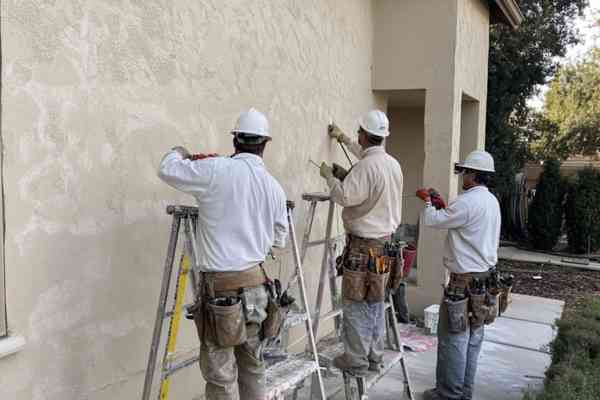
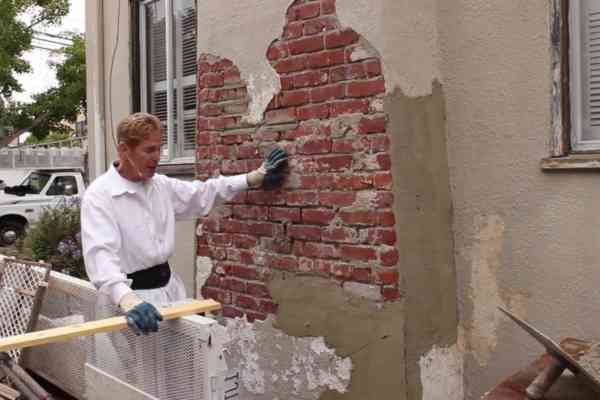
A Pelham Tudor’s stucco is not a coating; it is a wall system. The scratch coat keys into the lath or masonry, the brown coat builds the plane true, and the finish coat carries the texture — the stipple, dash or trowel pattern the original plasterer laid by hand a century ago. Each coat must cure before the next goes on, and each must be mixed to work with the one beneath it. Rush that sequence, or substitute a hard cement finish for a lime-based one, and the wall will tell on the repair within a few winters: cracking, hollow spots, and a finish that reads as a patch rather than a wall.
Matching the texture is the part of the job that separates a repair from a scar. We sample the existing finish, test the mix, and lay trial patches until the pattern, the aggregate exposure and the color read as one wall under the same light — not just in the shade of the workday. Where a Tudor’s texture has been flattened by decades of paint or an ill-judged patch, stucco skim coating and refinishing can restore the hand-worked surface without rebuilding the wall beneath it. And where paint is the question rather than the plaster, we say so plainly: a sound stucco wall often needs a breathable coating, not a new coat of stucco.
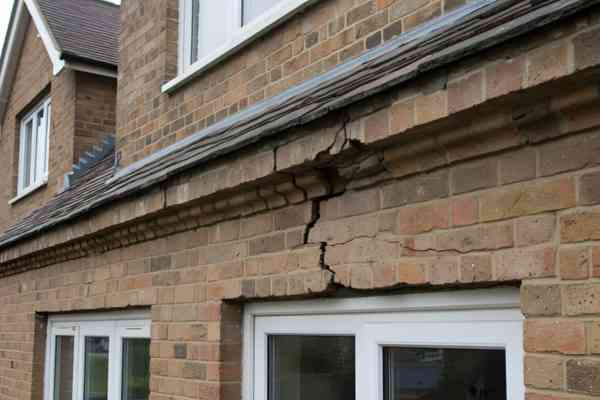
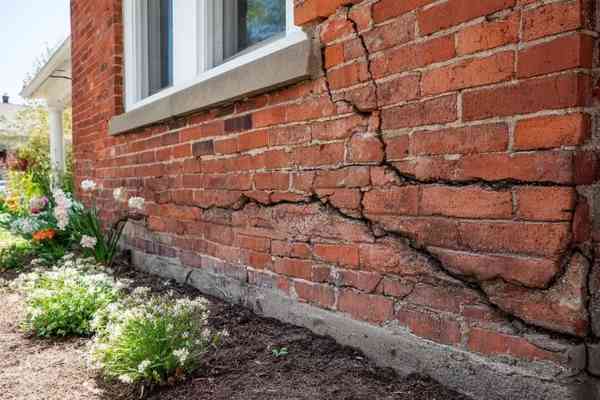
Every crack tells a story, and the first job is to read it correctly. A fine, hairline crack in stucco that follows no pattern is usually shrinkage or seasonal movement — a maintenance item, sealed and watched. A crack that steps diagonally through brick joints, widens at one end, or reappears after patching is saying something structural, and patching it without finding the cause only buys the next crack. Cracks that run from the corners of windows and doors often trace to the steel above the opening: lintel and shelf angle repair is a common answer where rust has expanded the steel and pushed the masonry apart, and it must come before any repointing, or the new joints will crack in the same places.
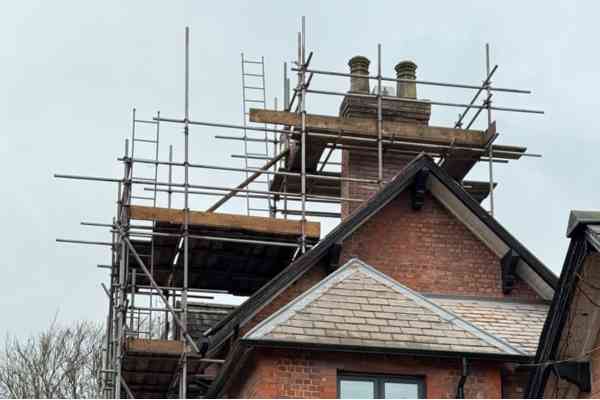
Moisture gets the same discipline. A damp patch on an interior wall is rarely where the water entered; it is where the water stopped. We trace it upward and outward — the chimney flashing, the coping, the window sill, the gutter joint above — and we treat the entry, not just the stain. Chimneys deserve special suspicion: they sit exposed on every side, their shoulders and caps take the weather first, and chimney repair and rebuilding is often the repair that finally dries a wall that has been patched three times. Only when the water’s path is understood do we repair the wall itself, so the repair lasts longer than the next hard winter.
Not every stucco-looking wall in Pelham is traditional stucco. Later homes and additions sometimes carry EIFS — an exterior insulation and finish system, a synthetic stucco over foam board rather than three coats of plaster over masonry or lath. EIFS is lighter, insulates well and finishes smoothly, but it behaves differently: it is less forgiving of trapped water, its repairs are system-specific, and it should never be patched with traditional stucco materials. Knowing which system a wall actually is matters before anyone prices a repair.
Our advice is straightforward. A pre-war Tudor with real three-coat stucco should stay in its own tradition — rebuilt coats, matched texture, breathable finishes. A later home with EIFS should be repaired as EIFS, with its drainage details and terminations respected, and we say so when that is the better answer rather than selling a traditional repair onto a synthetic wall. If you are unsure which your home carries, our comparison of EIFS vs stucco sets out the differences, and our EIFS stucco systems work covers repairs and detailing for synthetic systems. Either way, the wall gets the repair its own system calls for.
Usually, not urgently — but it deserves attention. Fine hairline cracks in stucco are commonly shrinkage or seasonal movement, and they are a maintenance item: seal them, keep water out, and watch them. A crack becomes a concern when it widens over time, runs diagonally or in a stepped pattern, lets water through, or is accompanied by hollow-sounding stucco or a damp patch inside. Those signs can mean movement, a failed flashing or water trapped behind the finish, and they are worth an inspection before the next winter widens them. The honest rule is simple: a crack that changes is a crack to investigate; a crack that stays sealed and stable is a crack to maintain.
Yes, in most cases — but matching is a craft, not a color swatch. A Tudor’s texture was laid by hand, and two houses on the same street can carry different patterns. We sample the existing finish, test mixes and tooling, and lay trial patches that we check in daylight before committing to the wall, so the repair reads as one surface rather than a patch. An exact match depends on the original texture and how much of it survives; where the original is badly degraded, we match the closest surviving area and blend the repair outward. Honest expectation: a well-matched repair should be hard to spot from the street, and we will show you the trial patch before the full repair goes on.
It depends on the paint and the wall beneath it. Sound, well-bonded paint over sound stucco can usually be recoated with a breathable masonry coating after cleaning and preparation — the key word is breathable, since a non-breathable film traps moisture behind it and will blister or peel. Paint that is peeling, chalking heavily or bridging cracks, or paint over stucco that is hollow or damp, needs a different answer: the failed paint comes off, the stucco beneath is repaired, and the wall is recoated only once it is dry and sound. Stripping is also the right call when so many layers have built up that the texture itself has been flattened. We test adhesion and moisture before recommending either route, so you are not paying to strip a wall that could have been recoated, or recoating a wall that needed stripping.
Traditional three-coat stucco is a long-life finish when it is kept dry: well-built and maintained walls commonly last 50 to 80 years or more, and many of Pelham’s Tudors are still wearing their original stucco a century on. Those ranges are guidance, not a promise — lifespan depends on the details that keep water out: sound flashing, working gutters, sealed cracks, and a breathable finish. A wall that stays dry ages gracefully; a wall with a failed flashing or a trapped-moisture problem can deteriorate in a few seasons. The maintenance that matters most is unglamorous: keep cracks sealed, keep water directed away from the wall, and recoat with breathable products when the finish weathers.
It depends on the scope. Like-for-like repairs — repointing, replacing a few bricks, patching or recoating stucco without changing the wall — are usually simpler and often do not need a permit. Work that changes the structure or the footprint — rebuilding a wall section, altering an opening, adding a new wall or changing the building’s exterior dimensions — generally does need village approval, and the requirements vary with the project. When in doubt, we confirm the position with the village before work starts, so a repair is never held up mid-job by a missing approval. If your project includes structural changes, we will tell you at the estimate stage rather than discovering it later.